The Destructive, Useful, Unethical Presumption of Bigotry, Part I: California’s Anti-School Discipline Law

Last year, in September, California became the first state to prohibit by law the suspension of students for “willful defiance” unless the activities involved were certified by the school superintendent as meeting the specific standards enumerated in the law, all of them very serious, most of them already crimes. What was the rationale behind Assembly Bill 420? Well, it seems African American kids were being disproportionately suspended. They made up about 6 percent of total enrollment, but 19 percent of suspensions for defiance.

According to the Justice Department’s politically motivated embrace of the “disparate impact” approach, any policy that disproportionately affects a minority group adversely is presumptively racist. It couldn’t possibly be true that black students are, as a group, more likely to defy authority, especially the authority of white teachers, right? The fact that pundits, members of the Congressional Black Caucus, MSNBC, Al Sharpton and the President keep hammering on the idea that America is run by a racist cabal, and that the only reason we aren’t getting ready to replace Teddy Roosevelt with Barack Obama on Mount Rushmore is that his wonderful accomplishments have been denied and distorted by white racists, and that our police departments are hunting down and murdering unarmed young black men as the justice system looks the other way—none of this could possibly be feeding anger, frustration, and hate among  among young black students that is translated into willful defiance in class—why would anyone think that?

The law is lunacy. The California state government is endorsing the idea that the schools, especially white teachers, are bigots, and thus the government is reinforcing exactly the emotions and beliefs that feed African American classroom defiance in the first place. Now uncooperative minority students will be able to have their disruptive conduct validated (with disruptive conduct by non-minority students similarly encouraged), treated gently and with understanding, inevitably reducing the educational value of class by allowing more chaos and less discipline, undermining the education of well-behaved students black or white. Meanwhile, toxic behaviors, attitudes and conduct by students that will hamper their prospects of success after school will not attract trigger negative reinforcement.

And when the out-of-school defiant conduct occurs later in response to a lawful command by a police officer?

You might get Michael Brown.

This is such a good plan. Continue reading
Ethics Poll: Target Practice For The North Miami Police

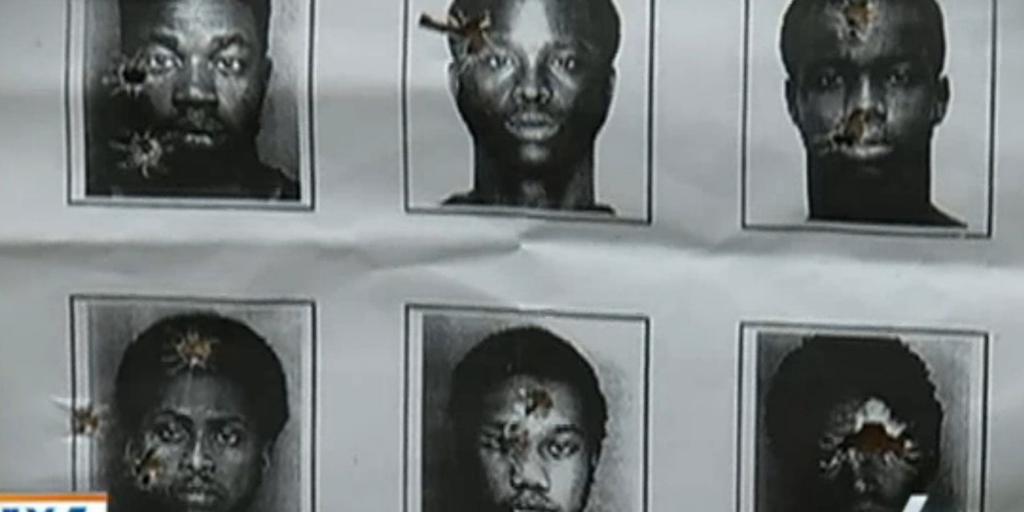
mug shot targets

From the BBC:

[P]olice officers have been…using mug shots of black suspects for target practice in Florida. The images used by North Miami Beach Police were discovered by a female soldier who used the firing range after a police training session…Police Chief J Scott Dennis said that his officers had used poor judgment but denied racial profiling.He told NBC that using real suspect images was an important part of training for his sniper team and that his officers had not violated any policies.

“There is no discipline forthcoming from the individuals who were involved with this,” he said.

A police spokeswoman added on Friday that officers use targets of all races and genders in their training sessions.

Embarrassing. A public relations nightmare for the department. But was using the mugshots unethical? Why?

Let’s vote:


Ethics Hero: Montgomery County, Md. Police Chief Tom Manger

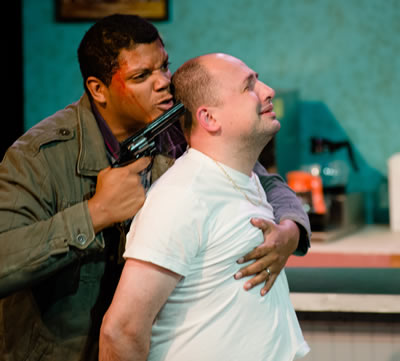
"Cops": Chaz Pando as the doomed perp; Nello DeBlasio as the hostage.

“Cops”: Chaz Pando as the doomed perp; Nello DeBlasio as the hostage.

My theater company is performing the 1976 Terry Curtis Fox drama “Cops” as we wind down this season after 20 years. I chose the show, and its companion piece in an evening called “Crime and Punishment in America,” William Saroyan’s classic one-act “Hello Out There,” in direct response to Ferguson, the growing controversy over police violence, the increased racial divide in the U.S. and the gun control debate. Both dramas, as cast, involve African American victims of violence in a law enforcement setting. “Cops,” in particular, features openly biased Chicago police (at least based on their choice of words) and the police execution of a disarmed and surrendering cop-shooter. As the lights fade, the police are discussing what their cover story should be.

I invited the Chief of Police in Montgomery County, Maryland, Tom Manger, to come to the production and field questions from the audience regarding its relevance to current controversies in Ferguson, New York City and across the nation. [Full disclosure: I have known Chief Manger and his wife for many years, and consider them friends] You might recognize him: he was a major figure in the apprehension of the D.C. Snipers, and has been seen and interviewed on the national news and on issue talk shows several times, most recently on CNN’s “State of the Nation” with Candy Crowley. Not only did Tom agree to come, but he let me schedule him twice, said the sessions could be videotaped, and that no question would be off limits.

The first of the talkbacks took place last week (I am moderating another this Sunday), and Tom was as good as his word—candid, blunt, open, and frank.  He was quizzed, hard, by our diverse, astute and always combative audience members about police training, police force diversity, bad cops, police who lie and cover-up misconduct, and racism in the ranks, as well as the details of specific shootings including the local one I have referred to here more than once, in which an unarmed white man, John Geer, was shot and killed by police as he stood in his doorway negotiating with them over a domestic dispute.

Since the episode in Ferguson, Chief Manger said, he has been meeting with community groups two or three evenings a week, doing everything he can to bolster community trust. Among his comments in response to questions: Continue reading

Ethics Observations On Mayor de Blasio’s Refusal To Apologize To His Police Officers

Integrity and leadership are not the same thing, Mayor...

Integrity and leadership are not the same thing, Mayor…

New York City Mayor Bill de Blasio’s relations with his own police force could not be worse, and this is not in the best interest of the citizens both the mayor and the police are duty-bound to serve. Can the rift be repaired?

This week de Blasio ruled out one avenue of peace: he said he would not apologize for his remarks following the Eric Garner grand jury decision not to bring charges against the officer who appeared to precipitate the unarmed black man’s death by using a choke-hold. The mayor said…

“You can’t apologize for your fundamental beliefs. The things that I have said were based on my beliefs, the truth as I know it. Can we do a better job communicating, and listening, and deepening an understanding of what our officers need? Yes.”

Fascinating.

I can’t think of a better example of a dilemma where the most ethical conduct is still irresponsible leadership, and thus, from the perspective of a leader’s obligations, unethical.

From an isolated perspective, de Blasio is asserting his integrity. “I could apologize and help smooth over my toxic relationship with the police, but that would require me to be insincere, and I’m not going to do that,” he is saying. He is saying that his constituents can trust him to be straight and honest, and if that means that he must pay a political price, he will pay it. This is admirable, on a human level. Praiseworthy…in a vacuum.

De Blasio, however, doesn’t have the luxury of being ethical in a vacuum. He is the mayor of a city with a lot of problems, controversies, obstacles to effective governance and people in need. The context of all of his words and actions must be his duties to address those issues, and his integrity, in this case, must be subordinate to getting the job he was elected to do done. Continue reading

Comment of the Day: “Of The Good Muslim, Paris, “1984”, And The Compulsion To Deny The Truth”

This was Jeff's submission for "Everyone Draw Muhammad" Day. He's a dead man.

This was Jeff’s submission for “Everyone Draw Muhammad” Day. He’s a dead man.

Long, LONG-time commenter Jeff H., himself a cartoonist, weighs in in the controversy discussed in the previous post, regarding efforts to exonerate radical Islam from any responsibility for the terrorist attack against a French satire publication.

In answer to his final question, I would respond: “It’s true, that’s all.” And yes, I think it’s clear that Muslims are more likely to engage in violent terrorism than other faiths, at least at this time.

Here is Jeff’s Comment of the Day on the post “Of The Good Muslim, Paris, “1984”, And The Compulsion To Deny The Truth”:

Here are my thoughts on it: if you think it would avail you any to talk to one of the men who perpetrated this act and say, “It’s OK! You’re not really Muslim!”, then you can go ahead and say they’re not Muslims.

If you ARE a Muslim who notices the hypocrisy in someone claiming to be a Muslim carrying out an act of terror in defiance of parts of the Koran, I wouldn’t have a problem with them saying he’s not a Muslim.

I saw someone call them “pretend Muslims,” and I sort of like that term, but that sort of implies that they don’t believe in the faith itself, and that’s not really for anyone to say. But if we’re calling them pretend Muslims because they don’t adhere to the parts of the Koran that would mitigate violence, they could call everyone else pretend Muslims for not participating in violence. Or, those who have intercourse before they’re married and trim the edges of their beards could be called “pretend Christians.” Let’s see how far that goes.

I really hate to hand it right to the jerks who will use this against the vast majority of peace-loving Muslims, but trying to deny it just kicks the can down the street. Pretending not only that it has nothing to do with it, but that it doesn’t even exist, ends up having the equal and opposite reaction on the other side that insists all Muslims secretly crave violent revolution.

What is especially bothersome is when people are like, “well, they’re Muslims, what do you expect?” I hate to cry ‘racist,’ but… that is totally racist. It is racist to assume that Muslims are not expected to control their anger, or that they cannot help themselves because of their ethnic background. This is why I was furious when I heard people hoping the perpetrators of the Boston bombing would turn out to be white.

Congratulations, you wretched tin-eared pinheads. You got your wish. The Tsarnaevs were white. They were Caucasian MUSLIMS from Chechnya. I hope that makes some kind of difference to you.

But just because jerks will use this to blame all Muslims (which is deeply regrettable), that doesn’t mean the response is to pretend Muslims are incapable of violence. That’s just carrying water for the next person of any belief who wants to do something unspeakable to their next critic.

What I want to see is a statistical analysis of acts of violence like this, the alleged beliefs of the perpetrator, and see if any group of beliefs makes someone more likely to do something like this. The goal is not to attempt to smother any belief except the belief that your opinion gives you the right to hurt someone else.

Yes, those who perpetrated this attack identified themselves as Muslim. Now the question is: “So what?”

Observations On The ACLU And “Grand Juror Doe’s” Power Play

Juror Doe now, but trying to become a household name...

Juror Doe now, but trying to become a household name…

In a move that tarnishes the reputation of the ALCU and reveals the deep ideological bias in its ranks, the Missouri chapter of the esteemed organization has encouraged a Ferguson grand juror to sue in order to end the lifetime ban on grand  jurors revealing what occurs during proceedings, allowing the juror to become a media star and, presumably, undermining the credibility of the deliberations that resulted in no indictment against Officer Wilson for his fatal shooting of Michael Brown.

Observations:

1. Grand jury proceedings have to be confidential, or the system will not work (yes, it worked as well as it possibly could have in Ferguson.) Secrecy prevents those who are being investigated from interfering with witnesses and otherwise tampering with and attempting to corrupt the investigation. It protects witnesses who might be reluctant to testify if they believed their comments would be made public. It decreases the likelihood that one who is about to be indicted by a grand jury will flee and thereby avoid being brought to trial on those charges. It also protects innocent individuals whose names may be implicated in a grand jury investigation but who will never be indicted.

2. The prohibition on participants in grand jury proceedings revealing what occurs there is not a restriction on free speech any more than a government employee being prohibited from revealing national security information. This is a necessary restriction based on due process and the functioning of the rule of law, and grand jurors agree to the prohibition as a condition of service.

3. The ACLU is grandstanding for its progressive, civil rights zealot fans and contributors. This is an irresponsible case: if it prevailed, the justice system would be thrown into chaos.

3. If even one grand jury is able to have the ban on secrecy lifted, every grand jury will labor under the fear of those involved that jurors will speak to the media and reveal harmful details. I will be shocked if the ACLU lawsuit succeeds. I think it is a frivolous suit, and a violation of legal ethics Rule 3.1 that prohibits such actions.

4. The grand juror who is seeking the lifting of the ban has arguably already revealed more than he is allowed to do legally under the law, which prohibits disclosing “matters occurring before the grand jury.”

5. The supposed explosive revelations the juror wants to expand upon are nothing at all, just ignorant and biased complaints that have already been thoroughly explored and debated by legal experts. The likes of progressive website Think Progress falsely represents the juror’s views as “significant” because progressives so, so desperately want to prove that Michael Brown was executed by a racist cop who was corruptly exonerated by a biased prosecutor. But as Gertrude Stein said of Oakland, there is no there there.

Here are Grand Juror Doe’s “concerns”: Continue reading

Unethical Quote of the Week: Ampersand on “Alas! A Blog”

Into the Woods

There is no reason in the world, other than Hollywood’s endless racism and lack of imagination, for this movie (or the original play, alas) to have an all-white cast. Why do movies feel like they’d rather die than show us a diverse cast? (And please don’t say “they cast the best people for the roles.” I thought the whole cast was good, but Streep was the only one who turned in a performance so unique that you couldn’t imagine anyone else doing the role.)

—–Ampersand, a.k.a. Barry Deutsch, opining on the assets and deficits of Rob Marshall’s film adaptation of “Into the Woods” on his blog

I hate to pick on Barry—OK, that’s not true, I enjoy it immensely—but this statement could stand as the distillation of knee-jerk liberal thinking on race, and it is wrong in so many ways that I hesitate to start counting. The sentiment, however, poses a nice counterpoint to the discussion here about the black James Bond controversy, so I can’t resist taking aim at it.

1. So casting a mega-million dollar film—-in a dicey genre (Have you heard? Big budget Hollywood musicals died in the Sixties…) and a limited audience—with actors who comport with that audience’s expectations of the musical the film is based on is racist, eh? More unfair words and inexcusable race-baiting were seldom uttered in word or written in ink. If a director had a vision that supported casting African American actors in traditional Grimms’ fairy tale roles and could make it work, I would salute him, but Rob Marshall had other priorities. He knew that every cut would be scrutinized and attacked by the Sondheim fanatics (which, by the way, are as white as a dove convention in a blizzard); he knew that the show itself was seriously flawed; he knew that every single adaptation of a Sondheim musical (“West Side Story” doesn’t count) has been a critical and box office bomb. He had every reason to keep his casting choices as close to the traditional images of the characters and the way they were portrayed on Broadway, and none of those reasons were racism.

2. It’s impressive how casually a race-obsessed progressive will accuse a professional of racism as a first response. Irresponsible, unfair, disrespectful, and in this case, ignorant of both commerce and art. Continue reading

Can’t Win, Can’t Break Even: If You Need To Apologize For Saying “All Lives Matter,” Why Not Apologize For Resolving To Challenge Racism?

We have a reverse Smith in Pittsburgh.

You will recall that Smith College president Kathleen McCartney attempted to  show support for her students  protesting racism and police brutality by sending a campus-wide email titled, “All Lives Matter, ” and came under fire by campus activists because the protest slogan was “black lives matter.” She quickly apologized,  saying that she didn’t intend for “all lives matter” to be interpreted as rebuttal to “black lives matter.”

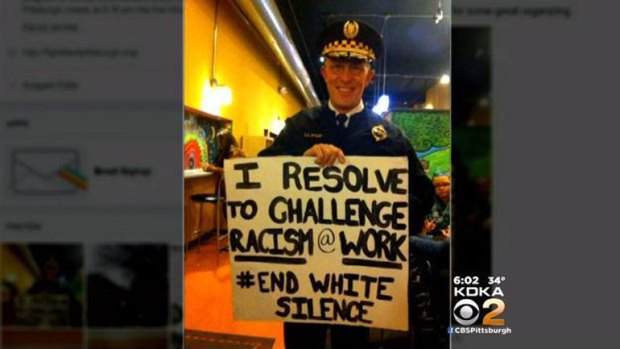
Now, in Pittsburgh, the Chief of Police is being attacked by his own officers who say that this photograph, posted on Facebook…

mclaybanner

…accuses them of being racists.

Touchy, touchy….?

The problem is that the Chief is endorsing a slogan of a group called Fight Back Pittsburgh, which has engaged in anti-police rhetoric in the past and carried signs saying “End White Silence” in protest marches.  It describes itself as a Pittsburgh-based collective (I would call it a Marxist group) with the mission of creating a world that is free of destructive white privilege and oppression. OK, Fight Back Pittsburgh sounds like a group of racists to me. But the message of the sign is hard to take offense at. Who isn’t obligated to challenge racism at work? Continue reading

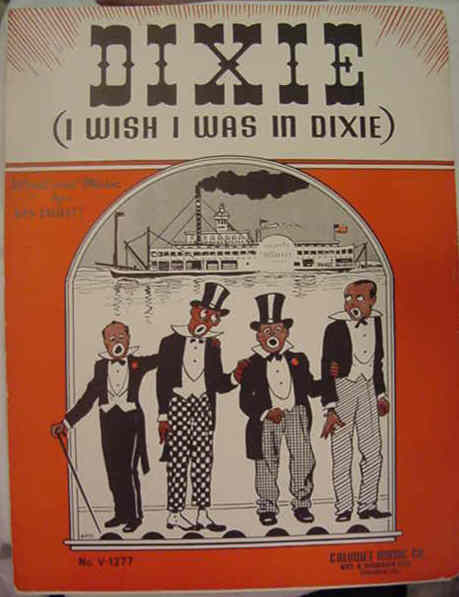
Comment of the Day: Prosecutor Ethics, “What The Hell Were You Thinking?” Dept: Dog-Whistling “Dixie” To The Jury

Dixie

I will introduce this fascinating Comment of the Day by one of the blog’s masters of the long form comment, Chris Marschner,  by saying that I think it is only tangentially related to the post, though he would disagree. Chris is writing about the history of “Dixie” and why it should not be associated with racism. Whether I agree with that analysis or not, the fact is that the public does overwhelmingly associate the song with a longing for the simplicities of the Old South, when the darkies were singing in the cotton fields and those Northern folks weren’t sticking in their noses where they don’t belong. This is the basis of an Idaho court’s decision to overturn the conviction of a black defendant after the prosecutor gratuitously and needlessly quoted the lyrics of the song in her closing argument.  That decision was correct, because the issue is whether the comment could reasonably have been an appeal, or seemed like an appeal, or have had the effect of an appeal, to racial bias. I don’t think that conclusion is arguable.

Here is Chris’s Comment of the Day on the post, Prosecutor Ethics, “What The Hell Were You Thinking?” Dept: Dog-Whistling “Dixie” To The Jury:

The prosecutor failed her client – the people- not because she used the words of an 19th century song but because she failed to come to understand that history and culture of the US has been so bastardized that even an appellate court has no understanding and context of the origins of the song and the history and culture of the south. And, because of its misunderstanding believes the lyrics to be racially prejudicial.

“Maybe Erica is so young, color blind and historically ignorant that she had no idea that “Dixie” has been played at Klan rallies and used as the campaign theme for states rights, segregationist, white supremacy candidates since the Civil War. Maybe she didn’t recognize the cotton reference as racial.”

This song was written by a northerner named Daniel Decatur Emmett and performed in New York in an 1859 minstrel show by Emmitt in blackface. The reference to cotton is geographic in nature because cotton represented the primary agricultural commodity and wealth creator of the southern states – nothing more unless one is predisposed to finding anything related to the antebellum south as racist

Many songs have been coopted by various groups but to suggest that lyrics of Dixie are inherently racial because they are used by White supremacists is faulty logic. If a white supremacist adopted the image of Leonardo D’Vinci’s David or Venus d’ Milo or other classical work of art on their flag that would not mean that any such depiction suggests racial superiority. Continue reading

Prosecutor Ethics, “What The Hell Were You Thinking?” Dept: Dog-Whistling “Dixie” To The Jury

"Wait...WHAT did you just say??"

“Wait…WHAT did you just say??”

Canyon County Deputy Prosecutor Erica Kallin wanted to make the point that the defense attorney for the African American defendant, James D. Kirk, was trying to lead the jury to ignore the evidence that pointed to his guilt in his trial for lewd conduct with a 17-year-old girl and sexual battery of a 13-year-old girl—making them, in effect,”look away” from the truth. How could she make that argument in a vivid way? Clarence Darrow used to use poems in his famous closing arguments; was there a memorable poem that used the phrase, “look away”?

“Eureka!” Erica thought. She found it! So she said to jury deliberating on the case:

“‘Oh I wish I was in the land of cotton. Good times not forgotten. Look away. Look away. Look away,’ And isn’t that really what you’ve kind of been asked to do? Look away from the two eyewitnesses. Look away from the two victims. Look away from the nurse and her medical opinion. Look away. Look away.”

The jury convicted Kirk, on both counts; the evidence against him was indeed strong. He was sentenced to 20 years in prison. Continue reading