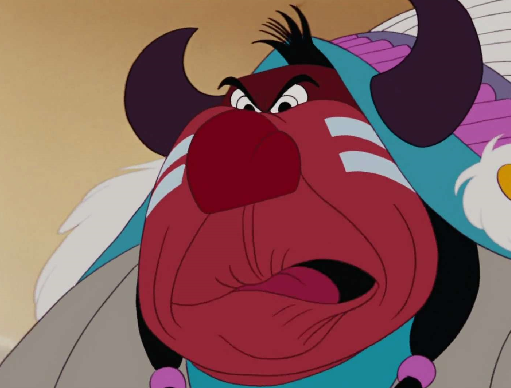
I recently watched the Disney “Peter Pan,” long my favorite of the classic animated films, which I had not seen from beginning to end in decades. I was genuinely shocked at the portrayal of the Indians, which would make the average movie Western seem politically correct and the Washington Redskins seem like a compliment. I know the story is a fantasy; I know that these are not supposed to represent real Native Americans, but a Victorian child’s visualization of the villains of their games. Nevertheless, it is hard to imagine the effect of such a film on a Native American child as being anything but devastating. The Neverland Indians, and their heroine, Tiger Lily, have been a human relations problem since at least the civil rights era, and the provocation is legitimate: did you recall (I had forgotten) that Tiger Lily belonged to the “Piccaninny tribe”? That James Barrie was a funny guy. Continue reading
racism
A Hate Speech Hoax Is As Wrong As Hate Speech, And Perhaps Worse.
It was Oberlin all over again…another Black history Month racist hate speech hoax. As Professor Jacobson reports, the racist message written on a whiteboard in front of a black Grand Valley State University (in Michigan) student’s door last month at was written by the student himself. This was not discovered, however, until the incident was used to justify the usual condemnations of American society as a hotbed of racial hate and prejudice against non-whites.
Ethics Take-Down Of The Year: UCLA Law Professor Eugene Volokh

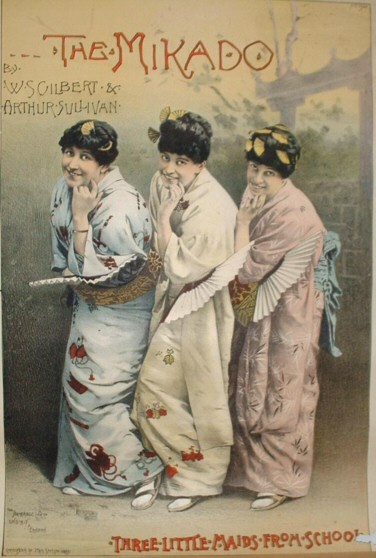
Wait, wait—I think I have it. A Japanese production of “The Mikado” would be a racist appropriation of a racist appropriation, right?
Here is a 2014 year-end Ethics Alarms Award I’m giving out now, with no worries that I will regret it later.
Salon, the online progressive magazine, published a classic in the revolting genre of self-righteous anti-white racism, a pathological screed titled “Why I Can’t Stand White Belly-Dancers.” (Full disclosure: I can’t stand any belly-dancers). If that per se title doesn’t set off a liberal editor’s ethics alarms, something is seriously wrong, but then, this Salon, a where the literate deranged of the Left hang out to plot the Socialist Revival. The foolish author devotes her article to the crackpot theory that in a pluralistic, free society, it is unethical “appropriation” for whites to engage in art that arose out of a non-white culture:
“Women I have confronted about this have said, “But I have been dancing for 15 years! This is something I have built a huge community on.” These women are more interested in their investment in belly dancing than in questioning and examining how their appropriation of the art causes others harm. To them, I can only say, I’m sure there are people who have been unwittingly racist for 15 years. It’s not too late. Find another form of self-expression. Make sure you’re not appropriating someone else’s.”
Had I encountered this cold, I would have taken it as a conservative parody of minority race-bullying. But I have to restrain my impulse to heap abuse on the author, Randa Jarrar, “a feminist of color,” because Prof. Volokh slices her and her idiocy into tiny, delicious shreds as well or better than I ever could. Here’ s yummy sample (read it all here): Continue reading
Being Fair To College Student Ideological Idiocy

Luckily for him, the bank president who wrote this foolishness in 1969 didn’t sign his name to it…Ah, my old college days!
My attention has been drawn recently to two essays by college students, both presumably sent to me on the theory (or hope) that reading them would kill me. The first, published in the Drexel Triangle (the student paper), argues that stage directors should be prevented from casting actors who look the way the playwright envisioned them. The second, published in the Harvard Crimson, makes an even more disturbing assertion: its author asserts that Harvard should stop guaranteeing professors and students the right to advocate controversial views or pursue research that challenges liberal views and assumptions.
I don’t want to devote the bulk of this post to rebutting these two essays, which are, I think self-rebutting. In the theatrical essay, student actress Alyssa Stover argues that a stage director shouldn’t have the right to decide that, say, casting an Asian dwarf as black boxer Jack Johnson in “The Great White Hope” would lead to a less effective production (that is my example, not hers—she objects to a director of “Cabaret” refusing to cast African-Americans as a matter of historical accuracy):
“These arguments are fundamentally flawed. What the audience wants is almost impossible to measure because the “audience” is composed of anyone who can get a ticket. A director or producer’s right to deny someone a role due to their appearance is debatable because this is a judgment based on one person’s preferences and may not actually create something that is stage worthy. The current status quo allows people to be barred from the stage due to physical “flaws,” as determined by the direction. These judgments are not harmless, and when the issue of race is involved, the problem only gets bigger.” Continue reading
Ted Nugent Ethics, Part 2: Nugent vs Bump
If asked, I would have said that it would be impossible for even the most ethically muddled blogger to discuss Ted Nugent’s revolting “sub-human mongrel” denigration of the President and make Ted look relatively astute by comparison. And I would have been wrong.
I wouldn’t even have answered in the affirmative if I had been warned that the parody of a progressive, Phillip Bump, was on the case. Bump was last featured here when I dissected his inept attack on criticism of the Obama children’s unusually lavish vacations. In a post on Wire, however, Bump does the impossible, and in the process, actually proves the diagnosis that has been offered in many forums regarding the warped ethical values and priorities in the progressive camp. To too many of them, race really does trump everything. Moreover, the obsession with race and racism can make one look foolish even compared to Ted Nugent, who looks foolish compared to Barney the Dinosaur, Justin Beiber, Flavor Fav, Valeria Lukyanova, a.k.a. “Real Life Barbie,” Michele Bachman, or “Jackass II.”
Over the weekend, Nugent issued 44 fatuous tweets asserting that various conduct and policies of the President or his administration were “more offensive” than his racist slur to describe President Obama. This is, as any regular reader here will note, an example of my least favorite of all the rationalizations on the Ethics Alarms Rationalizations list, the dreaded #22, “The Comparative Virtue Excuse,” or “There are worse things.” Attempting this argument, in my view, is proof positive that one is an idiot or a scoundrel, and usually both. Wrongful conduct is never excusable or mitigated because other conduct is somehow more wrong. An individual who reasons in this rudimentary way can rationalize literally every kind of unethical conduct, from cheating on a spouse to serial murder (“Well, at least I’m not a mass murderer!”) I call it the “bottom of the barrel,” and so it is. That Ted Nugent sought to defend his racist and ugly slur this way is signature significance that he is an irredeemable, indefensible jerk.
If Bump had any sense himself, and he does not, he would have dismissed Nugent’s offensive idiocy by citing the rationalization at work. Instead, he commenced upon the fool’s errand of comparing each of the 44 “worse” things cited by Nugent (several of them barely coherent) to racism, which in Nugent’s case means only the vilest variety of name-calling. Here is some of the conduct that Bump argues are definitely not “worse” than Nugent’s words:
“a biased lying media”
“bribing & rewarding bloodsuckers & con artists”
“buying votes”
“Fast & Furious”
“government out of control”
“government spying on Americans”
“hating America”
“Presidential lies”
“racial preferences”
“the racist knockout game”
” runaway fraud, deceit, and government corruption”
“violating your oath of office”
We are talking in the abstract here, remember. Bump isn’t arguing with Nugent about his interpretation of whether the President or his administration really engaged in these things; he is truly arguing that an addled rock singer uttering offensive words is more objectionable than all of the above, each of which has tangible, in some cases devastating negative consequences affecting lives, and in some case millions of lives. Bump’s priorities are stunning in their Bizarro World detachment from reality. He writes,
“Some of these are obvious. “Presidential lies” would be less offensive than racist words because racism is worse than lies.”
Racism, even the essentially victimless variety displayed by Nugent—these are just words, after all, directed at the most powerful man in America, who can, will and does brush such attacks off like gnats— is certainly worse than many kinds of lies, like those on Judge Kozinski’s list. It is assuredly not worse than substantive Presidential lies, which affect elections, policy, finances and lives. Ted Nugent’s pathetic, nasty, self-mutilating name-calling? Insignificant. “If you like your current health care plan, you can keep it—period”? Not just offensive, but catastrophic and a mass national betrayal. To Bump, however, that Nugent’s is a greater offense is beyond debate. To whom?
Yes, Phillip Bump is more offended by the silly blatherings of a has-been singer than he is Obama lying to the electorate. Or violating his oath of office, an impeachable offense. Or politicians engaging in voter fraud. Or news media bias, which makes competent democracy unworkable. In his own ideology-poisoned way, he’s every bit as crazy as Nugent.
Is Bump typical of progressives in his conviction that so much misconduct is less harmful than racial slurs? I find that difficult, and too frightening, to believe. Any group that believes mere words are so dangerous is on the verge of advocating censorship. Ted Nugent may be a racist and a fool, but his priorities, with all their many gag-inducing flaws, are more rational and ethical than those of Phillip Bump.
And they’re not as offensive, either.
______________________________
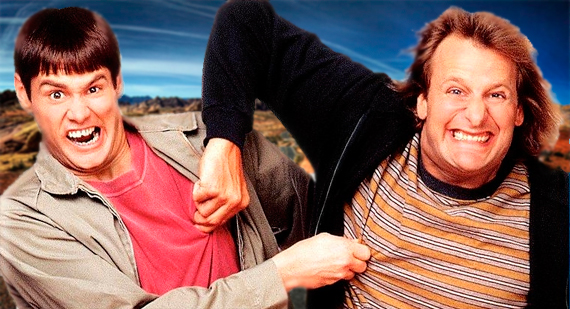
Graphic: Cinedork
Ethics Note To CNN’s Don Lemon: “Beyond A Reasonable Doubt” Is A Stringent Standard And The Jury Knows Best…And I’m Withdrawing My Endorsement For President
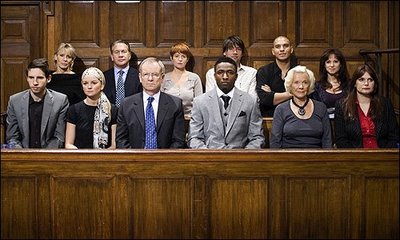
Once again, a criminal trial with racial overtones has caused an outbreak of criticism over a jury verdict and the jury system, by those who have a professional obligation to know better.
This time, it’s the so-called “loud music case,” that just ended with the accused, Michael Dunn, convicted of four charges (three of attempted second-degree murder) with the fifth charge, first-degree murder, resulting in a jury stalemate. Dunn claimed that he acted in self-defense when he repeatedly fired a gun at an SUV containing four African-American teens in 2012, over an altercation regarding their playing music too loudly. One of those teens, unarmed 17-year-old Jordan Davis, was killed by his gunfire.
CNN news anchor Don Lemon, in a series of rants on his show and also on Twitter, announced to his audience that Dunn should be convicted of first degree murder, and that Lemon would be outraged if he was not. Continue reading
Rubin-Jackson Revisited: Gibbs’ Rules #6 and The Harmful Apology
Samuel Jackson’s reckless and unjustified attack on KTLA entertainment reporter Sam Rubin (which, incredibly, continues to be misrepresented by most of the news media, internet and social media) is an excellent example of how relatively trivial incidents can teach important ethics lessons. One of those lessons I did not discuss in the previous post about this episode involves the phenomenon of the gratuitous or needless apology.
To briefly recap: Rubin’s celebrity guest, Samuel L. Jackson, falsely and obnoxiously accused Rubin of confusing him with another black actor, Laurence Fishburne, thus asserting that Rubin 1) thought all blacks looked alike 2) was impliedly a bigot or racist as a result, 3) was unprepared for the interview, and 4) was unprofessional and should lose his job. Rubin apologized twice, first during Jackson’s unprovoked rant (for Rubin had not confused him with Fishburne, and it was Jackson who was confused and unprepared for the interview), and later, to everyone else, after headlines that his “racist mistake” had justly provoked Jackson were being repeated everywhere. Rubin said:
“We start right now with the beauty and the occasional pain of live television. First and foremost, I do know who Samuel L. Jackson is. I’ve interviewed him several times over the years, but never quite like the conversation we just had. I indicated to Samuel that I’d seen him during the Super Bowl, and he thought that I had confused him with the commercial Laurence Fishburne had done for a car company. Of course a “Captain America” ad had also run during the Super Bowl, but I immediately felt so dumb, I didn’t bring that up — and he gave me the shellacking that was well deserved. I pride myself on the fact — that unlike a lot of people who do this kind of work — more often than not, I really do know what I’m talking about. But I didn’t 30 minutes ago, and I’m really embarrassed about it, and I very much apologize to Samuel L. Jackson and anyone else who was offended for what was a very amateur mistake.”
This kind of apology, a coerced, false apology for conduct that warrants no apology, regret or forgiveness at all, does not appear on the Ethics Alarms Apology Scale, because while it looks and sounds like an apology, it is something else entirely. The Apology Scale ranks the intent, sincerity, honesty and effectiveness of apologies for actual wrongdoing or harm. The coerced and false apology is wrongdoing that causes harm, and is the product of wrongdoing itself. Continue reading
Samuel L. Jackson Was Wrong and Behaved Like A Jerk: Why Is Sam Rubin The One Who Is Apologizing?
Sam Rubin, entertainment reporter for KTLA in Los Angeles, is being ridiculed far and wide for “mistaking Samuel L. Jackson for Laurence Fishburne – while interviewing Jackson on live TV!”
Bulletin: That’s not what occurred.
Jackson was wrong, Rubin was correct, and Jackson’s long riff, funny as it was, about how white guys can’t tell black actors apart was both a cheap shot and viciously unfair. Rubin made no such mistake. Jackson owes him an apology. Watch this trailer:
Did you see that black actor in two places in the video? That was Samuel L. Jackson, not Laurence Fishburne. That video di run during the Super Bowl, and was obviously what Rubin was referring to when he began his question with “You’re working for Marvel…” Marvel Comics, the creators of Captain America, in which Laurence Fishburne has no role. Continue reading
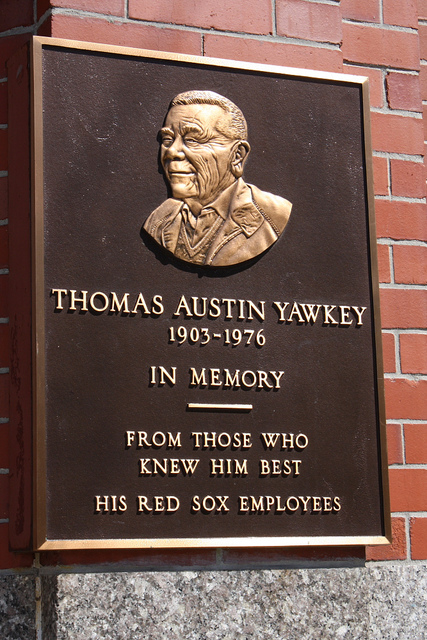
Tom Yawkey, J. Edgar Hoover, Political Correctness and Gratitude
It’s not often that I am called upon to rebut a web post that relies on one of my articles for its unethical conclusions, but that is the position that Ron Chimelis has placed me in with his recent essay, Why the Boston Red Sox should rename Yawkey Way.
To catch you up quickly: Tom Yawkey was a lumber tycoon and baseball enthusiast who owned the Boston Red Sox from 1933 to 1976, making him the longest-tenured team owner in the sport’s history. Yawkey was almost certainly a racist; if he was not a racist, his team’s policies certainly were for many years. The Red Sox were the last major league team to integrate, and blacks did not have a significant place on the team’s roster until the late 1960s, two decades after Jackie Robinson broke the color line. From the beginning, Yawkey ran the Red Sox as a public utility, paying little attention to the bottom line as he tried to build a winner out of the franchise that had been a perennial loser since selling Babe Ruth to the Yankees in 1919. After his death, Yawkey’s wife Jean continued the family tradition, running the Red Sox, except for a few years, until her own death in 1992.
When Tom Yawkey died, the City of Boston re-named Jersey Street, which runs past the entry to Fenway Park where the Red Sox play, Yawkey Way in his honor.
In the unerring clarity of hindsight bias, Chimelis argues that Tom Yawkey is undeserving of any recognition by the city that he devoted much of his life to representing, enhancing, serving, inspiring and entertaining because racism is the ultimate crime, and anyone possessing that vile state of mind should be consigned to shame forever. It is a common point of view, and an unfair one. Continue reading
What Do You Do With The Racist Frat House?
Tau Kappa Epsilon fraternity at the University of Arizona decided that hosting an African-American stereotype party on Martin Luther King Day was a cool idea, and soon thereafter posted photos of the bash on various social media, showing drunk students posing like rappers,wearing baggy pants around their knees and drinking liquor out of watermelon cups. The college community was appropriately horrified, and many are calling for the fraternity to be expelled for the incident and the students who attended the party punished. The Detroit Free Press story about the incident is headlined, “Racism or Free Speech”? This is the equivalent of a headline saying “Stupidity or Freedom of the Press?” It’s both. That’s the conundrum. Continue reading