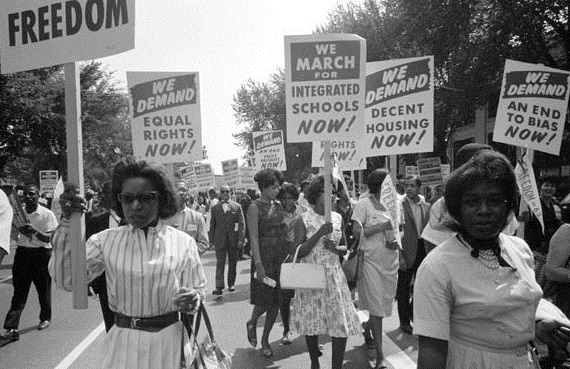
Late last night produced not one but two clear-cut Comments of the Day. This is the first; another will be along any minute now.
Responding to the post about Beyonce’s use of the Super Bowl halftime show to glamorize black liberation politics, Isaac argued that while the violent and loud radicals and revolutionaries get all the headlines, it is the quiet, law abiding, dedicated “squares”—haven’t heard that word for a long time!—that get the job done. This is essentially the opposite of Clarence Darrow’s conviction that it is the law-breaking revolutionaries who cut through the Gordian Knot of the unacceptable status quo. The man he extolled in a speech making that case was murderer and terrorist John Brown—who would have loved the Black Panthers. [I was just now trying to give you a link to Darrow’s amazing speech about Brown, and can’t find one. Shame on you, Internet! It’s in my book, though…you can get a used one for less than 3 bucks…]
Here is Isaac’s Comment of the Day on the post, Ethics Observations On Beyonce’s Super Bowl 50 Halftime Performance:
The bogus assumption often made is that the hippy/counterculture movement somehow brought about civil rights, since those two things happened at roughly the same time. This is wrong and those people should feel bad. It was decades of hard work by a whole lot of “squares” and a lot of stoically religious people, and the type of nonviolent and extremely effective form of resistance and racial healing preached by Dr. King that got the job done, at great personal cost. The stoner crowd and the violent, revolutionary factions like the Black Panthers were almost entirely counterproductive, but a lot sexier. So they are the ones romanticized today. Beyonce isn’t going to do a nostalgic dance number with Black women dressed as Baptists in flowery hats.

 Ethics Alarms