Unethical Website Of The Month: American College of Forensic Examiners Institute

This post is juuust a little bit late. The website in question is still up, but has been involved in “website maintenance” for years, though promising to be back in “a few days.” It won’t be: GOOD. However, it is instructive to consider the saga of this epically unethical website in light of the recent revelation that the most famous forensic expert of them all, Dr. Henry Lee, used fake forensic evidence to help send two teenagers to prison for 30 years for a crime they didn’t commit. It is also useful perspective for the current fealty the political Left and the mainstream media wants Americans to pledge to “experts” who will explain why progressive policy cant just “follows the science.”

When it isn’t performing its tax-payer funded role as a progressive propaganda mouthpiece, PBS is still capable of doing valuable investigative journalism. In 2012, a notable example was the Frontline series called “The Real C.S.I.,” blowing the whistle on the forensic science racket then being extolled weekly on network TV as all-but-infallible. There were a lot of head-exploders in the series, among them that fingerprints might not be as unique as we have assumed, but one of the main discoveries in the series was that criminal trials all over the country were being influenced by “graduates” of the American College of Forensic Examiners Institute (ACFEI), an on-line diploma mill founded and operated by a shady entrepreneur named Robert O’Block. ACFEI would certify someone as a forensics expert essentially for cash, though there was an “exam” that had a more than 99% pass rate. PBS interviewed a reporter who took the exam and got her certification despite knowing little more about forensic science than the average “C.S.I Miami” fan. O’Block, meanwhile, had turned fake credentialing into an empire, with 14 separate certification scams. These in turn churned out an estimated 70,000 fake forensic experts who were routinely admitted as legitimate testifying expert witnesses by judges who accepted O’Block’s meaningless certificates as sufficient proof of expertise.

O’Block also sent one certification to a prison inmate and bestowed another on his cat. ACFEI was never recognized by the US Department of Education’s Distance Education/learning Department, or the Federal Trade Commission/FTC, but most of the time neither judges nor defense attorneys took the time to check.

In 2017, O’Block, then 66, fatally shot himself after killing his 27-year-old girlfriend. On the disciples of this pillar of rectitude and ethics did a substantial segment of the American criminal justice system and its juries place their trust as they sent accused American to prison.

Investigative reporter Radley Balko wrote in part upon the occasion of O’Block’s demise,

Continue reading

At Last! A Persuasive Explanation For The Tyre Nichols Police Attack That Doesn’t Involve “White Supremacy”

Radley Balko, the former “Reason” investigative reporter who, as long as he isn’t discussing Donald Trump-related issues, is still a reliable, perceptive and ethical analyst, has a guest essay in the New York Times convincingly arguing that the tragedy was a predicable result of the ““elite” police team fad around the country. “Elite police teams” are, he explains, assembled for the broad purpose of fighting crime waves, and they intentionally operate with far more freedom and less oversight than police officers normally do.

The five officers who terrorized and eventually killed young Tyre Nichols were members of the 10-officer Memphis version of this phenomenon, and were collectively called “Scorpion.” Balko points out that the name is a tell: though the Memphis police force website emphasizes the importance of winning the community’s trust, the theory behind elite police teams is that they should inspire fear.

When I first learned that the Memphis police had shut down Scorpion in response to the Nichols tragedy, my initial reaction was that this was the Barn Door Fallacy, a rush to eliminate what was being blamed for a disastrous event without any evidence that doing so will have a beneficial effect, in order to be perceived as doing something. Balko makes a strong argument that these teams are ticking bombs:

Continue reading

Autumn Afternoon Ethics Leaves, 10/25/2022: Hope, Harvard, Fakes, And Weenies.

So far, at least, Biden’s spectacularly incompetent and unethical Cabinet hasn’t seen anyone indicted, though there are good arguments that at least two of them should be impeached. This date in history, October 25, marks the day in 1929 when Albert B. Fall, Secretary of the Interior in President Warren G. Harding’s cabinet, was found guilty of accepting a bribe while in office. Fall was the first Presidential cabinet member to be so humiliated. There would be others.

Fall accepted a $100,000 interest-free “loan” from Edward Doheny of the Pan-American Petroleum and Transport Company in exchange for Interior granting him a valuable oil lease in the Elk Hills naval oil reserve, which together with the Teapot Dome naval oil reserve in Wyoming, had been transferred to the Department of the Interior as part of Fall’s scheme to profit by receiving bribes. The Senate Public Lands Committee launched an investigation that revealed not only the $100,000 bribe that Fall received from Doheny, but also a $300,000 bribe that Harry Sinclair, president of Mammoth Oil, had given to Fall for use of the Teapot Dome reserve in Wyoming.

Yet Fall was only sentenced to a year in prison. It’s comforting to know that laws were only for the “little people” 100 years ago too, don’t you think?

A Cabinet member who betrays the public trust like that belongs in prison for decades, if not life.

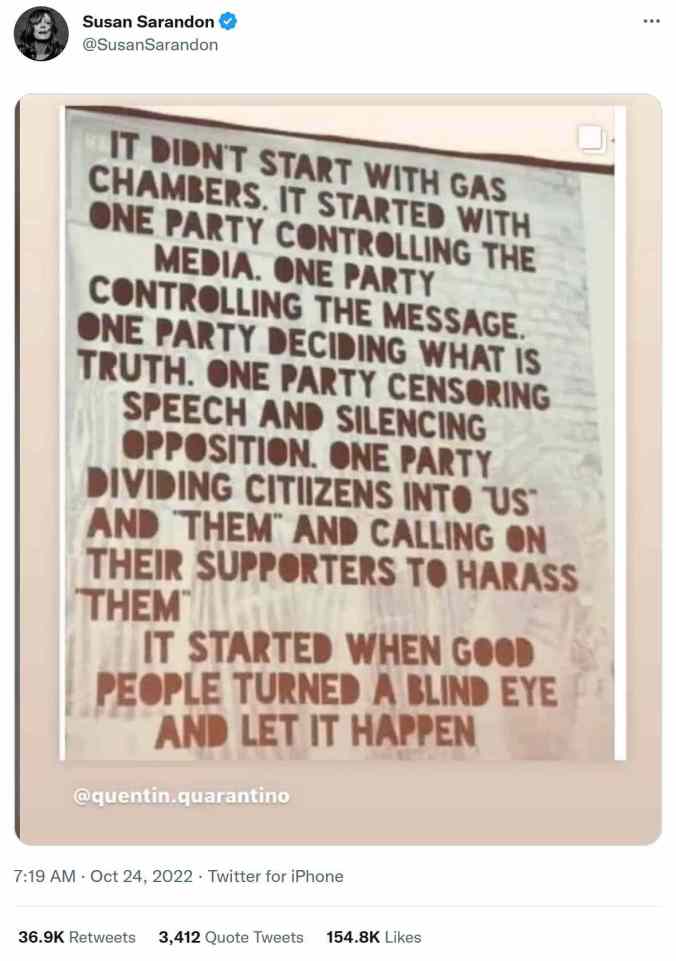
1. There is hope! At least one committed progressive activist of note has the integrity to be revolted at what her party of choice is doing. Susan Sarandon, a charter member of the Hollywood Left, posted this on Twitter:

Good for her.

Continue reading

The Great Texas Warrant Roundup

debtors prisons

If the news media did their job, somebody would have asked Ted Cruz about this by now.Something like, “Senator, what is your position on the growing use of debtors prisons in your state and other states around the U.S.?”

On March 5th, Texas commenced what is known as the Great Texas Warrant Roundup, an annual statewide collaboration of courts and law enforcement agencies to squeeze payment of overdue fines and fees from Texans. The Texans targeted are overwhelmingly poor citizens who have outstanding warrants for unpaid traffic tickets, many of which were dubious, the product of aggressive policing to meet budget quotas. The carrot is an amnesty period that precedes the “roundup;” the stick is the threat of arrest and jail for those who can’t pay.

In Texas, a ticket for failing to signal a lane change—a favorite way to start the process of bleeding vulnerable citizens to cover city and county budget shortfalls— will cost about $66. That’s just the beginning, though.  Texas adds $103 in court costs, a public defender fee,  a fee to put you on a payment plan if you can’t pay,  and the always versatile “administrative fee.” Writes the ACLU: “For people who are too poor to pay their tickets, that $66 fine can grow to over $500.”

Once the victim can’t pay the collective fines,Texas will suspend renewal of the driver’s license, adding the License Renewal Suspension Fee, another $30.  Now it’s illegal to drive to the work, and without work, it will be impossible to support a family and pay bills. Faced with that dilemma, many citizens drive anyway, and get eventually get pulled over, leading to more tickets, fines, fees…and more debt. Continue reading

KABOOM!* An Unethical Loophole In The Justice System—And The Supreme Court Just Refused To Remove It

Screenshot_loophole

Radley Balko, the libertarian investigative reporter, reports in his Washington Post column on a sentencing anomaly I was blissfully ignorant of before, and was a happier man for it. He writes…

Think the government must convict you of a crime before it can punish you for it? Think again.Most Americans probably believe that the government must first convict you of a crime before it can impose a sentence on you for that crime. This is incorrect: When federal prosecutors throw a bunch of charges at someone but the jury convicts on only some of those charges, a federal judge can still sentence the defendant on the charges for which he was acquitted. In fact, the judge can even consider crimes for which the defendant has never been charged.

Balko was writing about Jones v. United States,  in which the jury found three Washington, D.C.not guilty of a conspiracy to run an “open air” market for large quantities of illegal drugs on the streets of the nation’s capital, convicting them only of selling small quantities of the drugs, a relatively minor offense.  The judge, however—think about this, now—decreed that his sentence could also take into account the conduct that had led to the more serious conspiracy charge —that is, exactly the charges that the jury had acquitted them of—gave the three men sentences ranging from 180 to 225 months, while the crimes they were found guilty of committing would justify something in the range of 33 to 71 months. Continue reading

The Problem In Ferguson Goes Deeper Than Racism…

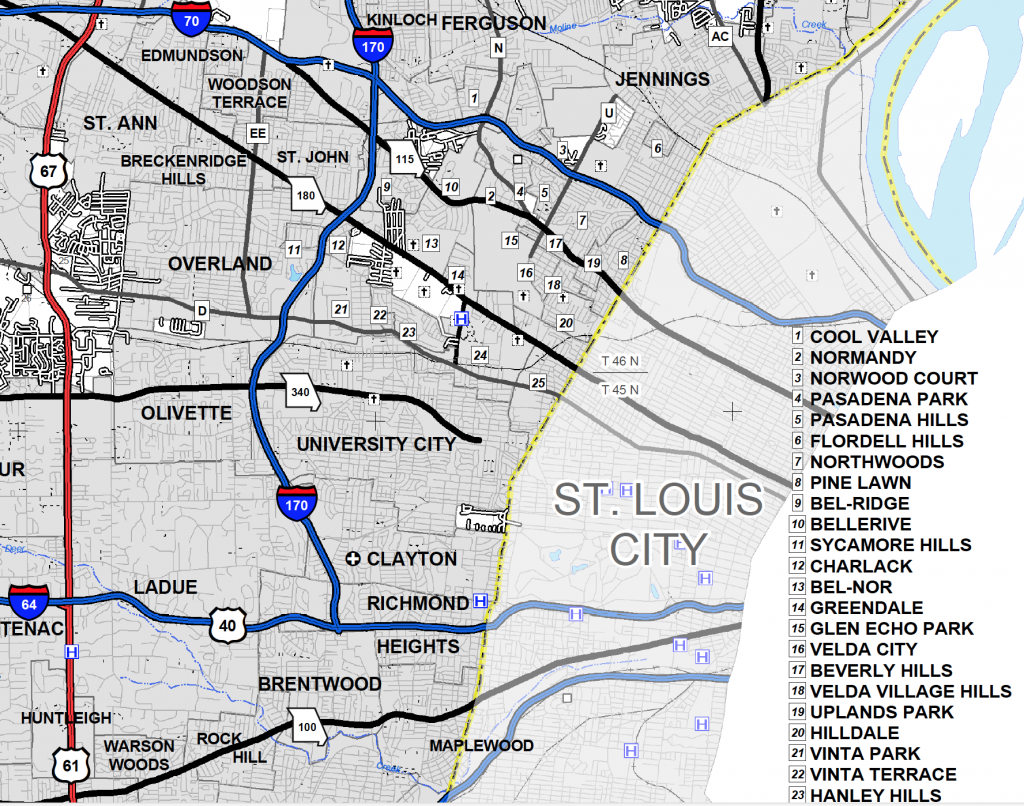
A horror story lies within this map.

A horror story lies within this map.

….and focusing only on race just makes understanding and dealing with the real problems impossible. Nonetheless, activists, the news media and the government intentionally ignore the complexities involved, which collectively define a human tragedy and a failing of U.S. governments at all levels.

Washington Post writer Radley Balko has delivered a shocking, disturbing, depressing and eye-opening investigative report on how small municipalities in St. Louis County operate, and how demographic, political and economic trends inevitably cause the tensions and distrust we saw burst into conflagration in the wake of the Mike Brown shooting. If Balko does not win a Pulitzer for this marvel of reporting and analysis, then the awards should eliminated.

You must read the whole piece here. It’s unethical for a responsible citizen not to; I really believe that.  I was originally going to post some excerpts,but I’m not going to, because I know many will just read them and skip the whole, long report. This is a significant and brave work, and attention must be paid. Continue reading

So Wrong It Defies Belief: The Green Bay Police Heist

Maybe the public and the media are finally waking up to the astoundingly un-American abuse of power that are the  civil forfeiture laws,  which allow property and cash to be seized as helping to facilitate a crime, and later are divvied up between the police and the state. There are some promising signs. Libertarians like Radley Balko have been trying to ring the ethics alarms on this horrendous example of government misconduct for years, and the Institute for Justice continues its lonely battle to defeat the most egregious offenses, but George Will just used the trumpet of his weekly column to expose the Caswell family motel scandal, which Ethics Alarms discussed in February here. Now comes a tale of civil forfeiture from Wisconsin that is so brazen that it defies belief, and also compels the following question:

How can this happen  in America? Also this one: If the government will use its power to steal money and property from law-abiding citizens, and no effort is made on the part of national government leaders to do anything to stop it, how can at least 50% of the American public continue to advocate giving more power and money to a government that obviously cannot be trusted with either?

The first question is frightening in its implications.

The second is a mystery, on par with “What happened to the Mary Celeste?” Continue reading

The Civil Forfeiture Outrage: American Government At Its Worst, So Naturally We Ignore It

Do progressives and conservatives have the courage to confront the illusion-shattering outrage of civil asset forfeiture in America? Not so far they haven’t. That shouldn’t be too surprising.

There are some things our governments do that are so frightening, wrong and un-American that we tend to look right by them—ignore them, pretend they aren’t happening, focus on other things—because their implications are too confounding to deal with. For fans of big government, who look to central authority to micro-manage our economy, distribute our resources, protect us from every threat and isolate us from the consequences (and often the benefits) of human nature, the fact that government power corrupts as surely as any power is an inconvenient (and undeniable) truth that threatens the foundation of their ideology. How irrational is it to place more responsibility on the government if we can’t trust the government, because we can’t trust the inevitably flawed and conflicted individuals who run it?

The willful blindness is no less insidious with conservatives, whose core belief is the inherent goodness of the American system and way of life, as defined by our founding documents. Accepting that the largest and oldest democracy on earth sometimes targets and plots against law-abiding citizens means accepting the possibility that the system itself doesn’t work, and that its supposedly sacred ideals—life, liberty, and the pursuit of happiness—are a cynical lie. Aiding and abetting the blindness is the traditional media, which is substantially populated by self-important, inadequately-educated, ethically-shaky pseudo-professionals who believe their duty to objectively tell the public what it needs to know should be tempered by what they believe will persuade members of the public to adopt the “right” views, and, of course, by what will pull their attention away from the competition. Better to have features about Michelle Obama’s healthy eating crusade than to tell Americans about government wrong-doing, especially when the journalists support the party in power.

As a result of this toxic mix of bias, self-interest, self-delusion and incompetence, many of the most illuminating examples of how far America can go wrong can take a long, long time to enter into public consciousness. A recent example is insider trading by members of Congress, which had been well-documented for a decade before a “60 Minutes” report combined with the Occupy protest visibility and the widespread distrust of Wall Street suddenly made it a significant public concern. But other equally important issues, like the abuse of U.S. convicts, including the tolerance of prison rape, haven’t broken through the willful blindness yet.

Neither has civil asset forfeiture, despite the efforts of libertarian activists, publications like Reason, websites like Popehat, and organizations like ACLU and  The Institute for Justice, a libertarian, human rights public interest law firm that I have been negligent in not plugging earlier. (I apologize.) Right now, the Institute is going to court in a Massachusetts civil forfeiture case, United States v. 434 Main Street, Tewksbury, Mass, that serves as an excellent introduction to the sinister nature of this institutionalized abuse of power. Here’s the story, from the Institute’s website: Continue reading

Quiz: Which Law Enforcement Fiasco Was More Unethical?

It’s Quiz Time!

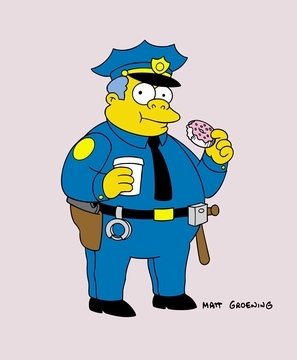
Chief Wiggum would be an upgrade.

Today’s topic: Why the public doesn’t trust the law enforcement system. Here are two horrible and true, tales of AWOL ethics involving law enforcement in New York and Tennessee. Which is more unforgivable, A or B?

A. Brooklyn, NY: The Perpetual Warrant

What is the fair limit of “the police made  an honest mistake”? Let’s say the police have a warrant to search your house, and come to your door because they got the address wrong—and it’s a mistake. At least they didn’t break down the door in the middle of the night. OK, mistakes happen. Then they come again, because they got your address in error again. Annoying, but they seem embarrassed: they aren’t trying to harass you.

And then they arrive 48 more times. Continue reading

Outrageous Prosecution: The Eric Rinehart Story

Asst. U.S. Attorney DeBrotas predecessors

Eric Rinehart, a 34-year-old police officer in  Middletown, Indiana, began consensual sexual relationships with two young women, ages 16 and 17. Rinehart was going through a divorce at the time, and in Indiana, he was doing nothing illegal, for 16 is the age of consent in the Hoosier state? Unethical? I tend to think so, but that isn’t part of the story.

One of the girls told Rinehart that she had posed for erotic photos for an earlier, presumably younger boyfriend, and suggested that she do the same for him. So Rinehart gave her his camera, with which she took the lascivious photos. This inspired Rinehart to take some more sexy photos and at least one video of both girls, which he downloaded to his computer.

For this, Rinehart was convicted on two federal charges of producing child pornography. Continue reading