Morning Ethics Warm-Up, April 12, 2018: Mistakes, Senators, Survivors, The Pope And Cosby

Good morning!

(I’m in a good mood because this happened last night…)

1. Incompetent elected officials of the month…From Reason:

On Tuesday, the Senate Judiciary and Commerce, Science, and Transportation committees grilled Facebook CEO Mark Zuckerberg about the company’s insufficient efforts to protect users’ personal data…

Sen. Roy Blunt, (R–Mo.) … didn’t seem to understand that Facebook lacks a means of accessing information from other apps unless users specifically opt in…. Sen. Roger Wicker (R–Miss.) needed a lot of clarification on how Facebook Messenger interacts with cellular service. Zuckerberg had to carefully explain to Sen. Brian Schatz (D–Hawaii) that WhatsApp is encrypted, and Facebook can’t read, let alone monetize, the information people exchange using that service. Zuckerberg had to explain to multiple senators, including Sen. Dean Heller (R–Nev.), that Facebook doesn’t technically sell its data: The ad companies don’t get to see the raw information. Sen. Patrick Leahy (D–Vt.) brought along a poster on which his office had printed out images of various Facebook pages. Leahy asked whether these were Russian propaganda groups. “Senator, are you asking about those specifically?” Zuckerberg asked. He of course had no way of knowing what was going on with those specific pages, just from looking at pictures of them….Sen. Amy Klobuchar (D–Minn.) offered this metaphor: “the way I explain it to my constituents is that if someone breaks into my apartment with a crowbar and takes my stuff, it’s just like if the manager gave them the keys.” But …Facebook didn’t willfully assist in a crime. …Sen. Debbie Fischer (R–Neb.) didn’t understand, at a fundamental level, that if you’re using Facebook, you have agreed to let Facebook know a lot of information about you. Sen. Lindsey Graham (R–S.C.) asked whether Facebook had any major competitors. …


This is a theme of regulation, rules and laws in the cyber age: the officials responsible for regulating the uses and abuses of technology don’t use the technology involved, don’t understand it, aren’t willing to take the time to learn, and are apparently not even aware of how irresponsible and incompetent this is, how stupid and lazy it makes them look, and how it undermines the public trust.

2. But don’t worry…In his testimony, Zuckerberg said that Facebook was working on a way to ban “hate speech.” I can’t wait to see what the left-wing crypto-fascists who run the Big Tech giants consider “hate speech.”  Actually, we have some pretty good clues. Facebook silenced pro-Trump video-bloggers “Diamond and Silk,” deeming their political content “unsafe to the community.” Continue reading

Comment Of The Day, Rebuttal #2: “Morning Ethics Warm-Up, 4/4/2018:…A Presidential High Crime…”

This is the second rebuttal to my criticism of the President’s effort to use his influence and power to harm Amazon. I’m very impressed with it, but I have to give a rationalizations alert, for there are several evoked here, including, a few versions of #1, Everybody does it,” #2 A. Sicilian Ethics, or “They had it coming,” #3. Consequentialism, or  “It Worked Out for the Best” #39. The Pioneer’s Lament, or “Why should [He] be the first?,” #45. The Unethical Precedent, or “It’s Not The First Time,” and probably others.

Here is Greg’s Comment of the Day on the #2 in “Morning Ethics Warm-Up, 4/4/2018: Baseball Lies, A Presidential High Crime, And A Judge Makes A Panty Raid”:

There is nothing wrong, much less anything impeachable, about the President making valid, policy-based attacks that target specific companies, even though the attacks may “suppress the companies’ stock values.” Attacks on Standard Oil were justified, even though stockholders in Standard Oil may have suffered. Trump’s comments about Amazon are fair. In any case, there is no reason to think that his remarks were intended to drive down Amazon’s stock price and very little reason to think that they will cause any particular harm to Amazon or its stock.

Trump’s recent tweets have made three points about Amazon, all of which he has made many times before: (1) Amazon benefits from a sales tax loophole that unfairly costs states money and disadvantages brick-and-mortar retailers, (2) Jeff Bezos uses the Washington Post to lobby for the continuation of this advantage and (3) the US Postal Service undercharges Amazon and should negotiate higher rates.

Trump has been making the first two points since at least 2015. He made them repeatedly during his campaign in tweets, in interviews and in speeches. Here’s the earliest reference that I found: https://www.washingtonpost.com/news/the-fix/wp/2015/12/07/donald-trump-called-out-jeff-bezos-on-twitter-then-bezos-called-his-bluff/?utm_term=.8573b4279b6d.

Trump has continued to make both points since he became president. Here’s just one example: https://www.bloomberg.com/news/articles/2017-08-17/trump-s-bruising-tweet-highlights-amazon-s-lingering-tax-fight. His Treasury Department has been studying the sales tax issue for over a year, http://thehill.com/policy/finance/343972-mnuchin-trump-administration-is-examining-online-sales-tax-issue, and his Justice Department last month filed an amicus brief in South Dakota v. Wayfair, a case currently before the Supreme Court, arguing that the Court should close the sales tax loophole that benefits Amazon and other online retailers.

Trump has been making the third point (about USPS rates) since at least December last year. http://fortune.com/2017/12/29/trump-amazon-post-office.

None of those previous statements and actions by Trump and his administration caused Amazon’s stock price to fall. Trump could not have expected that thisweek’s tweets, repeating exactly the same points that he has made many times before, would have any effect on Amazon’s stock price.

Moreover, Trump’s tweets haven’t made any threats against Amazon and he doesn’t seem to have any intention of taking any unilateral action to hurt Amazon. To the extent that his tweets may have affected Amazon’s stock price, they most likely did that by drawing investors’ attention belatedly to genuine issues regarding Amazon’s business model, in particular the possibilities that the Supreme Court might actually close Amazon’s sales tax loophole and that the USPS might actually negotiate a better deal with Amazon. If his tweets have pointed out concerns that investors previously hadn’t given proper weight, then he has done a valuable service for the markets. If these concerns turn out to be unjustified, then Amazon’s stock price will soon recover and Trump’s tweets will have done no harm. Continue reading

Review: Ethics Alarms Concepts And Special Terms

Recently updating the Ethics Alarms list of concepts and frequently used terms reminded me that I had been meaning to post them for review and assistance to those relatively new here. Of course, the link has always been right there at the top of the home page, but I have this sneaking suspicion that it isn’t visited very often.  Here, then, is the up-to-date list.

CONCEPTS

Non-Ethical Considerations: Defined above, non-ethical considerations are important because they are often the powerful impediments to ethical conduct, and the cause of many conflicts of interest. Non-ethical considerations are many and diverse, and include:

  • The need and desire for shelter, health, wealth, fame, security, self-esteem, reputation, power, professional advancement, comfort, love, sex, praise, credit, appreciation, affection, or satisfaction
  • The desire for the health, comfort, safety, welfare and happiness for one’s family, loved ones, friends, colleagues, an co-workers
  • The pursuit of vengeance or retribution
  • Hunger, lust, pain, ambition, prejudice, bias, hatred, laziness, fatigue, disgust, anger, fear
  • …and many more

Ethical Dilemma: This is an ethical problem in which the ethical choice involves ignoring a powerful non-ethical consideration. Do the right thing, but lose your job, a friend, a lover, or an opportunity for advancement. A non-ethical consideration can be powerful and important enough to justify choosing it over the strict ethical action.

Ethical Conflict: When two ethical principles demand opposite results in the same situation, this is an ethical conflict. Solving ethical conflicts may require establishing a hierarchy or priority of ethical principles, or examining the situation through another ethical system.

Ethical Gray Area: Gray areas are situations and problems that don’t fit neatly into any existing mode of ethical analysis. In some cases, there may even be a dispute regarding whether ethics is involved.

Reciprocity: The ethical system embodied by The Golden Rule, and given slightly different form in other religions and philosophies. It is a straight-forward way of judging conduct affecting others by putting oneself in the position of those affected. Reciprocity should always be available in any ethical analysis, but it is frequently too simple to be helpful in complex ethical situations with multiple competing interests.

Absolutism: Absolutist systems do not permit any exception to certain ethical principles. The champion of all absolutists, philosopher Immanuel Kant, declared that the ethical act was one that the actor was willing to have stand as a universal principle.

One principle of absolutism is that human beings can never be harmed for any objective, no matter how otherwise worthwhile. Absolutism has the advantage of making tough ethical calls seem easy, and the disadvantage of making debate impossible. One sees absolutism reflected today in the controversies over war, torture, abortion, cloning, and capital punishment.

Utilitarianism: Utilitarianism accepts the existence of ethical conflicts and the legitimacy of some ethical dilemmas, and proposes ethical analysis based on the question, “Which act will result in the greatest good for the greatest number of people?’ It entails the balancing of greater and lesser goods, and is useful for unraveling complex ethical problems. Its drawback, or trap, is that utilitarianism can slide into “The ends justify the means” without some application of absolutist and reciprocity principles.

Consequentialism: In formal ethics, utilitarian schools of philosophy are sometimes lumped together as “consequentialism,” in that the ethical decision-making is based on seeking the best result. Here we just uses the above term, utilitarianism.  Consequentialsm, in contrast, is the flawed belief that the rightness or wrongness, or even wisdom, of chosen conduct is measures by its actual results rather than its intended results. If “if all worked out for the best,” in other words, the conduct that created the desirable result most have been ethical, whatever its intent or however the conduct was determined to be necessary or desirable. This is a fallacy.

Cognitive Dissonance:
Cognitive dissonance is a psychological phenomenon first identified by Leon Festinger. It occurs when there is a discrepancy between what a person believes, knows and values, and persuasive information that calls these into question. The discrepancy causes psychological discomfort, and the mind adjusts to reduce the discrepancy. In ethics, cognitive dissonance is important in its ability to alter values, such as when an admired celebrity embraces behavior that his or her admirers deplore. Their dissonance will often result in changing their attitudes toward the behavior. Dissonance also leads to rationalizations of unethical conduct, as when the appeal and potential benefits of a large amount of money makes unethical actions to acquire it seem less objectionable than if they were applied to smaller amounts.

Moral Luck: The common situation where an unethical act is only discovered, noticed, or deemed worthy of condemnation due to unpredictable occurrences that come as a result of the act or that affect its consequences. Moral luck is the difference, for example, between two mildly intoxicated drivers, one of whom arrives home without incident, while the other has an unwary child dash in front of his automobile, leading to a fatal accident that he couldn’t have avoided if completely sober. Yet the unlucky driver will be a pariah in the community, while the more fortunate driver goes on with his life.

SPECIAL TERMS USED ON ETHICS ALARMS

Continue reading

Morning Ethics Warm-Up, 3/23/18: The All-Disposable Edition…Legal Ethics, Budgets, And Grocery Bags

Good Morning…

1. More Professionals Behaving Badly: The news media has widely reported that Ted Olson of the law firm Gibson Dunn refused Donald Trump’s request for his legal services. Olson, who is best know for arguing  the Bush side of Bush v. Gore that ended the 2000 Florida recount,  had declined to comment on this to the media but a partner in the firm Gibson Dunn’s “global co-chair” issued a tweet that Olson was not going to be representing the President. This is a straight-up violation of an attorney’s ethical duty  of confidentiality to a prospective client.

In other Trump lawyer news, the media is also widely reporting that John Dowd resigned from the President’s legal team over the President’s refusal to accept Dowd’s advice that he not agree to give testimony to the Special Prosecutor. Telling the news media that—telling anyone that—would also be a breach of confidentiality on Dowd’s part.

2. Per se legislative incompetence. Once again the Senate and the House passed a huge bill with massive implications and consequences without reading it. The legislation funds the federal government for the remainder of the 2018 budget year, through Sept. 30, directing $700 billion toward the military and $591 billion to domestic agencies. The military spending is a $66 billion increase over the 2017 level, and the non-defense spending is $52 billion more than last year. It also further explodes the deficit and the debt that bring the United States one step closer to a ruinous financial reckoning. The Democrats have been happily on this path for the entire 8 years of the Obama administration, but the Republicans rode to power in part because the public recognizes how insane this is. The GOP couldn’t even muster a cut in the arts spending that it has been promising since the Reagan administration, or to finally cut ties with public television, though Big Bird fled the nest years ago. Continue reading

Morning Ethics Warm-Up, 3/20/18: Life, Death, Fairness, Dissonance And Sanity

1 Let’s see more of such Ethics Heroes, please… In Upper St. Clair, Pennsylvania,  John Orsini, has gone to court to stop his ex-wife from allowing their son, 17-year-old Antonio, from playing high school football in his senior year. Antonio has already suffered at least three concussions. Antonio’s mother and John’s ex-wife, Janice, says that her son understands the risks, and that doctors have OK’d his continued play.

But he doesn’t understand the risks—apparently neither do those doctors—and he is considered a minor under the law because teenagers are prone to poor reasoning and impulsive decisions…especially when they have incipient brain damage.

CNN is eager to hear his position on gun control though. But I digress..

Says the CBS news story: “John contends that after these concussions and sub-concussive hits, medical research shows that Antonio would be in grave danger if he continues to play football.” He contends? There is no contention: that is fact.

“I’m trying to save his future. I’m trying to save his life,” he said of his son.

Janice and her attorney issued a statement, saying in part,

“The mother and her 17-year-old son have reasonably relied upon the input and opinions of his treating physicians and medical providers, and have considered the state mandated safety and concussion protocols followed by the school district, in deciding whether it was appropriate for him to continue to participate in football.”

John believes the court will side with him.  “If you have a significant indication that the child is being placed in harm’s way, and it’s brought to court to protect the child, it’s the court obligation to do so,” he says. I wouldn’t be so sure. This is football country, and football fanatics are in denial. They’ll get thousands of children’s brains injured before they are through.

“I’m hopeful that my son will just go on, get a good education and lead a healthy life. That’s all I want,” said John, whose other two sons no longer speak to him over this conflict.

Good luck.

Let’s hope Anthony is given then chance to grow smarter than his mother.

2. Let’s see, which Trump Derangement news media story should I post today? Every day, every single day, I have literally dozens of biased, vicious, stupid, unprofessional and blatantly partisan mainstream media news reports and pundit excesses to flag as unethical. Here, for example, is a New York Times columnists advocating for Rex Tillerson to betray all professional ethics, confidentiality, trust and responsibility by revealing everything he heard or saw as Secretary of State that could undermine Trump’s administration. It’s called, “Burn it down, Rex.”

Let me repeat: for journalists to set out to intentionally poison public opinion against the elected President of the United States by manipulation and hostile reporting is unethical and dangerous. This conduct has been the single largest ethics breach in the culture for more than a year, and one of the worst in U.S. history. In strenuously condemning journalism’s abdication of its duty to support democratic institutions and to remain objective and responsible, I am not defending Donald Trump. I am attempting to defend the Presidency itself.

Today I pick…this: Continue reading

The Desperate “Gunsplaining” Dodge

The latest tactic of the anti-gun Left is especially bizarre, but it nicely exposes the desperation and the essential dishonesty of the Parkland shooting extension of the Sandy Hook Ethics Train Wreck, which started its long journey of ethics carnage when gun control advocates decided to jettison fair and civil debate as well as any mooring to reality in exchange for demonizing, emotionalism, and hysteria.

In an op-ed in the Washington Post, gun-opponent Adam Weinstein accused pro-Second Amendment defenders and of bullying and deflection by what he called “gunsplaining.” The term was originally coined by Cosmopolitan four days before the massacre at Marjory Stoneman Douglas High School, though Cosmo’s version was that “gunsplaining” is just a sub-set of “mansplaining,” where men, the theory goes, inherently condescend to women by pointing out when they are wrong about anything. Weinstien’s version was a different, and even more foolish, a rationalization for ignorance:

While debating the merits of various gun control proposals, Second Amendment enthusiasts often diminish, or outright dismiss their views if they use imprecise firearms terminology. Perhaps someone tweets about “assault-style” weapons, only to be told that there’s no such thing. Maybe they’re reprimanded that an AR-15 is neither an assault rifle nor “high-powered.” Or they say something about “machine guns” when they really mean semiautomatic rifles. Or they get sucked into an hours-long Facebook exchange over the difference between the terms clip and magazine.”

The Horror. In fact, what Weinstein is complaining about is that mean old gun-ownership supporters point out when a knee-jerk, emotion-filled gun control advocate obviously doesn’t know what he (or she!!!,Cosmo) doesn’t know what the hell they are talking about. Note the Post’s Eric Wemple, in the tweet above, calls this a “bad faith” tactic. It’s funny: pointing out that an opponent is full of malarkey has always been  a valid debate tactic before, and for good reason. It means that that an advocate’s position is based on ignorance and laziness rather than sound research and facts. Why is this suddenly  bad faith. “bullying” and below-the-belt tactics now?

The reason is that the anti-gun Left has bet all its chips on the power of children claiming moral authority  to finally lead the anti-gun army to victory over the Second Amendment, and those children wield passion and anger but little else. Despite proclaiming themselves as “experts” on gun policy, as David Hogg recently did on Bill Maher’s “Real Time,” their expertise extends only as far as “Guns Bad!” Thus the “gunsplaining” dodge: who ever said you actually need to know what you’re talking about to be a respectable advocate? Continue reading

Thanks To CNN, Ethic Alarms Welcomes Rationalization #42, The Irrelevant Mitigation: “He’ll/She’ll/They’ll get over it.”

He’ll get over it…

When I hear or read an obvious rationalization that somehow had been left off the Ethics Alarms list, now closing in on ninety ( the new addition makes 89), I think, “That must be on the list somewhere!” When I check and it is not, I marvel, “How did I miss that one?” This was especially true with Rationalization #42, which, please note, bumps “The Hillary Inoculation” to 43, and every subsequent rationalization up one. This is not just a rationalization, but one of the near-evil ones, employed by unrepentant miscreants who count on gullibility, generosity, kindness, forgiveness and fading emotions to allow them to avoid accountability, and harm the same people again later

I almost christened the new arrival “Jake’s Rationalization,” for it was CNN’s Jake Tapper, once a real journalist, now in the final throes of  Sienenization, who uttered it. The topic was the recent CNN “town hall” on guns (described here and here), with an audience packed with angry Florida students and their  families, yielding questioners who were rude, hostile, and frequently full of misinformation.

The The Hollywood Reporter described the reactions of CNN head Jeff Zucker and Tapper as they tried to deny that their disgraceful stunt was what it so obviously was:

…[E]ven as the town hall was receiving plaudits from the mainstream media, the Florida event was being used as an example of how CNN has morphed into a partisan player. “CNN has decided to take this path where they are kind of left-wing advocates,” says Matt Schlapp, chairman of the American Conservative Union and organizer of CPAC.

It’s a characterization that CNN president Jeff Zucker finds insulting. “That criticism is silly,” Zucker tells The Hollywood Reporter. “The fact is we were there, we presented both sides. People who want to criticize are looking to just criticize before they even think about it.” He points out that Sen. Marco Rubio could have been joined by Trump or Republican Florida Gov. Rick Scott, but both declined CNN’s invitation. “That’s not CNN’s problem,” he adds.

Yes, it was being used as an example because it was an example. The fact that the mainstream media gave this monstrosity “plaudits” confirms that it isn’t only CNN that has morphed into a partisan player. “Both sides” were represented like “both sides” were represented at the Alamo. The audience was unbalanced (in more ways than one), the questions were ridiculously unbalanced (but that’s what happens at town halls when the audience is unbalanced), anti-gun activists and pandering anti-gun Democrats were allowed to make factually misleading statements on national television without corrections from the passive moderator (Tapper, in slug-mode), and the two designated defenders of the Bill of Rights on the stage, Marco Rubio and NRA pretty face Dana Loesch were inept and defensive (or perhaps defensive and inept.) Continue reading

Comment Of The Day: “How Many Rationalizations Can You Spot In This Op-Ed?”

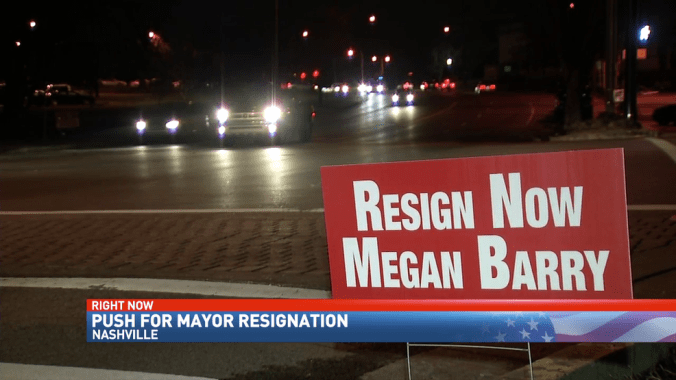
In the post, How Many Rationalizations Can You Spot In This Op-Ed?, I challenged readers to read the depressingly meat-headed New York Times op-ed by a defender of Nashville mayor Megan Barry. and challenged them further to identify all of the rationalizations and fallacies it contained. Only one of you took on the challenge in its full, horrible scope, in part because not everyone pays to get past the Times paywall. Fortunately one who did take it on was the newly-minted Michael West, who dissected the essay as if it were a pithed frog.

Here is his Comment of the Day, freeing me from the obligation to post the answers to my question.

Having reviewed the Rationalizations List, here’s my go:

Paragraph 2:
“Along with this confession, the mayor offered the kind of full-throated apology we almost never get from public officials: “I accept full responsibility for the pain I have caused my family and his,” she said. “I knew my actions could cause damage to my office and the ones I loved, but I did it anyway.””

But she doesn’t accept full responsibility. If she did, and clearly her affair led to extreme financial irregularities which amount to defrauding the public, then accepting responsibility probably requires resignation.

Paragraph 3:
“She ended her statement with a pledge: “God will forgive me, but the people of Nashville don’t have to. In the weeks and months to come, I will work hard to earn your forgiveness and earn back your trust.””

I don’t think “God will forgive me” is a rationalization. It may be an actual deeply held belief, but the State of Tennessee is a bit more hard-nosed. At best this is just poll-tested platitude, but at worst, it is meant to convince some people to forgive her also (which makes it a diversion, not a rationalization). Working to earn their forgiveness and trust is an appeal to 21A Ethics Accounting: Criminal’s Redemption. She thinks future “good works” can atone for past sins. They cannot. What atones for past sins is having that sin and its effects blotted out, which in the case of defrauding the public, the only atoning that works is resignation.

Paragraph 4:
“This promise did not seem like an act of damage control. This is the way Megan Barry really talks. The language of full emotional availability is her native tongue.”

Appeal for sympathy, which is the opener for the next string of rationalizations.

Paragraph 5:
“Perhaps that’s why this city loves her. She hugs schoolchildren. She looks genuinely joyful at city parades and festivals. She grieves that too many Nashville teenagers are slain by guns. When Max Barry, her own son and only child, died suddenly last summer, the people of Nashville wept with her. When she spoke openly about the drug addiction that killed him, we marveled at her courage and admired her resolve to bring addiction out of the shadows of shame.”

This is Ethics Accounting again. She’s a really great person…so it’s implied we should overlook this one thing.

Paragraph 6:
“But in a red state like Tennessee, this liberal mayor also has powerful opponents, and they are not idiots. An editorial in the conservative Tennessee Star wasted no time in calling for her resignation: “Barry and the fawning, liberal Nashville media are trying the Clinton defense.””

This is a diversion away from the miscreant by accusing the accusers of bad faith motives. #48 Haters gonna hate. Her critics are ONLY demanding accountability because they want a political advantage or want to win a tactical maneuver. Continue reading

How Many Rationalizations Can You Spot In This Op-Ed? [UPDATED!]


At the beginning of the month we discussed the scandal in Nashville, Tennessee, where the female mayor, —the news media tried oh so hard to bury her party affiliation deep in reports, but she’s a Democrat— was carrying on an adulterous affair with the head of her security detail.  Some quotes from the Ethics Alarms essay to refresh your memory for the horrors to come:

—She apologized “for the harm I’ve done to the people I love and the people who counted on me” but said she won’t be resigning. In a news conference, she said nothing illegal happened and no policies were violated.

—“I know that God will forgive me, but that Nashville doesn’t have to,” Barry said. “And I hope that I can earn their trust and I can earn your trust back, and that you will forgive me

—-This is classic appearance of impropriety.

—-In the Bill Clinton mold, the mayor is framing this as a matter of marital fealty rather than official misconduct—which it is—so she can argue that it’s just “personal private conduct.”

—-The conduct is unethical whether there are policies or not.

—-This is sexual harassment. The officer was a subordinate, and she was his boss, with the power to fire him or worse. There can be no genuine consent in such situations. In these cases with the typical genders reversed, neither the news media, nor the public, nor, in all likelihood, a hypothetical jury, would see it that way.

—-Barry’s playing the God Card is grounds to remove her all by itself.

—-Come on, #MeToo, show some integrity. Get this workplace predator kicked out of office.

Interestingly, a prominent and respected female, feminist Democrat who comments here with distinction argued in the comments to that post that this wasn’t even a newsworthy story outside of Nashville. Also interestingly, the New York Times disagrees, and even published a spirited—but stupid!—defense of Barry’s conduct, arguing that unlike, say, Al Franken, who was forced to resign for pre-political career conduct and unproven post-political career allegations, the fact that a Democratic mayor—FEMALE! Don’t forget that she is female!–was using state-paid employees under her supervision as a personal, state-funded dating pool does not mean she’s untrustworthy or qualified for high office.

Okey-dokey then! What we have here is an old-fashioned convenient double standard!

And this just in! Nashville’s main newspaper, the Tenneseean, reports that Rob Forrest, the Mayor’s married lover, earned substantially more overtime than the other bodyguards on Barry’s secuirty detail, $173,843.13  between July 2015 and January 2017, which was nearly $53,000 more than the other four bodyguards received combined. But, as several internet wags have noted, let’s be fair: Rob was doing more for the mayor than those other bodyguards..

Now let’s all read the op-ed*, by Margaret Renkl , whom the Times proudly describes as ” a contributing opinion writer.” This time around, I won’t get into such matters as the odd silence of the #MeToo warriors, who have set out to destroy successful men who were accused of being boorish on a single date. I won’t even question the competence of the Times editors, allowing such unethical, illogical, poorly reasoned hypocrisy to make its way into its pages to make Times readers more ethically inept than they already are. No, I just want to focus on Renkle and her claim that Barry shouldn’t have to resign, and the unethical rationalizations for wrongful conduct she gainfully employs along the way.

Here is the complete current list (some new rationalizations will be added soon, but this is plenty). These are just the titles; go here to get the full descriptions. Continue reading

Morning Ethics Warm-Up, 2/20/18: Cheaters And Useful Idiots

Good Morning!

1. A Whistle-blowing dilemma.The Ethicist in the New York Times Magazine is no fun anymore, now that a competent, real ethicist is answering queries rather than the previous motley assortment of Hollywood screenwriters and others of dubious qualifications. Even when I disagree with

  • “Given how little cheating is caught, reporting them would have meant that they paid a penalty that lots of others ought to — but won’t — pay.” Ugh! A Barry Bonds excuse! So because all guilty parties aren’t apprehended, everyone should get away with wrongdoing?
  • “Because many people in your generation don’t take cheating very seriously, your friends would most likely have ended up focusing on the unfairness of being singled out, not on their wrongdoing.” That’s their problem. The attitude the Ethicist identifies is 39. The Pioneer’s Lament, or “Why should I be the first?” He’s correct that this will be the likely attitude of the busted cheaters, but since when did how wrongdoers rationalize their wrongdoing become mitigation?
  • “The intervention you were considering was likely, therefore, to be very costly to you.” Yes, doing the right thing often is.
  • “The burden of dealing with cheating in your school shouldn’t fall on you.” Boy, I really hate this one. It’s #18. Hamm’s Excuse: “It wasn’t my fault.”

This popular rationalization confuses blame with responsibility. Carried to it worst extreme, Hamm’s Excuse would eliminate all charity and much heroism, since it stands for the proposition that human beings are only responsible for alleviating problems that they were personally responsible for. In fact, the opposite is the case: human beings are responsible for each other, and the ethical obligation to help someone, even at personal cost, arises with the opportunity to do so, not with blame for causing the original problem. When those who have caused injustice or calamity either cannot, will not or do not step up to address the wrongs their actions have caused (as is too often the case), the responsibility passes to whichever of us has the opportunity and the means to make things right, or at least better.

This rationalization is named after American gymnast Paul Hamm, who adamantly refused to voluntarily surrender the Olympic gold metal he admittedly had been awarded because of an official scoring error. His justification for this consisted of repeating that it was the erring officials, not him, who were responsible for the fact that the real winner of the competition was relegated to a bronze medal when he really deserved the gold. The ethical rule to counter Hamm’s Excuse is a simple one: if there is a wrong and you are in a position to fix it, fix it.

Appiah doesn’t feel the full force of my fury because the case involves middle-school, and the questioner is a child. This is what makes it a toss-up. If this were college or grad school, I think reporting cheaters is mandatory. Appiah also says that he doesn’t care for honor codes because they are usually not followed.

Maybe I was wrong about him… Continue reading