College Admissions Diversity Deception, Student Ethics Corruption

shabazz_Wisconsin

See that young black man in the photo above, gracing the cover of the University of Wisconsin admissions brochure? The one apparently cheering for the Badgers at a Wisconsin football game? His name is Diallo Shabazz, and as a student at the school in 2000 had never been to a game in his life when someone photoshopped his head into a crowd shot to let potential applicants know how diverse the University of Wisconsin was. This infamous incident, which Jon Stewart had a ball with in the day (is the Daily Show really that old?), is apparently more the norm that we thought at the time.

Tim Pippert is a sociologist at Augsburg College in Minnesota. He and his researchers looked at more than 10,000 images from college brochures to compare the racial composition of students in the pictures to the colleges’ actual demographics. They discovered that diversity, as depicted in the brochures, was over-represented. “When we looked at African-Americans in those schools that were predominantly white, the actual percentage in those campuses was only about 5 percent of the student body,” Pippert told NPR. “They were photographed at 14.5 percent.” Continue reading

Ethics Quote Of The Week: Glenn Greenwald

“Every journalist has an agenda. We’re on MSNBC now where close to 24 hours a day the agenda of President Obama and the Democratic Party are promoted, defended, glorified. The agenda of the Republican Party is undermined. That doesn’t mean that the people who appear on MSNBC aren’t journalists. They are.”

—-Libertarian blogger, pundit and activist Glenn Greenwald, defending himself in an MSNBC interview against allegations that he has become a “spokesman” for fugitive NSA leaker Edward Snowden.
Journalism!

Journalism!

Remember, this is an ethics quote, not necessarily one that expresses an ethical point of view. With that caveat, I find it fascinating in many respects:
  • Greenwald is technically correct: journalists who use  their position to distort the news, express their biases and serve as advocates rather than objective critics, as most of the journalists do on MSNBC (and the way many too many journalists do elsewhere) are still journalists. They are unethical and unprofessional journalists. Continue reading

Nelson Mandela, John Brown, And The Perils Of Hagiography

Mandela

He wasn’t a saint. Is it unethical to say so?

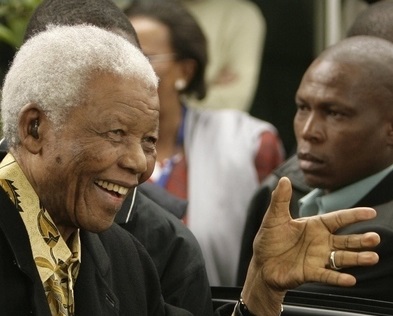
The truth made a surprising appearance where one should least expect it, MSNBC, yesterday. As the rest of the news media was awash in the sanctification of the late South African leader Nelson Mandela, former TIME reporter Richard Stengel, who worked closely with Mandela his autobiography, told shocked MSNBC hosts yesterday that the image of  Mandela being broadcast was, in fact, a false one.

“He was a pragmatic politician,” Stengal told “Morning Joe” that Mandela “wasn’t a visionary necessarily, he wasn’t a philosopher, he wasn’t a saint. But he never deviated from [his goal of overturning apartheid]. But anything that would get him there, he embraced, including violence. He created the violent wing of the ANC. And people don’t realize that and don’t remember that. We’ve kind of made him into a Santa Claus. He wasn’t. He was a revolutionary.”

The same day that Mandela’s death was reserved for testimonials and glowing remembrances, the website Buzzfeed had the impertinence to re-publish some of Mandela’s less Santa-like quotes, including praise for communism, communists, and dictators, and condemnations of the U.S. and Israel: Continue reading

Comment of the Day: “The Golden Rule Distortions”

bread

In a comment on the post about the various versions of the Golden Rule, including popular distortions of it, Isaac revisited the ever-popular “Les Misérables” scenario, in which a desperate man steals a loaf of bread to achieve a greater good. Is such law-breaking still unethical? I have consistently maintained that it is from society’s standpoint, if not from the perspective of the lawbreaker. The issue has arisen in the past in relation to illegal immigration.I think Isaac nails it.

Here is his Comment of the Day on the post, The Golden Rule Distortions: Continue reading

Some content on this page was disabled on November 29, 2017 as a result of a DMCA takedown notice from Tara Margetson. You can learn more about the DMCA here:

https://wordpress.com/support/copyright-and-the-dmca/

The Golden Rule Distortions

golden-rule distortedA recent unpleasant visitor here sought to defend unethical conduct—or perhaps it is more accurate to say that she argued that no one was qualified to assess the conduct as unethical—by citing the hoary theory that only someone who has “walked in the shoes” of the wrongdoer in question may judge the ethical nature of his actions. This is a dodge, of course, and one which I need to add to the list of rationalizations. It is an appeal to purely subjective ethics, and ultimately no ethical standards at all, since if every individual is the only one who can judge his own or her own conduct (since each individual’s experiences are unique), then everyone is free to construct their own ethics rules that seem right from their self-centered perspective. The argument is also a convenient way to shut off dissenting voices: only the poor have standing to criticize the poor, only blacks can find fault with the acts of African-Americans, and since men can’t get pregnant, how dare they have any opinion at all on abortion?

But before I added this irritating trick to the Rationalizations List—I think it will be called “The Foreign Shoes Defense”—I realized that it is also another one of The Golden Rule distortions: flawed ethical arguments that seem logical to some because they are based on a warped version of the principle of reciprocity.

The Golden Rule, usually stated as “Do unto others as you would have them do unto you,” is frequently attributed to Jesus, but in fact it is much, much older, and is a basic ethical tenet, reciprocity, of most religions and many philosophies. Here are some examples; there are many, many more: Continue reading

Lessons From The Defenders Of The Wise-Ass “A”

Back at the beginning of the month, some obscure corners of the web were buzzing over the picture of a purported student exam that ranked an “A..Nice job!” despite the student’s smug punt at the end. Here it is…the section in the square is the section of the student’s answer that provoked widespread indignation at the grade. I first saw it in a post titled: “Some teachers don’t even care any more”:

funny-test-A-grade-teacher-kid-school

To be fair, there are many and diverse possible interpretations of this evidence, and not enough context to choose among them. It could be a hoax, for example. The teacher may indeed have skimmed the answer, and not read the paragraph in question. The student’s answer may have already covered the topic sufficiently to justify an “A” (in the teacher’s judgment), and the teacher may have decided to ignore the non sequitur, stream of consciousness ending.

Or perhaps the teacher was like my high school chemistry teacher, Mr. Cosloy. (If you are out there reading this, Mr. C—thanks for the memories!) Mr. Cosloy was a terrific teacher who had a healthy dose of cynicism about the way school operated, as well as a well-developed sense of humor. He poked fun at the process all the time, and allowed his students to do the same as long as they also did the work he assigned and showed some progress toward mastering the subject. I felt comfortable writing asides and irreverent commentary on his tests, and on at least one occasion he wrote on one of them that my answers were only worth a B, but he had given me a B+ because I made him laugh twice. We don’t know what the relationship was between the student who allegedly wrote the test answer above and the teacher grading it. Heck, that teacher might have been Mr. Cosloy…

Thus, I was not going to write yet another “here’s more proof that our schools are going to hell” post, though our schools are indeed going to hell. What intrigued me about the episode were some of the comments about it, especially this one, from a Bridgemont Community and Technical College professor named Machelle Kindle: Continue reading

Ethics Hero, Thanksgiving Division: Scott Stuckey, Manager of Atlanta’s Omni Hotel

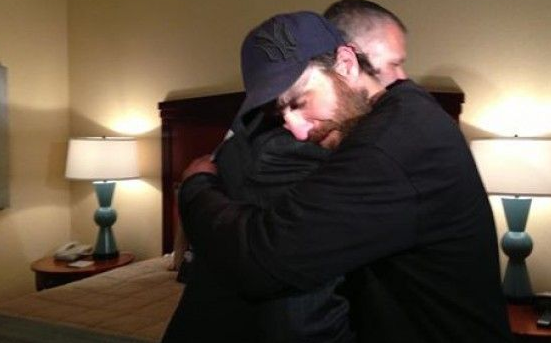
Scott Stuckey gets hugged by a grateful non-criminal Joel Hartman was homeless and surviving in Atlanta by dumpster diving, but when he found a lost wallet with the owner’s identification and credit card inside, he was determined to do the right thing. The wallet obviously belonged to a tourist, so the 36-year-old man checked the hotels in downtown Atlanta until he found out that the tourist (from France, for a conference) was staying at the Omni Hotel.

After Alanta’s Omni manager Scott Stuckey saw the surveillance video of Hartman—who looked as destitute as he was— turning in the wallet to the hotel’s  security guards, he decided that a reward was in order.  Hartman had given them a fake name, so it took some effort to track the shy good Samaritan down. Stuckey and his staff searched for a week, leaving messages with other homeless people that the Omni wanted to thank the man who recovered its guest’s stolen wallet. Eventually Hartman heard about their quest, and showed up at the hotel. He was shocked at what Stuckey had planned for him. Hartman was told that he would be the Omni’s guest in a luxury room through the Thanksgiving holiday with complimentary room service. The hotel also  gave him $500.

I think the gesture by Stuckey and the Omni was kind, appropriate, and in keeping with the spirit of the holiday….but: Continue reading

“Would You Rather”: An Ethics-Horror-Health Care-Dinner Party In Hell Movie You May Have Missed

“Would You Rather” is an odd 2012 film that sets up a film-long set of unlikely ethical dilemmas for its characters to solve. Desperate to save her dying brother with expensive medical treatment she can’t afford, the heroine (played by Brittany Snow) finds herself at a dinner party with seven other desperate strangers, hosted by a wacko family of millionaires who will help one of them after the others have been “eliminated” during the course of the evening. As what is described as a game progresses, each contestant is put through escalating rounds of risk, pain and torture in which they must make various Sophie’s Choices, such as…

  • Would you rather administer a painful shock to yourself with high-voltage electricity, or the person next to you? What if that person has been weakened by a previous shock? What if she is in a wheelchair?

The Daily Beast’s Lloyd Grove, Cultural Pollutor…But Only One Among Legions

Interestingly, THIS grove understands ethics better than Lloyd.

Interestingly, THIS grove understands ethics better than Lloyd.

There are three primary reasons the United States of America is getting steadily disoriented, more gullible, less discerning, cruder and unethical. The first is that our leaders now only care about maintaining power, where once  leaders tended to their duty of being what John Adams called America’s aristocracy. Such leaders, not too long ago, modeled the best values and behavior for the public because they carried the most crucial responsibilities, and thus had to be trustworthy. They understood this obligation was theirs because they had the most visibility, and recognized that this demanded positive, admirable, virtuous public behavior. Now our leaders use sophisticated modern marketing techniques to package themselves and ideas like a phony weight-loss remedy, gradually dropping the facades once they are too entrenched to remove. The dispiriting journey make us cynical, less civically involved, and confused. Continue reading

Thank You: The Obamacare Defenders Give Us Rationalizations #36 and #37

37

With so many excuses, euphemisms, desperate justifications and outright denials flying around in print, online and over the airwaves in these fevered days of the Affordable Care Act debacle, it was inevitable that the Ethics Alarms rationalizations list would benefit. Sure enough, the Obama faithful and the Obamacare hopeful have alerted me to not one but two serviceable and popular rationalizations that I had missed.

Your refusal to be honest to the public and yourself is sad and wrong, guys, but at least you’re enriching the ethics resources on the blog.

The first of the new additions, #36, comes from a recent Obamacare column by Eugene Robinson. I was curious how Robinson, who would probably not abandon his support of the President if Mr. Obama was caught torturing kittens, would spin the current mess, and he didn’t disappoint. After somehow managing to describe relatively accurately what has transpired to date without either being critical of the President or explicitly exonerating him,  Robinson wrote:

“Transforming the health-care system was never going to be easy.”

Marvelous!

“Nobody said this would be easy” can be an appropriate morale booster when a difficult challenge is proving more challenging than expected, and when unexpected obstacles cause new and daunting problems. Following the carnage of a totally botched task, however, where there is no new problem, just the realization that those tackling it are incompetent beyond belief, and have failed in minimally meeting their duties of diligence, care, and process for a mission that they and everyone else knew was risky and hard, “Nobody said this would be easy” is just a cynical deflection of responsibility and accountability, and a dishonest one.

The issue isn’t how difficult solving the health care problem is. The issue is how lousy the plan was that was sold as a solution to this difficult problem, how it was falsely represented, and how it has been ineptly, carelessly, and unforgivably managed. Robinson’s ploy is changing the subject at its most blatant. A surgeon who is supposed to cut out a cancerous tumor but who amputates the patient’s healthy leg instead dare not comfort the patient by saying, “Now, we both knew that battling this cancer wouldn’t be easy.” Yes, but the patient certainly was justified in assuming that the doctor wouldn’t make the battle harder by being a careless nincompoop. Thus the new entry…

36. The Maladroit’s Diversion, or “Nobody said it would be easy!”  Continue reading