The Ethics of Cheering Alex Rodriguez

Poor Alex Rodriguez and his wife...

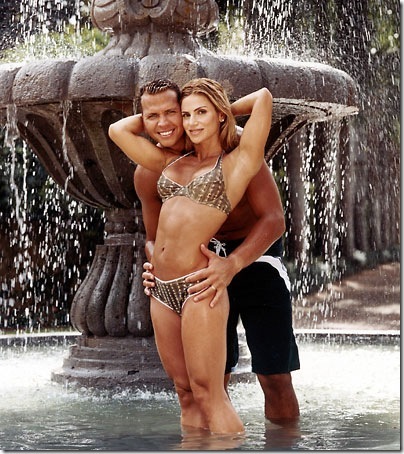
Poor, downtrodden, Alex Rodriguez and his wife…

Baseball’s most embarrassing super-star, the steroid cheat Alex Rodriguez, in playing for the New York Yankees while appealing his long suspension by Major League baseball. As he is unquestionably a repeat liar and a serial violator of the game’s rules against PED’s (performance enhancing drugs), as he signed a contract, in part generated by the results of his cheating, that will both enrich him by millions and handicap his team competitively while conferring few, if any benefits, as he would qualify, by most objective standards, as the antithesis of a sports hero, the fact that Arod, as he is called, still was cheered by a vocal minority in Yankee Stadium when he made his season debut this week is intriguing. What does this mean? Can it be ethical to cheer Rodriquez now?

These are deceptively complex and difficult questions. The threshold  issue is whether cheering or jeering any sports figure, or any public figure at all, is an act with ethical content rather than just a communication of an opinion. Is it conduct, or just “words”? I think, in the context of the Rodriquez situation, a sound argument can be made that it is conduct. Registering group approval or disapproval of prominent conduct by someone of status and influence is a crucial societal function in setting standards, registering disapproval, and prompting shame, regret, apology and reform—none of which, so far at least, seem to register with Arod.

That is pretty clearly what the boos convey, but what about the cheers? If the boos are ethical—they are if the disapproval is proportionate, rational, fair, and just—then are the cheers automatically unethical? Not necessarily. Here are some of the things those cheers could be expressing: Continue reading

Ethics Dunce: Photographer Jill Greenberg


"No emoticons were upset in the writing of this post."

“No emoticons were upset in the writing of this post.”

In Slate, renowned photographer Jill Greenberg returns to the topic that gained her unwanted notoriety in May: her exhibition of photographs of children crying their little eyes out. Greenberg revealed at the time that she captured the powerful photographs by giving the very young children lollipops or something else they liked or wanted and then having family members ask the kids to return the item. Strangely,  as Drew Curtis’Fark, one of my favorite web  sources for stories is wont to say, some people had a problem with this.

Greenberg revisits the issue because she has a book of the weepy photographs coming out. Seldom does one read a more casual, “What is the matter with people?”, utterly clueless display of invalid rationalizations for unethical conduct as Greenberg belches out. Unfortunately, another tendency illustrated by the article is far more common: a news sources examination of an ethics issue without any apparent sensitivity or understanding of the ethics issues involved.

Here are Greenberg’s rationalizations, or at least the ones she gave to Slate. I’m sure she has many more.

  • The Trivial Trap, or “Don’t sweat the small stuff.” “I have two children of my own. Crying is not evidence of pain or any real suffering. It’s really just the way children communicate.” Ah. Not real suffering. Then it’s all right, then. The bottom line is that Greenberg is intentionally upsetting the children, who, it can be fairly said, are less anxious and happier when they are not crying. Children who are teased, frightened or otherwise made uncomfortable can also be said not to be in pain or “real” suffering. It’s still cruel, and an abuse of power, to treat them this way. Come to think of it, Greenberg could make the same argument about some of the models in child pornography. Would she, I wonder?
  • “Everybody does it” and the “They’re Just as Bad” Excuse. “Making children cry for a photographer can be considered mean. But I would say that making children laugh and show off their jeans for an apparel ad is just as exploitative and less natural.” And, I suppose, making a Bangladesh child cry by taking food from her to make her cry is just as exploitative  and more natural than giving her food to make her smile, because, after all, she’s usually starving anyway.
  • The Saint’s Excuse or “It’s for a good cause” a.k.a “The ends justify the means.” Slate:  “The still image continues to have a ton of strength. An image taken out of context from one fraction of a second to the next can tell a story, and if photographers are looking to tell a certain story, they can curate those slices of time to their advantage. What’s weird about the images is they seemingly can be applied to all these random disparate causes. My husband was saying they’re like emoticons.” True, Jill, but those little smiley faces don’t have to be tortured to get them to frown or cry, because, unlike babies, they aren’t real human beings.

The bottom line is that Greenberg made money and got a lot of ink by making children unhappy, so she can’t see why anyone would argue that the conduct wasn’t justified, and based on the article, neither does Slate or its writer, Jordan G. Teicher. The photographer’s methods are, of course, obviously and indisputably unethical:

  • She exploited the children for her own agendas and benefit.
  • She abused her superior power over the children to get the reaction she wants.
  • She induced anxiety in another, causing needless harm.
  • She created a product, the photo, which memorializes a form of child abuse.
  • She recruited the children’s parents into assisting in the exploitation for the artist’s purposes, rather that doing their job as parents, thus inducing a breach of loyalty and a betrayal of parental duty.
  • She created and profited from a materialization of an unethical abuse of a child, which is identical to what child pornography does.
  • She encouraged others to create similar photographs, which will be created, in some cases, with even less humane methods.

Of course her methods were unethical. She deserves every bit of criticism and hate mail that she has received. But the sophisticates, like Slate and others, just shrug off the concern as foolishness, much ado about nothing. So she made kids cry! They cry all the time! What matters is that she got some great pictures!

Many of society’s problems arise from the fact that our media can’t recognize, and thus encourages, unethical behavior, even obvious examples like making little children cry for fame and fortune.

__________________________

Pointer: Alexander Cheezem

Sources: Bored Panda, Slate, Fully M


Unethical Quote Of The Year: Ariel Castro

Well, now, Ariel, with all due respect, I have to disagree with you here. You are, in fact, a monster.

Well, now, Ariel, with all due respect, I have to disagree with you here. You are, in fact, a monster.

Perhaps some gratitude is due to convicted Cleveland kidnapper, torturer, rapist Ariel Castro for yesterday’s long, rambling, thoroughly disturbing statement to the court before sentencing. Within the nearly 1900 words he inflicted on everyone present are a true treasure trove of rationalizations, ethical dodges and classic excuses for wrong-doing, many of which, in different contexts, we use ourselves or accept from others. Perhaps, in the future, when we hear or read of these very same rationalizations and deceit from politicians, celebrities, Wall Street manipulators, media flacks and the people who enable them, or when we detect the seeds of one of them germinating in our own heads, we will recognize them as the property of Ariel Castro, and reject them promptly.

Here is what Castro said yesterday, in its entirety. Read the whole thing…just picking out the highlights doesn’t do the statement justice. It is a masterpiece of evil. I’ll break in from time to time, in bold:

Continue reading

“It’s A Cook Book!”

Nobody listens to me...

Nobody listens to me…

The issues at the core of the Anthony Weiner debacle—which is not the conduct of the ex-Congressman/absurd NYC mayoral candidate/sick puppy, but the fact that so many, like Dan Savage, Huma Abedin (Weiner’s wife, Hillary’s apprentice, carrier of the Clintonian ethisc virus),  Andrew Sullivan, and apparently 16% of New York Democrats still argue that his conduct doesn’t disqualify him from elected office—-are ones which I am especially passionate about, because they are the very issues that launched this blog’s predecessor, the Ethics Scoreboard:

1. There is no division between private unethical conduct and public unethical conduct. It is a false construct designed to assist scoundrels in getting elected. Private conduct is as reliable an indicator of trustworthiness as other prior conduct.

2. Leaders in a democracy should be held to an exemplary level of conduct, not the average or common conduct of those they seek to lead.

3. Some instances of unethical conduct have “signature significance“for the individual involved, meaning that contrary to the common rationalization that “anyone can make a mistake,” there are some things that ethical people never would do even once, and thus the fact that an individual does do it is persuasive evidence that they are generally untrustworthy.

Thus I believe Weiner’s story is more important than the mere sordid political drama involved: if people pay attention, if people learn, if people can get by their partisan biases and convenient ethics misconceptions, maybe we can begin establishing a better, more sensible, beneficial standard for our elected leaders, who, perhaps you have noticed, are, as a group, an embarrassment to the legacy of July 4, 1776. I don’t have illusions that I have any influence, and it is unseemly to say “I told you so,” but sometimes I feel like one of the doomed heroes in science fiction/horror scenarios who end up screaming “They’re already here! You’re next!” or “It’s a cook book!” to unheeding crowds blithely proceeding to their own destruction.

Yesterday the news surfaced that should be the smoking gun on Anthony Weiner’s corrupt character that readers of this blog, at least, did not require to render a verdict—that Weiner’s conduct was not just an irrelevant personal quirk, that his initial lying about it was proof of a corrupt character, and that he is no more trustworthy than John Edwards, Lance Armstrong, Ryan Braun or anyone else who lies to the public to keep its trust. Maybe it will convince Dan, Huma, Andrew and the rest that Anthony Weiner is too corrupt—never mind sick—to lead. If it doesn’t, I think that is signature significance about them. Continue reading

Confections And Consequentialism

Busted!!!!

Busted!!!!

From across the pond comes a stupid story rich with buried ethics treasures.

Eleven-year-old Holli McCann was sent home from a week long school trip to the Isle of Wight (where Paul McCartney started vacationing  when he turned 64) because she violated one of the rules of the trip: no chocolate. The Bromet (in Watford, Herts) Primary School’s headmistress, Yvonne Graves, discovered the infraction by surreptitiously reading a private letter that Holly had written to her mother. After perusing the incriminating missive,Graves ordered teachers to search Holli’s room, which they did with the diligence and thoroughness of the FBI looking for forensic evidence of a serial killing, even emptying her toiletry bag into the sink and pulling out the lining of her suitcase. It was all worthwhile, however, because they discovered the yummy but incriminating substance they sought.

After the smoking chocolate was discovered, the headmistress contacted Holly’s mother and told her to pick up her daughter immediately—she had been voted off the Isle. The mother begged  Graves to reconsider, but was refused. She had to borrow money to make the 160-mile trip to pick up her daughter.

What have we learned? Continue reading

Unethical Quote of the Week: Economist Paul Krugman

“…The prostitute thing is embarrassing and painful to think about, but not a disqualification for public office. David Vitter is still in the Senate, and in internal LA Republican politics is apparently squashing the very pious Bobby Jindal like a bug…I know that opinions differ about just how effective Spitzer’s confrontations were. But at least he tried — which is more than you can say about almost anyone else in our political life. Basically, the malefactors of great leverage were bailed out and went right back to being bad guys again, and everyone in public life pretended that nothing had happened. That, I think, is why there’s a surprising reservoir of support for Spitzer; people remember him as someone who showed at least some of the righteous outrage that has been so wrongly absent from our national discourse. It’s a useful reminder, and it’s why I regard his entry into the race, win or lose, as a good thing.”

— Inexplicably revered progressive economist and New York Times columnist Paul Krugman, discussing the re-entry of Eliot Spitzer into New York state politics on his blog. Spitzer, despite having to resign from office as governor because he was caught partaking in the services of a prostitution ring—the same kind of enterprise he aggressively prosecuted as state attorney general, is now running for comptroller.

Explain, please: How can anyone rely on the judgment of someone whose ethical reasoning is this miserable?

Explain, please: How can anyone rely on the judgment of someone whose ethical reasoning is this miserable?

I do not understand how anyone can read or take seriously Krugman’s opinions on budget management and national affairs—he thinks that the national debt is no big deal at the moment, a position that is essential to Obama-enabling—when the favorite economist of progressives and Democrats can write something as indicting as the quote above. The post is appallingly irrational, irresponsible and unethical: it suggests that the author’s judgment is miserable, that his ethics are negligible, that his biases rule his intellect….and that, apparently with justification, he is confident that the Park Avenue liberals who quote him at dinner parties won’t lose an ounce of respect for or abandon an inch of reliance regarding a champion who believes such rot. Continue reading

“Ghosting” Is Unethical

I don't care if you are dead, Marley; when you leave my party, say good-bye.

I don’t care if you are dead, Marley; when you leave my party, say good-bye.

Slate contributor Seth Stevenson has an interesting justification for being rude: good manners are too much trouble.

This is the way the world ends, as T.S. Elliot would say.

Stevenson argues that instead of saying goodbye and thank-you to one’s host at a party, the best way to exit is “the Irish good-bye,” or in its non-ethnic stereotype form (Irish guests are presumed too drunk to say good-bye, you see), “ghosting.” “Yes, I know,” he writes. “You’re going to tell me it’s rude to leave without saying goodbye. This moral judgment is implicit in the culturally derogatory nicknames ghosting has been burdened with over the centuries.” That sentence is signature significance for me: Stevenson is an unethical jerk. I get comments and e-mails all the time accusing Ethics Alarms of “moralizing” or being “sanctimonious” when I write that obviously unethical conduct is obviously unethical. That’s because unethical people who do unethical things feel much better about themselves if nobody calls them on it, so they can maintain, as one recent commenter did here who was, I’m proud to say, chased away by the rest of you (and me) with torches and pitchforks, that ethics is “100% subjective”—Translation: “If I want to do it, it’s ethical.”

That’s essentially Stevenson’s reasoning, too.  “Is it really so bad to bounce without fanfare?,” he asks. Continue reading

And This, Craig, is Why Barry Bonds Should Only Get In The Hall Of Fame With A Ticket

Blame Barry, Chris.

Blame Barry, Chris.

In Baltimore, a young, slugging first baseman is leading the charge to get the Baltimore Orioles into the American League play-offs. He is on a home run pace that could net him 60  or more, and fans voted him the starting first baseman on his league’s All-Star team. Because his production this year far exceeds anything he had accomplished before, however, Chris Davis’s emergence isn’t being celebrated as much as it is being suspected. Another steroid scandal looms over major league baseball, one which threatens to engulf two former MVPs, as well as other players. Fans and sportswriters don’t trust players any more, or their power totals, not since Mark McGwire and especially Barry Bonds juiced and injected their way to shattering the game’s home run records.

This bothers lawyer/baseball blogger Craig Calcaterra, and it should., as someone concerned with justice. Of the smearing of Davis, he calls it…

“…utterly baseless speculation; Davis has always had tremendous power but is now, in the past year, matched it up with better plate discipline — is the product of a media landscape which has decided that every power hitter is a ‘roider. Jose Bautista got this treatment a couple of years ago. Davis is getting it now. Everyone who engages in this business does so because they’ve been convinced by the baseball media that such speculation is not just justified but necessary. It’s neither of those things. The drug testing system put in place had avoiding these parlor games as one of its primary justifications. But that’s not good enough for some, apparently.” Continue reading

More Ethics Of Terrible Secrets : Falling Bullets, Moral Luck, And The Accountability Check Of A Lifetime

Somebody's happy!

Somebody’s happy!

Seven year-old Brendon Mackey was walking with his father in the parking lot of the Boathouse Restaurant in Midlothian, Virginia at around 9 p.m. last Thursday when a bullet, apparently shot into the air by a Fourth of July celebrant, fell through his skull, killing him.

“We don’t think this was an intentional shooting. We think that somebody in or around the area was celebrating the Fourth of July. Unfortunately we think they were shooting a gun in a reckless manner and this young boy is a victim,” a police spokesman told the media. The bullet, experts say, may have been fired as far as five miles away.

There is an investigation ongoing, but if history is any indication, Brendon’s killer will remain a mystery. Last Independence Day, a Michigan State student, engaged to be married, was killed the same way, by a bullet believed to have been launched into the sky by a celebrating stranger. Michelle Packard was 34. This spring, her still grieving  fiancé committed suicide.

Has a reckless celebrant with a gun  ever stepped forward voluntarily to accept responsibility for causing such a tragedy? I cannot find any news accounts that suggest it. Deaths from stray bullets fired into the air are rare: most fall to earth harmlessly, and even when they hit someone, the result is seldom a fatality. Still, firing a gun skyward is illegal, and truly reckless and stupid. My father told me that during World War II, he warned the men under his command that he would see that anyone firing a weapon into the air without good reason would be court martialed. “They really seemed surprised when I told them that the bullets came down,” he said. Continue reading

Keeping Terrible Secrets

shhhhSomeday I should have an ethics quiz asking which advice columnist is more unethical, Chuck Klosterman, “The Ethicist,” or Emily Yoffe, Slate’s “Dear Prudence.” That horrible exercise is for another day, however. Right now, I am only considering Emily’s latest botch, in which she urged a mother with a guilty conscience to take her terrible secret to her grave.

The secret in question is that the woman asking Emily’s counsel conspired to get pregnant via her gullible, not-ready-to commit boyfriend, who thought she was using birth control. Now it’s 13 years later. She and the double-crossed father are  happily married to other people, in different states, though he “is involved” in his daughter’s life, whom he accepted as his own. Mom never told him what she had done, and he believes that his daughter was an accident, leading him to stay with the family for the child’s first three years.  “Prudence’s” questioner concludes,

“…I had decided that I would go to my grave never telling anyone what I had done. Recently, a friend became pregnant after a one-night stand. Everyone assumes that was an accident, but she confided in me that she had been seeking out sex with the purpose of getting pregnant. I was so relieved to meet someone else who planned an “accidental” pregnancy that it made me wonder if I should open up about my secret. But I’m afraid if I told Ben it might change the way he interacted with Holly. My questions are: Am I some kind of monster for getting pregnant on the sly? And should I come clean, and if so, who should know?”

What? The reply to this should take about 20 seconds of thought to answer:

  • You’re relieved that one of your friends is a lying, betraying fraud? Don’t turn your back on her; I’m warning you.
  • Of course you should tell “Ben,” since he’s the one whose life was turned upside down by your selfish perfidy and deception.
  • “It might change the way he interacted with Holly,” eh? You mean “he might not send quite so much money to you to take care of Holly,” don’t you? Too bad. This is your doing, your lie, and your fault. “I don’t like the potential consequences of telling the truth” is not a justification to keep lying.
  • Yes, indeed you are some kind of monster. What you did was despicable, cowardly, cruel and wrong. Ben might be a prince about it (“Ah, that’s all water under the bridge now! The important thing is that we have our beautiful little girl, and nothing else matters!”), or he might call his lawyer. That’s his choice, and he has an absolute right to have the facts to make it his choice.

Emily, however, reasons otherwise. Don’t tell him, she counsels…

  • “Your act doesn’t make you a monster…” Yes, it really does. Didn’t we establish this in “An Officer and a Gentleman”?
  • “…nor do I think there’s any benefit to enlightening everyone now.”  That’s Ben’s call. The Golden Rule says that he’d want to know that he was tricked, and has been living a lie for over a decade. I sure would. I like to know just how trustworthy the people I associate with really are.
  • “Both you and Ben rose to the occasion and neither of you would express regret that you’re parents to Holly.” Consequentialism! So what? What if she were a rebellious, hateful, crack-addicted thief? The fact that thing turned out all right doesn’t justify the lie or keeping it hidden now.
  • “…At this late date, however, your coming clean would only cast a shadow over your character.” A character that richly deserves such a shadow.
  • “You are deeply remorseful for what sounds like a singular act of substantial deceit.”  What difference does it make that it’s a single act? A single act is enough. And this wasn’t “deceit.” This was a lie.
  • “There’s nothing to be gained by telling your husband and making him uneasy about your essential honesty.” I’d say one’s husband has the right to know the character of who he’s married to. 
  • “You and your friend are also hardly the only women to deliberately get pregnant without letting the man in on your plan, as objectionable as that behavior is.” Oh, that’s terrific, Emily. The old “you’re not the first” rationalization, a particularly dumb variation on “everybody does it.” The conduct is horribly wrong, and the first person to do it is no worse than the 2,342nd.

Gee, I wonder what Chuck would say.

________________________________________

Facts: Slate