A Prosecutor Lies, But It’s For A Good Cause…

Yes, Jack McCoy would probably be disbarred in the real world...

Yes, Jack McCoy would probably be disbarred in the real world…

Aaron Brockler, an assistant Cuyahoga County (Ohio, including Cleveland) prosecutor, was fired last month for  using a false identity on Facebook  to try to influence the testimony of  defense witnesses in a homicide case.

He initiated Facebook discussions with two women listed by the defense as alibi witnesses in a murder prosecution. Brockler pretended to be a former girlfriend of the defendant who had a child fathered by him, and urged the witnesses not to “lie for him.”  County Prosecutor Timothy J. McGinty fired Brockler, who by my count violated at least Ohio legal ethics rules 3.4, 3.7, 3.8, 4.1, 4.2 and 8.4, (tampering with evidence, suborning perjury, becoming a necessary witness, prosecutorial misconduct, misrepresentation of facts, contact with a person represented by counsel and dishonesty) and perhaps some others. Prosecutors are not allowed to tamper with defense witnesses, or try to influence any witness testimony. They are not permitted to contact represented parties in connection with a prosecution, unless the lawyers are involved. They are not permitted to lie or pose as someone they are not over the internet. They are not permitted to make themselves witnesses in their own cases. Brockler wasn’t just fired for cause, he was fired for multiple causes, any one of which would have justified kicking him out the door. Continue reading

ARRRGH! Outrageous Ethics Malpractice By “The Ethicist”!!!!

Well, you did it again, Chuck..you made my head explode. But now I have a place to keep my keys...

Well, you did it again, Chuck..you made my head explode. But now I have a place to keep my keys…

It’s time for Chuck Klosterman, the New York Times’ designated amateur who now handles “The Ethicist” advice column, to hang it up, and let some randomly chosen unemployed New Yorker take a shot at the job. Since assuming his post, Chuck has had good moments and bad, but this botch is embarrassing, and signature significance—no one who isn’t a bona fide Ethics Dunce could make such a terrible call.

Get this: Klosterman was asked whether surreptitiously taking cuttings from plants owned by a shopping center was unethical:

“…While walking through our local shopping center, we noticed a particular plant that we both liked and decided to get it for our patio….My wife thought she could grow it from cuttings, so we went back and took about three or four cuttings from one of the many plants that were scattered around the shopping center. The plant was not hurt or damaged in any manner or form, but my gut instinct told me that this was wrong. Was it?”

Does this question really need asking? Apparently, because the fraud masquerading as an ethicist at the Times thinks it’s a “thorny” question (Chuck likes puns…maybe the column should be called “The Punster”) about an “unethical act that has a positive impact.” ( Helpful hint to Chuck: the issue is stealing.Klosterman then embarked on a rationalization orgy: Continue reading

The Deadliest Rationalization Of All?

woodys excuse

All rationalizations can be deadly and have been. History and human nature teach us, however, that “Woody’s Excuse,” #22 on the Ethics Alarms Rationalization list, can hold its own with any of them when it comes to tallying up pain, ruined lives, and death. This is “The heart wants what the heart wants,” the comedian, actor and acclaimed director’s personal pass for his seducing and marrying a girl who was, in essence, his adopted daughter.

Today the Washington Post carries the grim final act of a story so terrible that it crosses into the realm of black humor. A veteran Labor Department lawyer, married, with an impeccable record, was found dead in his cell after being arrested and charged with violently attacking a co-worker with whom he had become infatuated. The story is full of weird U-turns of phrase; for example, the judge called the lawyer, charged last week with first-degree burglary while armed and third-degree sexual assault relating to the June 5 attack, a “wonderful person in most respects”—-that is, “most respects” beside the implications of his breaking into a woman’s home, punching her in the face (or spraying her with mace,) then trying to incapacitate  her with a stun gun, handcuffing her hands behind her back and knocking her to the floor. The victim was so badly injured that a plate had to be surgically implanted in her face.

Other than that, Judge, you’re right: he was a hell of a guy. Continue reading

Why Your Child Should Watch “MLB Now”

…other than the fact that teaching your child to understand and enjoy baseball is one of the greatest gifts a parent can give, that is.

Don't be like Harold, son.

Don’t be like Harold, son.

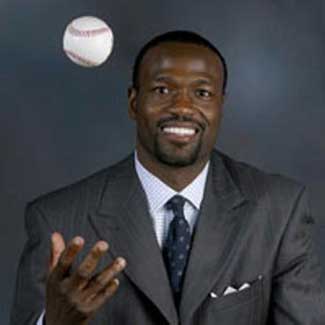
No, the best reason to watch “MLB Now,” a program on the cable MLB channel, has nothing to do with baseball. It does have to do with preparing your child for life, showing him the danger of bias, and teaching her that remaining open to new ideas and information is essential, not only to ethical conduct, but to rational conduct as well.

The show features two commentators, Brian Kenny and Harold Reynolds, debating various baseball questions while coming from different disciplines and perspectives. Reynolds, a former player of some note with the Seattle Mariners, is “old school,” meaning that he belongs to that dwindling cadre of people, in the game and out of it, who rely on traditional wisdom, misconceptions, myths, false assumption and, most of all, their own gut level observations to interpret the deceptively complex game and evaluate its players. Thus he extolls doing the “little things that win,” like bunting and stealing bases, talks a lot about “protection” in the line-up, prattles on about clutch hitting and “pitching to the score,” and other similar thoroughly debunked nonsense that was regarded as cant back when John McGraw was managing but now is about as outdated as the assertion that women can’t drive. Kenny is thoroughly versed in the art of sabermetrics, the statistical measurements of baseball pioneered in the 1980’s by Bill James and others. Sabermetrics has transformed how baseball is watched, operated and played, greatly aided by the availability of computers. They can show how a pitcher with a losing record is both better and more valuable than one who wins twenty games, the traditional measure of excellence. They can prove that a batting champion is actually less of a positive offensive force than some obscure, .270 hitting player few have ever heard of. Sabermetrics can prove that managers with the reputation of being geniuses were really lucky dimwits. They can, that is, if you are willing to learn and pay attention. Continue reading

“Rubbish” and Ethics

That's me!

That’s me!

Cognitive scientist and philosopher Daniel Dennett has a brilliant and original mind. One of the seven tools he advocates (in his most recent book) for those of us who want to think more clearly and make better use of our time caused me to reflect on one of the most persistent criticism I receive about Ethics Alarms. one of America’s foremost thinkers. Here are the seven, with a sample of Dennett’s comments about them:

1. USE YOUR MISTAKES

“Try to acquire the weird practice of savoring your mistakes, delighting in uncovering the strange quirks that led you astray. Then, once you have sucked out all the goodness to be gained from having made them, you can cheerfully set them behind you and go on to the next big opportunity. But that is not enough: you should actively seek out opportunities just so you can then recover from them.”

2. RESPECT YOUR OPPONENT

“Just how charitable are you supposed to be when criticizing the views of an opponent? If there are obvious contradictions in the opponent’s case, then you should point them out, forcefully. If there are somewhat hidden contradictions, you should carefully expose them to view – and then dump on them. But the search for hidden contradictions often crosses the line into nitpicking, sea-lawyering and outright parody. The thrill of the chase and the conviction that your opponent has to be harboring a confusion somewhere encourages uncharitable interpretation, which gives you an easy target to attack….” Continue reading

Ethics Dunces: The Wall Street Journal Editors

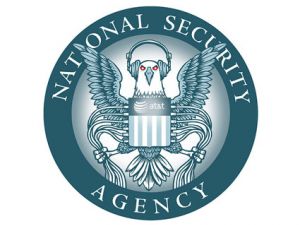
nsa-wiretap-eagle_0There may be good arguments to support that massive trolling of Verizon Business phone records by the NSA revealed yesterday, but so far, the justifications are either disingenuous, rationalizations, or leaps down the slippery slope. None exemplified this better than the Wall Street Journal, in its editorial defending the recently revealed surveillance. My favorite paragraph:

“The critics nonetheless say the NSA program is a violation of privacy, or illegal, or unconstitutional, or all of the above. But nobody’s civil liberties are violated by tech companies or banks that constantly run the same kinds of data analysis. We bow to no one in our desire to limit government power, but data-mining is less intrusive on individuals than routine airport security. The data sweep is worth it if it prevents terror attacks that would lead politicians to endorse far greater harm to civil liberties.”

Hmmm.

  • “The critics nonetheless say the NSA program is a violation of privacy, or illegal, or unconstitutional, or all of the above.” “The critics?” Can someone honestly say that taking my personal and private phone communications data without my knowledge or consent is not a violation of privacy?  To argue that is the definition of Orwellian. “We’re not violating your privacy, we’re just secretly examining your private communications.” Oh. Continue reading

“Hello, Hello, Hello…Hello!” An Ethics Dunce Trio: Newspaper, Sportswriter, President

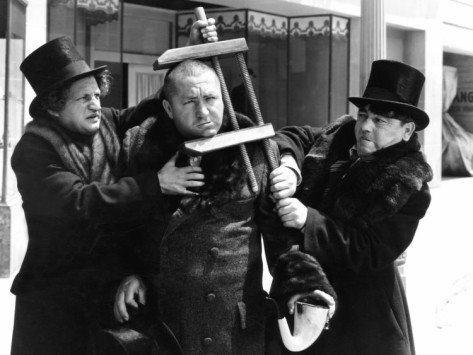
the-three-stooges

I have a lot of catching up to do with ethics issue backed up as far as the eye can see, so I will try to deal efficiently with the three Ethics Dunces that confronted me this morning:

Ethics Dunce #1 : The Washington Post Continue reading

Curtis Morrison, The Face Of Ethics Bankruptcy

How did you get this way, Curtis?

How did you get this way, Curtis?

Curtis Morrison’s post at Salon, “Why I secretly recorded Mitch McConnell,’ is disturbing in the manner of those periodic exposés where a journalist gets candid answers from a soul-dead 14-year-old inner city drug dealer,  a short-order cook who hates his customers and spits in their food, mad Islamic terrorist, or venal hedge fund manager. Morrison exposes himself as a politically active, ethically ignorant zealot, and ludicrously proud of it. I’m sure that conservative bloggers will seize on his damning post as evidence of the character rot at work on the Left, but he could just as easily be a young Andrew* Breitbart, or James O’Keefe.

The chilling revelation that dawns as one reads Morrison’s  piece is that mis-wired people like him increasingly warp our political process and turn it into incoherent, useless and destructive warfare. I don’t want to think about how many will read his words and admire him, rather than feel their gorges rise, but unfortunately, it’s my job to think about it. Our task is to make sure there are fewer Curtis Morrisons in the future. Maybe his Salon article, which should horrify anyone who isn’t already beyond ethics repair, will help. Continue reading

How To Raise An Unethical Child

"Oops!"

“Oops!”

“Ask Amy” features a parent who asks the advice columnist to add her authority to the parent’s concerted efforts to pass along her own ethics deficits to her college age daughter, which, I fear, is unnecessary at this point. The daughter’s ethical compass is probably already damaged beyond repair.

It appears that the daughter, in a drunken state, spilled champagne on a laptop belonging to “Laura,” a college friend. The laptop was lying on the floor of the friend’s dorm room, and the keyboard was drenched in bubbly. Ethically challenged Mom thinks Laura is being mean and unfair to expect the daughter to pay full price—$850—to get the besotted machine working again. The indignant mother protests… Continue reading

Ethics Dunce: Washington Post Columnist Richard Cohen

Richard Cohen, a fair and smart liberal columnist who sometimes jumps the ethics rails...like now.

Richard Cohen, a fair and smart liberal columnist who sometimes jumps the ethics rails…like now.

Richard Cohen, the veteran liberal columnist at the Washington Post, is not your usual knee-jerk partisan pundit. He’s that rarity, a thoughtful and fair opinion journalist who does not choose his positions according to which side he would rather have drinks with. He really, really doesn’t like Republicans and conservatives, but he is capable of siding with them, or at least against his philosophical brethren, when common sense and matters of basic right and wrong beckon. I used to think of him as a left-biased partisan, but then I had a chance to read E.J. Dionne and Eugene Robinson on a regular basis, and Cohen’s relative objectivity and fairness became obvious.

He does have blind spots, however. One is sexual harassment, which, as an older guy who likes flirting with young women at the gym and doesn’t understand that whole “unwelcome advances” thing, he just doesn’t comprehend. Another is the compliance delusion. To be seriously unethical in Cohen’s eyes, you have to break the law. Otherwise, it’s “everybody does it.” Cohen is prone to fall for other classic rationalizations as well.  He is a “gut instinct”analyst where ethics are concerned, and gut instincts aren’t enough. They will eventually lead you astray. They lead Cohen astray.

This was the glaring flaw in his recent column about the Benghazi controversy, where Cohen fell into line with the Obama protectors in the media whose argument is, “So they lied…who cares?” He wrote in part…

“…President Obama was then really Candidate Obama and he surely did not want the words “terrorist attack” uttered during the presidential campaign. In addition, the CIA and the State Department were in a cat fight and could not agree on the wording of the talking points — or even, from a fair reading of their clashing e-mails, who the fanatical enemy was: al-Qaeda or members of Congress? In all this, it’s almost possible to forget that four Americans died in Benghazi. The event was a tragedy and it hardly matters, as then-Secretary of State Hillary Clinton vociferously maintained, if the attack occurred spontaneously or was planned. Either way, it was a success for the terrorists and a debacle for the United States.

“It is good to find out how this happened — who’s responsible for the inadequate security, etc. — and it is also good to hold the Obama administration accountable for putting out a misleading statement. But the record will show that a thorough report was, in fact, compiled. Its authors were Thomas Pickering, an esteemed retired diplomat, and Adm. Mike Mullen, an equally esteemed retired chairman of the Joint Chiefs of Staff. They found the standard mistakes and snafus — but no crime….Watergate, though, was a crime. Iran-contra was a crime. Government officials were convicted and some of them went to jail. Fudging a press release is not a crime. Compromising on wording is not a crime…It is not a crime either to make a mountain out of a molehill, but this particular one is constructed of a fetid combination of bad taste and poisonous politics. Dig down a bit and it becomes clear that some — many? — Republicans suspect that Barack Obama and-or Hillary Clinton are capable of letting people die to cover up a terrorist attack. Either that, or this is what they want us to think.”

It’s a fascinating passage, because you can see Cohen slowly going off the ethical rails: Continue reading