Well, At Least Something Constructive Has Come Out Of The Latest Anti-Gun “Do Something!” Blather: Welcome Rationalization 40 A. Otter’s Solution, Or “I Had To Do Something!” And Rediscovered 40 B., The Lone Inspiration Excuse, Or ” Do You Have A Better Idea?”

We have talked about the empty grandstanding nostrum “Do something!” here quite a bit: there is even a tag for it, introduced in 2016, when the best the House Democrats could come up with to satisfy their anti-gun base that time around was a juvenile sit-in to demand suspension of the Fifth AND Second Amendments. Then I wrote,

The public debate over the various proposals to “do something!” about mass shootings is as depressing as any discussion I have ever participated in. The willingness of gun opponents, Democrats, journalists, pundits and otherwise intelligent people to not only defy the Bill of Rights guarantee of due process but to literally ignore its existence shows how close the stinking breath of totalitarianism is to the neck on our nation, and that it is much hotter than I realized. This isn’t an exception or an anomaly. This is a result of carefully bred contempt for American values.

The intense ignorance crossed with malice toward our Constitution reached a climax of sorts today on social media, as people who should know better (and people who do know better, like erstwhile Harvard Law professor Elizabeth Warren) applauded the cynical and hypocritical “sit-in” by House Democrats, who said they would hold their breath until they turned blue unless the Congress of the United States voted to allow the government to take away the rights of citizens based on “suspicion.” Only rationalizations can defend this position, primarily among them “The Saint’s Excuse,” or “It’s for a good cause,” “It” is this case meaning..

  • Accepting the ethically and morally bankrupt principle that “the ends justify the means”
  • Setting a precedent for allowing the government to abridge any rights it chooses once by some standard it finds a law-abiding citizen “unworthy”
  • Enacting a provision that the ACLU has pronounced unconstitutional
  • Establishing the principle that the Congress can and will abandon the rule of law as long as enough members of the public and media let emotion overcome reality
  • Lay the groundwork for a President, like say, just to pick a crazy, impossible example out of the air, President Trump, who is as ignorant of the rule of law as the position’s supporters, to really start ripping up the Bill of Rights, beginning with Freedom of the Press, Freedom of Religion and Freedom of Association.

To put it another way, it’s a really, really stupid and indefensible position.

But that’s “Do something!”  That’s’ where it gets you.

For some reason, however, I didn’t realize then that not only is “Do something!” bolstered, enabled and pointed to by many rationalizations [ Among them…“I’m on The Right Side Of History,”“This can’t make things any worse,” “Just this once!,” “It’s for a good cause,” “If I don’t do it, somebody else will,” “There are worse things,” “I’m just giving the people what they want!,” “I have no choice!,”“It’s My Duty!,” “These are not ordinary times,” “Ethics is a luxury we can’t afford right now,”  “I’ll do anything!,”  “If it feels good, do it!,” “Think of the children!,”  “If it saves just one life,” and “It’s the right thing to do”…] since it can’t be supported ethics or reason, it is itself a rationalization in its “I had to do something!” form or “You can’t expect me to do nothing, can you?” version. It is a very insidious and dangerous rationalization. I am angry that I didn’t see it before.

I see it now because the Santa Fe shooting really undercuts all of the previous “reasonable gun control measures” that had been proposed to end all school shootings forever, as the pompous Parkland naifs insisted. Banning assault-style weapons and “high capacity magazines.” Background checks and longer waiting periods. Tougher vetting of mental health records of gun purchasers. Not one of these, nor all of them together, would have stopped the shooting in Santa Fe. Rather than admit this like fair, rational people, the anti-gun mob has devolved into shouting, “Well….do SOMETHING!”

On my Facebook page, an old friend, a lawyer, not yet senile as far as I know, actually posted, “Hey guys, here’s an idea: let’s finally do something about all this gun violence!” And that was it. Something. No other recommendation. Something. Brilliant. Why didn’t we think of that before?

The clip that introduces this post, which I have run here before, is the famous moment in “Animal House” in which the Delta House members, led by wise-ass Otter and chaotic Bluto, conclude that the only response they can muster to being kicked off campus is a “really futile and stupid gesture.” Hence the title of #40A. I was tempted to call it Kelly’s Solution after this…

….but Otter’s is funnier, and illustrates perfectly what acceptance of “Do Something!” as a justification leads to…futile and stupid gestures, or worse. For example, it paves the way for totalitarianism, as a desperate public cheers on action for action’s sake, not paying proper heed to where the action leads.

Rationalization #40 A., Otter’s Solution, or “I had to do something!” is an invitation to be unethical, irrational, reckless and irresponsible, bypassing law, values, common sense, and any other obstacle that usually constrains bad policy and  conduct. It creates an intellectually dishonest shortcut, making the decision to act before any effective action is considered, designating action the objective rather than what the objective of the action should be. Obviously this is backwards, and it is intentionally backwards, because it takes a detour around essential questions, responsible decision makers must consider before acting,  like “Is this legal?” “Is this wise?” “What will be the long term consequences?,”  “Can this work?” and “What are the costs?” Rationalization 40A makes the conduct itself the objective rather than the results of the conduct. The imaginary virtue is taking action—even if it is futile and stupid.

And, if one challenges the badly-reasoned “something” that 40 A supports, one often will be challenged by 40 B. The Lone Inspiration Excuse, or ” Do You Have A Better Idea?”

40 B. The Lone Inspiration Excuse, or ” Do You Have A Better Idea?” qualifies as The Lost Rationalization. I announced it two years ago, never entered it on the list, and forgot about it, until today.

I am not obligated to solve the problem you cannot solve without breaching ethics or law.  Nor is it obligatory for someone pointing out why proposed conduct is illegal, unethical, dangerous, imprudent and wrong to posit alternatives for the verdict on the proposed conduct to remains valid. The Lone Inspiration Excuse suggests that a terrible course of conduct can become acceptable by default. How many catastrophes have been created by that warped logic? If a proposed measure is too wrong and reckless to undertake, it shouldn’t be undertaken. That’s the first step. Finding a better course comes later, or never, if there isn’t one.

The ethical response to someone who reasonably and carefully explains why proposed conduct cannot work and violates principles of law, ethics or common sense deserves a thank you, for that is valuable information. “Well, you solve it then!” is not a fair response. It’s a deflection, and a transparent one. If the only course of action being proposed is unethical, then the responsible and ethical better idea may be not to do anything at all.

The 90th Rationalization: #67 The Herd’s Excuse, Or “We’re All In This Together”


In Philip Zimbardo’s writings about avoiding corruption in organizations, he warns, “Be aware of the roots of compliance and persuasion: reciprocity, commitment, majority conduct, authority, liking, and perceived scarcity/need. Know why you are being persuaded.”  Rationalization #67 on the list, reaching the landmark of ninety rationalizations in total, addresses the commitment and majority conduct arguments for following the crowd even when the crowd is wrong.

The Herd’s Excuse is an inverted #1, “Everybody Does It.” That most popular of all rationalizations holds that what everyone does is ethical because “everyone” does it. The Herd’s Excuse argues that what would normally be wrong becomes right when the group endorses it uniformly. This is sinister.  A protesting group member gets extorted into following a group course of action that he or she had legitimately identified as wrong by being told that withholding participation, endorsement and approval is not only a betrayal, but conduct that sabotages what would become rightful as long as the group is united and of one mind.

The use of this peer pressure as emotional blackmail to keep followers in line is a weaponized tool of unscrupulous leaders, ethics corrupters, cultists and  authoritarians.  It is the false and sometimes deadly logic that has led to some of history’s worst disasters, closely related to magical thinking. If we all commit to this, we cannot fail. The group cannot be denied.

In such situations, it is essential that those who know that the planned or proposed action is wrong form a different group. Togetherness, in such situations, is no longer a virtue.

Here Is Why Baseball Fans, And Almost Everyone Else, Are Ignorant Of How The Law Works…

Last night, while I was watching a lousy Red Sox loss to the Oakland A’s, the Boston broadcasters announced their mid-game poll: “Do you agree with the Supreme Court decision on sports betting?” Viewers were supposed to text one number for yes, another for no. It was quite clear that the Sox announcers themselves had no clue what the decision was, however, as Jerry Remy and Dave O’Brien began debating the pros and cons of legalizing sports betting. The debate was edifying, but had nothing to do with the Court’s decision in Murphy v. National Collegiate Athletic Association whatsoever.

They and thousands of Red Sox fans had no clue what the decision was, and their ignorance didn’t stop them from voting on what they thought it was. What they thought it was came from second and third hand social media posts, and misleading headlines (“Supreme Court Strikes Down Anti-Sports Betting Law”) as well as brain-dead reports on the meaning of the majority ruling. (“Today the Supreme Court opened the door to legalized sports betting by declaring the federal law banning it unconstitutional…”). On a local news channel in the D.C. area, a reporter was dispatched to “investigate” if the reporting on the decision was accurate. “We began by reading the decision itself,” he said,

Wow! What a concept! Read the opinion rather than depend on ignorant reporters who don’t know the Constitution from “Hiawatha” to explain it based on what they think they know, which is not remotely like knowing anything!

Quoting again from ScotusBlog, here’s what “the decision on sports betting” was…

The 10th Amendment provides that, if the Constitution does not either give a power to the federal government or take that power away from the states, that power is reserved for the states or the people themselves. The Supreme Court has long interpreted this provision to bar the federal government from “commandeering” the states to enforce federal laws or policies. [The] justices ruled that a federal law that bars states from legalizing sports betting violates the anti-commandeering doctrine…

…In a decision by Justice Samuel Alito, the court began by explaining that the “anticommandeering doctrine may sound arcane, but it is simply the expression of a fundamental structural decision incorporated into the Constitution” – “the decision to withhold from Congress the power to issue orders directly to the States.” And that, the majority continued, is exactly the problem with the provision of PASPA that the state challenged, which bars states from authorizing sports gambling: It “unequivocally dictates what a state legislature may and may not do.” “It is as if,” the majority suggested, “federal officers were installed in state legislative chambers and were armed with the authority to stop legislators from voting on any offending proposals. A more direct affront to state sovereignty,” Alito concluded, “is not easy to imagine.”

Later on, Alito makes it clear that the decision isn’t pro-sports betting or anti-sports betting. The decision is anti-the federal government telling the states that they can’t pass certain kinds of laws, and the subject matter of those laws are irrelevant to that principle. The decision in Murphy v. National Collegiate Athletic Association  no more approves legalized sports betting than it approves speed limits over 90 or letting felons vote in state elections. The decision says that while the federal government can pass its own laws, it can’t order the states not to pass laws.

Never mind! Thousands of Red Sox fans had opinions based on misunderstanding the decision, just as many bloggers and online commenters worked themselves into a frenzy about the evils or benefits of sports betting, aided by journalists who literally, not figuratively, didn’t know what they were writing about, and didn’t have the integrity or common sense to find out.

Good job, everybody!


Morning Ethics Warm-Up, 5/15/2018: Alito Gets One Right, Ellison Deceived, And An Ancient, Unethical Tactic Works Once Again…

To a glorious morning, Ethics-Lovers!

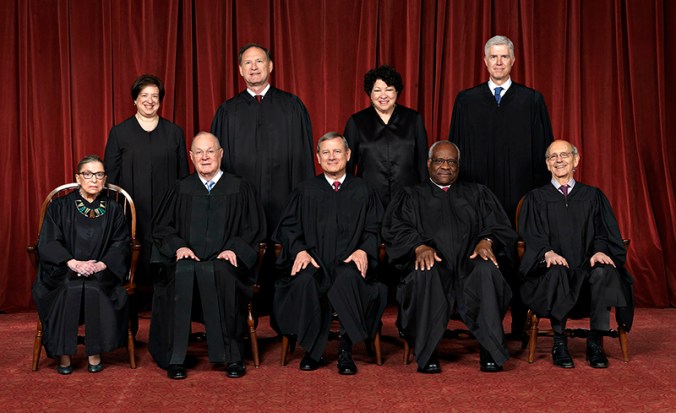
1. Bad Alito, Good Alito.  As I briefly noted yesterday (and hopefully will do in detail today), Justice Alito authored an unethical and embarrassing dissent defending a lawyer who deliberately betrayed his client by telling the jury that he had killed someone his client denied killing. Bad Alito. However, the arch-conservative jurist also authored the majority opinion in Murphy v. National Collegiate Athletic Association, in which the SCOTUS majority struck down a virtuous but unconstitutional law, and did so clearly and well.

These are, I think, my favorite Supreme Court opinions, where the Court ignores the motives and objectives of a law and simply rules whether the legislature is allowed to behave like that. I don’t know, but I would guess that most of the majority feel the way I do about organized sports gambling: nothing good can come of it, and a lot of harm is inevitable. One they get the green light, I’m sure that as many states will take over sports gambling for its easy revenue as now prey on its poor, desperate and stupid with their state lottery scams. Everyone involved–sports, fans, athletes, states, the public’s ethical compass—is going to be corrupted by letting the sports betting genie out of its bottle: just watch.

Nevertheless, the Professional and Amateur Sports Protection Act, a 1992  law known as PASPA, should have been struck down decades ago; I’d love to know why it took so long. No, it did NOT ban sports betting, though this is what far too many news reports tell you. Congress can ban sports betting directly if it chooses to, as it is interstate commerce. This isn’t in dispute. What it did in 1992, however, was to order states not to pass laws states have a constitutional right to pass. The distinction matters. From SCOTUS Blog, which is usually the best source for analysis of these things:

The 10th Amendment provides that, if the Constitution does not either give a power to the federal government or take that power away from the states, that power is reserved for the states or the people themselves. The Supreme Court has long interpreted this provision to bar the federal government from “commandeering” the states to enforce federal laws or policies. [The] justices ruled that a federal law that bars states from legalizing sports betting violates the anti-commandeering doctrine…

…In a decision by Justice Samuel Alito, the court began by explaining that the “anticommandeering doctrine may sound arcane, but it is simply the expression of a fundamental structural decision incorporated into the Constitution” – “the decision to withhold from Congress the power to issue orders directly to the States.” And that, the majority continued, is exactly the problem with the provision of PASPA that the state challenged, which bars states from authorizing sports gambling: It “unequivocally dictates what a state legislature may and may not do.” “It is as if,” the majority suggested, “federal officers were installed in state legislative chambers and were armed with the authority to stop legislators from voting on any offending proposals. A more direct affront to state sovereignty,” Alito concluded, “is not easy to imagine.”

…The court also rejected the argument, made by the leagues and the federal government, that the PASPA provision barring states from authorizing sports betting does not “commandeer” the states, but instead merely supersedes any state laws that conflict with the provision – a legal doctrine known as pre-emption. Pre-emption, the majority explained, “is based on a federal law that regulates the conduct of private actors,” but here “there is simply no way to understand the provision prohibiting state authorization as anything other than a direct command to the States,” which “is exactly what the anticommandeering rule does not allow.”

Got it.

Good decision. Continue reading

McCoy v. Louisiana

Today the Supreme Court ruled in favor of Robert LeRoy McCoy, who was convicted of three counts of murder after his lawyer refused to follow his instruction and plead not guilty as he directed. I had predicted that his convictions would be over-ruled; I also wrote,

“If the Supreme Court does anything but overrule Louisiana in this case by a 9-0 vote, I may turn in my law license in exchange for a free Whopper at Burger King.”

Well, the vote wasn’t 9-0. I think instead of turning in my license, I’m going to turn in my respect for the so-called conservative wing of the Court. The majority opinion was authored by Justice Ginsberg, with Kagan, Sotomayor, Breyer, Roberts, and Kennedy concurring. Two of the conservatives concurred in a dissent authored by Alito: Gorsuch and thomas.

I haven’t had time to read it as carefully as I have to to do a thorough analysis, but I read it well enough to flag it as an embarrassing collection of rationalizations. While the majority opinion interprets a straightforward case according to what is significant about it—a lawyer pleaded guilty for him when his client demanded that he plead non guilty, thus making the conclusion unavoidable, Alito resorts to desperate excuses. Well, this kind of case isn’t likely to happen again. So what? A man was robbed of his Sixth Amendment rights! His story was ridiculous. So what? If that’s his story, he has the right to tell it. The lawyer was placed in a tough situation by a client whose claims were unbelievable. The jury decides who to believe, and a defendant has the right to let them do that. McCoy’s lawyer didn’t believe him. So what? Welcome to criminal defense work. McCoy was going to be convicted anyway.

What????

I can’t believe a Supreme Court Justice is making these arguments. So what? The principle of the rule of law is that it is vital that the defendant, if he is convicted, is convicted the right way, constitutionally. The conduct of McCoy’s lawyer was indefensible under the ethics rules, and the Constitution.

Reading the whole opinion and the dissent is revealing, and not in a good way. The majority opinion shows us that the Supreme Court can’t say the sky is blue without making the case in the mots turgid way possible. This opinion should have been a few pages at most.

The dissent lets us know that Justices Alito, Gorsuch and Thomas look for minuscule fragments of justifications to avoid doing the right thing.


Morning Ethics Warm-Up, 5/3/2018: Katie’s Rationalization, Teachers’ Extortion, Rudy’s Zugswang, And Kanye’s Influence

Goooood morning!

(I thought it was time for “Singin’ in the Rain” again. Of course, it is always time for “Singin’ in the Rain”…)

1. And that’s when you know…When alleged sexual harassers are accused, the way you know whether they are guilty or not often depends on whether the floodgates open, and large numbers of other women step forward. This was Bill Cosby’s downfall. Now we learn that 27 more victims of Charlie Rose have raised their metaphorical hands. Sorry, Charlie!

The mystery to me is why  current and former colleagues of outed abusers and harassers so often rush to defend them, even post #MeToo, and even women. I suppose is cognitive dissonance again: the defenders have high regard for the harasser, and simply can’t process the fact that they may have been engaged in awful conduct. Katie Couric’s defense of Matt Lauer, however, is especially damning.

Variety reported that Lauer’s office had a button that allowed him to remotely lock his office door when he had female prey within his grasp…

“His office was in a secluded space, and he had a button under his desk that allowed him to lock his door from the inside without getting up. This afforded him the assurance of privacy. It allowed him to welcome female employees and initiate inappropriate contact while knowing nobody could walk in on him, according to two women who were sexually harassed by Lauer.”

Yet on “The Wendy Williams Show” this week, Couric “explained”…

“I think the whole button thing, you know? I think — NBC — a lot of stuff gets misreported and blown out of proportion. A lot of NBC executives, they make it sound like some kind of den of inequity. I don’t know what was happening. A lot of NBC executives have those buttons that opened and closed doors… They did. I mean, it was really just a privacy thing. It wasn’t..Honestly I think it was an executive perk that some people opted to have and I don’t think it was a nefarious thing. I really don’t. And I think that is misconstrued….”

Wowsers. First, Couric is intentionally blurring the facts, using “open and close” as a euphemism for “unlock and lock.” I guarantee that no button would cause the office door to swing open or swing closed, as Couric suggested. I’ve searched for such a device: all I can find are remote office door locking mechanisms. Second, while it is true that other NBC execs once had that feature, it appears that Lauer was “was one of the few, if not the only, NBC News employee to have one,”a senior NBC News employee told the Washington Post.

Second, Couric is engaging in The Golden Rationalization: “Everybody does it.”

2.  Extortion works! Arizona’s governor signed a 9% pay increase for the state’s teachers, because the teachers engaged in a wildcat strike, kids were missing school, and parents couldn’t go to work without their state funded child-sitters. I’m not going to analyze whether the teachers demands were right or wrong, because it doesn’t matter. The teachers’ tactic was unethical, just like the Boston police strike in 1919 was unethical, just like  the air traffic controllers strike in  1981. In the former, Massachusetts governor Calvin Coolidge (what happened to that guy?) famously fired all the striking cops, saying in part that  “The right of the police of Boston to affiliate has always been questioned, never granted, is now prohibited…There is no right to strike against the public safety by anybody, anywhere, any time.” President Reagan quoted Cal when he fired the air traffic controllers and eliminated its union.

Striking against children and their education is also a strike against the public safety. What now stops the teachers, in Arizona or anywhere else, from using similar extortion tactics for more raise, policies they favor, or any other objective?  What was lacking here was political leadership possessing the integrity and courage to tell the teachers to do their jobs during negotiations, or be fired.

This precedent will rapidly demonstrate why public unions are a menace to democracy Continue reading

Mid-Day Ethics Warm-Up, May 1, 2018: Generally Disgusted

Good day to all, I guess.

Me, I feel like quitting.

1.  Basic ethics blindness regarding the White House Correspondents Dinner. The ethically obtuse responses I am reading in columns and blogs regarding the self-defining journalism ethics event–you know, as in none—doesn’t bother me too much. I assume these people have the ethics of jackals. The similar responses I am reading here from intelligent readers who have been supposedly paying attention, however, discourage me greatly. Really: why bother writing a couple thousand words a day about ethics when  your readers react to a high profile, unequivocal act of disrespect and rudeness by resorting to “I don’t like the guy, so I’m glad,” “he started it!” and “they had it coming”?

Or, my personal favorite, “this one insult everyone is talking about isn’t one if you spin it hard enough, so the other 30 insults don’t matter”?

There is no ethical defense whatsoever for inviting individuals to a formal dinner and intentionally making them feel like they are being singled out for abuse. Ever. Period. No exceptions. This is so obvious and uncontroversial that it prompt debate in a civilized society.  That anyone is trying to defend the association, and its hired gun, Ms. Wolf, simply validates my two years-and-running correct prediction that electing Trump as President will turn this into a nation of assholes, though I was expecting those transformed to be primarily young, shallow and easily influenced. I did not expect so many professionals to re-enact the donkey-scene in “Pinocchio.”

And yes, as far as I’m concerned, Wolf, with the journalists’ consent, insulted the President of the United States and his daughter to their virtual faces. It is just moral luck that Trump did not attend, and there is no reason to believe that Wolf changed her act one iota because he wasn’t there. She was prepared to call the President of the United States a pussy, a monster and a Nazi to his face, with him a captive audience member. The ethics-free, rationalized justification I am reading on this blog is , “Yeah, well he made fun of a disabled man in 2016!”  Wow. I really am wasting my time, I guess. How else can I interpret that?

Off the blog, some other ethically dim justifications have surfaced, like today’s New York Times column absolving Wolf from all responsibility because she performed the same kind of anti-Trump material that she always did. Funny, nobody gave Don Imus, the briefly ascendant shock-jock, that easy out when he embarrassed President Bill Clinton by calling him a “weasel,” among his less offensive terms, when he entertained the same group. Hey, protested the I-Man, I call Clinton a lying weasel every day on my show, why would anyone expect me to do any differently at the dinner? Why? Because professional entertainers have calibrated the appropriate content of their performances to their audiences’ tastes and sensitivities forever, that is why, and professionals are expected to be professional, which includes responsible. Go ahead, look me in the eye and tell me that Wolf would have made equally denigrating jokes if Obama was the President. Jokes about his flirtation with being gay. Jokes about eating dog. Jokes about him being a weenie with Putin and the “red line.” Jokes about the most “transparent” administration ever. Jokes about Joe Biden feeling up women during photo ops. About the IRS. About “you can keep your plan.”  No, the association always assumes that its entertainers would keep their material appropriate to the venue and the event. The argument being used to excuse Wolf would be like excusing infamous “blue” material comics like Buddy Hackett, Redd Foxx and David Brenner if they made dick jokes on “The Ed Sullivan Show.” No, they toned down their material, out of respect for the audience. Respect. What a concept. And this was an audience of middle class Americans, not the President of the United States.

Of course, Wolf easily could have assumed that she was expected to be uncivil, cruel and offensive, since she knew that her hosts, like her and her fellow professional Trump-bashers, constituted the “resistance’s” Agents of Presidential Destruction. That doesn’t relieve her of ethical responsibilities, though. The association was irresponsible to hire someone with her proclivities, and she is accountable for her own disgusting, divisive conduct. Continue reading

Morning Ethics Warm-Up, 4/30/18: Going Out Like A Lamb

Good Morning!

It’s especially good because this is the last day of one of the worst Ethics Alarms months ever, with the lowest daily average of views for an April since 2013. I have no idea why, and I wouldn’t change anything anyway. I have my dark suspicions, though….

1 Pig brain ethics. Researchers at Yale University restored circulation to the brains of decapitated pigs, and kept the organs alive for several hours.  Now ethicists are wondering if this was ethical.

Hmmmm:

  • I’m going to go out on a limb here and guess that if you asked the pig, he’d say that cutting his head off was more unethical than keeping his brain alive afterwards.
  • Like a lot of bioethics controversies, this is more “ick” than ethics.
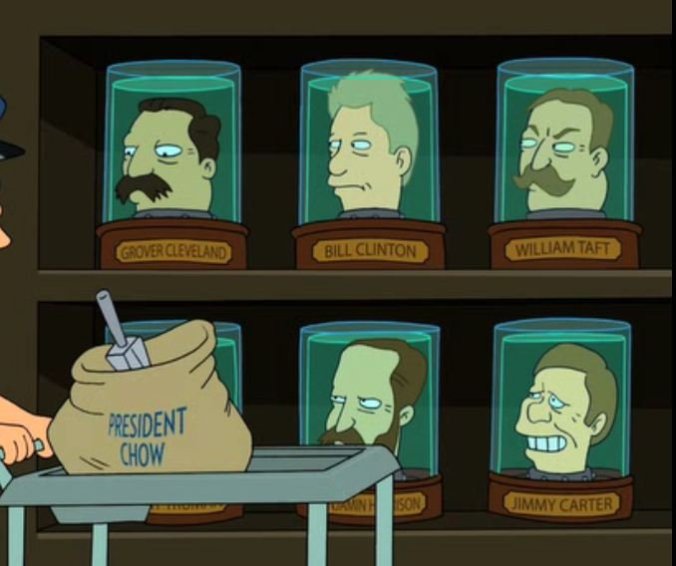
  • Go on, make a “Futurama” joke.

2. Human brain ethics. Is we getting dumber? This Facebook quiz claims that “nobody” can get even 5 of these 10 questions right, and that if you get all ten right, you’re a genius. I hope that isn’t true. I would say that anyone who can’t get at least 8 of the 10 right is either under 15 or cognitively damaged. I really want to know what the average score is. If most Americans really can’t answer these, then we need to dismantle the public school system and start from scratch. And any teacher who can’t answer at least nine of the ten questions should be fired. Continue reading

About The Cosby Verdict

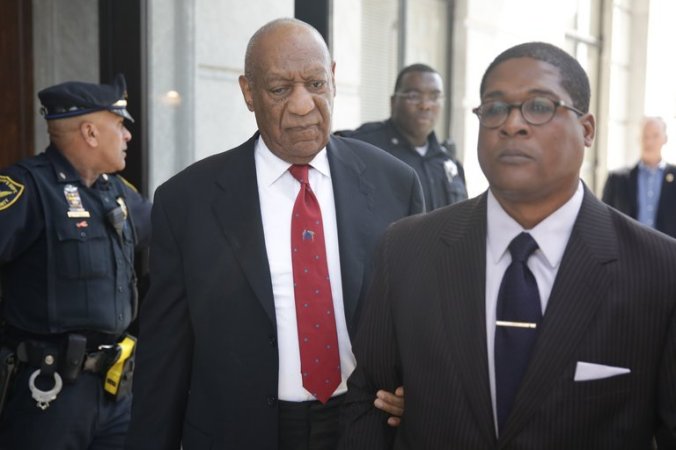
Serial rapist and sexual predator Bill Cosby was found guilty today. From the New York Times:

A jury found Bill Cosby guilty Thursday of drugging and sexually assaulting a woman at his home near here 14 years ago, capping the downfall of one of the world’s best-known entertainers, and offering a measure of satisfaction to the dozens of women who for years have accused him of similar assaults against them.

On the second day of its deliberations at the Montgomery County Courthouse in this town northwest of Philadelphia, the jury returned to convict Mr. Cosby of three counts of aggravated indecent assault against Andrea Constand, at the time a Temple University employee he had mentored.

The three counts — penetration with lack of consent, penetration while unconscious and penetration after administering an intoxicant — are felonies, each punishable by up to 10 years in state prison, though the sentences could be served concurrently.

Observations:

1 Good. Cosby should be serving hard time for rape. This verdict won’t accomplish that, and he has the resources to keep the matter tied up in appeals, maybe even forcing a new trial. Never mind: the verdict itself is satisfying punishment for a true ethics villain.

2. The verdict overcame the Cognitive Dissonance Scale, and that’s no mean feat. The jury deserves a lot of credit. Here, for the umpteenth time, is the scale:

Celebrities—or the characters they are identified with— are typically so high on the scale ( think of Bill/Cliff Huxtable as a plus 100) that even the evidence of a crime can’t pull them down sufficiently for jurors to be able to resolve the dissonance when they are thinking, “But he’s a great man and a wonderful person! How could he do these things?” The dissonance creates automatic reasonable doubt, all by itself, at least with enough jurors to ensure a mistrial, as in Cosby’s first trial. Hence O.J. Errol Flynn was acquitted of statutory rape. Robert Blake (“Baretta”) was acquitted of murdering his wife. Bill Cosby figured to have an unusually strong celebrity shield, but several  factors overcame it:

  • the amount of evidence against him.
  • the fact that what he did represented such a betrayal of his public image
  • the judge allowing, in the re-trial, other victims to testify
  • the series of previously admired show business figures who have been exposed as predators and sexual abusers since the Harvey Weinstein Ethics Train Wreck pulled out of the station, and
  • the fact that Cosby peak celebrity was decades ago.

If the trial had occurred at the time of “The Cosby Show,” I wonder if any evidence could have convinced a jury to convict him. Continue reading

Wait…Al Gore Is From Ancient India?

Okay, okay, I know Al has been riddled with cheap shots over this and never claimed to be the inventor of the Internet. However, that apocryphal claim makes more sense than this one, recently made by Biplab Deb, the chief minister of the Indian state of Tripura. He insists that the Internet was invented thousands of years ago by ancient Indians.

And you thought President Trump saying that Andrew Jackson could have prevented the Civil War was bad!

Heeeeeeeeeeeeeeeeeeeeeeeere’s

Biplab!

“Narrow minded people find it tough to believe this. They want to belittle their own nation and think highly of other countries. Believe the truth. Don’t get confused and confuse others . . India has been using internet since ages. In Mahabharata, Sanjay was blind but he narrated what was happening in the battlefield to Dhritarashtra anyway. This was due to internet and technology. Satellite also existed during that period . . . Some European countries and the US claim that the modern communication system were their invention, but we had all these technologies in ancient times.”

Just in case you think he was misunderstood. or mistranslated, Minister Deb doubled down, elaborating in a scholarly fashion, almost as if he weren’t certifiably off his rocker and so technologically ignorant that he makes Hillary Clinton look like Steve Jobs, in a more recent interview when asked about his earlier jaw-dropping comments:

Whether Mahabharat, Ramayana or Upanishad, these are the empirical texts of our culture. If a person sitting in a palace can narrate what is happening in a battlefield 50 km away, there must have been some technique. Ordinary eyes do not have the facility to see such things. This was a particular technology, in the name of Sanjaya, which is akin to the Internet of today. Now if some of my friends raise questions on proof, then I would say that the proof lies in the Internet technology of today. Those who cannot understand, and feel that to oppose they must run down Indian culture and civilisation and aggrandise Western culture, they are provoked by my statements.

For example, how did the Wright Brothers think up of aeroplanes? They watched birds fly and conceived of a technology that could make a plane that flew. Thus Sanjaya’s use of a technology that could see events far away proves the superiority of Indian civilisation. Those who do not believe in Rama will question his existence. In the time of Rama, there was the Sarayu river, now too it is there. I am born of my mother, why do I believe that, because my mother told me so.

Continue reading