The Fifth Annual Ethics Alarms Awards: The Best of Ethics 2013

Ethics Story 2013

I decided to start with the Best in Ethics this year, in contrast to other years, on the theory that it would get things off to a positive start in 2014. What it did, instead, was make me realize how negative Ethics Alarms was in 2013. Either there wasn’t much positive going on in ethics, or I wasn’t seeing it. My thanks to those of you who send me nominations for Ethics Heroes (and other stories); even when I don’t write about them, they are valuable. Please keep them coming. In the meantime, I pledge to try to keep the jaundice out of my eye in 2014. Things just can’t be as dire as they seemed last year.

Could they?

Here are the 2013 Ethics Alarms Awards for the Best in Ethics:

Most Important Ethical Act of the Year:

The U.S. Supreme Court declared the Defense of Marriage Act unconstitutional, paving the way for the universal legalization of gay marriage. Yes, it was a legal decision, but it was also based, as all such culturally important decisions are, on a societal recognition that what was once thought to be wrong and immoral was, in fact, not. This is ethics, an ongoing process of enlightenment and wisdom about what is right and wrong, and the U.S. Supreme Court did its part. Continue reading


Now THAT’S An Apology: Chuck Klosterman (“The Ethicist”) Shows The Way

Chuck Klosterman, "The Ethicist," stands tall.

Chuck Klosterman, “The Ethicist,” stands tall.

In the past I have been very critical of  The New York Times’ current writer of  its “The Ethicist” column,  but there is no denying that Chuck Klosterman knows how to make an apology. Indeed, responding to a sensitive situation, he may have offered the most exemplary apology I have ever heard or read.

“A Typical Son” is a perceptive and moving blog that documents the life experiences of a young boy with Down Syndrome and his parents. His mother occasionally  posted an open letter to Mr. Klosterman on the blog, citing his multiple uses of the words “retard” and “retarded” in various published works (Chuck was a film and TV reviewer prior to “The Ethicist” gig) over the past decade. She wrote in part…

“…Today people with cognitive disabilities and their allies are asking members of society to refrain from using the word “retarded” (along with all mutations of the word)… My question to you: Is it ethical to contribute to the denigration of the vulnerable? I am particularly interested because you, Chuck Klosterman, are The Ethicist for the New York Times” and the author of the following [examples of denigrating or mocking references to the mentally handicapped]…. Mr. Klosterman, you appear to be an unrepentant hater of people with cognitive disabilities. You are not using the word in an “I don’t mean it like that way…” sort of ignorance which I think would be much easier to redress. You are using the word in a “Those people are exactly who I am talking about” way.

Please enlighten me: What are the ethics of using the R-word? I am the mother of a seven-year-old son who has Down syndrome.  I believe your response to my question could make all the difference in the world.”

Here is Klosterman’s remarkable response: Continue reading

Well, Crap. Again.

Regret2

I am now in shock, having just learned that a dear friend of four decades is now in a hospice with complications of congestive heart failure, and not long to live. We had been exchanging cheery emails, and while I knew of his health issues, I was under the impression that they were manageable, and certainly not this dire. Naturally, we had kept planning on getting together for dinner or a ball game, but one thing or another always intervened, usually on my end, and I had not seen him since the Spring.

This has happened to me before, more than once. What will it take to make me take the time to show love and appreciation to the many people in my life who have earned it, and to try to enrich their days, however many they have left, in some small way, rather than allowing everything else to get in the way?

________________________

Graphic: Ronnie Tabor

On Apologies: the Sincere, the Forced, the Cynical and the Harmful

"Apologize! SINCERELY!"

On February 17th, Washington Post political commentator Dana Milbank wrote a column disparaging what he called “forced apologies.” Although the context of his column and the apology he was refusing to make was too silly to bother with* (yes, there really are things too silly for Ethics Alarms to bother with) something told me I should keep his column handy, and indeed, the perfect time to consider Milbank’s argument has arrived. Forced apologies are flying all over the place.He wrote:

“…one of the most annoying components of our decaying political culture [is] false umbrage. Liberals created this form of identity politics, in which an underrepresented group claims persecution, but conservatives have embraced it. One of its most common expressions is the demand for an apology. It’s phony by definition — an apology can’t be sincere if it’s answering a demand — and the reflexive demand (like a demand for a resignation) serves only as an excuse to keep a news story alive. Sorry, but it’s time to put this tired gimmick to rest.”

Milbank’s essay included an impressive catalogue of recent demands for apologies, and since it was published there have been many more, the most recent example, of course, being Rush Limbaugh’s mea culpa for his outburst against Sandra Fluke. His central thesis, however, is wrong.

Here is the hierarchy of apologies, their function and their motivation, 1-10, from most admirable to despicable: Continue reading

Comment of the Day: “Charles M. Blow’s Anti-Mormon Tweet, Chapter 2…”

Michael, who is now the Ethics Alarms all-time leader in the Comment of the Day category, scores another with a thought-provoking post inspired by the New York Times’ stunning disinterest in its columnist tweeting a religious slur about Mitt Romney. I’ll have some added reflections at the end. Here is his Comment of the Day onCharles M. Blow’s Anti-Mormon Tweet, Chapter 2…”:

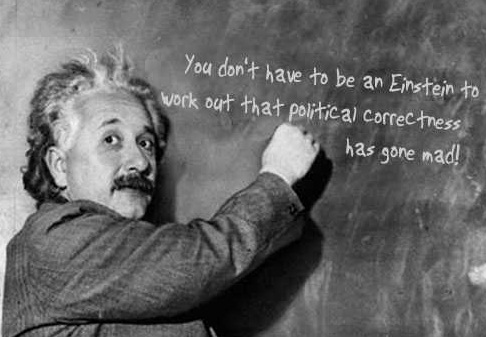
“I remember an article about this when I was in college. In analyzing how the news media treated different races, they came up with the PC Hierarchy. Anyone higher on the hierarchy can criticize or be insensitive to anyone below them. If there is a conflict between two groups, the one higher on the PC scale is assumed to be right”

PC Hierarchy of RacesContinue reading

Charles M. Blow’s Bigoted Anti-Mormon Tweet, Chapter 2: Ironies, Regrets, and Hypocrisy on the Left

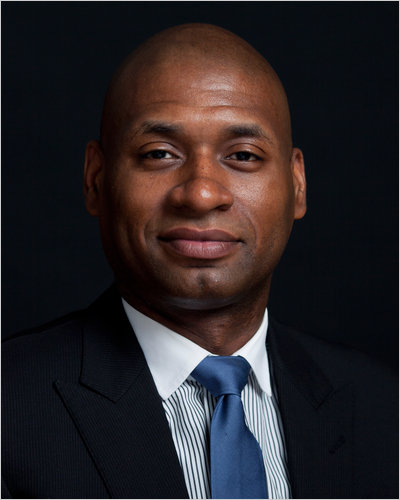
Charles M. Blow, trapped in regret-apology hypocrisy. Fortunately for him, his paper doesn't care.

Charles M. Blow, the New York Times columnist who sent his followers an uncivil, unprofessional and bigoted tweet regarding Mitt Romney and his faith during Wednesday’s debate [“Let me just tell you this Mitt ‘Muddle Mouth’: I’m a single parent and my kids are *amazing*! Stick that in your magic underwear.”] issued a fascinating…something...today in response to criticism, which did not come from the supposedly bigotry-sensitive left. He tweeted:

“Btw, the comment I made about Mormonism during Wed.’s debate was inappropriate, and I regret it. I’m willing to admit that with no caveats.”

It is fascinating to me that this is being called an apology by Blow’s supporters and conservative critics alike. If it is an apology, and that is open to dispute, I’d like someone to explain to me how Blow can use “regret” as a stand-in for “I apologize,” and yet the same commentators who are interpreting the word that way have insisted that President Obama’s repeated use of “regret”to refer to past U.S. foreign policy actions was not the equivalent of apologizing, and have in fact stated that this interpretation by conservative critics is “a lie.”

Among those who have defended the President in this way, I believe, is Charles M. Blow. Continue reading

Ethics Dunce: Dennis “Oil Can” Boyd

Well, I can’t say I’m really very surprised.

And another mystery solved: Why was he called "Oil Can"? Because apparently that's what he has on top of his neck instead of a head.

Former Red Sox pitcher Dennis “Oil Can” Boyd, one of my favorite characters when he was active, admitted this week that he was stoked up on cocaine when he pitched more often than not. “Oh yeah, at every ballpark. There wasn’t one ballpark that I probably didn’t stay up all night, until four or five in the morning, and the same thing is still in your system,” Boyd told WBZ NewsRadio 1030’s Jonny Miller in Fort Myers, Florida, where the Red Sox are about to start Spring Training.  “Some of the best games I’ve ever, ever pitched in the major leagues I stayed up all night; I’d say two-thirds of them. If I had went to bed, I would have won 150 ballgames in the time span that I played. I feel like my career was cut short for a lot of reasons, but I wasn’t doing anything that hundreds of ball players weren’t doing at the time; because that’s how I learned it.” Continue reading

How New Ethical Standards Get Made

Jim Joyce, the American league umpire who cost Armando Galaraga a perfect game by missing the what should have been the final out of the game, achieved immediate respect for admitting his mistake and apologizing to the pitcher and the public. Now another umpire, Gary Cederstrom, following Joyce’s lead, has admitted and apologized for a botched call, a wretched called strike on Johnny Damon that ended another Tigers game with a strikeout when it should have been a game-tying ball four (the bases were loaded at the time.)

ESPN commentator John Kruk and baseball blogger Rob Neyer have expressed dismay at the apparent trend, but it is a legitimate cultural shift in ethical standards.  Continue reading