Of Hollywood Hubris, Bait and Switch and Flat Learning Curves: Just What We Need, a Woke “Gone With The Wind” With Space Invaders

I don’t know, Dana, I really don’t.

I have no idea what’s going on here. On a website called “Gone With The Wind (2025)” we get puffy blather about a stirring, high budget re-make of the politically incorrect classic, still the most successful movie of all time, ready to open at the end of 2025. It stars black Scarlett (Zendaya) and a black Rhett Butler (John Boyega). The site does not permit copying or screen shots. The director is Barry Jenkins, whose output so far has been only stories about social justice, racism, and black protagonists. The site’s description, however, tells us that this is a “Gone With The Wind” remake that will bring “fresh perspectives and contemporary sensibilities (oh-oh!) to this “modern adaptation.”

Although the web page is headlined “Gone With The Wind” (2025) Official Trailer, no trailer to the new film is on it. Several versions of the trailer for the original 1939 version are there to see, however.

Puzzled, I searched for a trailer for “Gone With The Wind” (2025), and got …

…. the trailer for “Gone With The Wind : Invasion!” Is that really a movie? Is it a spoof? Is the website a tease (that is, unethical fake or hoax) that pretends the new film is a remake? And what the hell is this:
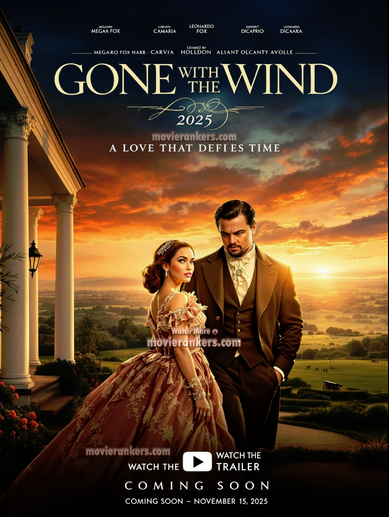
Please rank in order of commercial viability: A GWTW starring Leonardo DiCaprio as Rhett and Megan Fox as Scarlet, a woke remake, and one with invading aliens. It’s a tough assignment.

I would normally assume that no one in Hollywood is so stupid as to make a woke update of “Gone With The Wind,” but then there were recent re-makes of “The Ten Commandments” and “Ben-Hur,” both of which bombed like the siege of Vicksburg. I assume that there are enough stupid people in Hollywood to make a science fiction version, since they got away with “Cowboys and Aliens” (barely) starring Daniel Craig and Harrison Ford in 2011.

Whatever is going on, it’s wrong.
“The Magnificent Seven” Ethics (Spoiler Warning!)

I have noted more than once what an excellent ethics movie the original 1960 Western classic “The Magnificent Seven” is. Occasional  Ethics Alarms contributor and apparently retired ethics blogger Bob Stone made an excellent case for what he calls his favorite ethics movie here, but the screenplay makes its own case with exchanges like this one:

Harry (Brad Dexter): “There comes a time to turn mother’s picture to the wall and get out. The village will be no worse off than it was before we came.”

Chris (Yul Brenner): “You forget one thing — we took a contract.”

Vin (Steve McQueen): “It’s not the kind any court would enforce.”

Chris: “That’s just the kind you’ve got to keep.”

or the very first scene, where gunslinger Chris volunteers to drive a horse-drawn hearse to Boot Hill where a group of armed bigots are threatening to shoot anyone who tries to bury a recently deceased Indian, who lived in the town, in the town’s cemetery along with “decent white folks.”  Steve McQueen (Vin) goes along as Chris’s wing-man, and the first two of the seven team up for an act of pure altruism.

The remake of the film opened over the weekend, and in part because I’m doing a program for the Smithsonian about the lore surrounding the movie, I saw it. And took notes.

It’s not bad. I enjoyed it. It is yet another example of how Hollywood no longer trusts the Western genre or its traditional trappings: the heroes in this and the heroes in most modern Westerns are now portrayed as super-heroes, ridiculously fast on the draw, absurdly accurate with every shot, and able to ride like circus performers. At a certain point, this silliness leads to a damaging loss of suspension of disbelief. The intrusion of gratuitous diversity was also annoying: the end features three heroes riding into the sunset, and they consist of an African-American, a Native American, and a Mexican. How they missed including a handicapped gay woman is mystifying, and somebody should organize a protest. Well, at least all the whites and the Asian guy were killed. That’s something. Continue reading

The Ethics From U.N.C.L.E.

U_N_C_L_E_-logo-symbol-The-Man-From-UNCLE-TV-show

There’s nothing that can be done about this, but I’m going to complain about it anyway.

When I was a sprout, one of my favorite TV shows, indeed among my top 20 shows of all time, was “The Man From U.N.C.L.E.”  At least for its first few seasons—that balance between satire, intentional silliness, cool and plots worth paying attention to was hard to hold—the show simultaneously kidded the James Bond craze and delivered an hour of thrills and intrigue. It was a period piece, to be sure, of its time as much as “Perry Mason,” which is why, I assumed, that it wasn’t in syndication any more.

When I heard that it was getting the Hollywood reboot treatment, I knew what was in store, and it was. The movie, which came out last week, is an unremarkable meh, and the middling to sneering reviews, by people less than half my age and who never saw the original, are taking cheap shots at Robert Vaughn (the first Napoleon Solo) and David McCallum (the only Illya Kuyakin) and the original as if it were crap too.  As has happened so many times before, a careless and disrespectful movie exploiting all the good will created by an older work of art—yes, art, dammit—is burying its better model and has effectively poisoned it in the culture. Ultimately, the loss is ours. Continue reading

“True Grit” Ethics

I haven’t seen the remake of “True Grit,” but I know I will, and like many other fans of the original 1969 version, I’m trying to conquer my biases. The latest effort by the usually brilliant Coen brothers creates ethical conflicts for me, and I am hoping I can resolve them right now. Can I be fair to their work, while being loyal to a film that is important to me for many reasons?

The original, 1969 “True Grit” won John Wayne his only Oscar for his self-mocking portrayal of fat, seedy law man Rooster Cogburn, 

who is hired by a young girl to track down her father’s murderer. I love the film; I saw it on the big screen nine times, in fact. Remaking it with anyone else in the starring role feels like an insult, somehow, as if the Duke’s version was somehow inadequate.

Intellectually, I know that’s nonsense. Artists have a right to revisit classic stories and put their personal stamp on them, and they should be encouraged to do it. Every new version of a good story, if done well, will discover some unmined treasure in the material. Why discourage the exploration? Continue reading