The Romney and Paul Smears: Time For U.S. News Media To Admit Its Bias And Address It

"Mitt Romney is the one in the middle. Or so we're told. Seems plausible to us."

Although the left-leaning bias of the majority of the news media is frighteningly/absurdly/amusingly/frustratingly obvious (depending on your point of view) every single day, the standard response to complaints remains, 1) “What about Fox?” and 2) “Bias? What bias?”  The latter response, if not proof of dishonesty or pathological denial, is one of the symptoms of the problem: the mainstream media is so used to being biased that bias is now the status quo.

There has been plenty of evidence in 2011, however, that the problem is getting worse, and both the public and self-government are being badly served as a result. Recently there was another flutter of statements from pundits and others, like Bill Clinton, that the media obviously favored Obama over Hillary Clinton in the 2008 Democratic presidential nomination battle. Of course it did. That the media then went on to outrageously tilt its coverage in Obama’s favor durin the campaign for the general election is hardly capable of contradiction: Obama was on more magazine covers, got more video time, received more consistently hagiographic stories, his questionably-qualified running mate was barely criticized while the press couldn’t attack McCain’s enough…in short, it was a disgraceful abdication of professional duty. How can journalists decry the influence of Super-PACs and big money in elections when the news media, the most powerful communications factor of all ( because it has—still—the remains of a reputation for being objective, fair and accurate) is consistently biased? Not only is that a bigger problem, it is one journalists themselves have the power to fix…if they wanted to, if they cared. Continue reading
Fairness for Ron Paul

So as not to leave you in suspense longer than necessary, let me be direct: fairness to Ron Paul means firmly declaring him unqualified to run for President on the Republican ticket in 2012.

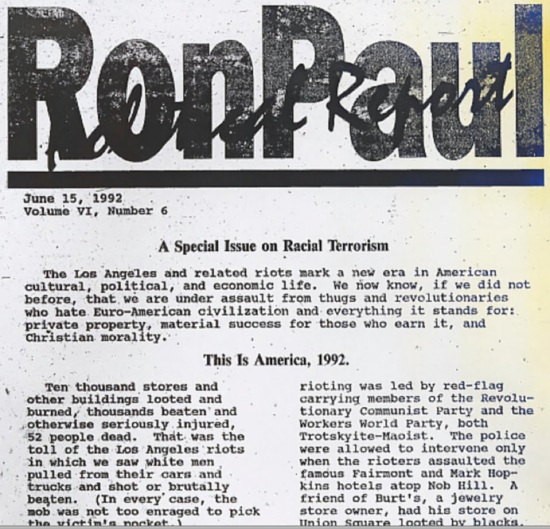
The reason is old, which means that we should have been having this discussion months ago, before Paul first set foot on a debate stage. In the late Eighties and Nineties, while Paul was out of Congress, he published a group of newsletters to true believers called “The Ron Paul Political Report,” “Ron Paul’s Freedom Report,” “The Ron Paul Survival Report,” “The Ron Paul Investment Letter,” and “The Ron Paul Greyhound Racing Tip-Sheet.”  Okay, okay, I’m sorry: that last one is made up—I couldn’t resist. But the others are real.

Also real were periodic statements in the newsletters that could charitably be called “racially-insensitive” or not-so-charitably be called “racist.” Paul has been questioned about these before, and in the run-up to the Iowa Caucuses where he is a genuine contender is being grilled on them again. Yesterday, he walked out of a CNN interview when Gloria Borger refused to let the subject go. Continue reading

The Ethically Messy, Legally Muddled, Drone Killing of Anwar al-Awlaki

Ah, those were the good old days: when warfare was simple, fair, brutal and stupid!

The C.I.A. drone killing of Anwar al-Awlaki, an American citizen who was also an Al Qaeda leader, is raising multiple ethical controversies that pollute each other,  making ethical coherence all but impossible.

The issues:

  • The target was an American citizen. Whatever his crimes, shouldn’t he have the right to a trial before being summarily executed?
  • There is no conclusive proof that he actually did anything that resulted in violence against Americans, or posed an imminent threat to national security. Was he targeted for his words, rather than his conduct? How can it be legal or ethical for the U.S. to target a citizen for death because of his political views?
  • The United States has officially forsworn assassination as a military or intelligence tactic. Yet this appears to have been one.
  •   Yemen is not a field of combat, and there was no imminent threat to human life creating an exigency to require U.S. forces to target someone there, whether he was a citizen or not.

Wolf’s Question and the Ethical Answer

"Upon reflection, perhaps failing to buy health insurance was a mistake..."

Wolf Blitzer’s question to Rep. Ron Paul at the CNN/Tea Party Express Republican debate in Tampa, Fla. has received most of its publicity because of the idiotic response it elicited from the audience, or some of it. That is good fodder for the Tea Party-slimers, but it was the query itself that raised the most interesting ethical issue.

What should happen, Wolf asked, when a healthy 30-year-old man who can afford insurance chooses not to buy it, and then goes into a coma and needs intensive care for six months? Ron Paul, true to his libertarian soul, muttered unhelpfully that we should all take responsibility for ourselves, which is true, but non-responsive. Blitzer followed up: “But, Congressman, are you saying the society should just let him die?” (This is where the barbarians at the gates added their bloodthirsty shouts of “Yeah!”)

Slate’s Jonah Goldberg has written about what he calls the three possible options available to American society to handle the comatose slacker: Continue reading

Richard Cohen, National Interests, and the Ethical Duties of the US to the World

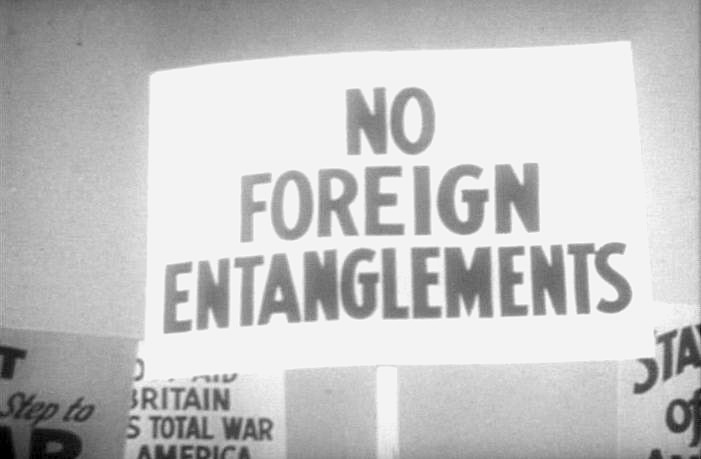
There used to be no columnist who infuriated me more consistently than Richard Cohen. Those were the hazy, golden days before I discovered E.J. Dionne, Paul Krugman and Harold Mayerson, however, whose rigid ideology virtually precludes objective analysis. Cohen isn’t biased, he’s just wrong more often than not. But he is also capable of bursts of moral and ethical clarity. Today was an example, as he took on the isolationist voices on the left and the right that make up a large component, if not the majority, of our elected leadership today.

Cohen begins by recounting a section from  Erik Larson ‘s book,“In the Garden of the Beasts,” about how the American foreign policy establishment in the Thirties resisted efforts by William Dodd, then ambassador to Germany, to protest the Hitler government’s increasing persecution of Jews. Humanity, and the U.S., paid a steep price for its inward-turning perspective after World War I, as we abdicated our traditional role as defender of liberty, freedom, democracy and human rights on the world stage. Continue reading

The Most Unethical Businesses and Viatical Settlements

A British website has posted its list of the “10 Most Unethical Ways to Make Money.” Like all such lists, there are some eyebrow-raising choices, both in what is included and what is not, usually attributable to the political and ideological biases of the list-makers. For example, until we have figured out a way to run civilization without oil, it is more than a bit unreasonable to declare the entire oil industry unethical, climate change or no climate change. Oil is on the list, though, while child porn, drug dealing and gambling are not. The list could be the result of a collaboration among Greenpeace and Ron Paul.

Still, most of the inclusions on the list, like blood diamonds, ivory, and sweat shops are neither surprising nor controversial. Placing one of the businesses on the list, however, qualifies as a public service. Most people have no idea what the industry is, or what is unethical about it.

That business is the viatical settlement industry, which preys on human impulsiveness and irresponsibility to make large profits. Unfortunately, the list’s brief explanation of the industry misses its most unquestionable and sinister incarnation: buying structured settlements. Continue reading