Whose Ethics Alarms Are Ringing Over “Truthy”?

Colbert

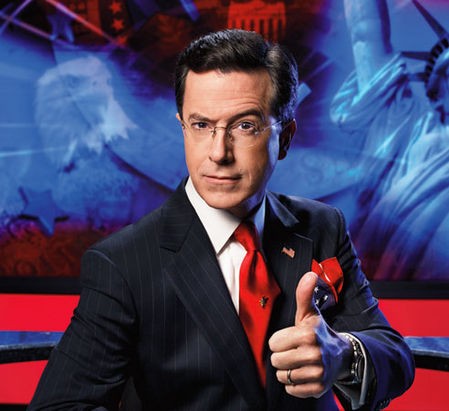
Sad but true; the NSF spent a million dollars of a project named after a Stephen Colbert gag. But that’s not the worst part…

It certainly seems that most of the ringing over Truthy, the disturbing University of Indiana internet speech monitoring project funded by the National Science Foundation, is occurring in the brains of conservatives. Does that mean that one is a biased right-winger to think that the government has no business deciding what is “misuse” or “abuse” of social media—social media meaning “the communication of opinions, statements and ideas over the web”?

I don’t think so. I think it means that a troubling number of progressives, including a large constituency in the Obama administration, are convinced that the only way for their ideology to prevail is to marginalize opinions they don’t like as “hate speech,” restrict the First Amendment by demonizing opponents, and engaging in de facto censorship though harassment. Being opposed to that doesn’t make anyone right wing. It means that they reject the unethical theory that the ends justify the means, which at this point in our history seems to be flourishing primarily on the Left.

Did you miss the news about Truthy when it first provoked a flurry of news reports last fall, almost exclusively from conservative media? That’s because the mainstream media—surprise!—saw nothing at all alarming or even newsworthy about a government-funded project to “study how memes spread on social media,” to identify what it considers “false and misleading ideas,” with a major focus on political activity online,  to “detect political smears, astroturfing, misinformation, and other social pollution” —in other words—mine—-to track down opinions and assertions on the internet that argue against Obama administration policies, progressive movements and the agendas of liberal-biased researchers.

When the conservative news service Washington Free Beacon blew the whistle on this under the radar and misbegotten project—a project that could only scratch the surface of being ethical if it was absolutely non-partisan and neutral in all respects, which in 21st century U.S. academia is impossible—the reaction at the University tells us everything we need to know. Continue reading

Ethics Hero (sort of, maybe, a bit): Google

Google is a little like the turncoat in an action movie who almost sinks the hero but then makes a surprise return at the climax to save the day. In 2006, many of us were disgusted when Google agreed to help the oppressive Chinese government censor speech and information in exchange for getting a crack at the biggest market on the planet. We heard the company’s rationalizations about compromising their principles now to help open up Chinese society, but the truth always was that “Do no evil” Google was willing  to do evil for four years in exchange for a lot of yen.  At last the company finally decided that it couldn’t look at itself in its virtual mirror anymore, abandoned its agreement to help China control what its people could read and say, and moved its server to Hong Kong.

Google has garnered a lot of praise on-line and elsewhere for its decision. The company did the right thing, it is true, but it would have been far more admirable if it had taken the same position four years earlier, and refused to play the part of China’s cyber-muzzle in its quest for big bucks.

That feckless guy in the action movie who comes back in the last reel isn’t really a hero, you know. The only reason he is in a position to act like one is that he did the wrong thing in the first place. We’re glad he had a change of heart, sure. But let’s not get carried away.

__________________

Update: In the category of getting “carried away,” here is a stunning example from “Op-Ed News”:

“…again Google has found itself in a situation where its ethics are being challenged by one of the most oppressive governments (In our opinion) in the Global Community, and rather than backing down, Google has chosen to stand-up for their belief that moral values and ethics trump corporate profit, an occurrence so rare these days that we believe Google  deserves special recognition for refusing to compromise their core ethics of “Don’t be Evil,” even in a situation where it could result in the loss of huge profits in China’s booming economy and what may one day be one of the largest Internet markets in the world…”

The author, William Cormier, conveniently ignores the fact that Google’s decision that “moral values and ethics trump corporate profit” has only come after four years of letting profit trump its values. What does he think Google has been doing the last four years? Does he really believe China just started  censoring Google searches? You can read his entire, hilarious hosanna to Google here.