Ethics Hero, Corporate Division: Merck

Sometimes, though their implacable foes would refuse to acknowledge it, big corporations do the right thing even without a metaphorical gun at their heads. This week’s Economist magazine relates an amazing example that the public needs to know about, especially since it challenges popular stereotypes about Big Pharma.

The Economist begins by horrifying us with a deadly aspect of life in third world countries that are hot and wet: “neglected tropical diseases,” or NTDs. These are neglected because the populations that suffer from them are poor and far away, but they affect more than a billion people. Among the scourges, all parasitic, are Buruli ulcer, Chagas disease, guinea-worm disease, leishmaniasis, river blindness, trachoma and yaws. There are 18 pernicious maladies currently listed as NTSs.

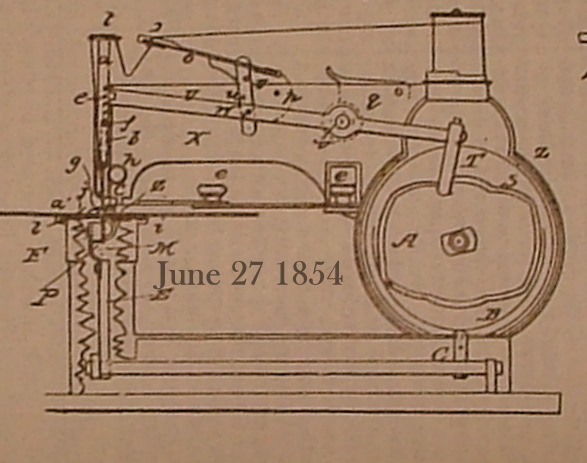
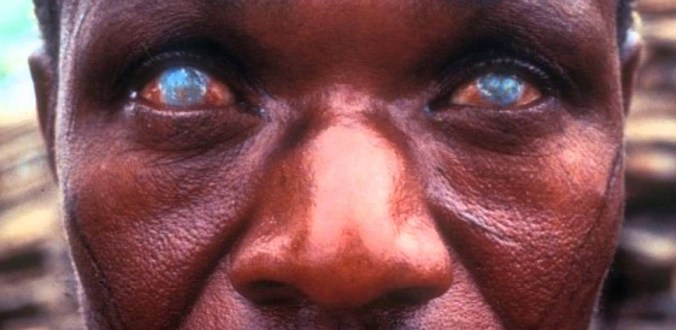
In the 1970s, mega-pharmaceutical firm Merck developed the drug ivermectin after tests on animals with parasitic infections. William Campbell, one of the firm’s parasitologists,told company executives that the new drug might be effective against the parasite that caused onchocerciasis, or river blindness, which  afflicts populations in in parts of Africa, Latin America, and  Yemen.  He was given the green light to find out.

The first human trial of ivermectin as treatment for river blindness took place in Senegal in 1981, on patients who had the early stages of the disease—itching, rashes— but no damage to their eyes yet. The results were encouraging,  indicating that ivermectin was safe for humans and highly effective at stopping the disease before it blinded its victims.  Merck, however, now faced the problem that has impeded cures for all the neglected tropical diseases: those who needed ivermectin were too poor to buy it, and so were the nations where they lived. Big corporations are not charities; they have investors, stockholders and a bottom line. They are not accustomed or programmed to give away their products.

Yet Merck made a corporate decision that Bernie Sanders and Elizabeth Warren say is impossible. Starting in 1987, it made an open-ended commitment to distribute as much ivermectin as was needed to eradicate the river blindness worldwide. In the next ten years, it swallowed the cost of 100 million doses. Continue reading
Sixth Grader Lauren Arrington Is No Plagiarist—This Science Fair Ethics Train Wreck Is Adult-Engineered

You know, it's really all YOUR fault!

You know, it’s really all YOUR fault!

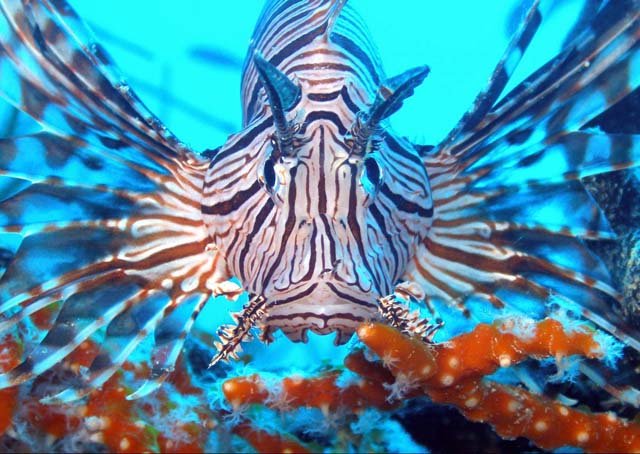
Florida sixth grader Lauren Arrington found herself a sudden media star when her science fair project was featured on NPR, CBS, and other media outlets for allegedly breaking new ground.  Rather than rub hormones on chicks or build models of volcanos, Lauren’s project focused on the Indo-Pacific lionfish, a troublesome invasive species that is causing ecological havoc in ocean waters along the Southeastern United States and the Caribbean. The NPR story, “Sixth Grader’s Science Fair Finding Shocks Ecologists,” was typical: it quoted Lauren’s “Eureka!” thusly…

“Scientists were doing plenty of tests on them, but they just always assumed they were in the ocean. So I was like, ‘Well, hey guys, what about the river?’ “

Gee, I wonder why a 12 year-old girl was thinking about that? Well, it seems that her father, Dr. Albrey Arrington is the executive director of the Loxahatchee River District, and has been involved in lionfish research. Not that there is anything necessarily unethical or unusual about a parent suggesting a science fair project to his child that is in that parent’s own area of expertise, or even providing access to resources for the child to accomplish the project, but as we will see, Dr. Arrington set his daughter up for trouble she couldn’t possibly understand. Continue reading

The Ethical Guinea Pig

Which would be…you!


Don't say I didn't warn you!

Don’t say I didn’t warn you!

A group of professors and graduate students from the University of Virginia, The University of California (Irvine), and the University of Southern California have announced that they are performing research on “how moral minds work” and inviting volunteers to be subjects  in the study…

“Why do people disagree so passionately about what is right? Why, in particular, is there such hostility and incomprehension between members of different political parties? By filling out a few of our surveys, you’ll help us answer those questions We, in return, will give you an immediate report on how you scored on each study, quiz, or survey. We’ll show you how your responses compare to others and we’ll tell you what that might say about you.”

You are invited (by them) to register (you can do so anonymously if you choose) online and begin the process. The website is here, at Yourmorals.org.

If this turns out to be a secret government plot to identify those with insufficient “social justice” inclinations and send them to forced re-education camps where they’re required to listen to Lauryn Hill songs, Sandra Fluke speeches and Michael Moore rants all day, don’t blame me: I’m not endorsing the study, just letting you know about it. I have been singularly unimpressed with most scientific research in this field, and not just because it seems unusually vulnerable to the biases of the researchers.

I was recently listening to NPR interview a researcher in animal morality who informed the audience that “dogs are a species that don’t hold grudges.” Tell it to my Jack Russell, Rugby, a dog who loves everybody and everything except the two Belgian Shepherds that belong to my neighbor, which look sufficiently like the two dogs of the same breed that attacked Rugby when he was a puppy that he races to the window every day at the exact moment they walk past our house, whereupon he growls, barks and generally goes nuts in an orgy of fury, using his big-dog bark to say (this is a rough translation): “GET AWAY FROM HERE YOU STUPID CRAP-HEADS!!! JUST WAIT UNTIL I TRACK YOU DOWN!!! YOU’RE DEAD, DO YOU HEAR ME, DEAD! YOU THINK I’VE FORGOTTEN??? SOONER OR LATER, I’LL GET YOU, JUST YOU WAIT!!!!! IHATEYOUIHATEYOUIHATEYOUIHATEYOU!”

Anyway, good luck.

__________________

Pointer: Charles Green (Thanks, Charlie!)

Comment of the Day: “Nomination For Enshrinement in the Hall Of Bad Ethics Ideas: A Hippocratic Oath For Scientists”

Zoebrain, the Aussie researcher who has enlightened many Ethics Alarms debates, provides delicious perspective to the post regarding scientific ethics, specifically regarding the question of whether scientists can or should pledge, like doctors, to “do no harm.”

Here is her Comment of the Day to Nomination For Enshrinement in the Hall Of Bad Ethics Ideas: A Hippocratic Oath For Scientists:

“Tell the truth, the whole truth – but possibly not nothing but the truth, as long as any opinion is unmistakably marked as such. Correct your past mistakes as you find them. Also be prepared to accept responsibility for the moral consequences of the power you provide to others being misused. Unless you feel it right to give them the power, you must accept personal responsibility and so withhold it. That’s not a Scientific sin, it’s a personal one.

“Providing the sharpest possible scalpel to a surgeon is one thing. Providing it to a vivisectionist of “untermenschen” another. Providing it as a toy for a 6-month-old baby yet another.

“The only scientific sins are knowing falsification of results, and omitting contradictory evidence. But scientists have responsibilities as humans too.

“Please have a listen to this song [ by musical satirist/scholar Tom Lehrer’s “Werner Von Braun,” about the amoral Nazi-turned-U.S. rocket-scientist.]:

Continue reading

Nomination For Enshrinement in the Hall Of Bad Ethics Ideas: A Hippocratic Oath For Scientists

Nope. No sewing machine. It will cause too much “harm.”

A blogger for the Lindau Nobel community asks, as a follow-up to a discussion raised in one of the august group’s recent meetings, whether scientists should have to take an oath similar to that traditionally (but not universally, by the way) taken by physicians, a pledge to “do no harm.”

No. Next question!

This is not merely a bad idea, but an arrogant and ignorant one. The medical profession is dedicated to healing, without regard to who is being healed. “First, do no harm” is a rational and excellent absolute principle, one that relieves the profession of the burden of many (but not all) complex utilitarian dilemmas that doctors and other health professionals may not be equipped to solve. Medicine is much narrower than science, and its limitations more clear. Most people would agree with doctors on what constitutes “harm” in 99% of the situations where the issue would be raised. Not so science, where one man’s monstrosity is another’s giant step for mankind. Continue reading

The Unethical Consequences of Ethical Coffee

"Mmmmmmm! Smells ethical!"

When ethical conduct becomes too complicated, confusing, or controversial, the vast majority of people will shrug and give up, leaving the conduct to be embraced by fanatics who can be relied upon to argue among themselves about who is really being ethical.   Welcome to the world of so-called ethical coffee, where adherents must choose between a dizzying number of certifications and categories to ensure that their coffee purchases support ethical practices and objectives.

“Shouldn’t the dollars you spend support the values you believe in?,” chirps the home page of EthicalCoffee.com. “Fortunately, when it comes to the morning cup of coffee so many of us love, it’s easier to put your money where your conscience is than with any other commodity. (Just try to find a gas station that can certify that the gasoline you’re putting in your tank isn’t linked to environmental disasters or labor abuses halfway around the world.) With coffee, you can pay a little more and know the grower is getting a minimum price or be sure you’re helping preserve winter habitat for some of the same songbirds that will show up next summer in your back yard.”

Hey, sounds great! Love those song birds! Then comes the “but’… Continue reading

Climate Science Ethics: The Lovelock Interview

James Lovelock, 90, is a legendary scientist, environmentalist and futurist. He has just given a lengthy interview in which he opines about the recent scandals in climate science, the value of skeptics, the limitations of political solutions to big problems, and the inherent uncertainty of science. The interview is remarkable for what it reveals about this independent scientist’s honesty, integrity, respect for adverse opinions and understanding of human nature. It is also that true rarity, an assessment of climate change that is measured, reasonable,  persuasive, and logical.

You can read the whole interview here, and the key statements  here.

Dubious Ethics Studies, Part II

There are good reasons to be skeptical of all studies purporting to analyze what people think according to how they fit into common ideological categories. In 2003, a study purported to portray conservatism as a kind of mental disorder. In 2008, another series of studies was packaged to make the case that liberals were compassionate in words only, that when it came to putting one’s money where one’s conscience was, it was those mean old conservatives who opened their wallets. Now comes a study called “Do Green Products Make Us Better People?”published in the latest edition of the “Journal of Psychological Science.” Its authors, Canadian psychologists Nina Mazar and Chen-Bo Zhong, did a series of experiments comparing the behavior of patrons of “green” products and the conduct of the less environmentally correct. Continue reading