Comment Of The Day #3: “Back To The Bigoted Baker: It’s Complicated…More Than I Thought”

And now there are FOUR Comments of the Day on the post about the Great Cake Controversy. This is a record number for a single Ethics Alarms post. It is a true ethics conflict: which should have priority in a pluralistic society, the right of all citizens to be treated equally under the law, and to have the government ensure their right to the pursuit of happiness, or the individual right to act and live in concert with one’s sincerely held religious beliefs, and to not be forced into expressive speech, part of the right to liberty? This part of the controversy doesn’t even include the ethical question of whether either party should have allowed this to be come a legal dispute.

When I post the fourth COTD, with was a response to #3, I’ll include links to the other three and include a poll for readers to register their opinion regarding which comes closer to their own view

Here is Extradimensional Cephalopod’s  Comment of the Day on the post Back To The Bigoted Baker: It’s Complicated…More Than I Thought:

There’s an obvious question here (well, several) that occurs to me: What if I walked into the shop and asked for a wedding cake for no reason at all? Nobody’s getting married; I just want the cake. Is it against his religion to make that style of cake for anything other than weddings? Do I have to show him a marriage license? I’m an atheist; will he refuse to acknowledge my marriage because you can’t have marriage without a god? Does only the Christian deity count for a “real” marriage?

I would argue that the artistic quality of the cake has nothing to do with who is getting married, or if there’s even a marriage at all–at least, as far as religion is concerned. If I asked someone to draw me a picture of a bird, they don’t have to know anything about me in order to make it. Their art doesn’t have anything to do with me, and they are not expressing any objectionable ideas. They’re not endorsing me in any way by taking me on as a customer. Therefore, this isn’t like refusing to make a swastika cake. This is like refusing to sell a cake to Nazis. (Yes, Nazis should be able to buy cake like anyone else. Preventing them from doing so is just bullying, and won’t teach them anything except more hate. How will they learn how to appreciate different people if only other Nazis talk to them?) Continue reading

Comment Of The Day #2: “Back To The Bigoted Baker: It’s Complicated…More Than I Thought”

This the second of the Comments of the Day on the post about the Great Cake Controversy; a third arrived last night, which will appear shortly. It was authored by the always provocative Mrs. Q—you can tell because she always uses ampersands. I used to turn them back into “and,” and then decided that this was a signature feature.

The three Comments of the Day on this topic are as different as they could be. I detest the Colorado baker controversy, because three people could have and should have avoided the whole thing, saved a lot of time, money, and ink, and just exhibited some empathy and proportion rather than avoiding the Golden Rule so emphatically. I detest it, but it certainly is a rich ethics subject.

Here is Mrs. Q’s  Comment of the Day on the post Back To The Bigoted Baker: It’s Complicated…More Than I Thought:

When my wife & I were looking for wedding rings we stopped at a place where the owner after talking to us went on a strange rant about some NFL player who came out gay. The owner went so far as to physically mimic kissing another guy in telling his story, and shivering with wide toothed disgust at the thought. He didn’t say he wouldn’t sell us a ring, but obviously we didn’t want one from his store & the feeling was mutual.

We could have gone on Yelp and given the store a bad review or complain to someone who could “go after” him politically, but at the end of the day our relationship didn’t (doesn’t) need others affirmation. We were certainly hurt – not by his thoughts but the manner in which he shared his thoughts. Yet we picked our proverbial battle and let it go. Why? because we too are Christian and know no one person can ever really give us what we need. Hurt feelings can be gotten over and forgiveness heals wounds far faster than enacting revenge because someone doesn’t agree with us or what we do.

We have to ask what will be next. I don’t believe suddenly we’ll see “No Homo’s Allowed” signs on shops. And ultimately that’s not what I believe this case is about. Also I’m not convinced that these bakers are bigots either. Instead I suspect what this case is ultimately about religion and thought police. Orthodox Muslims having to make non-Halal foods, Jewish deli’s selling pork, Christians making Satanic themed confections. I’d rather see a few victim-minded SJW’s get butt-hurt than force others to sign off on what are ultimately another persons *private* beliefs. Forcing business owners to think as we wish sets a dangerous precedent while walking away from a shop not being affirmed only requires one to find another place to go. And honestly it’s fairly easy to find smug leftist affirmation at businesses. Yes…even in small towns too. Continue reading

Back To The Bigoted Baker: It’s Complicated…More Than I Thought

The last time (in July) I dealt with the apparently thornier-than-I-thought issue of the Colorado baker who refused to sell a wedding cake to a gay couple, I assumed that the Supreme Court would treat this as a pure public accommodations case, and side with Colorado and the couple. I was wrong. Now it is beginning to look like baker Jack Phillips may even prevail, based on the justices’ comments during oral argument.

Then I wrote, quoting my post when this case first surfaced…

“The court’s conclusion  is impossible to rebut. The cake the baker was asked to bake for the gay wedding differed not at all from one he would normally sell a straight couple. In truth, this had nothing to do with expression. He was just refusing to serve a gay couple because of their sexual orientation. Selling them a standard cake would neither constitute, nor would it be recognized as a “message” in support of gay marriage.

The Court agreed that a wedding cake with a customized message celebrating a same-sex marriage as such might implicate First Amendment speech issues, but “we need not reach this issue,” the court said. “We note, again, that Phillips denied Craig’s and Mullins’ request without any discussion regarding the wedding cake’s design or any possible written inscriptions.”

In other words, Phillips was gratuitously and unnecessarily being a cruel jerk. An alleged Christian who is unable to detect the basic Golden Rule application in treating fellow citizens with the minimal level of respect inherent in allowing them to buy a standard wedding cake requiring no “Yay Gay!” or “Charlie and David Forever!” messages in pink frosting deserves no sympathy or quarter from the law. Could the couple have just shrugged and found another bakery? Sure, they could have. Linda Brown could also have just shrugged and found an all-black school to attend, too.

The gay couple are not the villains here. Jack Phillips broke the social contract, as well as the law.”

Recent articles about the SCOTUS appeal have added some facts that I had missed, or not given sufficient weight. For example, Continue reading

Morning Ethics Warm-Up, 11/16/17: Keeping the Public Ignorant About Unethical Lawyers, Sugar Lies, And A Terrible Trump Tweet…

Good Morning, John!

Sing us into the first item, would you?

1 “Is anybody there? Does anybody care?” Everywhere I go, lawyers are talking about the David Boies scandal, which I wrote about here. I haven’t seen much media discussion about it at all. We have now seen one prominent hack lawyer, Lisa Bloom, and one prominent, skilled and respected lawyer, Boies, demonstrate high profile professional conduct that should receive serious sanctions from their profession, and it appears that most of the public and the media neither knows this nor cares.

Bloom is just a venal, incompetent, bad lawyer. The real crisis is when top lawyers blithely engage in wildly unethical conduct in a high profile case, but I doubt the public sees the difference. Very little commentary on Boies’s betrayal of the New York Times  focused on the throbbing black-letter ethics violation involved.  Today, a front page story in the New York Times about Black Cube, the sinister investigative crew hired by Boies to gather dirt on the Times before it blew the whistle on Harvey Weinstein completely missed this crucial element of the story. It also makes it near-certain that no one will read the report who need to know how poorly legal ethics are enforced.

Here’s the headline in the print edition: “Sleuths for Weinstein Push Tradecraft Limits.”  Tradecraft? Online: “Deception and Ruses Fill the Toolkit of Investigators Used by Weinstein.” Nowhere in the article are readers informed that lawyers are forbidden, without exception, from using any contractor that regularly uses deception.

Here is the kind of thing Black Cube specializes in, from the Times piece:

“Earlier this month, a former hedge fund employee was flown from Hong Kong to London for a job interview. Around the same time, a current employee of the same Toronto hedge fund was also flown to London for interviews. The company courting them was fake. Its website was fake. There were no jobs to be had, and the woman who set up the interviews was not a recruiter but an agent working for an Israeli private investigative firm.

This was not an episode of “Homeland” or the latest “Mission: Impossible” installment. Interviews and court papers show that these deceptions were part of a sophisticated and expensive investigative operation. The objective, according to one filing, was to gather proprietary information held by the hedge fund. The agent worked for Black Cube.”

Every single jurisdiction in the United States declares in its legal ethics rules, usually in the rule about misconduct, 8.4 (bolding mine):

It is professional misconduct for a lawyer to:

(a) Violate or attempt to violate the Rules of Professional Conduct, knowingly assist or induce another to do so, or do so through the acts of another;

(c) Engage in conduct involving dishonesty, fraud, deceit, or misrepresentation…

How much clearer can it be? It is unethical for a lawyer to employ someone or an organization that he or she knows routinely and reliably engages in “dishonesty, fraud, deceit, or misrepresentation.” Yet that’s the only reason anyone hires Black Cube. Conclusion: Boies breached a major ethics requirement, perhaps the most serious one there is. And why?  Because a client paid him to. Continue reading

Ethics Quote Of The Week, And A Few Related Diversions

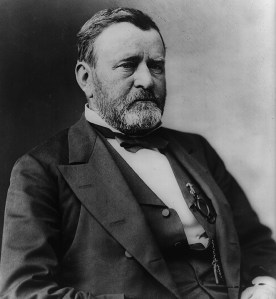
My son is named after this President, incidentally.

The quote itself is by Ron Chernow, the historian who authored the recent well-reviewed biography of out 18th President, “Grant,”  “Hamilton,” the biography that inspired, we are told, the mega-hit musical. and “Washington” (won’t somebody send a copy to the fools at Christ Church?) was given to an interviewer as his description of another book, the Philip Roth’s historical novel  “The Plot Against America”:

[A] democracy can be corrupted, not by big, blaring events, but by a slow, insidious, almost imperceptible process, like carbon monoxide seeping in under the door.

Some random thoughts on this statement, which I believe is exactly right, and a lot more interesting than the more frequently used analogy about boiling a frog slowly:

  • Grant, as Chernow’s book (among others of recent vintage) documents, was present at one of those points when democracy seemed to be in the process of being poisoned, and acted forcefully.

By 1868, when Grant was elected to succeed Andrew Johnson, who had done everything he could to allow the South to resist extending civil rights to the newly freed slaves, the KKK had evolved into a powerful terrorist organization that referred to itself as  “The Invisible Empire of the South.” Under the  Klan’s first  “Grand Wizard,” the brilliant former Confederate cavalry general  Nathan Bedford Forrest, whites from all classes of Southern society joined the Klan’s ranks. They attacked and punished newly freed blacks for crimes like  behaving in an “impudent manner” toward whites, brutalized the teachers of  schools for black children, and burned schoolhouses. It also terrorized and often murdered Republican party leaders those who voted for Reconstruction policies.  In Kansas over 2,000 murders were committed as the 1868 election approached; in Louisiana, a thousand blacks were killed in the same period.

Grant entered office knowing that the Civil War victory could come apart. He made some bad appointments–Grant was naive about politics and trusted too easily—but his choice as Attorney General, Amos T. Akerman, was masterful. With Grant’s support, and the with the help of the newly created Justice Department under Grant, he vigorously worked to enforce the Fifteenth Amendment, which gave the vote to black men in every state, and the First Reconstruction Act of 1867, which placed tough restrictions on the South and closely regulated the formation of their new state governments. Between 1870 and 1871, the Republican Congress passed and Grant signed into law the Enforcement Acts, which made it a crime to interfere with registration, voting, officeholding, or jury service by blacks. Congress also passed the Ku Klux Klan Act, which allowed the government to act against terrorist organizations.

  • When I was growing up and becoming interested in the Presidents, a life-long passion that led me to both law and ethics, Grant was routinely listed as one of the worst in the line. All one heard from historians was about the financial scandals that rocked his administration. Grant’s great success in subduing the Klan was literally never mentioned. The main Presidential historian then was Arthur Schlesinger Jr., a member of Jack Kennedy’s inner circle. His job as he saw it was to minimize the contributions of any Republican President, like Teddy Roosevelt (“near great” in his rankings), Eisenhower (“below average”) and Grant (“failure’). Meanwhile, Woodrow Wilson, who dragged the U.S, into the first World War, botched the Versailles Treaty and who actively revived the Klan, being a stone-cold racist, was “great.” Naturally, I believed all of his distortions, which were largely those of the historians at the time, then, as now, often partisans and propagandists. It took me a while to realize that this had been my first encounter with the Left attempting to alter present perception by controlling the past.

That is one of the major sources of Chernow’s carbon monoxide today, except that the disinformation now emanates from the schools, colleges, and the news media. Continue reading

Abashed Morning Ethics Warm-Up, 10/28/17 [Updated]

Good Morning!

1 Following a day in which various exigencies and responsibilities, plus fatigue and distraction, caused me to whiff on getting up at least three posts I thought were worthy of consideration, yesterday I failed to get any up at all. This makes me very unhappy, and I apologize. A fly-in, fly-out assignment in New York City had me up early and back late, whereupon I had my son’s birthday to acknowledge, the World Series to scrutinize and some aching feet to attend to. Priorities can’t be ignored, and being able to recognize when something you want to do and are devoted to doing just cannot be done well in the time allowed is a matter of life competence. Yet I hate failing loyal readers who care about ethics issues and rely on Ethics Alarms to explore them, and feel negligent when this occurs…fortunately, not very often.

Still too often, however.

2. The emergence of Hollywood director James Toback as a serial sexual harasser (at least) had me preparing a post about why theatrical directors are especially prone to this conduct. The gist of it was that in college, where participation in theater is often more social than aesthetic, directors forming romantic relationships with their cast members is neither taboo nor typically exploitative. Similarly, in community theater such relationships are not unusual or unethical, unless they interfere with a director’s artistic duties: casting an inferior performer because she’s your girl friend or because you want her to be is per se unethical. These are the cultures that produce many directors, and they enter professional theater, and later films, with bad habits that cannot be tolerated or continued in a professional context. Similarly, performers also come out of that culture. It may be difficult for some of them to comprehend that what is arguably acceptable in amateur settings is becomes unconscionable in a professional one.

However, this cannot explain Toback’s conduct. An astounding 200 plus women now say they were harassed or assaulted by him, and the list filled up in less than week. Compared to Toback, Harvey Weinstein and Bill Cosby seem restrained.

Actress Selma Blair, for example, says her agent arranged for her to meet Toback for a possible role in one of his films after her career had begun with promise. Blair says the meeting was scheduled at a hotel restaurant, but  when she arrived the hostess told her that Toback wanted to meet in his hotel room. There, Toback asked her to perform a monologue nude, directed her to have sex with him, and said he would not let her leave until he “had release.” Then the actress says, he simulated sexual intercourse on her leg. 

I begin my sexual harassment seminars by stating that the problem is one of ethics. If you have respect for human beings regardless of gender, if you are fair to people you interact with, if you are caring toward them and obey the Golden Rule, if you apply the three basic ethics alarms checks (“Does this seem right? Could I tell my mother about this? Would I want this on the front page of my local newspaper?”), then you won’t be a harasser. But I can’t begin to explain how someone reaches the point of depravity and utter contempt for women that he would behave the way Blair describes Toback behaving. This is, to understate it, uncivilized. Was he raised by wolves? I suspect even wolves would be horrified by his behavior. My father never had to sit me down at 13 and say, “Jack, it’s time for a talk. It’s never right to simulate sexual intercourse on a woman’s leg when she has come to interview for a job.” I didn’t need to be told this. Who needs to be told this who isn’t already a dangerous sociopath?

Somehow, the culture of Hollywood devolved to such a state that abuse of power and women became a social norm, and even conventionally acculturated adults had their values erased and replaced. That is the only way the Tobacks and Weinsteins could come to exist. That culture is now too sick and entrenched to be wiped clean by a few scandals. It is going to take a long time to change it, if indeed it can be changed. Continue reading

Ethical Quote Of The Month: David Brooks, Channeling Yale Law professor Stephen L. Carter

First, a bit of a disclaimer:

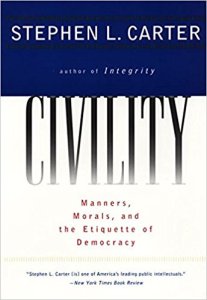
In his Monday column for the New York Times, David Brooks evoked Yale Law professor Stephen L. Carter‘s 1998 book “Civility” to recommend how reasonable people should engage with “fanatics.” I like the quote a lot, with this caveat: Brooks makes it clear, as almost all Times op-eds do now, that by “fanatic” he means all those strange, nasty, stupid, hateful people who don’t subscribe to the New York Times world view and progressive cant. As a result, I have to take Brooks’ words with several grains of sea salt, and indeed try to forget that they are coming from a pundit who has at other times implied that President Trump should be removed from office regardless of whether he actually does anything that would meet the standards required by the impeachment clause or the 25th Amendment.

That and other opinions he has put into print–always in the measured words of the intellectual he styles himself to be—marks him as a fanatic in my book, just one operating under the cover of gentility and intellectual rhetoric. Now, it would have been easy for Brooks to dispel my suspicions and also to have a larger audience for his wisdom had he chosen, as his example of a fanatic, a member of the antifa, or a college student who believes that conservatives should be censored, or any number of leftist nut cases who are as plentiful now as the autumn leaves. But no. Brooks knows that wouldn’t endear himself to his colleagues like Paul Krugman and Charles M. Blow, so his first example of a fanatic, and his only American one, was “a Trump supporter” who threatened him at a baseball game.

Thus Brooks’ column manages to be condescending and arrogant, as well as partisan, because of his failure to harness his biases. The substance of his quote, however, comes via Terry Teachout, the drama critic of The Wall Street Journal, the critic-at-large of Commentary and a thoughtful moderate for an arts guy, and through Amy Alkon, a moderate conservative feminist Trump-hating blogger and author, and Professor Carter, who seems like a reasonable and not especially political sort. This is enough, I think, to cleanse Brooks’ words of their inherent hypocrisy. Deciding that those who disagree with you must be the fanatic in the conversation is, after all, a poor starting point for a productive discussion.

With those reservations and qualifications, here is the quote: Continue reading

Why Ethics Alarms Don’t Ring: The Gloucester PTO’s “Don Trump” Gravestone

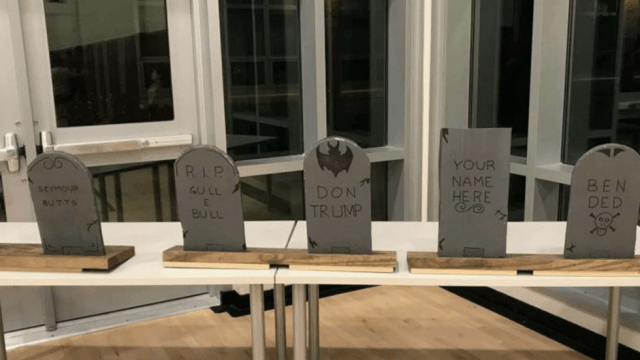
In Gloucester, Massachusetts last week, the parent-teacher organization hosted a Halloween themed fundraiser at West Parish Elementary School.   One of the parents was thoughtful enough to bring a bean bag toss game that featured fake tombstones. One of them had the familiar name “Don Trump” on it. Hilarious! And so clever…

Surprisingly, at least to the thoughtful parents and the host who didn’t have the sense to say, “Cute! But you know we can’t display that…”, not everyone present, even in the Bluer than Blue Bay State of my birth, revels in the thought of the President of the United States dying in office.  Several  parents took photos of the fun game, and sent them to Massachusetts Republican Party committeewoman Amanda Orlando Kesterson, who shared one of the them on Facebook along with a searing post, which read in part,

“I find it absolutely despicable that the PTO of one of our local elementary schools would bring this political agenda before our children. The parents or teachers responsible for this disgusting display should claim responsibility publicly and apologize publicly as well. … We should teach our children that the office of the president ALWAYS deserves respect. Our school system is not the place for nasty political agendas.”

One question that puzzles me: did they object to the fundraiser organizers before sending the photos? That would be the ethical course. There’s nothing wrong with ring those ethics alarms by hand if they are stuck.

After the controversy erupted into the news media, the school principal, Dr. Telena Imel, apologized in a letter to parents, saying

“Intentionally or not, it inappropriately brought a political agenda into what was designed to be a fun family affair. Our school, and this includes school events sponsored by related groups, is not the place for politics. In planning future events, it will be made clear to organizers that school is not the place to engage in or to display political agendas or opinions.”

Oh, I think it’s fair to conclude that it was intentional.

The parents responsible for the  game  apologized, as did Gloucester’s mayor, who said in a statement, “The City of Gloucester does not condone political messaging within our schools.”

There is no other way to describe this incident except as a mass ethics alarms malfunction, one that is overwhelmingly afflicting Democrats. (Okay, one more question: Did any Democratic-leaning parents see what was wrong with the Dead Donald reference?) I am old enough to remember the assassination of Jack Kennedy, a Massachusetts native son. I can’t imagine anyone in my state not recoiling at any hint of a casual or satirical reference to another President’s death, even Nixon, and Mass was the only state that voted for George McGovern.

We almost had another assassination  when two crazy women took shots at Gerald Ford, and then one more near miss, when a sick Jodie Foster fan somehow thought killing Ronald Reagan would entrance her. When did this ethics alarm get broken, and how? The gravestone of the current President being presented as an appropriate Halloween decoration in an event with children present? Hosted by a parent-teacher organization? No alarms? Not even faint ringing? In Massachusetts, where everyone once knew “Abraham, Martin and John” by heart?

The alarms didn’t ring in part because teachers began thinking that indoctrinating children in their own political views became accepted practice during the Bush administration, as schools started showing Al Gore’s climate change agitprop in class. The Bush administration wasn’t behind the trend, but the Obama administration encouraged it, especially during the Post Sandy Hook anti-gun freak-out. Teachers were punishing kids for finger guns and biting pizza and pop tarts into pistol shapes even before that.

Still, the “It’s not good citizenship to joke about killing the President” alarm was functioning even if the “Don’t indoctrinate kids in partisan politics” clapper had been covered in bubble-wrap. Then the nation’s voters had the audacity to reject an awful, corrupt and dishonest Democratic Party candidate whose campaign had included calling anyone who opposed her a sexist, and anyone who voted for her opponent as “deplorable,” as well as promising that she carry on the policies of that wonderful President who had so thoroughly divided the nation in eight years that someone like Donald Trump—well, not just like him, but him— had been nominated to run against her. Suddenly the very same people who had lectured Trump and Trump supporters about how in the U.S., after an election, no matter how contentious, good citizens always put down their placards and unite behind the winner, validating and honoring American democracy and the wisdom of the people and our system of selecting leaders, did a back somersault reminiscent of Nadia Comanici her prime, and declared, in demonstrations and boycotts and calls for various means of undoing the election,  that this President didn’t deserve that deference and respect.

Then various voices in the party made vague and not so vague references to how nice it would be if someone “took out” the President. (That’s Maxine Waters’ term.) After the Charlottesville riots, Missouri state Sen. Maria Chappelle-Nadal—I wonder what party she belongs to?–went on her personal Facebook and said to a commenter, “I hope Trump is assassinated!”

The main pro-Trump death chorus, however, came from that saintly community that is always doing yeoman service as the culture’s moral exemplar, the entertainment business—you know, where Harvey Weinstein and the cool, beautiful, progressive people hang out. Madonna told an audience, “Yes, I’m angry. Yes, I am outraged. Yes, I have thought an awful lot about blowing up the White House. But I know this won’t change anything. We cannot fall into despair.” Johnny Depp told another throng, “This is going to be in the press and it’ll be horrible. But I like that you are all a part of it. When was the last time an actor assassinated a President?” Rapper Snoop Dogg remixed  “Lavender” by Canadian band BadBadNotGood adding a clown-clad version of President Trump called Ronald Klump, and showed him being  shot with a toy gun.

Last summer, New York’s acclaimed Public Theater staged a version of William Shakespeare’s ” Julius Caesar” in  Central Park with the crowd-pleasing gimmick of portraying Julius Caesar as a Trump clone. The audience cheered as he was assassinated in an on-stage blood bath. And, lest we forget, there was this:
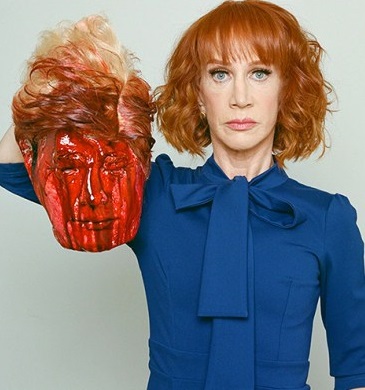
All in good fun, of course!

Thus are once functioning ethics alarms silenced.

Now read the comments to Ms Kesterson’s Facebook post.

Ethics Dunce: The Dr. Seuss Museum

The fanatics who pollute the left end of our political spectrum apparently have no limits to their purges, political correctness tantrums, grandstanding, bullying, and efforts to warp the past, present and future. To fit their rigid view of a “just” culture, they have begun demanding that the cultural landscape must constantly be cleansed; no real or imagined discomfort to sensitive progressive souls can be permitted to survive in art, history, literature or the public square.

Since even their worst excesses are cloaked in self-righteousness and the Saint’s Excuse, what this requires of the rest of us—you know, those who have perspective and proportion, believe in diversity of thought, and object to airbrushing reality out of the nation’s palette—to have the courage and integrity to say, “No.”

Sometimes “Hell no.”

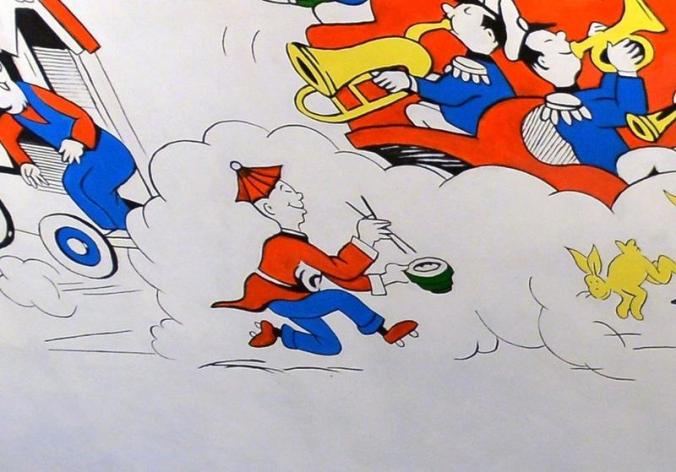
The directors of the new Dr. Seuss Museum in Springfield, Massachusetts lack these and other necessary markers of ethical character and responsible citizenship. Thus when three prominent children’s authors who had been invited to attend the Children’s Literature Festival at the Seuss Museum to be held on October 14 threatened to boycott the event because the above mural, painted to replicate a scene from Dr. Seuss’s “And to Think That I Saw It on Mulberry Street,”  was, they claimed, offensive, the museum cravenly excised that section of the painting.

Mo Willems, Mike Curato and Lisa Yee issued a public letter condemning the drawing as a “jarring racial stereotype… with chopsticks, a pointed hat, and slanted slit eyes.”

“We find this caricature of ‘the Chinaman’ deeply hurtful, and have concerns about children’s exposure to it,” they wrote.

If the directors possessed comment sense, principle or the backbone God gave a guppy, they would have written back,

“We are sorry you cannot attend, and also that you are so enamored of political correctness grandstanding that you would unjustly insult Theodore Geisel, his work, his millions of fans, and this museum by your false and hysterical characterization. We do not engage in censorship here, nor do we accept presentist slurs on past art that involve retroactively applying modern sensibilities or hyper-sensitivities, to classic works that are decades old.”

There is nothing racially jarring about Geisel’s painting of a “Chinaman” except to someone already looking for offense. Dr. Seuss’ drawings can be fairly termed cartoons. The definition of a cartoon is “a simple drawing showing the features of its subjects in a humorously exaggerated way.”  What are these juvenile children book authors asserting…that all cartoons are racially insensitive? That only cartoon of non-whites are offensive?

Let’s look at the offensive figure again: Continue reading

A Hopefully Calming Word From Your Host [Updated]

I would not have predicted that the NFL Anthem Protest (Or is it the anti-Trump protest? The “there are still injustices in America protest”?) Ethics Train Wreck would be the topic to cause multiple meltdowns, name-calling bouts and potty-mouth attacks among the veteran commenters here. I’ve given up on predicting which issues will ignite the assembled, however.

I am proud of the passion and intelligence with which the regular participants in this forum attack the varied matters I throw down for consideration. At their best, even the most intense debates usually bring more light than heat, to use the dichotomy poor Howard K. Smith employed when William F. Bucklet snapped, called Gore Vidal a “queer” on live TV and threatened to punch him out.  However at least four veteran commenters here have had Buckley-esque flip-outs of late, and that will not do.

I don’t expect this blog to ever be “safe.” Bad, lazy, poorly reasoned, biased and partisan opinions should always be called out, and in terms that fit the offense. I do not want to police words, but when we move beyond fair or at least supportable assessments of comments into insults and the denigration of commenters, I expect the ethics alarms to ring out. If they don’t sound, I don’t know what the purpose of Ethics Alarms is. Theoretically, we are here to learn from each other, and that means giving each other the benefit of an assumption of good will, and occasionally a damn break.

Those who have contributed positively here for a lengthy period build up credits that will allow them to commit one or more egregious breaches of decorum without any adverse action. Ironically, I also expect the veterans and frequent commenters to be role models, and lead by example.

I also want to urge some commenters here to make an effort to curtail endless, circular one-on-one debates  in which the objective deteriorates into getting the last word. In the past, Ethics Alarms has seen some epic debates resembling the Hundred Years War. What is remarkable about all of them is that it was clear as glass from the start that neither combatant was going to yield, and indeed was even fairly processing what his or her adversary was saying. I confess: outside of checking in periodically and making sure that the exchange isn’t resembling a Tarantino film, I don’t read these very long. They are boring. And because they are boring, they make Ethics Alarms boring.

Commenters with agendas are also a problem. If you approach every issue here knowing immediately what position you are going to take before you even read the post, I submit that your objective is less helping us nourish an ethical society than something else. You need to think about that, because it makes you a less valuable participant here. It also can make you annoying.

One more thing I need to add (and am adding as I am in a Fairfax, VA hotel after a horrible sleepless night as I prepare for a presentation to local lawyers about legal ethics and technology: occasionally pushing another commenter’s buttons—you know who has them, and what to push—is occasionally justifiable, but becomes sadistic and abusive if engaged in as a regular tactic.

You know, I’ve met a lot of you. There isn’t one commenter that I have met that I don’t like. Every one is a smart, passionate, interesting person. I would recommend that before you start hurling abuse at another empty face in cyberspace, consider that, as Marge Simpson sang in “O Streetcar!,” “A stranger’s just a friend you haven’t met.”

We can get our work done civilly and respectfully. I’ve seen it. If all else fails, consider the advice of Elwood P. Dowd:

Years ago my mother used to say to me, she’d say, “In this world, Elwood, you must be” – she always called me Elwood – “In this world, Elwood, you must be oh so smart or oh so pleasant.” Well, for years I was smart. I recommend pleasant.

I recommend both.