Wanted: Ethical Teaching Aide to Stop Abu Ghraib, Jr.

Yesterday, I wrote about the disturbing incident at an Ohio elementary school, where a sixth grader was systematically mortified and subjected to ridicule because of the length of his hair. That was bad; this is worse.

A teacher at a New York City public school, P.S. 65 in the Ozone Park neighborhood, turned his fourth-grade classroom into a fighting ring and forced two children to duke it out. Continue reading

Don’t Apologize for the Truth, Mr. President.

For the second time in less than  a year, Nevada officials are annoyed with President Obama for a remark he has made about Las Vegas–essentially the same remark, in fact, he delivered before.

Speaking in New Hampshire about budget austerity, the President said, “You don’t blow a bunch of cash on Vegas when you’re trying to save for college. You prioritize. You make tough choices. It’s time your government did the same.”

The mayor of Las Vegas is demanding an apology. True, in tough economic times, the President should refrain from specifically discouraging tourism to a particular location. Continue reading

What Rudyard Kipling Taught My Father

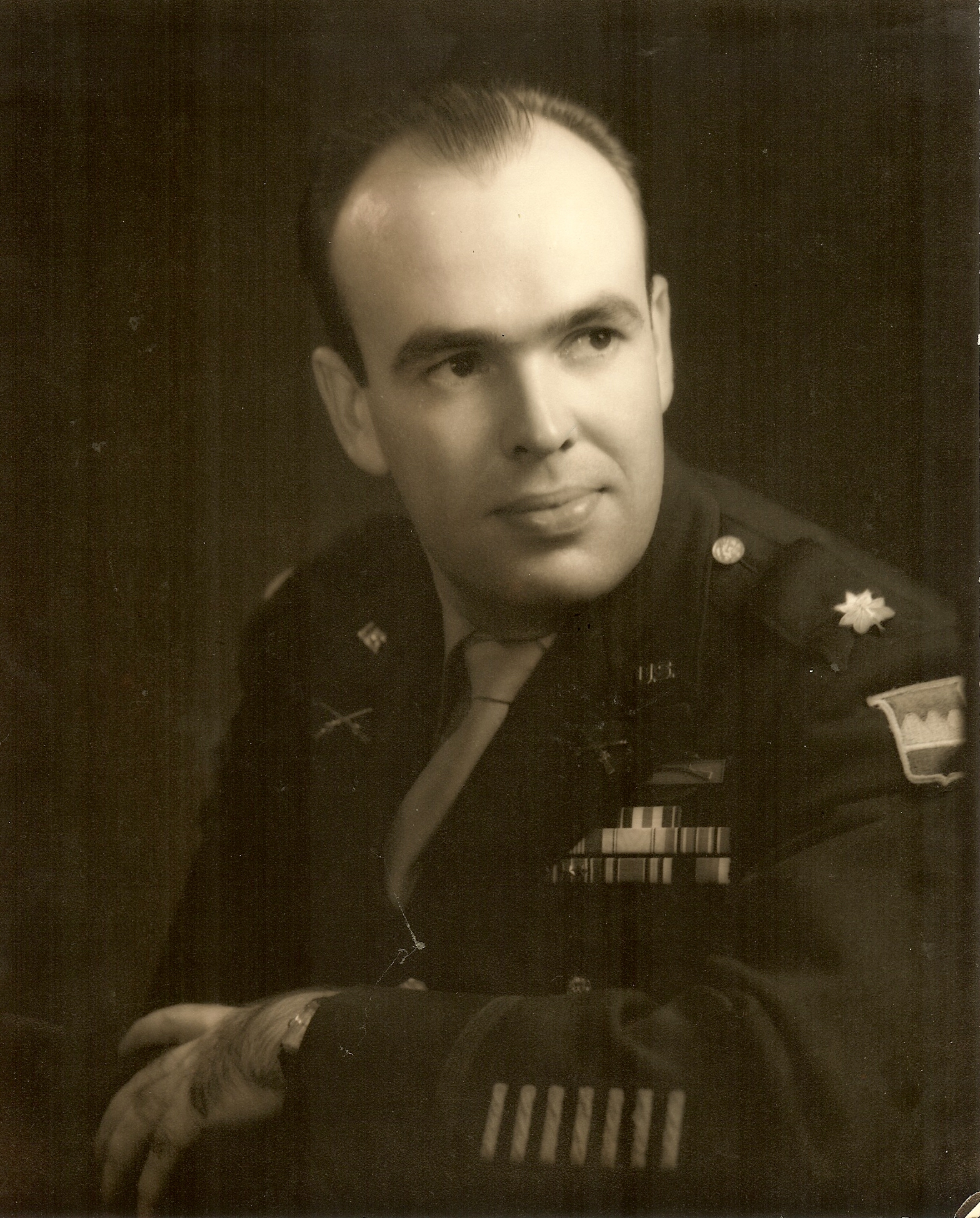
Jack Marshall Sr Army portrait

Today the Army buried my father, Major Jack Marshall, Sr., with full military honors. He had earned them, for he was a hero in World War II. Let me correct that: every soldier who serves in battle is a hero, but my Dad had a few special distinctions, like a Silver Star and a Bronze Star to go with his Purple Heart.  He  sustained a crippling wound to his foot from a hand-grenade, healed enough to jam what was left of it into a boot, and went on to fight in the Battle of the Bulge.

Under the clearest of blue skies, with the cemetery covered in snow, a caisson drawn by black horses, one without a rider, carried my father to a gravesite ceremony where the American flag draping his casket was carefully folded by six soldiers and given to my mother, following a 21-gun salute. My father was a hero off the battlefield as well, a profoundly ethical and courageous man throughout his life, and how he got that way is worth examining. Continue reading

Obama’s Preference: Ethically Correct, Historically Impossible

“I’d rather be a really good one-term president than a mediocre two-term president,” President Obama told Diane Sawyer. That is the right attitude, unquestionably. It correctly places responsibility over popularity, accountability over expediency, courage and conviction over cowardice, and generally endorses ethics and duty over unethical considerations.

The statement is admirable, but interestingly, almost completely unrealistic. For historically it has proven virtually impossible for a one-term President to be good, or even successful. Continue reading

The Rutgers Sorority Hazing

Here are three brief ethics observations on a horrible story that mostly speaks for itself.

Police arrested members of a Rutgers sorority after a pledge reported being beaten by paddles over a period of seven days, causing her blood clods, welts, bruises and excruciating pain. The young woman said that the six members of  the Rutgers chapter of Sigma Gamma Rho told her that the beatings were not hazing, which is banned on the Rutgers campus, but rather an experience that would “humble” her, and build love and trust between her and her sorority sisters. Police say that there were at least six other women who were similarly “humbled.” Continue reading

Ethics Trumps Morality: Ending “Don’t Ask, Don’t Tell”

Almost lost in the din of President Obama’s defiant State of the Union address was his promise to finally end “Don’t ask, don’t tell” as military policy. There is no ethical argument against this long overdue move. It has always been a policy based on the political expediency of politicians afraid to do the right thing.

“Don’t ask, don’t tell” is unethical. The law treats gay Americans in a biased and discriminatory manner, reinforcing negative stereotypes and the irrational fears. It also hurts the military and the nation by robbing it of able soldiers and military personnel. Continue reading

Ethics and Valleywag’s Apple Tablet Scavenger Hunt

Today is the day Apple will unveil its long-awaited tablet device, destined to be the most culture-altering advancement since, well, the Segway or something. Apple’s excited about it, anyway, and as is usual for that company, it has fiercely guarded against premature leaks regarding its newest innovation. In the process, it threatened to sue the proudly sleazy website “Gawker,” which had one of its misbegotten offspring, the Silicon Valley gossip site “Valleywag,” announce the “Apple Tablet Scavenger Hunt,” which dangled cash prizes for anyone who would uncover and leak tablet information to the website before January 27. Saying said it had “had enough of trying to follow all the speculation,” Valleywag published a bounty list describing what it would pay for and how much, ranging from $10,000 for photos to $100,000 for anyone who could put the tablet in its editors hands.

Apple’s lawyers responded with a cease and desist letter, saying that the scavenger hunt scheme violated trade-secret law and induced others to breach their confidentiality agreements with the company. Naturally, Gawker cried “First Amendment!”

It appears that the lawsuit won’t go forward, since the tablet announcement date is here; a pity, because a lawsuit couldn’t happen to a more deserving operation, and because a court decision would have clarified an interesting issue. We all know the media happily acts as information-launderers, accepting documents and secrets from lawyers, government officials and corporate whistleblowers who could be fired, disciplined, sued or prosecuted for leaking them, and publishing the illicitly acquired information with self-righteous pride, not to mention confidence, since the Constitution says the press can print anything. The issue is this: if the media can publish such leaks, can it also induce them directly with cash? Continue reading

Our Culture’s Teen Pregnancy Ethical Conflict

Unwed teenage pregnancies are on the rise again. There are many reasons, but one of them has to be this: it is hard to discourage self-destructive and societally damaging conduct while the culture celebrates it. Continue reading

Media Ethics and Haiti

  • Rebecca Solnit has written a powerful piece questioning the news media’s accounts of “looting” in Haiti. She argues that people in the midst of a disaster with a breakdown of infrastructure and government assistance are acting reasonably and justifiably when they take food and other necessities from abandoned stores. She believes that media accounts emphasizing looting warp the public perception of what is happening, vilifies the victims of the disaster, and prompts excessive measures against the “looters,” who are only trying to survive. She has a point. You can read her whole piece here.
  • There is something oppressive and coercive when so many networks and cable channels interrupt regular programming to carry a telethon, as they did last night. It turns an appeal for help into a demand for help. Continue reading

Pennsylvania’s and Delaware’s Disgrace: Risking the Poor to Balance the Budgets

Delaware and Pennsylvania, facing state budget deficits that would require political courage and citizen sacrifice to address, has taken the craven route of other states (with more sure to follow) by legalizing casino gambling.

In Pennsylvania, State Republicans, the majority party in the state senate, had opposed the expansion of gambling , but capitulated when faced with the reality of having to choose between cutting jobs and services or raising taxes. Instead, the Republicans joined with Democrats, those champions of the weak and powerless,  to victimize the poorest people in the state for profit. Continue reading