Comment of the Day: “How To Raise An Irresponsible and Dangerous Child”

“I know my precious angel crashed her car, but it’s her own fault: she left the keys in it!”

Michael, who is the reigning champ in the Comment of the Day Division, scores another with this comment, a rebuttal of ampersand’s plea that a mother’s efforts to deflect blame from her joy-riding teenager, now in a coma after causing a high speed police chase and an accident that closed down a major highway, shouldn’t be held against her. “The mother’s statement was stupid,” ampersand wrote, “but… if there’s any time when we should refrain from attacking people for saying stupid, regrettable things, it’s right after their 14 year old son has been in a terrible, tragic car accident. I don’t think it’s unreasonable to give this woman the benefit of the doubt, and suppose that how she acts on the worst day of her life might not be a representative sample of how she generally acts.”  I’m generally in favor of the benefit of the doubt, although I personally doubt whether any responsible parent would try to blame joy-riding on the owner of the car her son stole, or would try to minimize the offense by suggesting that “maybe he wanted to go farther than he felt like walking.”  I cannot imagine any tragedy that would have made my parents say something that absurd.  Still, I acknowledged that the context of the mother’s comments should be taken into consideration. Michael was tougher, and makes a powerful case that he should be. Here is his Comment of the Day on the post How To Raise An Irresponsible and Dangerous Child.

“I think ampersand is exactly wrong. So much that is wrong and wasteful is done because of this kind of sentiment. She should be confronted about this, because the alternative is to go along with it. She said it, it was published. It must be refuted. Not refuting it, publicly, leads to this being considered a valid opinion. Considering this a valid opinion means possibly arresting and convicting the owner’s boyfriend. It also means that it is OK to “borrow” someone’s car (however you have to) if you are tired of walking.

“Some examples of what happens when you go along with it because you don’t want to confront someone who has suffered the loss or injury of their child: Continue reading


How To Raise An Irresponsible and Dangerous Child

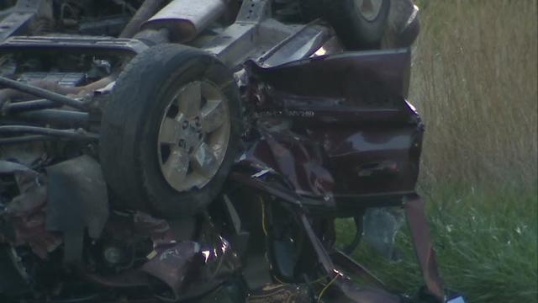
After a 14-year old Pennsylvania lad stole Jeep Grand Cherokee and led police on a high-speed chase that ended with him clipping another vehicle and causing a crash that closed the highway and left the boy in a coma, his mother told reporters that her son wasn’t the only one to blame for the accident.

“I’m not downplaying my son’s role in taking something that didn’t belong to him, but I am saying they actually left their keys in the car and the vehicle could have been taken by anybody,” she said. The mother, who has not been identified in press accounts because, I guess, her son is a minor and some people think that teenagers who steal cars, defy police and endanger lives should have their identities shielded (not me!), also found fault with the Jeep’s owners boyfriend, who followed the vehicle after the kid started driving it away: Continue reading

The Pasco School District (Florida) Flunks Its “Cone of Shame” Lesson

Isn’t this hilarious? The student looks just like that funny animated dog!

Laurie Bailey-Cutkomp is, among other things that I will enumerate as we go, a  science teacher who until recently was employed at Zephyrhills High School in Dade County.  The Pasco School District fired her for devising and employing a unique form of punishment for misbehaving students: she placed them in a wide plastic collar of the sort used by veterinarians to keep dogs from licking their stitched up wounds, what the talking dogs in Disney’s  animated film “Up” amusingly called “the Cone of Shame.” But they were dogs, and they were animated. The Cone of Shame isn’t funny on kids, except maybe to Ms. Bailey-Cutkomp.

Then the same school district that fired her, following negotiations and a settlement agreement, allowed another school in the same district, Middle School, to hire her to teach science there.

Oh, darn…my head just exploded all over my computer screen! There…it’s wiped off now. Continue reading

Integrity Failure: Rubio and Obama Show How Unserious Our Leaders Are About Taxes

“The Hopeless Dawn” by Frank Bramley (1888) This is what this story makes me feel like….

If you pay attention, and most American won’t, the evidence that our elected leaders are not serious about being consistent, responsible, or even governing competently is delivered every day in packages large and small. The most recent depressing example was the bi-partisan tag-team of Sen. Marco Rubio and President Obama backing tax-exempt status for medal-winners on the U.S. Olympic team.

Sen. Rubio concocted his Olympic Tax Elimination Act on the theory that “athletes representing our nation overseas in the Olympics shouldn’t have to worry about an extra tax bill waiting for them back at home.” This is spin and nonsense. There is no “extra tax bill,” any more than there is an “extra tax bill” when your boss gives you a bonus for job well done. It’s just a regular, old-fashioned,  tax bill for income, that’s all. Medal-winning Olympic athletes get bonus payments from the U.S. Olympic team. Is their income—that’s what it is, just income—-somehow less fair to tax than your income? No, of course not. Rubio’s  “representing our nation overseas” justification for special treatment is naked and offensive pandering. How about people who represent our nation here, in the United States? They don’t get to travel to London, all expenses paid, like the pampered athletes—why are they less deserving of a tax break? Or why isn’t Rubio arguing, then, that all federal employees who work abroad shouldn’t be taxed? What is his logic, exactly? Continue reading

Randy Cohen’s Scofflaw Cycling: How Did THIS Guy Ever Get To Be Called “The Ethicist”?

Stop means “stop,’ unless Randy decides it means “yield”—after all, he knows best.

Randy Cohen was the original author of the New York Times Magazine’s column “The Ethicist.” During his tenure he made a name for himself with lively and sometimes witty prose, and on Ethics Alarms, at least, a disturbing tendency to rationalize clearly unethical conduct when it suited his political agenda, which was unapologetically left of center. In one notorious example, he told a student whose wealthy and famous father was paying her college tuition that it would be ethical for her to cash a partial tuition refund check she received from the university to her mother and stepfather, who believed that the father had not paid his fair share of child support. Cash that check, advised Cohen….“You are entitled to this money not because he is successful while you struggle. Such rough justice would also encourage you to sneak into his house, swipe his sofa and sell it on some kind of furniture black market. That would be stealing; this is merely claiming what he owes you.”  Of course, this is also stealing: cashing a check not intended for you because you believe it should be used to settle a disputed debt between the owner and someone else is not honest or fair, regardless of the merits of that belief. But Randy is a class warrior: as “The Ethicist,” he routinely took the position that it was “ethical” for people to use dubious means to get an edge on the evil rich, which in his world apparently means anyone richer than him.

I don’t know what Cohen has been doing since the Times sacked him; it isn’t practicing ethics, as he didn’t do this before his tenure, and confessed when he left the job that writing about ethics didn’t make him practice ethics while he was “The Ethicist” either, something I found and still find incomprehensible. Now, he tells us in a recent Times piece, the Ex-Ethicist is riding around New York City on his bicycle, running stop signs and red lights.

He tells us, moreover, that this is ethical, though it is certainly illegal. “I roll through a red light if and only if no pedestrian is in the crosswalk and no car is in the intersection — that is, if it will not endanger myself or anybody else, ” Cohen says. “To put it another way, I treat red lights and stop signs as if they were yield signs. A fundamental concern of ethics is the effect of our actions on others. My actions harm no one. This moral reasoning may not sway the police officer writing me a ticket, but it would pass the test of Kant’s categorical imperative: I think all cyclists could — and should — ride like me.”

This is arrogant, fatuous, reckless and wrong. But that’s Randy.

Even Coehn’s reading of Kant is wrong. The categorical imperative says that an action is ethical only if it could be the universal rule without harm, and this, despite Cohen’s rationalizations, could not. Who says the cyclist’s judgment of when it is safe to run a red light or stop sign is correct or reasonable in every instance? Why couldn’t motorists also use this same justification for running red lights at will? Continue reading

The Name Shame

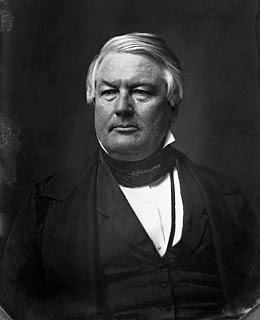
Millard understood.

Giving one’s children ridiculous, bizarre or otherwise perverse names is the height of parental arrogance and narcissism, an abuse of power in which Golden Rule considerations evaporate in the desire to place a distinctive mark on the child of one’s creation, like a brand or a particularly garish tattoo.

There is some weak historical evidence that an oddball name can point a child to leadership or other kinds of singular achievements by isolating him or her from peers. A number of U.S. Presidents have had rare names, with four using their middle monickers to be more distinctive, and one, Lyndon Johnson, being specifically named by his mother so he “would look good on a ballot.” But there is also evidence that strange names are handicaps, and no doubt at all that they risk making children a lot more miserable than calling them Ed, Elizabeth or Frank.

Over at Deadspin, Drew Magary has harsh criticism for the apparently rising trend of wacko names, and all power to him. He combed through a Parents Magazine survey of the names favored by 13,000 people, and arrived at the horrifying conclusion that “Americans are somehow getting even worse at naming children, and they show no signs of correcting themselves.”  Among his trenchant commentary on the names he discovered: Continue reading

Settlement Corruption and Ethics Failure: The Kelley Currin-Rick Curl Saga

” Ah, what a beauty! $150,000 well spent!”

Imagine, if you will, that the late Joe Paterno didn’t take action to expose the child-molesting proclivities of his former assistant coach Jerry Sandusky, not because he was concerned about his cherished football program’s image, but because Sandusky paid him off with a big check. Can we all agree that this would have been even more reprehensible than what actually occurred? I assume so. Paterno would have been enriching himself with the sacrifice of young innocents to a pedophile.

Now compare that hypothetical with what we know about the developing scandal around renowned swimming coach Rick Curl, who has trained Olympian swimmers for decades. took a leave of absence from the club he founded Wednesday in the wake of accusations that he engaged in a sexual relationship with a teen swimmer and then paid her and her parents to keep quiet as part of a settlement. Continue reading

Ethics Quiz: Who Is More Unethical…the Coward Who Left His Girlfriend and Child to Die, Or the Girlfriend Who Agreed To Marry Him Anyway?

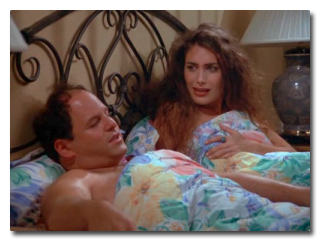
Would an ethical woman marry George?

I am a great fan of the old Seinfeld show in general and the George Costanza character in particular (all ethicists love George, who  exemplifies how messed up a life without ethical instincts can be), but I didn’t laugh at the episode when he smelled smoke at kids’ birthday party and trampled the children as he escaped in panic from the apartment. And that was just a TV sitcom; the actions of Jamie Rohrs, the Colorado man who ran out of the Aurora movie theater when James Holmes started shooting and drove away in his truck, leaving behind his girlfriend and her two young children—one of whom was fathered by him— go beyond unfunny to revolting. Luckily, and no thanks to Rohrs, Patricia Legaretta and her kids did not die, because a stranger, Jarell Brooks, helped them escape the theater and the massacre.

Then comes the rest of the story, revealed to Piers Morgan on CNN: after his act of aggravated cowardice, Rohrs had the gall to propose to the mother of his child, and Legaretta, incredibly, accepted.

Your Ethics Quiz:

Who is more unethical—Legaretta, or Costanza, er, Rohrs? Continue reading

Ethics Quiz: The Vetoed Wish

“When you wish upon a star…it depends how sick you are!”

This one is so convoluted with cross-cutting issues that I’m not going to even try to make the call until I read some responses.

McKenna May is four-years-old and has survived leukemia. Her mother and grandmother submitted her wish to go to Walt Disney World to the Make-A-Wish Foundation, which, according to its mission statement, selects children with life-threatening medical conditions and grants their wishes. McKenna’s wish was granted by the charity, but then withdrawn  because her father, William May, who is divorced from McKenna’s mother, refused to sign the required approvals. He believes that the Make-A-Wish funds should be spent on children who are terminally ill, and not children like McKenna, who have been cured. McKenna’s mother, Whitney Hughes, says that the real reason May has killed his daughter’s dream is to punish Hughes for restricting his visiting rights.

Your Ethics Alarms Quiz Question:

Assuming May is not doing so out of spite, is his decision to pass up his daughter’s dream trip to the Mouse Kingdom so that a more needy child can be helped an altruistic and noble gesture, or an unethical act of disloyalty and betrayal to his young daughter? Continue reading

The University of Montana, Campus Rape, and the Penn State Disease

The Justice Department is investigating this issue, so I am hardly going to get to the bottom of it in a blog post. But there is obviously a rape and sexual assault problem at the University of Montana, and to conclude that the administration is a large part of the problem doesn’t take much of investigation. This certainly appears to be a school suffering from the Penn State disease, in which the values of the institution place public relations, spin and, once again, football above the welfare of past, present and future victims.

Let us just begin with this salient fact:  and President Royce Engstrom still has his job. In February, a student who was a Saudi national was accused in two campus incidents, one involving a rape, and another involving sexual assault. Records show that the first action taken by the administration, in the person of now-retired UM Dean of Students Charles Couture, was to alert the accused, advise him, and suggest that he get out of Dodge before he could be arrested—which he did, fleeing to Saudi Arabia. The police didn’t learn about the complaints for a week, and by then the alleged student rapist was long gone. Then Engstrom had the jaw-dropping gall to tell the press that this was a good thing, and that his staff had acted in a “timely” and “appropriate” fashion. “We can let people know we have dealt with these (alleged assaults) and that particular perpetrator is gone,” Engstrom said.

In a word, unbelievable. Continue reading