“No Questions Asked” Ethics

Kwame Anthony Appiah, the long-running most recent occupant of the NYT’s “Ethicist” throne, received what I initially thought was one of the dumbest inquiries ever last week. After thinking about it, I decided that it was a good ethics quiz after all.

A man’s son had his mountain bike stolen, and the father issued a notice that there would be a $500 reward for its return, “No questions asked.” The tale continued,

“To my surprise, I got a response from someone, and we set a time to meet. Then I became worried that I was being set up to be robbed. So I called my son. Next thing I knew there were six hulking 20-somethings tagging along with me in my minivan. At the agreed-upon meeting spot, the guy appeared with my bike in hand. …while I’m looking the bike over, they said, in no uncertain terms, that it was not necessary for me to pay for the bike. The guy looked scared, and I wanted things to end safely, so I peeled off half the stack. “How about $250?” The guy took the money and ran off.” 

The inquirer asked the Ethicist whether he did the right thing, since it was obvious to all present that the guy was the thief. Should the father have instead paid the whole promised amount, or nothing at all?

Continue reading

Are You Really A Hero When You Decide Not To Commit A Crime?

19-Year-Old New Mexico Man Visits Local ATM and Finds Bag with $135K Inside, Returns It


José Nuñez Romaniz drove to a local Wells Fargo bank last weekend  to deposit money at the  ATM …and saw a clear plastic bag filled of $50 and $20 bills that he later learned added up to $135,000.

“I didn’t know what to do. I was, like, dreaming,” Nuñez, a Central New Mexico Community College student, told CNN. “I was just in shock. I was looking at myself and just thinking, ‘What should I do?'”

Really? If one finds obviously lost money belonging to someone else, what’s the mandatory response? Is this  a tough question?

 Nuñez eventually made the responsible decision to call the Albuquerque Police Department, who then sent two officers out to pick up the cash. Well, of course he did. How many movies have there been about previously law-abiding citizens who discover a large amount of money try to keep it? In almost every one, they end up on the run, dead, or in jail.  This was the premise of “It’s a Mad,Mad,Mad,Mad, World.” I think the grimmest one is “A Simple Plan,” where the nice people trying to keep the windfall to “have a better life” trigger the deaths of  five people and destroy their marriage.

“This money could have made an incredible amount of difference in his life if he went down the other path,” a spokesman for the Albuquerque police said. ” But he chose … the integrity path and did the right thing.” Right. Tell  Billy Bob Thornton and Bill Paxton about the difference finding a stash in a crashed private plane made in their lives.  Nuñez chose the “integrity path: because he’s not an idiot and doesn’t have a death wish.

The Albuquerque police even presented him with a plaque.

“Meet Jose, this week his selfless actions lead him to contact police and help return $135,000 in cash that he found near an ATM. He is pursuing a degree in criminal justice,” the department wrote on Facebook. “Chief Geier and Mayor Tim Keller invited Jose to the Police Academy where he was recognized and honored for exhibiting the pillars of APD: Integrity, Fairness, Pride and Respect.” Nuñez was also offered season tickets for the University of New Mexico football team by local sports radio station 101.7 FM, and at least three businesses in the area gave him $500 each for his good deed.

Well, the guy seems nice and sincere, and I suppose nothing is wrong about him receiving some gifts and publicity for doing what any citizen should be expected to do, when he really had no other reasonable option. Nevertheless, representing  obeying the law and not stealing someone else’s money as an act of heroism sends very warped message.


Pointer: Michael

Ethical Quote Of The Week: Relationship Advice Columnist Carolyn Hax

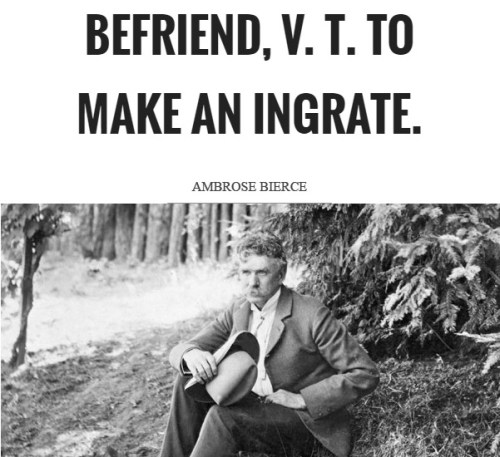
befriend-v-t-to-make-an-ingrate-quote-1

“[I]t’s time you made the acquaintance of an institution we all must embrace at some point in life: the thankless task. That’s how you file away changing a baby’s diaper, paying your taxes, visiting a relative turned cranky from infirmities, throwing in extra toward the tip because everyone else left the table. You do these because they’re the right thing to do, even though babies don’t sit up and say thanks for the squeaky-clean butt.”

—–Syndicated advice columnist and natural-born ethics whiz Carolyn Hax, answering a young woman’s question regarding the proper response to someone who should have thanked her for a kindness, but did not.

The letter writer was a high school athlete who, like most high school students today, had never been introduced to the satirical wisdom of philosopher/humorist Ambrose Bierce in his indispensable “The Devil’s Dictionary.”  The young woman had organized a senior night tribute to a graduating teammate, who then expressed no gratitude after the event.

“I am not sure whether or when I should broach the subject. Am I being needy and selfish, or do I have a legitimate case for feeling disowned?” she queried Hax.

As she is about 98% of the time, the columnist was spot on in her response. Doing good things and right things do not assume some kind of quid pro quo, cosmic or otherwise, in this  world or a subsequent one. Learning to feel good about doing the right thing whether you are praised, rewarded, thanked, or derive any tangible benefits yourself is one of the hardest lesson on the way to ethical living, and one of the most important. No, you shouldn’t assume that you will be treated unfairly, as Bierce suggests. As he meant to warn you, however, you shouldn’t be surprised, either.

Do not expect karma, or justice, or thanks—don’t even hold out for credit. Just figure out the right thing to do–how you would want to be treated, how you wish everyone would act, the conduct that will make society better for everyone by solving problems or making them bearable—and do it. Those who don’t understand that it’s also right to reciprocate by exhibiting recognition and gratitude  haven’t figured things out yet, and their ethics alarms are jammed.

Be glad yours are in good repair.

Fair vs Fair: Ethics and the “No-Tip” Restaurant

You know, this looks like a place that would believe that dishwashers deserve as much pay as waiters...or as bankers, for that matter.

You know, this looks like a place that would believe that dishwashers deserve as much pay as waiters…or as bankers, for that matter.

William Street Common is a new restaurant in Philadelphia, and is getting publicity for, we are told, experimenting with a different and (maybe?) fairer compensation model. Owner Avram Hornik  pays all of its employees, from the servers to the dishwashers, at least $15 an hour plus paid sick leave and health insurance benefits. There is a 20 percent service charge for drinks, and that goes into a common fund that makes that  $15 an hour wage affordable. Money left over at the end of a pay period is divided up among employees based on a point system related to various factors.

Hornik came up with this structure, he says, to deal with the well-debated problems of tipping. “Some people just tip the same amount, but some people base it on how quickly the food was there, whether we were out of something, whether the server was there when they wanted them to be,” he says. “So much of that is out of the control of the individual server… So why would it be fair for the service employee to be responsible for the poor decisions of management?”

Hornik argues that his model “essentially creates a guaranteed floor. But we’re also capping the ceiling,” he points out, because the tipping gets shared equally with all employees. “We didn’t think it was fair [that] in some places you have dishwashers earning 10 dollars an hour and the bartender earning 30 dollars an hour.” He also is convinced that the customers will benefit.  “That atmosphere among the employees, a sense of community and empowerment and happiness with the job, is going to translate into a better environment for customers,” he said. “By having happy staff customers are going to be happier too.”

Is this system really fairer than the current one? Progressives are cheering it, because it represents a “living wage,” or at least something close to it. OK, but it would be nice not to feel hyped: ThinkProgress, for example, had headlines that the William Street Common “got rid of tipping” and writes “tips aren’t mandatory.”

Inept reporting or lies, take your pick. A 20% “service charge” is a mandatory tip, so tips ARE mandatory. The reports don’t explain how voluntary tipping has been eliminated, or whether a server would be prohibited from keeping a ten-dollar bill that a diner hands him, saying, “You know, the food was lousy, but you were so gracious and accommodating that you single-handedly made the evening bearable. Thank you. If I ever come back, it will be because of you.” If so, is that fair?  I don’t think so. In fact, it’s exactly as unfair as a diner not rewarding excellent service, and tipping a dime. Continue reading

Ethics Hero, Thanksgiving Division: Scott Stuckey, Manager of Atlanta’s Omni Hotel

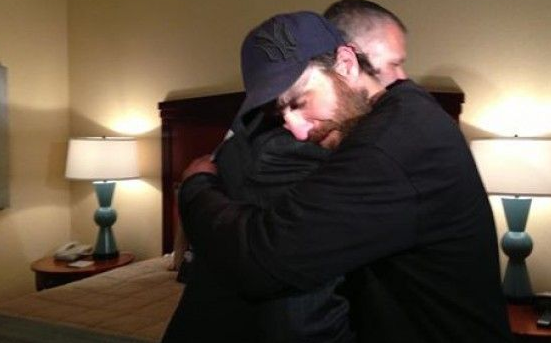
Scott Stuckey gets hugged by a grateful non-criminal Joel Hartman was homeless and surviving in Atlanta by dumpster diving, but when he found a lost wallet with the owner’s identification and credit card inside, he was determined to do the right thing. The wallet obviously belonged to a tourist, so the 36-year-old man checked the hotels in downtown Atlanta until he found out that the tourist (from France, for a conference) was staying at the Omni Hotel.

After Alanta’s Omni manager Scott Stuckey saw the surveillance video of Hartman—who looked as destitute as he was— turning in the wallet to the hotel’s  security guards, he decided that a reward was in order.  Hartman had given them a fake name, so it took some effort to track the shy good Samaritan down. Stuckey and his staff searched for a week, leaving messages with other homeless people that the Omni wanted to thank the man who recovered its guest’s stolen wallet. Eventually Hartman heard about their quest, and showed up at the hotel. He was shocked at what Stuckey had planned for him. Hartman was told that he would be the Omni’s guest in a luxury room through the Thanksgiving holiday with complimentary room service. The hotel also  gave him $500.

I think the gesture by Stuckey and the Omni was kind, appropriate, and in keeping with the spirit of the holiday….but: Continue reading

Ethics Hero: Minneapolis Dairy Queen Manager Joey Prusak

"Good job, Joey!You made Dairy Queen proud and brought honor to the store, Here's 40 dollars."

“Good job, Joey!You made Dairy Queen proud and brought honor to the store, Here’s 40 dollars.”

It’s a simple story, trivial in a way, but with an important ethics lesson.

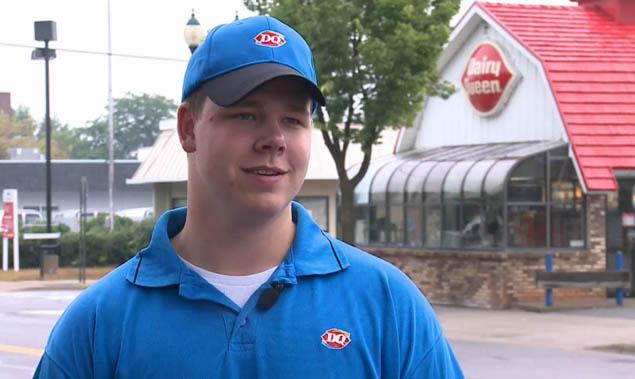
Joey Prusak, the 19-year-old store manager at a suburban Minneapolis Dairy Queen, watched as a female customer with a heart of ice saw a vision-impaired man drop a $20 bill, picked it up, and instead of returning the money to the unaware customer, slipped it into her own purse. When the certifiably awful woman got up to the counter to order, Prusak told her what he had seen and demanded that she return the bill as a condition of service. The woman, as one might expect from someone who would take money under such circumstances, refused, so Prusek reimbursed the visually impaired customer with $20 of his own.

A customer who saw the incident e-mailed Dairy Queen in praise, and now Prusak has become something of a folk hero.

The important ethics lesson is “Fix the problem.” If you are in a position to right a wrong or prevent one, it has become your obligation to do it. Don’t adopt  any of many rationalizations available to persuade you to do nothing— “It’s not my job,” “Mind your own business,” “Who am I to judge?”, “It’s not my fault”, “What if I’m wrong?”—or, in a case like this one, manufacture excuses for the vile miscreant who took the money—–“Maybe she’s desperate,” “Finders keepers”-–and just act. Fix the problem. Continue reading

Reading Club Ethics: Punishing The Motivated And Successful In Hudson Falls

There goes Tyler, doing more than he has to and spoiling things for everyone else...

There goes that show-off Tyler, doing more than he has to and spoiling things for everyone else…

Some day in the less-distant-than-we-might-think future, when the United States is a gray, socialist country populated by millions of Winston Smiths and Julias, historians and sociologists, if there are any left, may well look back on the species of American represented by Hudson Falls (New York) Public Library Director Marie Gandron, and reflect upon how it proliferated, eventually taking control of the culture and permanently stigmatizing initiative and talent to achieve the current ideological Holy Grail of guaranteed equal outcomes.

Ms. Grandon thinks its unfair that the student who reads the most books in the library’s student reading club summer competition keeps winning the annual distinction of being honored as the student who read the most books in the library’s student reading club summer competition.

Following the immortal logic of those who regard rewards for superior performance one more injustice spawned by the oppressive values of the United States of America, she reacted to the annual triumph by 9-year-old Tyler Weaver, who just loves to read and who again lapped his fellow club members in the Summer Reading Challenge for the fourth straight year, by suggesting that the rules should be changed. In an interview, the library director said Tyler “hogs” the contest and should “step aside,” because the other kids “quit because they can’t keep up.”  She told the reporter she planned on changing the rules of the contest so that instead of giving prizes to the children who read the most books, she would draw names out of a hat and declare winners that way. Continue reading

Chris Dorner Capture Reward Ethics

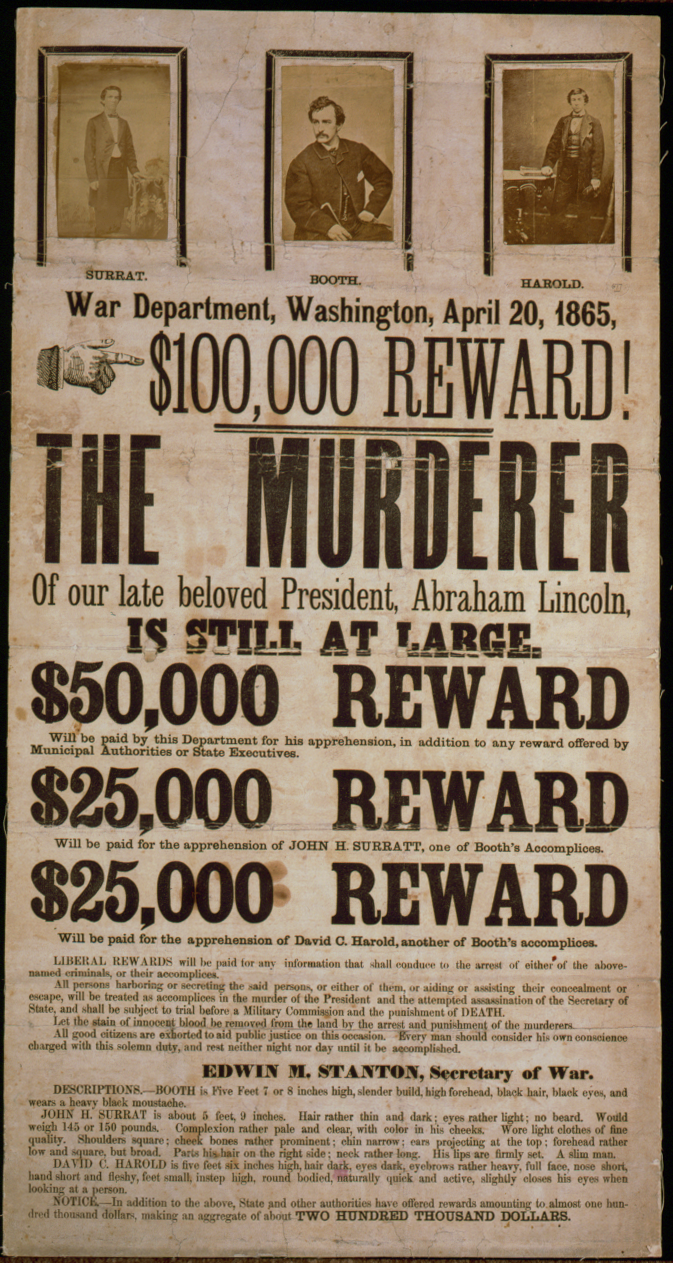
John_Wilkes_Booth_wanted_poster_colourThe gossip site TMZ often has horrible ideas, but for once it has come up with a horrible idea that is worth discussing seriously.

Several citizens provided information that led to renegade killer Chris Dorner being trapped and ultimately killed in a stand-off with police. This should put them in line for three rich rewards offered for information leading to the end of Dorner’s rampage, but TMZ identified catches in all three:

 “The Mayor of L.A. announced a $1 million reward — funded by private groups — for information leading to the “capture and conviction” of Dorner.  Big problem — technically speaking, Dorner must be both captured AND convicted to trigger the reward. The L.A. City Council offered a $100,000 reward for information leading to “the identification, apprehension, and conviction” of Dorner.  Again … no conviction.  City Council sources tell us there’s already a disagreement between the Legislative Analyst and the City Attorney over how to interpret the reward language. And finally … the L.A. County Board of Supervisors offered a $100,000 reward for information “leading to the capture of Christopher Dorner.”  One source at the Board of Supervisors tells TMZ,  “Dorner was cornered but not captured.”

Could TMZ possibly be correct? Would the offerers of these rewards weasel out of their obligations, citing the fact that Dorner burned to death before he could be captured and convicted?

Legally it’s possible, but barely. Ethically, it would be unfair and a breach of public trust. Pragmatically, it would be stupid beyond all imagining. Continue reading

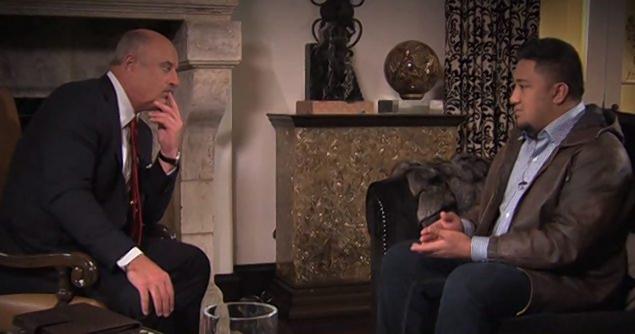
The Triumph of Ronaiah Tuiasosopo

Ronaiah TuiasosopoIs, getting what he wants.

Ronaiah TuiasosopoIs, getting what he wants.

Ronaiah Tuiasosopo, the silly, sick man who hoaxed his alleged friend, Notre Dame star Matti Te’o, into a public humiliation that will shadow the rest of his life, has everything he wants now. “Dr. Phil” is featuring him on his show with a long interview—a match made in the stars, since Phil achieved his fame as a fake doctor, and Ronaiah his as a fake girlfriend to the most gullible college athlete in captivity. More interviews for the hoaxer will follow, with a book and movie deal near certainties. He behaved abominably, and now the American celebrity machine will reward him for it. I predict he’ll travel the same road as other bottom-feeders who have parlayed a lack of principles into fame, however brief.  Joey Buttafuoco. Jessica Hahn. Octomom Nadja Suleman.”Tanning Mom”Patricia Krentcil. Levi Johnston. They all were boosted to semi-star status by being slimy, foolish, or both, and Tuiasosopo fits right in. Continue reading

My Field of Dreams

Yesterday, an Off-Broadway musical closed that I launched on its remarkable run nearly 12 years ago. The show had productions in four states, D.C. and London; it had over 450 performances; it became the cornerstone of one very talented (and very nice) actor’s career, and an important opportunity for several others. It gave a dear friend immense pleasure, satisfaction and recognition in the final decade of his life, and probably saved my theater company from bankruptcy. Most important of all, perhaps, is that it entertained thousands of people. If I got bopped by a trolley tomorrow, the show would undoubtedly stand as one of the major accomplishments of my entire strange, eclectic, under-achieving life.

And yet…feeling good about the unlikely saga of the show, now that it has finally (probably—it has risen from the dead before) seen its last audience, takes considerable effort for me, and has from the beginning. My satisfaction is more intellectual than emotional, because I know that I personally benefited less from the show in tangible ways in proportion to my contribution to it than anyone else involved. Although I restructured the script, re-wrote, added and cut lines, wrote new lyrics to one song and added two others to the show, including the finale, I’m not credited as a co-auther. I own no part of the property, and never received a dime in compensation. Those closely connected with the original production know all of this, but the extent of my role in the creation and success of the show has been invisible to audiences for over a decade. Continue reading