“Good Censorship”: Regarding Ethics Villain Puffin Books And Its Defender, Seth Abramson

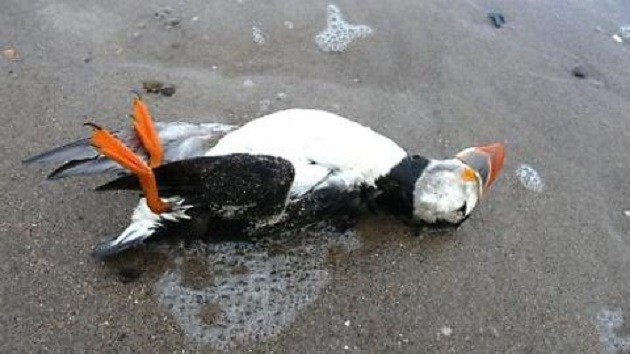
Yes, that’s a dead and rotting puffin above. It should be the new logo for Puffin Books, a division of Penguin. According to Wikipedia, “it has been among the largest publishers of children’s books in the UK and much of the English-speaking world” since the 1960s. According to the Penguin website, Puffin Books is “prestigious.”

According to Ethics Alarms, the children’s book publisher has no regard for authors’ rights, integrity, fairness, literature or language, all rather crucial to its trade, wouldn’t you say? What’s happened at Puffin? Well, what’s happened to Disney, elementary schools and toy makers? ( Clue: Mattel has a gender-fluid line of Barbies).

Puffin has decided that the demands of wokism, political correctness and child indoctrination justify rewriting the works of iconic British author Roald Dahl. Since Dahl’s death, Puffin has made hundreds of changes to his childen’s classics, removing words and passages that The Wonderfully Woke might consider offensive or harmful, even to the extent of adding passages that Dahl never wrote.

What?? I’m assuming that Puffin owns the rights to the books somehow and can do this legally. You want to know why authors like Samuel Beckett made sure his estate had iron-clad control over his works? THIS is why. Please note: it doesn’t matter one whit that Puffin can allow some anonymous censor to rewrite “Charlie and the Choaolate Factory,” it is throbbingly unethical for it to do so.

In the original edition of “Charlie and the Chocolate Factory” Grandma Josephine speaks of a “crazy Indian prince.” The 2022 edition describes the character as a “ridiculously rich Indian prince.” Augustus Gloop, one of the horrible children in the novel, is no longer described as “enormously fat” as Dahl wrote; he is now   described as “enormous”(whatever that means). Puffin apparently has a fetish about “fat.” Aunt Sponge, in the 2022 edition of “James and the Giant Peach,” is now “quite large” instead of “enormously fat,” leaving the possibility that she could be the size of  The Rock or even a T-Rex. Other passages where Aunt Sponge is described as “fat” have been excised.

Meanwhile, “two ghastly hags” has been changed to “two ghastly aunts.” “Queer” is apparently no longer acceptable to describe a house—just in case its a gay house, I suppose—and was replaced with  “strange.” In “The Witches,”  edits by Puffin made character descriptors gender-neutral, so “chambermaid” became “cleaner.” Though Dahl wrote that a character said, “You must be mad, woman!,” the line is now, “You must be out of your mind!” The line describing a, “Great flock of ladies” was changed to a “Great group of ladies.”

And so on. Continue reading
Roald Dahl And The Imaginary Apology

896full-airport-screenshot

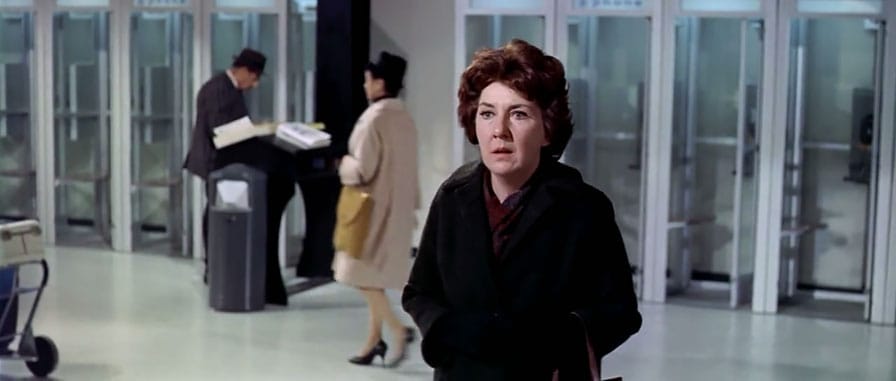
In “Airport,” the ’70s disaster movie, actress Maureen Stapleton (above) has a memorable and moving moment at the end of the movie, greeting the disembarking passengers on the plane nearly brought down by her disturbed husband’s bomb, and saying, tearfully, “I’m sorry! I’m so sorry!” She received an Oscar nomination for it. But the passengers weren’t going to forgive the man who nearly killed them because his wife was apologizing. What makes the scene so touching is her desperation and guilt when she did nothing to feel guilty about. Her apology, no matter how emotional, was meaningless to those who were receiving it.

Roald Dahl, who died in 1990 at the age of 74,was a famed and critically acclaimed writer of classic children’s books like “Charlie and the Chocolate Factory,”“The BFG,” “Matilda,” and “The Witches.” He was also, by his own admission, an anti-Semite, complete with a belief in “Jewish bankers” controlling world economies. Now that writers and artists face “cancellation” from the self-empowered censors of the cancel culture, his family has taken to Dahl’s “official website” to offer an apology to the world.

“The Dahl family and the Roald Dahl Story Company deeply apologise for the lasting and understandable hurt caused by some of Roald Dahl’s statements,” read the online statement.. “Those prejudiced remarks are incomprehensible to us and stand in marked contrast to the man we knew and to the values at the heart of Roald Dahl’s stories, which have positively impacted young people for generations. We hope that, just as he did at his best, at his absolute worst, Roald Dahl can help remind us of the lasting impact of words.”

Continue reading

Morning Ethics Warm-Up, 9/16/17: Amazon Purges Reviews For Hillary, Equifax Must Die, Making Literature More Diverse, And The Red Sox Get Away With It…

GOOD MORNING!

1 “It would be wonderful, wouldn’t it?”

This is the response that the widow of writer Roald Dahl to a reporter’s suggestion that Charlie, the hero of Dahl’s “Charlie and the Chocolate Factory” (aka “Willy Wonka and the Chocolate Factory:) should be made black in a future “reworking” of the book. Recently Mrs. Dahl has claimed that Charlie was originally supposed to be black, but that her husband changed the character before the book was published. She blames his agent, who was, she says (none of this is more than hearsay) afraid that the book wouldn’t sell as well in American with a black hero. She blames “American sensibility.”

No, it wouldn’t be wonderful to start changing the races (and inevitably, genders and sexual orientations) in “reworkings” of literary classics. It would be unethical and irresponsible, as well as a defilement of the author’s visions and creations. Whatever the reason was, and we cannot know it regardless of what Mrs. Dahl now claims, Charlie was white in Dahl’s book. If he had wanted his book to be about a black child, or a little girl, or a Muslim transsexual, the author would have made it so. If someone obsessed with tribal identity politics wants to write a new adaptation under their own name so we can jeer and mock him or her, swell. But it isn’t any more “wonderful” to “rework” Dahl’s own story this way than it is to make Bob Cratchit black, or Captain Ahab black, or Bigger Thomas in “Native Son” Asian-American.

Of course, a stage or film adaptation of the book can cast it any way it chooses.

2 The major business ethics story this past week has been that data security breach by credit giant Equifax. An estimated 143 million Americans now face identity theft for the rest of their lives because the company wasn’t competent to be in the business it was in. It’s that simple. The ways in which Equifax blundered into allowing all this data to be hacked are legion, with more revelations almost daily. My personal favorite is that it neglected to install a patch that would have made its files more secure, delaying for months for no good reason.

Business analysts point out that despite this massive demonstration of ineptitude, the company is not likely to suffer more than the cost and inconvenience of a class action lawsuit or five. The companies that pay Equifax weren’t harmed by the breach, just the lives of the credit-seekers who they use Equifax to check. Nobody seems to think that even this massive misconduct will put Equifax out of business.

The company has dumped some executives, and will probably dump some more, reorganize, and padlock that barn door securely now that the horse has fled. TooLate. The company is untrustworthy, and more than that, companies like Equifax that gather personal information about innocent citizens need to be scared sick about what will happen to them if they can’t keep the information from falling into malign hands. Equifax needs to be put out of business. Its leaders and management need to be imprisoned, fined so severely that they are reduced to eating cat food, or blacklisted so their future employment is limited to bait shops and traveling carnivals. Continue reading