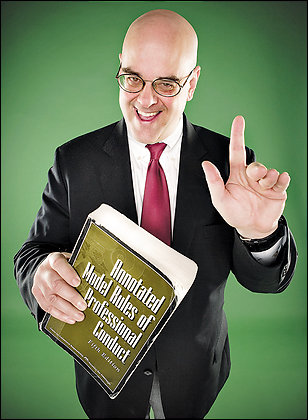
I’ll be “appearing” on NPR’s “Tell Me More” tomorrow with Michel Martin, discussing the NFL’s bounty scandal and maybe another issue or two. Check local times in your area, or just plan on rearranging your sock drawer.
Roger Goodell
The NFL, Battling Its Own Sick Culture
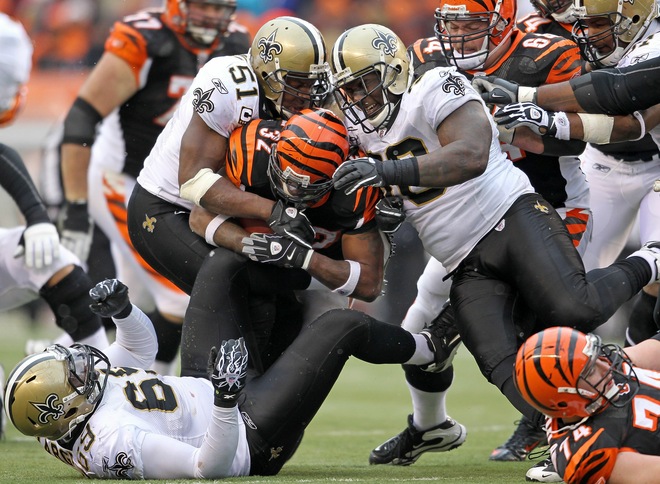
The last Super Bowl was phenomenally successful, as its audience size shattered previous records. Yet for many years, I have not been able to enjoy the sport, because of the unethical conflict at its core. Pro football’s appeal and swagger is based on violence, and we now know that the violence damages its players to an unacceptable extent. The players are paid both to accept the crippling and often-life shortening abuse, as well as administer it. For this former fan, that makes football too close to boxing from an ethical perspective. If the NFL is paying players to do permanent harm to each other, then so are the fans that pay the NFL. Sorry: there are too many other forms of entertainment that don’t require me to endorse and subsidize brutality. Thus I was not surprised to read this, in the New York Times:
“During the past three seasons, while the National Football League has been changing rules and levying fines in an effort to improve player safety, members of the New Orleans Saints’ defense maintained a lucrative bounty system that paid players for injuring opponents, according to an extensive investigation by the N.F.L. The bounty system was financed mostly by players — as many as 27 of them — and was administered by the former defensive coordinator Gregg Williams, who also contributed money to the pool. The N.F.L. said that neither Coach Sean Payton nor General Manager Mickey Loomis did anything to stop the bounties when they were made aware of them or when they learned of the league’s investigation. According to the league, Loomis did not even stop the bounties when ordered to by the team’s owner. “
This practice is not only unethical and against NFL rules, it is criminal. Continue reading
The NFL’s Looming Choice: “Chickafication” or Bloodsport
At a recent conference, a physician panelist discussing NFL player head injuries said that if the average NFL player walked into a doctor’s office for a typical checkup, he’d be rushed immediately to a hospital for treatment.
The fact is slowly dawning on NFL management, the players and the public that pro football, indeed all football, is even more dangerous than everyone thought, and that normal, accepted play may still routinely cripple players in the worst possible place: their brains. The problem, ethical as well as medical, is that no one knows whether the sport can fix the problem and still be what fans regard as NFL pro football. It is a medical problem, because the data increasingly indicates that serious head trauma and long-term disability is frighteningly common. It is an ethical dilemma, because the very aspect of football that many of its fans most relish—the bone-crushing violence—is leaving players unacceptably vulnerable to depression, memory loss, personality disorders, rage, dementia, and suicide. Continue reading
Player Dementia and the Fan’s Dilemma: Is Watching N.F.L. Football Unethical?
It is Sunday, and much of America is ready to settle in front of millions of wide-screen, high-definition television sets to watch Sunday’s favorite entertainment: NFL football. The last thing football fans want to think about today is ethics, and today, perhaps, they shouldn’t have to. Although we are not there yet, the time is fast approaching when not only football fans, but the companies that buy commercials, the merchandisers that sell NFL-licensed jerseys and posters, the TV networks, and the nation itself may have to consider a difficult ethics question: is supporting pro-football unethical? Continue reading