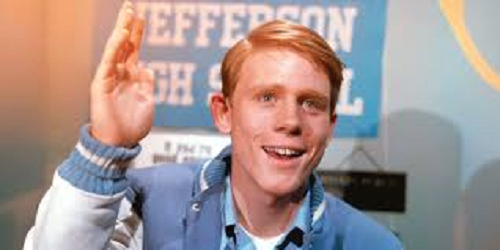
On That Fake “Ron Howard” Facebook Post….

“Appeal to Authority” is one of the hoariest logical fallacies of all as well as one of the most common; it is a favorite of those who cannot make their own cases for their fervently held beliefs. So it is not surprising that a supposed post by nice guy—he was Opie, after all!—and mostly apolitical Hollywood director Ron Howard has resurfaced on social media as desperate progressives try to avoid the consequences of the Charley Kirk murder that was the inevitable result of the fearmongering and demonizing their party flooded the culture with for years.

The Ron Howard manifesto of what liberals believe and why was circulating earlier this year and even Snopes, a reliable Axis ally, pronounced it fake. Never mind, though. What a brilliant ideology the Left has that its adherents can’t even be honest about who is making arguments in its support!

If you read “Ron’s” screed, you will conclude as I have that the director needs to track down the forger and sue him for defamation, or perhaps force the miscreant to watch Howard’s “How the Grinch Stole Christmas” and Jim Carey’s unrestrained mugging for days on end. The recitation of beliefs is so full of “Imagine”-esque fantasy and logical inconsistencies that a relatively alert 8th grader should be able to poke the thing with enough holes to fill Prince Albert’s Hall.

Here’s a challenge to Ethics Alarms readers: debunk this virtue-signaling orgy my Facebook friends are so fond of, and I’ll publish your vivisections in one grand post to express my gratitude for saving me the trouble. I’ll get you started: Only idiots make statements that they conclude with “PERIOD.”

Heeeeeeeeeeeeeere’s “Ron”…

Continue reading

Mid-Day Ethics Flashes, 10/16/2020: Casting Ethics, Celebrity Threats, Free Speech Suppression, And Conservative Clickbait

Flashes

1. The good brother. It’s not worth a full post, but Ron Howard deserves a call-out for being a good brother. Last night I finally watched “Frost/Nixon,” and wondered if, since it was directed by Ron Howard, Opie’s hideous younger brother Clint Howard would be in the cast. Sure enough, he was. Clint, like Ron, was a child star, most prominently in the TV series “Gentle Ben.” Unlike Ron, Clint was not treated well by the puberty fairy, and once his goofy looks stopped being cute, he had a face that was usable, if at all, in cheap horror flicks and in bit parts playing various creeps and thugs. Clint’s not a bad actor, he’s just not very versatile, and relentlessly hard on the eyes. He would probably not have an A movie to his credit were it not for the fact that his brother, the rich and famous star director, puts him in the cast whenever he can.

Well, good for Ron. Sure, it’s nepotism, but Clint is serviceable, and certainly capable of playing the parts he’s cast in, like one of the NASA guys in the control room in “Apollo 13,” or a referee in one of the less important Jim Braddock fights in “ Cinderella Man.” Getting such roles in Ron’s prestige films make Clint more attractive for the parts he’s up for in his usual vehicles, like the upcoming “Hell of the Screaming Undead.”

2. On a related casting issue, I watched the Netflix production “Enola Holmes.” It was fun, but the “anti-racism” casting was already in evidence: African Americans were scattered through Victorian London in odd and ahistorical places. It didn’t undermine the quality of the productions: all of the black actors and actresses were pros, but it did make the piece seem set in some fantasy land that never existed. If you know history, it is jarring; if you don’t, then it has no impact at all. I did find the non-traditional casting half-hearted: in virtually all cases, the actors “of color” were relegated to extremely minor roles a step above the extras. You know—like the parts Clint Howard plays in his brother’s movies.

Continue reading

Isolating Corey Haim: Child Star Deceit and Disinformation in the Media

It is clear that the news media, and especially the entertainment and pop culture media, don’t want to lose their cuddly child performers. Thus when a former kid star like Corey Haim perishes at a young age, the victim of a dysfunctional childhood turned fatal by addictions to fame and drugs, the sad story is usually told as a cautionary tale about how one young actor’s early promise and talent turned to dust and destruction because of his own weaknesses and missteps. A responsible media would use such events to examine the larger, serious, and mostly ignored problem of child abuse and exploitation in the entertainment business, and its terrible toll of casualties.The media is not responsible on this topic, however, and in the case of Haim, seemed to go out of its way to falsely represent his fate as the exception, rather than the rule. Continue reading