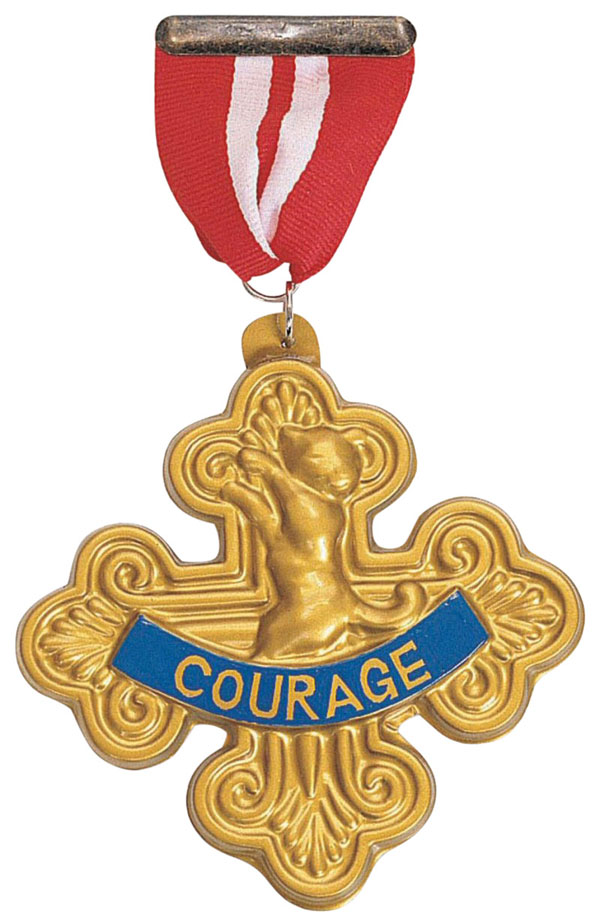
Ethics Heroes: The Fukushima 50, Reminding Us What Real Heroism Is

We all throw around the words “hero” and “heroism” too readily, and it cheapens the real thing, which is rare, and awe-inspiring. Teachers are heroes, cancer patients are heroes, mothers and dads are heroes, legislators who ignore polls are heroes, quarterbacks are heroes. There is much heroism around us, certainly—those who do vital jobs and make courageous choices at personal sacrifice deserve praise and recognition, as do those who overcome tremendous personal challenges. We should appreciate these acts when we see them.

Still, this leaves us unable to muster the words to distinguish the rarest and most remarkable of heroes, like the fifty Japanese nuclear technicians who have remained behind to try to prevent a nuclear catastrophe at the Fukushima Dai-ichi nuclear plant damaged by Friday’s earthquake. They are not merely risking their lives, but quite probably trading them, for the well-being of their country and its citizens.

We should all aspire to such courage, selflessness, and character.

In the pantheon of ethical conduct, the Fukushima Fifty deserve the most honored place of all.

The Wrestler, the Girl, and Cultural Confusion

"Wanna wrestle?"

Sixteen-year-old high school sophomore wrestler Joel Northrup forfeited his match against a fourteen-year-old wrestler with two X chromosomes, Cassy Herkelman, at the Iowa state wrestling championships, saying that “As a matter of conscience and my faith I do not believe that it is appropriate for a boy to engage a girl in this manner.” Obviously Herkelman didn’t require protection from anyone or anything. She was her district’s 112-pound champion wrestler, and she won the Iowa championship for her class as well.  Cassie had won 20 of 33 matches, all against male wrestlers, on her way to the state championship. Maybe Northrup didn’t want to risk being ridiculed for losing to a girl; maybe he was uncomfortable with the sexual overtones of an inter-gender contest. All we can do is assess his conduct by taking him at his word: he believes a young man wrestling a young woman is morally wrong, and was willing to forfeit a match he might have won. Joel was, after all, the fifth-ranked wrestler in the state at 112 pounds, and had a 35-4 record.

Was his decision admirable, or sexist? Was it gentlemanly, or demeaning? Continue reading

Good-bye and Good Riddance to Bush’s Unethical “Conscience Clause”

The Obama Administration has deep-sixed a controversial Bush Administration rule that permitted a wide variety of health care workers to  refuse to administer treatments they found morally repugnant, what the Bush administration termed workers’ “right of conscience.”

Hospitals and clinics faced a loss of federal funds if they failed to uphold the rule, which itself was ethically repugnant. Kudos, thanks and hosannas to President Obama for getting rid of the Federal variety; some states, regrettably, still have them.

The American Medical Association’s position on the matter, embodied in a resolution passed by its membership, is clear and well-reasoned. Its reasoning applies to health care workers though the specific subject of the resolution was pharmacist conscience clauses.

The AMA’s resolution, “Preserving Patients’ Ability To Have Legally Valid Prescriptions Filled,” states: Continue reading

Ethics Scoreboard Flashback: “Death on Everest”, a Real Life “What Would You Do?”

[ The discussion in the earlier post today regarding ABC’s revolting “What Would You Do?” convinced me that I should re-post this essay about a real-life “What Would You Do?”tragedy, which originally appeared on The Ethics Scoreboard in 2006.  Entitled “Death on Everest,” It has been lightly edited to bring it up to date.]

As 34-year-old mountaineer David Sharp lay near death on Mount Everest, over 40 other climbers trudged past him on their march to the peak. All had oxygen with them, and a few even stopped briefly to give Sharp a few breaths. But still they climbed on, and Sharp perished. His demise on May 15, 2006 has gone into ethics lore alongside the infamous death of Kitty Genovese on March 13, 1964. Genovese was murdered outside her apartment building in Queens while thirty-eight neighbors watched and did nothing.
The two incidents stem from very different causes, however. While Genovese’s death was fueled by urban fear and apathy, a mass failure of courage and the willingness to assume responsibility in a crisis, Sharp was the victim of that universal ethics-suppressant, the powerful non-ethical consideration. Continue reading

Becoming a Society Without Empathy

Attorney, blogger and legal ethicist Franco Tarulli has a thoughtful post on The Ethical Lawyer about the results of a recent study I had missed, and now that I know about it, I almost wish I was still missing it. The findings are ominous. Continue reading

The Second Annual Ethics Alarms Awards: The BEST of Ethics 2010

The Best in Ethics 2010. Not nearly long enough…but still a lot of men, women and deeds worth celebrating.

Most Important Ethical Act of the Year: Continue reading

Christmas: the Ethical Holiday

Benjamin Franklin recognized the importance of regularly focusing one’s attention on ethical conduct rather than the usual non-ethical goals, needs, desires and impulses that occupy the thoughts of even the most virtuous among us. He suggested that every morning an individual should challenge himself to do good during the day. In the 21st century psychologists call this “priming,” a form of beneficial self-brain-washing that plants the seeds of future choices.

The Christmas season operates as an effective form of mass population priming, using tradition, lore, music, poetry, ritual, literature, art and entertainment to celebrate basic ethical virtues and exemplary conduct toward other human beings. Continue reading

Ethics Hero: President Obama

According to a tweet today from Press Secretary Robert Gibbs, President Obama has quit smoking,

A president’s habits, be it “the vigorous life” of Teddy Roosevelt, not wearing a hat, like Jack Kennedy, or regarding fellatio from interns as “not sex,” as Bill Clinton did, have the power to change public attitudes and conduct for better or worse. This must have been an especially difficult time for Barack Obama to quit his long-time smoking habit, which typically is a response to stress. Despite perhaps the most stressful period in his life, the President did the right thing, and as good leaders must, to set an example.

We will never know for sure how much or how many, but his responsible conduct will undoubtedly change some behavior, and save some lives.

Bret Favre, Meet Derek, LeBron, and Tiger

Recent revelations about Joe DiMaggio’s conduct while doing PR work for the military during World War II shocked some people who had been humming “Mrs. Robinson” over the years. Joe, as insiders had long maintained, really was a selfish and anti-social guy, far from the knight in shining armor that the public took him to be. But he played his hero role well when he was in the public eye, and that is to his credit: DiMaggio met his obligation as a hero-for-hire. Athletic heroes are challenged to live up to their on-field character, and not surprisingly, few are equal to the task. One who was has been back in the news lately: Stan (the Man) Musial, the St. Louis baseball great who will soon be awarded the Medal of Freedom by President Obama.

In these anxious times when every institution and every champion seems to betray us eventually, sports heroes who can remain untarnished are especially valuable, which is one reason why they earn so much money. On the field, court, course, ring or track, they can exhibit courage, trustworthiness, selflessness, leadership, sacrifice, diligence, loyalty, fair play and sportsmanship to inspire us and serve as role models for our children. All they have to do is avoid showing that it is all an illusion after the games are over. It shouldn’t be difficult, yet it is.

Tiger Woods only needed to be a responsible and trustworthy husband and father. LeBron James only had to avoid revealing himself as a fame-obsessed child. Derek Jeter only had to resist the impulse to extort the team he symbolized for money he neither deserved or needed. Yet they couldn’t, or wouldn’t do it. They hurt their own images, reputation and legacy beyond repair, but more important, they robbed us of heroes that we sorely need.

The latest addition to the pantheon of fallen idols is Bret Favre, the star NFL quarterback now suffering through the humiliating final season that was more or less guaranteed by his inability to retire while he could still pick up a football. Continue reading

Deficit Reduction Ethics: We’re All Selfish Dunces, and We’ll Be Sorry

President Obama’s bi-partisan commission on cutting the deficit has come up with its draft recommendations, and they are fair, balanced, obvious, and, inevitably and unavoidably, flawed. Despite the flaws, everybody gets hurt, as everyone deserves to be when we elect a series of profligate and irresponsible leaders who spend more money than the nation has, on too many dubious projects and policies.

Personally, it would kill my already struggling personal finances dead: I’d have to sell my house, for one thing, at a lower value than it has now. Are the recommendations perfect? Surely not. They address the problem, however, and it is a problem that 1) has to be addressed 2) has to be addressed quickly and 3) will never, ever be addressed sufficiently if left to the usual corrupt legislative process, where it will sliced to pieces by lobbyists and turned into more pork, more lies, and another 3000 page bill that nobody reads before voting on it.

If Americans were responsible, honest, fair and genuinely concerned about America’s future prosperity and strength, we would just buckle down take deep breaths, and agree to make the sacrifices necessary to put the nation back on the road to fiscal health. But we won’t, will we? Continue reading