Noted: A Familiar Debate Over At Slate

battle-marvel

Those who participated in the epic, star-studded battle in February here, led by the departed Bruce Bartup, over what are acceptable levels of intensity and personal attack on Ethics Alarms, will experience some nostalgia reading this debate on Slate about the website’s policies. My favorite line: “…if someone is a dick, and we’ve explained that he’s a dick, why shouldn’t we also call him a dick? He’s earned it!”

If you missed Bruce’s Lament and the terrific donnybrook it generated (sadly, Bruce took his bruised feelings and went home to the British Isles, though I urged him to persevere) can read his Comment of the Day and the responses to it here.

___________________________

Graphic: kiss my wonder woman

Incompetence in Portland: Bureaucrats Show Those Who Are Paying Attention Exactly What They Need To Know

urinating_outdoor_garden_water_fountain

Honestly, I first though it was a joke. The more I think about this story now, the less funny it gets, and the more tragic and frightening.

A security camera captured the image of a 19-year-old jerk urinating into Portland, Oregon’s Mt. Tabor Reservoir system, so “to be safe,” the city is dumping all 38 million gallons of drinking water. From Ars Technica:

“David Shaff, Portland’s water bureau administrator, reserves a special disgust specifically for human urine. In 2011, when Shaff drained the reservoir following a urination, he reasoned to the Portland Mercury, ‘Do you want to be drinking someone’s pee?… There’s probably no regulation that says I have to be doing it but, again, who wants to be drinking pee?’ This time around, Shaff wrote in a statement, ‘Our customers have an expectation that their water is not deliberately contaminated.'”

That’s right: this is the second time Portland has done this. Slate does the “Wow, what an idiot!” math:

“…a typical urination of about 1/8 gallon in a reservoir of 38 million gallons amounts to a concentration of 3 parts per billion. That’s billion with a b. For comparison, the Environmental Protection Agency’s limit for arsenic in drinking water—arsenic!—is 10 ppb. The EPA doesn’t appear to have a limit for urine in drinking water, but it does limit nitrates in drinking water to 10,000 ppb, and urine does contain a lot of nitrogen, so let’s use that as a proxy. How many times would that teenager have to pee in a Portland reservoir to produce a urine concentration approaching the EPA’s limit for nitrates in drinking water? About 3,333 times.”

Continue reading

Worst Loving Parents Of The Year…I Hope

The Sailing Kaufmans. Make that the Sinking Kaufmans. The Stupid Kaufmans?

The Sailing Kaufmans. Make that the Sinking Kaufmans. The Stupid Kaufmans?

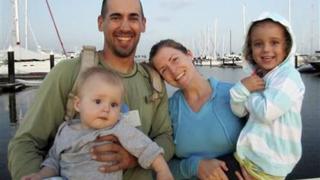
Last month, I wrote about the burglar who brought his infant offspring along with him on a job, which is to say, a burglary. It is fair to say, and thus I am saying, that San Diego parents Eric and Charlotte Kaufman, presumably known as “The Sailing Kaufmans” in honor of “The Biking Vogels,” make that burglar look like the Huxtables from “The Cosby Show.”

Oh, they are loving parents I’m sure, just like the doting professionals played by Bill Cosby and Felcia Rashad in the iconic sitcom. The problem is that they don’t have the sense bestowed by nature on the average adult lemur. Mom and Dad Kaufman brought their 1-year-old daughter Lyra and her 3-year-old sister, Cora along with them as they embarked in March on the great adventure of sailing across the Pacific as the first leg of a planned circumnavigation of the globe.

In a 36-foot sailboat.

Alone.

With a toddler.

And an infant.

Morons.

Continue reading

Spreading the Word: “The Amazing Mouthwash Deception: Helping Alcoholics Relapse For Profit”

"Bottoms up!"

“Bottoms up!”

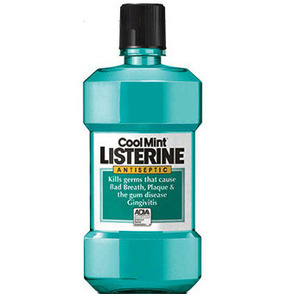
I am moved to re-post the early Ethics Alarms entry from 2010, titled “The Amazing Mouthwash Deception: Helping Alcoholics Relapse For Profit,” for a few reasons.

It raises an important and shamefully under-reported topic, one that despite my exhortations then has yet to be adequately examined in the media. If one googles various combinations of “mouthwash,””Listerine,”‘alcoholism,” and “alcoholic,” the first result is, sadly, my post. Most people who are not afflicted with the disease of alcoholism have no idea that mouthwash is a popular stand-in for liquor, or that is used to deceive family members who think an addict is no longer using or intoxicated. None of the recommended policy changes I suggest in the post have been implemented, either.

Last week I chanced to mention the use of Listerine by alcoholics to a friend who is a doctor who treats alcoholics. He was shocked, and had no knowledge of this at all. “Eww!” he said. “Isn’t that poison? You can drink it? I had no idea.” And he is a professional who keeps up  with the literature. (But obviously doesn’t read his friend’s blog.)

Despite my frustration that what I regard as a true exposé that should have sparked an equivalent article in a more widely read forum has remained relatively unknown, I am encouraged by the effect it has had. Most posts have their greatest traffic around the time they are posted, but since 2010, the page views of this article have increased steadily every month. More importantly, it has drawn comments like this one, from yesterday:

“Am looking after my twin sister who is a chronic alcoholic. She has been three days sober and then she just walked in and I couldn’t work out what the hell happened. She was in a stupor , but there was no alcohol and I am dispensing the Valium for detox period and she smelt like mint!! Found three bottles of it !!! This is my last big push to help her and she pleaded innocent and no idea it had alcohol in it! Hasn’t had a shower for two days but keeps her month fresh and sweet !! Thanks for the information. Much appreciated XXX”

Most of all, I am revolted that what I increasingly have come to believe is an intentional, profit-motivated deception by manufacturers continues, despite their knowledge that their product is killing alcoholics and destroying families. I know proof would be difficult, but there have been successful class action lawsuits with millions in punitive damage settlements for less despicable conduct. Somewhere, there must be an employee or executive who acknowledges that the makers of mouthwash with alcohol know their product is being swallowed rather than swished, and are happy to profit from it.

Few had discovered Ethics Alarms by April of 201o. I hope that by re-publishing the post now, it might find its way to more social media pages and even be sent to some investigative reporters. As I ended the original post, spread the word. Mouthwash is killing your friends and family members, or if not yours, those of someone not far away.

Thus, for the second time and hoping for more impact than the first, here is “The Amazing Mouthwash Deception: Helping Alcoholics Relapse For Profit.” Even if you read it the first time, refresh your memory.

People are killing themselves right under our noses, and we are being thrown of by the minty smell of their breath.

Continue reading

Caring Letter From A Child Star

Sarah and the Baron.

Sarah and the Baron.

This remarkable letter is old—2005—but I just became aware of it, and it is an important document in the ongoing problem of the mistreatment of child performers.

I am a fan of film director (and Monty Python member) Terry Gilliam, and a great admirer of Canadian actress/director/political activist Sarah Polley. So naturally I love “The Adventures Baron Munchausen,” Gilliam’s epic fantasy that starred Polley when she was the tender age of 9, and gave one of the most impressive performances of any juvenile actress, ever. In 2005, Gilliam was filming another movie with a young star, and 17 years after working with him, Polley felt obligated to write this letter, which speaks for itself, and eloquently too:

Hi there, Terry.

Continue reading

Comment of the Day: “Zero Sum Ethics Encore: When An Unfair Firing Is Still The Most Ethical Course”

 my hero

The dilemma posed in the recent post about the radio host fired because of the danger posed by her threatening, stalker ex-husband sparked some unexpected reactions, as many readers expressed frustration that Nancy Lane’s employer left her to her own resources in her peril. One of the more provocative alternatives proposed is Steven’s endorsement of what he calls the chivalristic response.

Here is his Comment of the Day, to the post Zero Sum Ethics Encore: When An Unfair Firing Is Still The Most Ethical Course.

The problem I have with situations such as here with Nancy Lane is there is no reason for this situation to result in an ethical dilemma or “Zero Sum”. I, as well as few others here recommend what can only be labeled as a chivalristic response. Now we are not talking the aristocratic, medieval ethos but more of a modernization of the gentlemanly behavior exhibited of those of the greatest generation without the bigotry or homophobia. With the feminization of our society it is incredibly hard to find the line between “modern” chivalry and misogyny, or at least feminism’s liberal application of the term. Continue reading

Zero Sum Ethics Encore: When An Unfair Firing Is Still The Most Ethical Course

zero-sum-thinking

Back in June, Ethics Alarms set off quite a donnybrook over a post about a second grade teacher in San Diego who was fired over concerns for the safety of staff and students after the teacher’s ex-husband came to the school to confront her. The teacher protested that the school was abandoning her when she needed support most, which was indeed true. But Ethics Alarms concluded…

“This is the kind of ethical conflict involving competing interests and obligations that only a balancing approach, utilitarianism, can address properly. The husband is Carie’s problem. He is not the school’s problem. It is not the students’ problem. It is not the children’s parents’ problem. I know it’s not an easy problem for her to solve, but she has no right to insist or demand that her inability to solve her problem should be permitted to put others at unnecessary risk…Sometimes ethics is a zero sum game, and someone has to lose. This is one of those times…”

Ethics conflicts (where two or more ethical principles are in direct opposition) necessarily require making tough choices, but many readers didn’t like the analysis, pronouncing it “cold.” “There has to be some other solution,” wrote one commenter. Certainly there are other solutions, but the school was obligated to choose the solution that resulted in the least risk to their primary charges, the kids.

And if children aren’t at risk?

That’s the question raised by the most recent occurrence of the zero sum ethics scenario, in which Nancy Lane, a popular Pennsylvania radio host, has been terminated by her employers because of the threats made against her and the company by her ex-husband. The ex, George Lane, is currently jailed for  impersonating police. In the recent past he has repeatedly threatened Nancy, her family and coworkers, and last year hired someone to slash the tires of several company vehicles at Forever Broadcasting, Nancy Lane’s now former employers, who severed its ties with her by writing,

“Regrettably recent events involving your former husband has caused severe disruption to our business and has made this decision necessary.”

Lane has posted a petition protesting her dismissal. It reads, in part… Continue reading

Comment of the Day: “How People Rationalize Being Close-minded: A Case Study”

battle-marvel

The Ethics Alarms resident humanist, Bruce, has filed a passionate brief condemning the sometimes rough debate on Ethics Alarms, and, in some ways, the blog itself. This is the latest volley in an ongoing thread that has jumped around from multiple posts: my fault, because I keep raising the issue in various ways. I would normally append some reactions at the conclusion of such direct criticism, but it’s a busy day, so I’ll have to put them in the comments to Bruce’s post later, with this exception.

The Ethics Scoreboard, which was not a blog but a website, embodied Bruce’s suggestion of radically fewer posts, more carefully considered and proofread. I am proud of a lot of the work there, but the format was limiting. The goal of Ethics Alarms is to try to inject ethical considerations into the national analysis and discussion of daily events, including politics, that need them but hardly ever receive them, because, sadly, most commentators are either uninterested or incapable of it.  The reason I chose a blog format is that these issues are time-sensitive, and if I am to have even a wisp of a chance of elevating the discussion and encouraging valid analysis of right and wrong, I have to strike quickly, or I might as well be writing about the ethics of the Spanish American War.

Jeffrey Field, my favorite Occupier who often weighs in here, periodically sends me a note that says “Slow down!”  I appreciate that, and take it to heart. Nonetheless, when the news media was (lazily? maliciously?) misrepresenting the meaning of David Wildstein’s lawyers’ letter regarding Chris Christie’s involvement in the George Washington Bridge affair, and I could find nobody who was pointing out what miserably unethical journalism this was, I had to write about it immediately—and, frankly, Ethics Alarms readers were ahead of most of the public. A little later, the New York Times, for example, had to tune down its characterization of the document.

I know my analysis is not always air tight, but I’m not trying to end discussions, but begin them. I wish I could do ten posts a day.

Here’s Bruce, and his Comment of the Day on the post How People Rationalize Being Close-minded: A Case Study”: Continue reading

How People Rationalize Being Close-minded: A Case Study

close_minded

For “close-minded,” you can substitute ignorant, knee-jerk partisan, misguided, arrogant, stupid, reckless,naive, easily-manipulated, or just stubbornly wrong.

I owe Ethics Alarms expatriate Barry Deutsch for pointing me to this; on weekends I often check out the blogs and websites, and sure enough, on his own blog Alas! Barry was once again discussing the issue that was in part responsible for his contentious departure here—the issue of how comfortable on-line forums should be for participants. Though Barry has his own—typically nuanced, too-equivocal for my tastes—views on the topic, the post I want to feature is one he linked to, a blog called Apophemi. In a post about why the blogger avoids participating on the so-called “rationalist” forum “Less Wrong,” which appears to be a major source for the writers of “Big Bang Theory,” he argues for, as translated by Barry and others—he needs a translator—“safe places,” meaning web forums where certain ideas, topics and positions will not or cannot be discussed. He writes (I warned you, remember);

“I am reasonably confident (insert p value here) that this attitude is self-replicating among people who are accustomed to being at risk in a specific way that generally occurs to marginalized populations. (I cannot speak for people who may have a similar rhetorical roadblock without it being yoked to a line of social marginalization, other than that I suspect they happen.) This would mean that rewarding the “ability” to entertain any argument “no matter how ‘politically incorrect’” (to break out of some jargon, “no matter how likely to hurt people”) results in a system that prizes people who have not been socially marginalized or who have been socially marginalized less than a given other person in the discussion, since they will have (in general) less inbuilt safeguards limiting the topics they can discuss comfortably. In other words, prizing discourse without limitations (I tried to find a convenient analogy for said limitations and failed. Fenders? Safety belts?) will result in an environment in which people are more comfortable speaking the more social privilege they hold. (If you prefer to not have any truck with the word ‘privilege’, substitute ‘the less likelihood of having to anticipate culturally-permissible threats to their personhood they have lived with’, since that’s the specific manifestation of privilege I mean. Sadly, that is a long and unwieldy phrase.) Environments for discourse which do not allow/encourage what I’m calling “discourse without limitations” are frequently (that I have seen) trash-talked in the context of environments which do allow/encourage that type of discourse.”

I guess this would be “trash-talk,” then: Apophemi is rationalizing echo chambers, close-minds and intellectual laziness. Continue reading

Ford’s Hypothetical Ethical Dilemma

"Oh-oh...Lindsay's behind the wheel again..."

“Oh-oh…Lindsay’s behind the wheel again…”

Ford’s Global VP/Marketing and Sales, Jim Farley, was waxing on about data privacy as a participant in a panel discussion at an electronics trade show in Las Vegas. He was making a point regrading how much data Ford has on its customers, and its possible uses, and stunned audience members when he said, “We know everyone who breaks the law, we know when you’re doing it. We have GPS in your car, so we know what you’re doing. By the way, we don’t supply that data to anyone.” Ford knows when drivers of its automobiles break the law? That raises all kinds of concerns, and obviously Ford’s PR folks and lawyers didn’t care to deal with them. The next day, after a lot of publicity, Farley “clarified” his statements, saying, “I absolutely left the wrong impression about how Ford operates. We do not track our customers in their cars without their approval or their consent. The statement I made in my eyes was hypothetical and I want to clear this up.”

Well, you know how much I like hypotheticals. Besides, how will we be sure that Ford, if it can monitor our driving, won’t monitor our driving, or at least someone’s driving? Constitutional law specialist and blogger Eugene Volokh has an interesting post about the legal and liability implication’s of Ford’s peculiar spying ability. Introducing his analysis, he writes, Continue reading