Sunday Ethics Refresher, 3/24/2019 [PART II]: Bill of Rights? What Bill Of Rights? [CORRECTED]

Now it’s “Good afternoon!”

Sunday’s depressing ethics potpourri continues…

3. Psst! San Antonio! This is unconstitutional! The San Antonio City Council rejected  Chick-fil-A ‘s application for a site at its airport this week because the company’s foundation has contributed to organizations that oppose same-sex marriage

Councilman Robert Treviño told the news media that the council made the decision based on “inclusivity.”

“With this decision, the City Council reaffirmed the work our city has done to become a champion of equality and inclusion. San Antonio is a city full of compassion, and we do not have room in our public facilities for a business with a legacy of anti-LGBTQ behavior. Everyone has a place here and everyone should feel welcome when they walk through our airport.”

Have these fools and censors even read the Bill of Rights? A government can’t penalize a business because it doesn’t like the opinions of its owner or management. This is viewpoint discrimination, and a screamingly obvious First Amendment violation. As Chick-fil-A accurately pointed out in its response, no one has ever been refused service or treated differently in one of the company’s restaurants because of race, gender, ethnicity, sexual orientation or gender identity. That’s their LGBTQ “behavior,” not their entirely legal and protected choice of charities and non profits.

Once again from the Democratic Party and the Left we whiff the rotten stench of nascent totalitarianism. Believe as we do, or be punished. This is the same company several Democratic mayors said were not welcome in their cities. Once again, this unconstitutional and undemocratic act by San Antonio’s Democrats is assured of a reversal by the Supreme Court, and if Justice Ginsberg still has most of her marbles and Sotomayor isn’t chasing rainbows and unicorns, it ought to be a 9-0 vote.

Local government actions like this ought to concern followers of both parties equally. The First Amendment should not be a partisan issue. Continue reading

Ethics Observations On The Masterpiece Cake Shop Decision

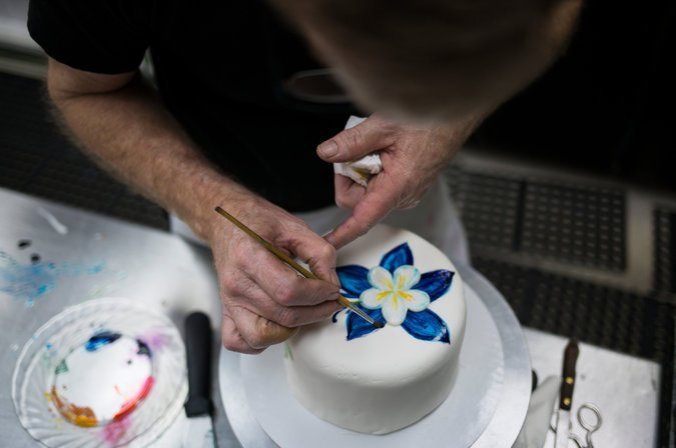
The Supreme Court ruled today in favor of Jack Phillips, the Christian baker in Colorado who refused to bake a custom wedding cake for a same-sex couple. The Court  found that the Colorado Civil Rights Commission infringed on Phillips’s rights in ruling that he violated the Colorado anti-discrimination law barring merchants from refusing service based on race, sex, marital status, or sexual orientation. The ruling is narrow; it does not empower merchants to deny service based on sexual orientation.  It is based entirely on  the Colorado Civil Rights Commission’s  hostility toward Phillips’s religious views in ruling against him.

Observations:

1. Justices Ruth Bader Ginsburg and Sonia Sotomayor were the only dissenting votes, meaning that the decision was 7-2, and not a “conservative vs liberal” outcome. Even the dissent is based on narrow legal and factual distinctions rather than ideological ones.

2. Read the opinion, and the dissent. Also, if you really want to impress your friends, access the resources available here.

3. These statements from Justice Kennedy’s majority opinion, cited by Justice Ginsberg, help clarify matters in the right legal and ethical direction:

  • “[I]t is a general rule that [religious and philosophical] objections do not allow business owners and other actors in the economy and in society to deny protected persons equal access to goods and services under a neutral and generally applicable public accommodations law.”
  • “Colorado law can protect gay persons, just as it can protect other classes of individuals, in acquiring whatever products and services they choose on the same terms and conditions as are offered to other members of the public.”
  • “[P]urveyors of goods and services who object to gay marriages for moral and religious reasons [may not] put up signs saying ‘no goods or services will be sold if they will be used for gay marriages.’ ”

The ruling could have hardly been less of a ringing endorsement of either “side.”

4. To which I say, “Good.” As I wrote the last time this case was discussed here,
Continue reading

It’s A Comment Of The Day Weekend! First Up…Comment Of The Day (3): “An Ethics Alarms Holiday Challenge! Identify The Rationalizations, Logical Fallacies, Falsehoods And Outright Errors In This Essay…” AND, In Related News, Another Bakery Gets Slammed In Oregon

I’m not exaggerating: I have at least four Comments of the Day stacked up on the Ethics alarms runway after this one, and there are usually COTDs arriving on Saturdays. I can’t promise to get all of them up today, especially since I’m hacking away at the 2017 Ethics Alarms Awards, and this is a long working weekend at ProEthics. Still, I will get a lot of them to you, and it’s a provocative group, as you will soon see.

But first, a prelude and some context.

An Oregon appellate court this week upheld a ruling against the owners of the since-closed Sweetcakes by Melissa,  Aaron and Melissa Klein, forcing them to pay emotional-distress damages of $135,000 to Rachel and Laurel Bowman-Cryer, a lesbian couple for whom they refused to design and sell a wedding cake almost five years ago. The Klein’s argued that state Labor Commissioner Brad Avakian violated state and federal laws and their rights as artists to free speech, their rights to religious freedom and their rights as defendants to  due process.

The Oregon court ruled that the Kleins’ argument that their cakes entail an artistic expression is “entitled to be taken seriously,” but it’s not enough for the couple to assert their cakes are pieces of art:

“Although we accept that the Kleins imbue each wedding cake with their own aesthetic choices, they have made no showing that other people will necessarily experience any wedding cake that the Kleins create predominantly as ‘expression’ rather than as food.”

This mess commenced  when Rachel Bowman-Cryer went to the suburban Portland bakery with her mother in January of 2013. When Aaron Klein was told that the wedding did not involve a male partner,  he said that the bakery did not make cakes for same-sex weddings. They left, but soon the mother returned to argue with Klein as Rachel sat in the car, weeping. her mother went in to speak with Klein. The mother told Klein she had once thought like him, but having two gay children forced her to see the error of her ways.  Klein retorted with Leviticus: “You shall not lie with a male as one lies with a female; it is an abomination.”

The complaint and action by Oregon’s Bureau of Labor and Industries followed. You can read the opinion here.

Ugh.

This case is even worse than the one currently before the Supreme Court, discussed here. Continue reading

Comment Of The Day #4: “Back To The Bigoted Baker: It’s Complicated…More Than I Thought”

Ryan Harkins’ Comment of the Day, the fourth on the post about the Great Cake Controversy ,responds to #3, by Extradimensional Cephalopod.

The four COTD’s cover a great deal of legal and ethical territory and if not the full spectrum of positions on this difficult topic. Ryan’s three predecessors can be read here:

After you read #4, I’ll ask you which of the COTDs come closest to your own opinion. If the answer is “none of them,” by all means try for #5!

Here is  Ryan Harkins’ Comment of the Day on the post Back To The Bigoted Baker: It’s Complicated…More Than I Thought:

EC,

I hate to answer for the baker, so I hope you don’ mind if I respond with how I would answer.

What if I walked into the shop and asked for a wedding cake for no reason at all? Nobody’s getting married; I just want the cake. Is it against his religion to make that style of cake for anything other than weddings?

It would not be against my religion, no.

One thing I want to point out about your line of inquiry here is that you are divorcing the mechanical action of making a cake from the purpose of making a cake. A cake is a cake, and apart from any purpose, it remains a cake with no further meaning than a configuration of confectionery molecules. But the purpose for making the cake defines the context. If you wanted me to bake you a cake so you could bury it in your backyard, I wouldn’t have any religious objections to that, but I would certainly object to having the fruits of my labor just thrown away. Just as I would object if you wanted me to write you a book so could use the pages of the book as toilet paper.

The purpose of making a wedding cake is for it to be displayed and consumed at a wedding. If you aren’t going to use the cake for a wedding, ontologically speaking, could it even be a wedding cake?

Do I have to show him a marriage license?

I wouldn’t require that. My general standpoint would be to take people at their word. That being said, if I knew you and you were known for pranks, were opposed to marriage in general, and nothing I knew about your recent activities hinted at a wedding, I might want some actual proof that a wedding was occurring.

I’m an atheist; will he refuse to acknowledge my marriage because you can’t have marriage without a god? Does only the Christian deity count for a “real” marriage?

Since I’m Catholic, I’ll just toss out what the Catholic Church teaches about marriage. Marriage is universal. Historically, marriage permeates pretty much every culture. Marriage is an institution that has, for the most part, united a man and his wife to the children they bear together. Marriage does not require a profession of faith, because it is a foundational institution of mankind. That is why eating, drinking, and shelter don’t require a profession of faith. They are also foundational aspects of the human condition. So, there is no objection to two atheists marrying.

Where the religious context comes into view is with the nature of that marriage. Catholics profess that Jesus elevated the institution of marriage to a sacrament. This means that a valid marriage between baptized individuals cannot be dissolved save by the death of one of the two parties. But that does not mean every marriage is sacramental. If one of the two parties is not baptized, the marriage is still a valid marriage, but it is not a sacramental marriage. Thus it could be dissolved, and either party would be free to re-marry.

A funny oddity of terminology crops up in Catholic teaching. Since a valid, sacramental marriage cannot be dissolved, but since parties can licitly separate for serious reasons (abuse, abandonment, adultery, addiction), a Catholic can be married and divorced at the same time…

I would argue that the artistic quality of the cake has nothing to do with who is getting married, or if there’s even a marriage at all–at least, as far as religion is concerned.

I agree with you to a certain extent, here. The artistic quality is its own concern. It is the teleological purpose of the cake that is the true contention. So that raises a question: if I bake a cake that I do not intend to be used at a wedding, but looks just like a cake that I do intend to be used at a wedding, is it a wedding cake? To use some technical terms, there is the essence of a thing, and there are the accidents of a thing. The essence of a thing is what is essential to a thing being that thing; accidents are just features that particular thing has that are not essential to a thing being that thing. The essence of a chair is something to sit on. Accidents of a chair are having one leg, or three, or four, having a back, not having a back, etc. So what is the essence of a wedding cake, and what are the accidents of a wedding cake? I think the only essential difference between a wedding cake and a non-wedding cake is the intent for which the cake is made. The only part I waffle on is the cake-topper…

On a separate note, I assert that religion ultimately must be subordinate to the law of the land.

I’m uncomfortable with how you phrase this, so let me toss out what I think about this, and let me know if it does or doesn’t conform with what you’re thinking. Continue reading

Comment Of The Day #3: “Back To The Bigoted Baker: It’s Complicated…More Than I Thought”

And now there are FOUR Comments of the Day on the post about the Great Cake Controversy. This is a record number for a single Ethics Alarms post. It is a true ethics conflict: which should have priority in a pluralistic society, the right of all citizens to be treated equally under the law, and to have the government ensure their right to the pursuit of happiness, or the individual right to act and live in concert with one’s sincerely held religious beliefs, and to not be forced into expressive speech, part of the right to liberty? This part of the controversy doesn’t even include the ethical question of whether either party should have allowed this to be come a legal dispute.

When I post the fourth COTD, with was a response to #3, I’ll include links to the other three and include a poll for readers to register their opinion regarding which comes closer to their own view

Here is Extradimensional Cephalopod’s  Comment of the Day on the post Back To The Bigoted Baker: It’s Complicated…More Than I Thought:

There’s an obvious question here (well, several) that occurs to me: What if I walked into the shop and asked for a wedding cake for no reason at all? Nobody’s getting married; I just want the cake. Is it against his religion to make that style of cake for anything other than weddings? Do I have to show him a marriage license? I’m an atheist; will he refuse to acknowledge my marriage because you can’t have marriage without a god? Does only the Christian deity count for a “real” marriage?

I would argue that the artistic quality of the cake has nothing to do with who is getting married, or if there’s even a marriage at all–at least, as far as religion is concerned. If I asked someone to draw me a picture of a bird, they don’t have to know anything about me in order to make it. Their art doesn’t have anything to do with me, and they are not expressing any objectionable ideas. They’re not endorsing me in any way by taking me on as a customer. Therefore, this isn’t like refusing to make a swastika cake. This is like refusing to sell a cake to Nazis. (Yes, Nazis should be able to buy cake like anyone else. Preventing them from doing so is just bullying, and won’t teach them anything except more hate. How will they learn how to appreciate different people if only other Nazis talk to them?) Continue reading

From The Ethics Alarms “Stop Making Me Defend Sarah Huckabee Sanders!” Files: “The Advocate” Lies About The Masterpiece Cakeshop Case


Wouldn’t it be wonderful if activists had integrity? Unfortunately, most of them don’t, and I only say “most” because I haven’t checked all of them. Virtually all that I have checked spin, distort facts, and lie outright, because the ends justify the means to them, and they, of course, are Right. It’s the Saint’s Excuse. Lies that advance the cause are benign.

The latest disgraceful example of wilful deception in support of a passionately felt cause came from the LGBT publication “The Advocate,” as well as many Democratic and progressive news sources. They all chose to deliberately misrepresent what the President’s spokesperson said about his position was on The Great Cake Controversy…all the better to rev up hate and fear among their readers. You see a typical example in the label to the video above. “Sarah Sanders: Trump OK with businesses hanging anti-gay signs.” She did not say that. The video proves she did not say that. She was asked if the President agreed with the Solicitor General in his oral argument before the Supreme Court in the Masterpiece Cakeshop case when he said that it would be lawful and possible for a baker to hang a sign saying, “We don’t bake cakes for gay weddings.” She said yes. Of course yes. The government’s case is that a baker should not be forced to “participate/endorse” a ceremony that his religion declares morally wrong, and thus is not discriminating by refusing to make cakes for same sex weddings, as long as the baker does not generally discriminate in providing service on the basis of sexual orientation. If the Court agrees, then a baker such as the owner of Masterpiece Cakeshop can legally follow the dictates of his faith and not make same- sex wedding cakes, and if he isn’t selling them, he not only could but should inform potential same-sex couples of that fact.

This is not, by any fair assessment, an “antigay sign.” It makes no antigay assertions at all. The statement is false. Unequivocally, intentionally false. Continue reading

Comment Of The Day #2: “Back To The Bigoted Baker: It’s Complicated…More Than I Thought”

This the second of the Comments of the Day on the post about the Great Cake Controversy; a third arrived last night, which will appear shortly. It was authored by the always provocative Mrs. Q—you can tell because she always uses ampersands. I used to turn them back into “and,” and then decided that this was a signature feature.

The three Comments of the Day on this topic are as different as they could be. I detest the Colorado baker controversy, because three people could have and should have avoided the whole thing, saved a lot of time, money, and ink, and just exhibited some empathy and proportion rather than avoiding the Golden Rule so emphatically. I detest it, but it certainly is a rich ethics subject.

Here is Mrs. Q’s  Comment of the Day on the post Back To The Bigoted Baker: It’s Complicated…More Than I Thought:

When my wife & I were looking for wedding rings we stopped at a place where the owner after talking to us went on a strange rant about some NFL player who came out gay. The owner went so far as to physically mimic kissing another guy in telling his story, and shivering with wide toothed disgust at the thought. He didn’t say he wouldn’t sell us a ring, but obviously we didn’t want one from his store & the feeling was mutual.

We could have gone on Yelp and given the store a bad review or complain to someone who could “go after” him politically, but at the end of the day our relationship didn’t (doesn’t) need others affirmation. We were certainly hurt – not by his thoughts but the manner in which he shared his thoughts. Yet we picked our proverbial battle and let it go. Why? because we too are Christian and know no one person can ever really give us what we need. Hurt feelings can be gotten over and forgiveness heals wounds far faster than enacting revenge because someone doesn’t agree with us or what we do.

We have to ask what will be next. I don’t believe suddenly we’ll see “No Homo’s Allowed” signs on shops. And ultimately that’s not what I believe this case is about. Also I’m not convinced that these bakers are bigots either. Instead I suspect what this case is ultimately about religion and thought police. Orthodox Muslims having to make non-Halal foods, Jewish deli’s selling pork, Christians making Satanic themed confections. I’d rather see a few victim-minded SJW’s get butt-hurt than force others to sign off on what are ultimately another persons *private* beliefs. Forcing business owners to think as we wish sets a dangerous precedent while walking away from a shop not being affirmed only requires one to find another place to go. And honestly it’s fairly easy to find smug leftist affirmation at businesses. Yes…even in small towns too. Continue reading

Comment Of The Day #1: “Back To The Bigoted Baker: It’s Complicated…More Than I Thought”

There were so many thoughtful and diverse comments on the post about the Great Cake Controversy that I could have justified four or five Comments of the Day. I chose two. This is the first, by the indefatigable Michael Ejercito. Here is his Comment of the Day on the post Back To The Bigoted Baker: It’s Complicated…More Than I Thought:

“Art is notoriously difficult to define. To that list, I could argue for the addition of gardeners, landscapers, bathroom floor tilers, interior designers, architects, website designers, marketing consultants, and on and on. Is a sign-maker an artist? A printer?”

This is a feature, not a fault, of the First Amendment. Courts must make findings of fact based on evidence and testimony. Courts did in fact do just that in Hurley v. Irish American Gay, Lesbian, and Bisexual Group of Boston, 515 U.S. 557 91995) and Rumsfeld v. Forum for Academic and Institutional Rights, Inc., 547 U.S. 47 (2006).

In its amicus brief, the Department of Justice spent a total of six paragraphs detailing how public accommodations laws do not ordinarily implicate freedom of expression.

“Justice Kennedy became involved in some of this discussion about where to draw the lines — the ready-made/custom cake distinction, the speech/conduct distinction, and the distinction between selling a cake in a shop and supervising the cutting of a cake at a ceremony…”

It is a distinction that must be made.

It is a tenuous argument, at best, that the sale of sign-making supplies constitutes expression. Thus, Colorado’s laws properly apply to such, and it is unlawful to refuse to sell sign-making supplies because the purported customer is a Westboro Baptist or a militant Islamist. And religious discrimination laws must cover unpopular religions, or else it fails to achieve its own purpose. Continue reading

Back To The Bigoted Baker: It’s Complicated…More Than I Thought

The last time (in July) I dealt with the apparently thornier-than-I-thought issue of the Colorado baker who refused to sell a wedding cake to a gay couple, I assumed that the Supreme Court would treat this as a pure public accommodations case, and side with Colorado and the couple. I was wrong. Now it is beginning to look like baker Jack Phillips may even prevail, based on the justices’ comments during oral argument.

Then I wrote, quoting my post when this case first surfaced…

“The court’s conclusion  is impossible to rebut. The cake the baker was asked to bake for the gay wedding differed not at all from one he would normally sell a straight couple. In truth, this had nothing to do with expression. He was just refusing to serve a gay couple because of their sexual orientation. Selling them a standard cake would neither constitute, nor would it be recognized as a “message” in support of gay marriage.

The Court agreed that a wedding cake with a customized message celebrating a same-sex marriage as such might implicate First Amendment speech issues, but “we need not reach this issue,” the court said. “We note, again, that Phillips denied Craig’s and Mullins’ request without any discussion regarding the wedding cake’s design or any possible written inscriptions.”

In other words, Phillips was gratuitously and unnecessarily being a cruel jerk. An alleged Christian who is unable to detect the basic Golden Rule application in treating fellow citizens with the minimal level of respect inherent in allowing them to buy a standard wedding cake requiring no “Yay Gay!” or “Charlie and David Forever!” messages in pink frosting deserves no sympathy or quarter from the law. Could the couple have just shrugged and found another bakery? Sure, they could have. Linda Brown could also have just shrugged and found an all-black school to attend, too.

The gay couple are not the villains here. Jack Phillips broke the social contract, as well as the law.”

Recent articles about the SCOTUS appeal have added some facts that I had missed, or not given sufficient weight. For example, Continue reading

Fun With Witch Hunts! If The Harvey Weinstein Ethics Train Wreck Has To Run Over Someone, Roy Moore Is A Great Choice, But Still…[UPDATED!]

From the New York Times:

“Republicans in Washington seemed near panic Thursday in the light of a news report in which four women said Roy S. Moore, the Republican nominee for a United States Senate seat in Alabama and an evangelical Christian, had made sexual or romantic overtures to them when they were teenagers and he was in his 30s. Senator Mitch McConnell of Kentucky, the Republican majority leader, said Mr. Moore should step aside ahead of the Dec. 12 special election if the allegations were true.”

“Sexual or romantic overtures,” eh? We are now officially entering the Witch Hunt Zone. Bill Cosby has been accused of drugging and sexually assaulting women. Harvey Weinstein has been accused of sexually harassing many women in the workplace, as well as committing sexual assault and rape. Kevin Spacey was first accused of throwing a 14-year old boy onto a bed,and laying on top of him until the boy managed to get away—30 years ago. Now a controversial politician—he’s controversial because so many Republicans somehow think he is qualified to be an elected official when he clearly isn’t, and the only controversy is over whether they have no scruples, or are merely too dumb to be let outside without a leash—is being accused of “pursuing” three girls ranging in age between 16 and 18 and one girl who was 14 almost 40 years ago, when he was in his early thirties.

Unlike in the cases of Weinstein, James Toback, and most (I haven’t waded through all of them) of the Hollywood types now riding the Weinstein Ethics Train Wreck, only one crime is being claimed against Moore. It is also worth considering that the age of legal consent in Alabama is 16. A thirty year-old hitting on teens that young is certainly creepy, but it’s not illegal, and if Alabama says its legal, it is also saying it isn’t so creepy that the State wants to discourage it.

Thus we are left with just one accuser, Leigh Corfman, whose accusation involves alleged wrongdoing by Moore.. She  says she was 14 years old in 1979 when  Roy Moore introduced himself to her and her mother as they were sitting outside an Alabama courthouse. Moore was a 32-year-old assistant district attorney at the time. He  offered to watch the girl while her mother went inside for a child custody hearing.  Alone with her, Moore asked Corfman for her phone number, and later asked her out on a date. (We do not know if he asked her age.) On the first date, Corfman says, Moore drove her to his home  about 30 minutes away, told her how pretty she was and kissed her. On the second and final date, she says, he took off her shirt and pants and removed his clothes. He touched her over her bra and underpants, she says, and guided her hand to touch him over his underwear. Corfman says she then asked Moore to take her home, and he did.

Ew. Continue reading