Why Are American Liberals Espousing Censorship And Mind-Control?

zipper on mouth

I say “suddenly” because I always thought of censorship and mind-control as Big Brother, “1984” stuff, the tools of fascism and totalitarian dictators. Yet for several years, the primary calls for impeding open debate and limiting the tools that facilitate it have been coming from the left. No labels. No “eliminationist rhetoric.” Ban “retarded.” Ban “nigger.” Now a best-selling feminist, Facebook COO Sheryl Sandberg, has launched a fatuous campaign to ban the word “bossy,’ on the theory that it is wielded against incipient female leaders and crushes their spirits and aspirations. (I would counter that any girl who can’t stand up to a word isn’t a very promising leader to begin with.) Unable to mold human nature to its liking with reason, facts and persuasion, the increasingly popular tactic seems to be removing the ability to engage in the kinds of thinking and conduct that liberals, with varying justification, find repugnant. Linguists have shown that ideas that can’t be expressed are difficult to form, much less argue for. Eliminate bigotry, bias, inequality, and social injustice by making them impossible to articulate, and then even conceive! Brilliant!

Now Lawrence Torcello, an American philosophy professor with a Ph.D. from the University at Buffalo, has published  an essay in the academic website The Conversation arguing that dissent about climate change and the human role in it is so sinister that it “ought to be considered criminally negligent.” Continue reading
Being Fair To College Student Ideological Idiocy

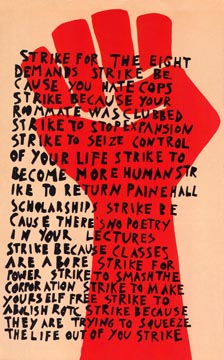
Luckily for him, the bank president who wrote this foolishness in 1969 didn't sign his name to it...

Luckily for him, the bank president who wrote this foolishness in 1969 didn’t sign his name to it…Ah, my old college days!

My attention has been drawn recently to two essays by college students, both presumably sent to me on the theory (or hope) that reading them would kill me. The first, published in the Drexel Triangle (the student paper), argues that stage directors should be prevented from casting actors who look the way the playwright envisioned them. The second, published in the Harvard Crimson, makes an even more disturbing assertion: its author asserts that Harvard should stop guaranteeing professors and students the right to advocate controversial views or pursue research that challenges liberal views and assumptions.

I don’t want to devote the bulk of this post to rebutting these two essays, which are, I think self-rebutting. In the theatrical essay, student actress Alyssa Stover argues that a stage director shouldn’t have the right to decide that, say, casting an Asian dwarf as black boxer Jack Johnson in “The Great White Hope” would lead to a less effective production (that is my example, not hers—she objects to a director of “Cabaret” refusing to cast African-Americans as a matter of historical accuracy):

“These arguments are fundamentally flawed. What the audience wants is almost impossible to measure because the “audience” is composed of anyone who can get a ticket. A director or producer’s right to deny someone a role due to their appearance is debatable because this is a judgment based on one person’s preferences and may not actually create something that is stage worthy. The current status quo allows people to be barred from the stage due to physical “flaws,” as determined by the direction. These judgments are not harmless, and when the issue of race is involved, the problem only gets bigger.” Continue reading