Sarah Durand, a senior editor at a division of Simon & Schuster, Atria Books, informed the literary agents of one of the U.S. soldiers who had submitted a book proposal about the conduct of Sgt. Bowe Bergdahl—the controversial Taliban prisoner who was freed in a costly prisoner exchange and then hailed as a “hero” by the Obama administration— that the publishing house was not interested in pursuing the project. The soldiers, comrades of Bergdahl, allege that he is a traitor.
Maybe the book proposal was poor; maybe it isn’t what Atria Books is looking for at this time. Getting any book published is difficult for first-time authors, and there is no obligation for a publishing company to print anything.
However, this is what Durand wrote to explain the rejection:
“I’m not sure we can publish this book without the Right using it to their ends..the Conservatives are all over Bergdahl and using it against Obama and my concern is that this book will have to become a kind of ‘Swift Boat Veterans for Truth'”
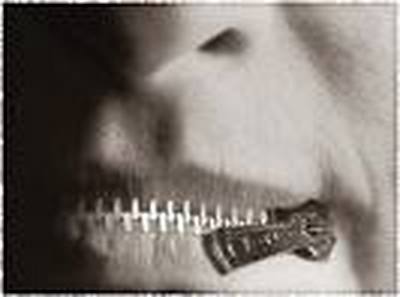
In other words, a professional, supposedly non-partisan conduit for free speech and communication is restricting that speech for political and partisan reasons, and specifically to protect the government currently in power.
I would never argue that refusing to publish the book is unethical. That reason, however, if it is the only reason, is unethical, and also chilling. The only difference between the government censoring political speech and private enterprise censoring speech critical of the government is that the former is prohibited by the Constitution, and the latter is protected by the Constitution, since the freedom not to say something is the same as the freedom to say it. Durant and Atria, appear to be using that freedom to do exactly what a censoring government would do if it could. And how do we know that a Simon & Schuster executive didn’t contact the White House for guidance, and were told to bury the book for “future considerations”? We don’t. Yet this is the kind of suspicion and distrust engendered when communications entities behave like this.
Note that Durand doesn’t challenge the truth of the soldiers’ assertions about Bergdahl. Her concern is how it will be used by political opponents of President Obama. The fact that she would feel that this is a legitimate factor to be considered in publishing a book to the extent that she wouldn’t see the danger of expressing it in an e-mail is as disturbing as the sentiment itself. The book editor sees her duty as protecting the state from opposition and criticism, apparently. How many other gate-keepers of our free speech feel the same way?
_______________________________
Pointer: Newsbusters
Source: Yahoo!
 Ethics Alarms