Congratulations, Sen. Reid: Abusing Government Power To Stifle Political Speech And Participation Works!


Nice choice of role models, Harry.

Nice choice of role models, Harry.

From the Washington Post:

“Senate Majority Leader Harry M. Reid’s relentless attacks on the billionaire Koch brothers are having an unforeseen impact: spurring other wealthy Republican donors to give more money to groups that keep their supporters’ names secret. Several prominent pro-Republican advocacy groups say they are benefiting from a burst of cash as some donors — fearful of harsh public attacks such as those aimed at the Kochs — turn away from political committees that are required by federal law to reveal their contributors.”

What a surprise. Citizen participants in the political process who see others like them engaging in no illegal or unethical conduct. other than taking positions with which the leader of the U.S. Senate disagrees. being called “un-American” and having their reputations and names savaged by him in speech after speech on the Senate floor, decide that it is no longer safe for a citizen to openly contribute to political causes in the U.S.

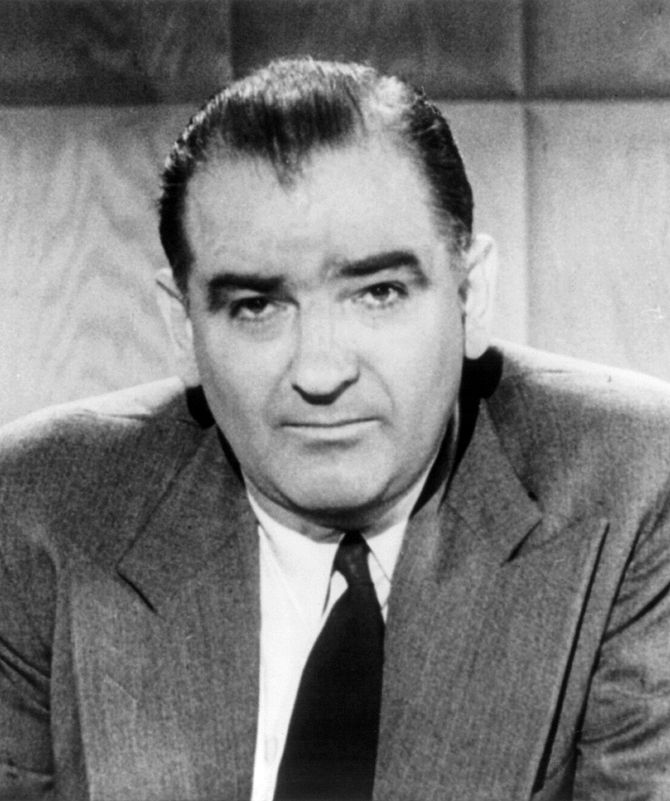
Democrats who use this development to attack the Supreme Court’s Citizens United decision, eliminating financial limits on the expressive activities of domestic advocacy groups and legal entities in political campaigns, will reveal themselves as beneath contempt. Reid, primed by President Obama, who has also crossed that line that must not be crossed by using his high elected office to call down the public’s disapproval on private citizens for their political views, has engaged in conduct that deserves the label of “McCarthyism.” Fair Americans, pundits, journalists and politicians of all political stripes ought to be candid and open about who is the ethics villain here. It is not the Koch Brothers, the Supreme Court or the GOP donors who are turning away from transparency. It is the disgraceful Senator Harry Reid.

At last count (in April; an update is needed), Reid had attacked the Kochs by name 134 times, when it is a breach of Senate tradition and a violation of the intent of the U.S. Constitution for a government official acting in his  official capacity to do so even once. Continue reading
The Ethics Stories I’m Not Going To Write About

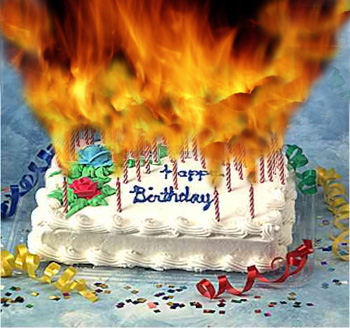
FlamingBirthdayCake1

I am often tempted to write one of those short, bullet point, stream-of-consciousness posts like some fool used to pay Larry King to write for his awful syndicated column, which included trenchant observations like, “For my money, there’s no better game show host than Bert Convy!” Such a post would take a lot less time, and I could cover more of the myriad ethics issues I encounter in my research every day that for one reason or another—the main one being I have to work for a living—never make it to the pages of Ethics Alarms. But it’s my birthday, dammit; I am one year closer to death, I miss my Dad (you too, Mom, but you picked a better day to die), and it’s pretty clear that I will have “epic underachiever” on my headstone where Jack Marshall, Sr’s reads “Silver Star,” so in lieu of any other celebration, I’m going to, just this once, use the bullet point format to note a bunch of the things I normally wouldn’t get around to writing about. Like: Continue reading

Scott Olsen, The “Occupy” Movement and The Protest Dilemma

The critics of the various Occupy Wall Street demonstrations are hustling to defuse the backlash from an incident that took place this week in Oakland, where a confrontation between police and Occupy Oakland protesters not only led to many arrests, but also a severely injured protestor. Iraq war veteran Scott Olsen is hospitalized with a fractured skull as a result of being hit by a projectile directed by police, probably a tear gas canister.

In the age of YouTube, the various images of Olsen’s injury were quickly exploited by protest organizers, as should be expected and is entirely fair. All demonstrations and protests are ultimately about public relations: if the protesters manage to be viewed more sympathetically than the group they are protesting against, then they attract sympathy and support. They win. If the protesters become unsympathetic, then they lose. All intense demonstrations eventually become a game of chicken between demonstrators and the government’s law enforcement force, be it police or National Guard. The demonstrators refuse to clear out of an area where they do not have a right to be, either because of the lack of a permit, or because they are disrupting the public peace, safety and welfare. They will try to provoke police without appearing so violent, unruly or scary that they lose public support. The police (or National Guard) have a job to do—they also have their own physical safety to protect—and yet they have to avoid making martyrs out of the demonstrators by appearing too militaristic, and also to make sure that their efforts don’t evoke images of police state oppression. Continue reading