
Creating Captain Costanzas

Metaphor

I think I stopped finding George Costanza funny when I saw the “Seinfeld” episode in which he panicked at a kids party after smelling smoke and trampled the children rushing to be the first out the door. (His callous reaction to his fiancée’s death from licking envelopes had paved the way for my inability to laugh at George.) The thought of a real-life George Costanza, the most unethical character on a show about unethical characters, serving as the captain of an imperiled ship full of passengers is horrifying, but that’s basically what befell the unsuspecting tourists on board the cruise ship that tipped over after hitting a rock off the coast of Italy. Having caused the accident, it appears, by irresponsibly changing course, captain Francesco Schettino hit the life boats before most of his passengers, and claimed to be directing the evacuation from the relative safety of a lifeboat as he defied orders from the Italian Coast Guard to return to the ship. Continue reading

An Ethics Lesson Missed, a Life Lost

Jayna Murray, victim of a murderer and ignorance of the the Golden Rule.

The grisly Lululemon Athletica murder trial in Montgomery County, Maryland, concluded with Brittany Norwood being quickly found guilty of the March beating and stabbing death of co-worker Jayna Murray in the yoga-wear store where they both were employed. Among the key testimony at the trial was that of Jana Svrzo, the manager of the Apple store adjacent to the murder scene, who said she heard banging, screaming, grunts and other someone-is-getting-attacked sounds, along with a frantic woman screaming things like, “God help me! Please help me!” and “Talk to me! Don’t do this!” Svrzo said she called another Apple employee over to the wall to confirm her suspicions, and they heard the voice say,”Stop! Stop! Stop!” and then, “Oh, God! Stop!”

The two Apple employees did nothing. Continue reading

Death Photo Ethics

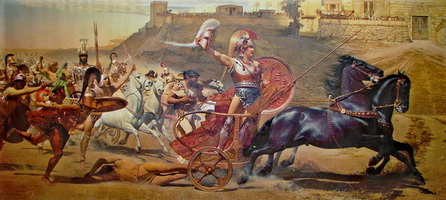
Even before Achilles dragged the corpse of Hector behind his chariot through the dust around the walled city of Troy, the tradition of demoralizing the enemy by degrading and displaying the bodies of its dead heroes was well-established. The United States was horrified when this was done to our fallen servicemen in Somalia, and it is one of the most barbaric and unnecessary practices of war.  While the Geneva Convention doesn’t mention the displaying of enemy corpses, a 2005 publication by the Red Cross called Customary International Humanitarian Law does. It was written to address issues that international treaties omitted, and its Rule 113 reads:

“Each party to the conflict must take all possible measures to prevent the dead from being despoiled. Mutilation of dead bodies is prohibited. Continue reading

Illinois: A Clash of Law, Ethics, Christmas and Festivus

Any one with lingering doubts about whether law is capable of navigating the nuances of ethics should ponder the Christmas display at the Illinois State Capital, where an effort to avoid state support of religion has resulted in an offensive mockery of it that is inappropriate for any season.

The collision of the Constitution’s Establishment Clause (and the Supreme Court’s  broad interpretation of it) with the cultural, traditional. historical, artistic and commercial aspects of Christmas have created an annual fiasco that looks silly, irritates everyone, and accomplishes nothing constructive. It would be better to have no Christmas display at all, and that fact proves the limitation of law, and the subordination of ethics. Continue reading

The Ethics of Ignorance and Apathy: Gore’s Million Degree Gaffe

I didn’t watch Al Gore when he appeared on the Tonight Show a couple weeks ago. What he said then while hobnobbing with Conan should be old news, but in fact it was no news at all, because virtually no news media gave it more than a passing mention. Then, by purest accident, I heard a talk-radio host ranting about a shocking statement Gore had made on the show, and I checked to see if he could possibly be quoting the former Vice-President correctly.

He was. Here is the exchange: Continue reading