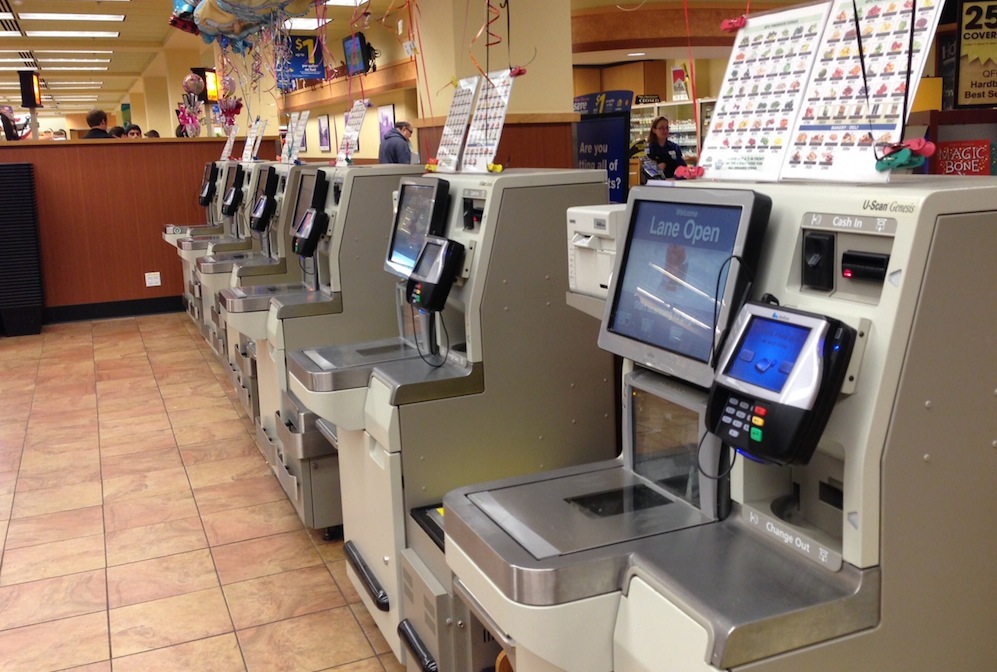
I am embarrassed to admit that this issue never occurred to me begore a friend sent me an article about it. Or maybe I should be proud.
Voucher Codes Pro is a company that offers coupons to internet shoppers. It surveyed 2,634 people, and almost 20% said they had cheated while using a grocery store self-checkout. Over half of the cheaters said they took advantage of the system because they realized being apprehended was unlikely. A 2015 study of self-checkouts with handheld scanners conducted at the University of Leicester audited a million self-checkout transactions over a year’s time.Out of $21 million in sales, goods worth nearly $850,000 left stores without being scanned and paid for.
How does this happen? There are several techniques:
- Ringing up a T-bone ($13.99/lb) with a code for a cheap ($0.49/lb) variety of produce is known as “the banana trick.”
- When a pricey item leaves the conveyor belt without being scanned, it’s “the pass around.”
- Then there is “the switcheroo,” where you peel the sticker off something inexpensive and place it over the bar code of something pricey. You do have to make certain that the two items are about the same weight to avoid triggering the “unexpected item” alert on some machines.
“Anyone who pays for more than half of their stuff in self checkout is a total moron,” reads a comment in a Reddit discussion on the subject. Another one says, “There is NO MORAL ISSUE with stealing from a store that forces you to use self checkout, period. THEY ARE CHARGING YOU TO WORK AT THEIR STORE.”
I guess this would apply to gas stations too.
 Ethics Alarms