
Three Florida Lawyers Discover How Reporting a Crime Can Be Unethical

DUI_setup

How can you get disbarred for reporting a drunk driver? Three Florida lawyers were up to the task.

Stephen Diaco, Robert Adams and Adam Filthaut were found to have “maliciously” set up the drunken-driving arrest of their opposing counsel in a  high-profile defamation trial, and Judge W. Douglas Baird,  the referee in their legal ethics case,  wrote  that Stephen Diaco, Robert Adams and Adam Filthaut should lose their licenses permanently under the legal ethics standards of the Florida Bar.

In 2013, C. Philip Campbell was representing radio shock jock Todd “MJ” Schnitt in his slander suit against another DJ, “Bubba the Love Sponge” Clem. Clem was represented by the Adams and Diaco law firm. Campbell  left court and went to Malio’s Steakhouse in downtown Tampa, near his home and office. While Campbell was at the eatery, he was spotted by Melissa Personius, a young paralegal who worked for Adams and Diaco.

According to testimony, Personius called her boss, Adams, to report that Campbell was in the restaurant. Then Personius sat next to Campbell and the two bought each other drinks. As the night proceeded, Personius periodically relayed information to Adams. Adams then contacted Diaco and Diaco constacted Filthaut to agree upon next steps. The key was that Filthaut was friends with Sgt. Raymond Fernandez, who was then head of the Tampa police DUI unit, thus was able to sic  the DUI unit on the unsuspecting opposing counsel, who was in the process of being plied with liquor by Adams and Diaco’s attractive paralegal.

When it was time to for the targeted lawyer to leave, Campbell told Personius that she was too tipsy to drive and offered to call her a cab. Personius protested that she didn’t want to leave her car at the restaurant overnight and asked Campbell  if he would move the car for her. “Of course,” he said, nice guy that he is. As Campbell drove her vehicle up the street, he made an illegal turn and was pulled over by Fernandez officers, who were lying in wait. He was arrested and charged with DUI. Continue reading
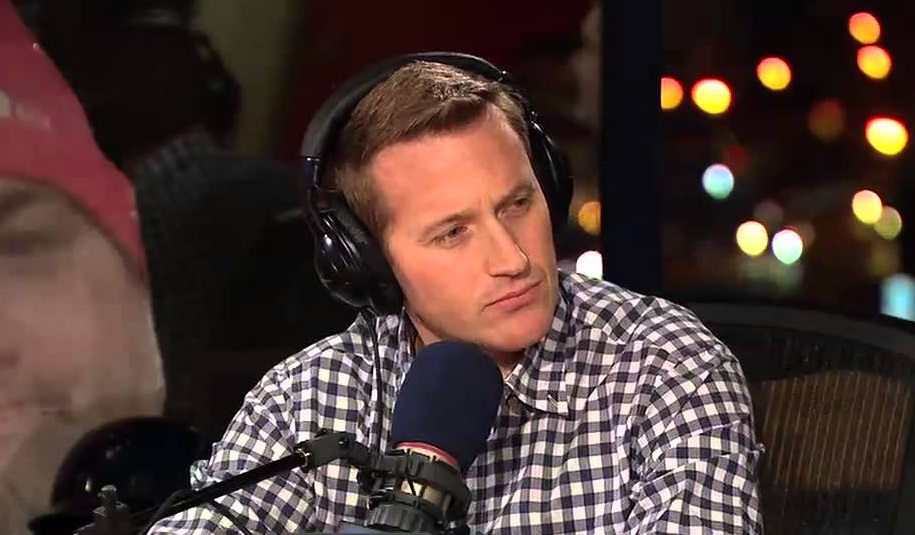

Our Incompetent Media, Making America Ignorant, Case # 58755

Mike Ferrin, making up Constitutional law as he goes along...

Sirius-XM’s Mike Ferrin, making up Constitutional law as he goes along…

Driving along, minding my own business, on the way to picking up some cranberry juice and dishwasher detergent, I chanced to turn on channel 89 on Sirius-XM, where, by no special intent of mine, the baseball show “Power Alley,” with hosts Mike Ferrin and Jim Duquette (the latter a former and probably future big league general manager) was covering the A-Rod suspension story, currently the hottest scandal in sports.  Ferrin is a baseball commentator, and he was railing about the statement of a lawyer, quoted on the show, that it was Alex Rodriquez’s refusal to testify at his hearing before a union arbitrator that sealed his doom and resulted in his season long suspension by Major League Baseball being upheld.

“What about his Fifth Amendment rights?” Ferrin was saying. “I am very disturbed by this. Rodriguez doesn’t have to testify! He has every right to refuse! I find it very disturbing that we are being told that a man lost his livelihood because he asserted his rights as an American! It’s just wrong!”

At this point, my car is weaving all over the road as I try to find my cell phone to call the show (I had left it at home) and scream. The Fifth Amendment, which among other things protects citizens against compelled testimony against themselves under threat of government action, has nothing to do with Alex Rodriquez and his arbitration hearing—-Mike Ferrin, you incompetent, blathering fool. The Fifth Amendment does not apply to private proceedings, of which a labor grievance arbitration is one.  Continue reading

Ethics Hero: John Dryden, High School Teacher

DrydenIt took a couple of months to determine whether John Dryden, would be best described as a high school social studies teacher in Batavia, Illinois, or as an ex- high school social studies teacher in Batavia, Illinois.  That part had a happy ending: he was not fired, as appeared at one point to be likely, for his act of ethical heroism.

In April, he was directed by the school board to distribute a survey on so-called “emotional learning” to his students. The results of the test, created and scored by Multi-Health Systems, were to be evaluated by comparing them to statistical data obtained from a large sample of students of similar ages given the same test. The MHS test included thirty-four questions regarding the use of drugs, alcohol, and the students’ emotions. Though Dryden was supposed to assure his students that their responses would be confidential, they were not. Any student whose answers raised concerns was to be sent to the school’s  counselors.

After the teacher picked up the survey forms from his mailbox shortly before his first class of the day, he noticed that each survey form had a student’s name on it  and that the questions involved under-age drinking and drug use. He had just finished teaching a unit on the Bill of Rights, and recognized a looming Fifth Amendment violation while fearing that his students, who were used to following orders, would not be aware that their rights were in peril. The survey, he correctly surmised, was state-compelled self-incrimination, and a breach of his students’ right to refuse to incriminate themselves.There was no time to confer with administrators, so he told  his students that they did not have to complete the forms if doing so involved admitting illegal behavior. Continue reading

Sunday Ethics Round-Up: Cynical Fines, Drunk Norwegians, Lazy Newsmen and Pitiful Ballplayers

Here are some ethics issues to ponder from the recent news and around the Web:

  • Who says it pays to be ethical? The astounding insistence, under oath, by Goldman Sachs executives that they had done nothing wrong in selling admittedly “crummy” investment products to clients while using the company’s own money to bet that the same products would fail will not be sufficiently punished or contradicted by the S.E.C.’s cynical cash settlement of its suit against the firm. For a $500 million penalty, Goldman Sachs is off the hook for the equivalent of four days’ income, as the Obama Administration claims to the unsophisticated public (“Isn’t $500 million a lot of money?”) that it is “getting tough” with Wall Street. The fact is that Goldman Sachs’ unethical maneuvers paid off handsomely, and nothing has happened that will discourage it from finding loopholes in another set of regulations and making another killing while deceiving investors legally and, by the Bizarro World ethics of the investment world, “ethically.” You can read a perceptive analysis here. Continue reading