 “Soul Train” creator and pop culture icon Don Cornelius took his own life at 75 yesterday, using a gunshot to the head to do it. Suicide always conjures up feelings of special sadness for the deceased, sometimes mixed with anger. The act can be cruel and devastating to family members and friends; often it leaves behind crushing problems, financial and otherwise, that the living have to deal with. Suicide is stigmatized in our culture as a coward’s way out of earthly problems; many religions consider it a sin, and many legal systems consider suicide a crime. Yet it may be that American culture will have to undergo a major cultural transformation in the matter of taking one’s own life. While morality tends to ossify, ethics is fluid and adaptable. Changing conditions and new realities can, in rare circumstances, cause societies to conclude that what was once considered right is really wrong, and what was once condemned as wrong is in society’s best interests. I think we may reach that point with suicide. Continue reading
selfishness
A Frightening Figure, Setting Off Ethics Alarms

We don't even know how to play Russian Roulette responsibly.
On Friday, the day before Christmas Eve when much of America was thinking about sugar plums, lay-away plans, and protesting Christmas pageants, the Federal Accounting Office released its analysis of the net present value of the nation’s Social Security and Medicare obligations, “net present value” being the total funds that would have to be set aside today to pay the costs of these programs in the future. Seldom do figures so clearly indict the unethical practices and statements of so many.
In fiscal 2011, the cost of the catching up on the required funding of Medicare and Social Security rose from $30.9 trillion to $33.8 trillion. That $2.9 trillion increase should be regarded as adding to the $1.3 trillion cash deficit for fiscal 2011, making a $4.2 trillion deficit—and this coming in a year in which the rising national debt was supposedly recognized, at last, as a threat to America’s stability, prosperity, and welfare. The costs of Social Security and Medicare are rising at a frightening rate, nearly doubling in the last decade, with little or nothing being done to address the problem. And there is good reason to believe that the Medicare estimates are based on unrealistic assumptions. The GAO report also includes an alternate, less rosy scenario (or perhaps “more putrid” is a better phrase) in which the projected Social Security-Medicare debt is more than $46 trillion. How serious is that? Well, the combined value of the equity in U.S. homes and the value of all publicly-traded companies is less than 20 trillion dollars.
What do these figures tell us about the ethics of the various players on the national scene? Continue reading
Paterno, Hoover, and Jones’s First Law
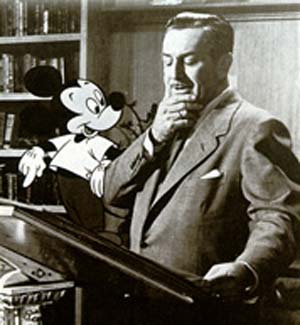
Would Uncle Walt have resisted the curse of Jones's First Law?
Jones’ First Law, one of many useful corollaries to Murphy’s Law (“Anything that can go wrong, will.”) is usually stated:
“Anyone who makes a significant contribution to any field of endeavor, and stays in that field long enough, becomes an obstruction to its progress – in direct proportion to the importance of his original contribution.”
This week was a good one for Jones (whoever he was; I can’t seem to find out) if not for the rest of us, because two classic examples of his principle were on display: Penn State coach Joe Paterno, who managed to stay coach long enough to unravel his legacy and help lay the groundwork for an ethical, moral, legal, public relations, and financial catastrophe for the institution he had dedicated his life to, and J. Edgar Hoover, the subject of a newly-released Clint Eastwood directed film that shows how he too stayed long enough as the key figure of an institution he built—the FBI—to become an embarrassment to it. Continue reading
The Indignant Starbucks Squatter and the Compliance Mindset

OK...NOW it's selfish to squat at tables for hours.
I owe thanks to a blogger named JJ (and to Ken at Popehat, whose post brought him to my attention) for giving me one of the best illustrations of what I call “The Compliance Mindset” I have ever seen.
I’m sure it would horrify JJ to learn this, but he is ethically aligned with all the financial wheeler-dealers and unscrupulous mortgage lenders who crashed the U.S. economy. They also thrived in the Compliance Mindset, as do corrupt politicians, deceptive advertisers, dishonest journalists, sleazy lawyers, and millions of others in our culture who make life miserable for the rest of us for their own benefit. All of these people adopt the convenient belief that something must have a formal rule or law prohibiting it before it becomes wrong. This is, in fact, the opposite of the truth: if people were completely ethical, we would need very few rules. The Compliance Mindset is really an unethical rationalization that allows people to be rude, selfish, irresponsible, unfair, or worse because their conduct is technically legal and there isn’t a rule against it yet. Usually the rule or law arrives after a lot of needless harm has been done. Continue reading
The Real Meaning of Manny Being Manny
 The only surprising aspect of the news yesterday that former baseball slugger-savant Manny Ramirez had been arrested for allegedly slugging his wife—the one alleging being said wife—is that any baseball fans were surprised. If anything was written in the Book of Fate, it was that this man, so completely lacking in respect for basic ethical values, was destined for trouble with the law.
While he was playing, of course, Manny’s uncivilized and cheerful contempt for basic rules and principles of right and wrong were tolerated by his employers, amused sportswriters and evoked cheers from fans. He was a great, great hitter, you see: who cares if he was habitually rude, unprofessional, slovenly, careless, disloyal, disrespectful and above all, selfish to his core? Look! He’s having fun! Isn’t that charming? Stop harping on little details, like hustling, sportsmanship, or being honest. Let Manny be Manny! Continue reading
Web Ethics Complaint File: Rotten Etiquette in “Etiquette Hell”

The topic: rude behavior in public dining
There is nothing quite as exquisitely frustrating as having one’s commentary misrepresented elsewhere by a sloppy blogger, and then watching the nasty comments pile up by posters who never bother to read the original post. That is what is happening to Ethics Alarms, and thus me, over at an otherwise virtuous site called Etiquette Hell.
The site, or blog, or forum, or whatever the hell it is commented on the Starbucks post, with the inept headline: “Hogging all the tables in a crowded establishment.” That’s not what the post was about. That is a misrepresentation. The post was specifically about coffee shops that provide free wi-fi, and how customers abuse the privilege and benefit by camping out with their laptops for unreasonable amounts of time, forcing patrons who need to use the tables for the primary purpose they exist to provide—allowing someone to eat and drink comfortably—to go elsewhere, or to stand. Continue reading
The Starbucks Principles

Hey you squatters! I'm coming over!
The First Starbucks Principle: If you create a free and open public benefit, the use of which is contingent on mutually understood conditions of fairness and reasonableness, eventually the utility of the benefit will be destroyed by individuals who refuse to be either fair or reasonable.
The Second Starbucks Principle: Once this occurs, there will necessarily be rules and enforcement, conflict leading to consensus and a new social norm, or the elimination of the benefit.
Starbucks is in the midst of the First Starbucks Principle, but the Second is on the way. The nice, absurdly expensive coffee shops that created a culture where coffee-lovers could drink their lattes at leisure while working at their laptops or perusing books and newspapers, are being choked to death by arrogant and cheapskate squatters who stake out the tables and remain for hours on end, often driving out customers who just want to sit down briefly and sip.
I had read about Starbucks’ New York City shops covering up outlets at the store, limiting the squatters to the battery storage limits of their laptops, a pretty mild reform. Then, last week, I saw the problem up close: a companion and I purchased coffee at a Starbucks clone, Caribou Coffee, and found that every table was occupied by one squatter with a laptop. Out of eight tables, only one had a cup or food of any kind. We had to go outside and find a bench; I guarantee that Caribou lost some business, because I would have purchased another drink. Continue reading
How the Lack of Ethics Cripples Democracy, Reason #1: Ethical Leadership Is Neither Encouraged Nor Rewarded

How many elected leaders will be responsible when it means risking THIS?
Washington Post Metro columnist Robert McCartney relates the cautionary tale of Fairfax (Va.) School Board member Liz Bradsher. The school board, like others across the nation, was required to make some tough choices with its resources scarce and stretched to the breaking point. The costs of renovating a high-achieving elementary school in the Fairfax County countryside didn’t pass an objective, cost-benefit analysis, so the board voted to close it. Bradsher, whose district includes Clifton, the neighborhood served by the school, was expected to vigorously oppose the move. But after studying the costs and enrollment forecasts, she reluctantly concluded that it made more sense to shutter the facility so the county could spend scarce renovation dollars where they would benefit more children.
She did what was best for the Fairfax community as a whole, which, as an elected official, is her duty. But rather than appreciating the courage it took to agree to close a beloved institution in her district for the greater good, she is being attacked. Anonymous postings on a popular local website have spread false rumors that she has a drinking problem and that her marriage is on the rocks. She is receiving threatening letters, and obscene e-mails. Continue reading
Ethics Dunce: Ex-Washington Nationals Manager Jim Riggleman
 Jim Riggleman is a major league baseball manager of modest accomplishments, one of the forty or so men in the rotating pool that teams will use to fill manager vacancies with low-risk options rather than try someone promising but with little experience. He had a one-year contract with the hapless Washington Nationals that included a team option for a second, which the manager felt the team should pick up now, rather than at the end of the season.
Riggleman believed that he had some leverage. The Nationals have been surging since star third baseman Ryan Zimmerman has returned from an injury, and are, for the first time in the team’s short time in Washington (they were once the Montreal Expos), flirting with a winning record more than half-way through the schedule. But as is often the case with players when a club option is involved, the Nationals saw no reason to make a decision on Riggleman’s contract until the season was over. A lot can happen in three months. General manager Mike Rizzo told Riggleman he would just have to wait. That’s what a team option is, after all. The team’s option. Continue reading
A Three-Year-Old’s Privacy, Sacrificed For A Story

"Dad???"
Showing the excellent ethical instincts that frequently characterize his blog for the Wall Street Journal (though not always), James Taranto accurately identifies blatantly callous and unethical conduct by the New York Times, its reporter, and the adult subjects of a Father’s Day feature called”And Baby Makes Four.” The story, intended to highlight the proliferation of non-traditional family structures in modern America, focused on a 3-year old boy whose mother conceived him using the sperm of a gay friend.
The Times named and interviewed both the mother and the friend, who often babysits the toddler but professes no desire to ever be a father to him in the parental sense. The Times story describes how the sperm-donor watches the clock in boredom, waiting to be relieved of his child-care duties, and how observing the child—his son— play sometimes fill him with “profound despair.” Continue reading
 Ethics Alarms