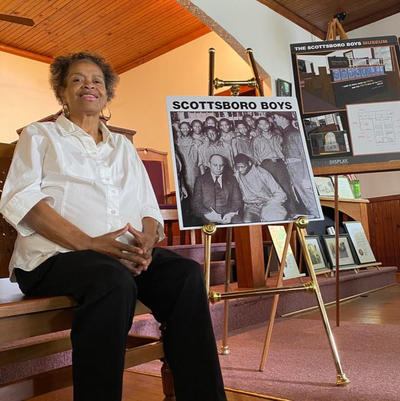
Shelia Washington is a sterling example of how a dedicated, passionate citizen can repair gaping wounds in history and law.
Washington died last month, but not before fulfilling a self-assigned mission. She accepted that mission at the age of 17, when, as a native of Scottsboro, Alabama, she found a book hidden under a mattress at her home while she was doing some cleaning. Her stepfather told her to hand it over. “You don’t need to know about that,” he said. “Just keep quiet about this now.” The book was “Scottsboro Boy,” a 1950 memoir by Haywood Patterson, an innocent young man who was convicted four times by all-white juries and sentenced to death three times.
Washington did not obey her stepfather. To the contrary, Washington set out to obtain posthumous justice for the nine young black men known as The Scottsboro Boys, who were falsely accused of raping two white women in 1931. They were subjected to many trials at the height of the Jim Crow era, two reaching the U.S. Supreme Court. The ugly story of the Scottsboro Boys became the country’s most sensational civil rights case up to that point. Their tragic story later inspired feature films, documentaries, a Broadway musical, and was a factor in shaping the plot of Harper Lee’s 1960 novel, “To Kill a Mockingbird.”
Yet how many Americans today can tell you anything about The Scottsboro Boys?
 Ethics Alarms