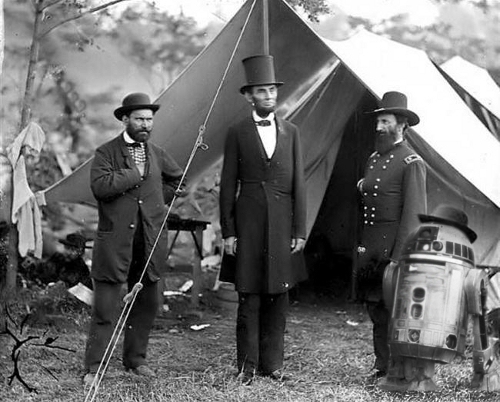
If Di Tzeitung had covered the Civil War
If I could pronounce it, the Brooklyn-based Hasidic newspaper Di Tzeitung would be useful shorthand for “shamelessly using rationalizations to defend indefensible conduct.”
Last week, the newspaper ran the now-familiar photo of President Obama, Secretary of State Hillary Clinton, and others in the White House Situation Room, except that in Di Tzeitung’s version, Clinton and the only other woman present, Director for Counter-terrorism Audrey Tomason, had magically vanished. Di Tzeitung had airbrushed them out, Politburo-style.
Of course, publishing the photo of a historic news event and altering it to convey misleading or false information (in this case, “Hillary wasn’t there”) is a substantial and wide-ranging violation of core journalism ethics, a breach of the reader’s trust, unfair, dishonest, misleading, incompetent and disrespectful. The altered photo was alternately condemned and mocked all over the media and blogosphere. Yet Di Tzeitung is largely unapologetic, and made it clear that it would do the same thing again if the opportunity arose. In a prepared statement, the editors explained why they did nothing “wrong”…well, almost nothing…challenging the Olympic record for rationalization by a news organization along the way: Continue reading
 Ethics Alarms