signature significance
Morning Ethics Warm-Up, 4/24/18: Jarrar And The Kardashians
Good morning, everyone!
1 Something stupid. I haven’t written about the Kardashians for a long time, unless you count Kanye West, but he has a legitimate claim to celebrity and the fact that he’s married to Kim K. is more or less a footnote. This morning, checking some cyanide out at the CVS, I saw this cover by the register:
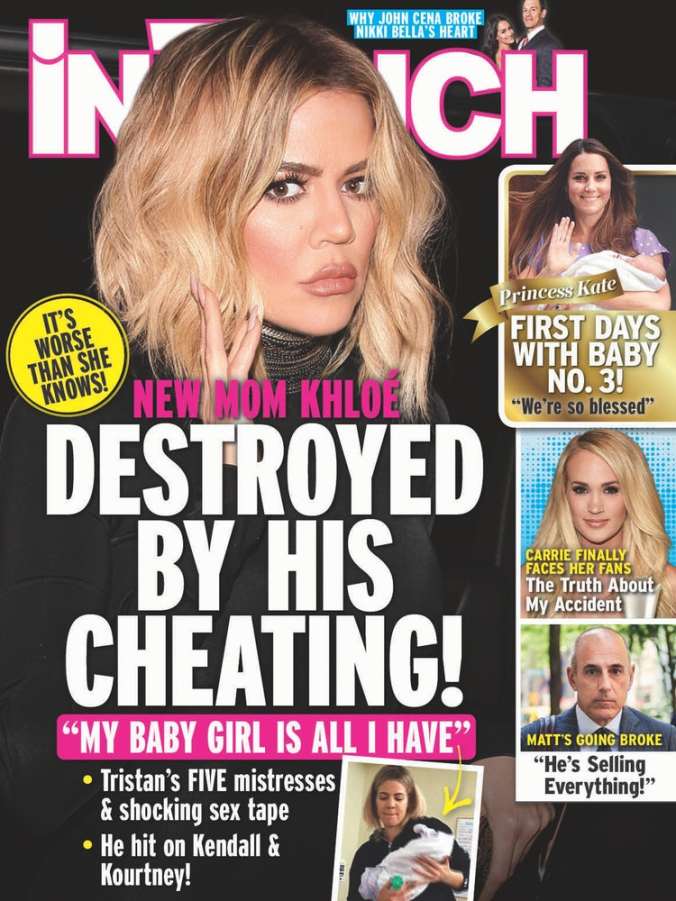
Quick, now: why would it be smart and profitable to put this story on the front of a tabloid magazine? Who is Khloe Kardashian (normally I would try to find a way to get that accent over the “e” but it just isn’t worth it) and why would anyone on God’s green earth care about what she’s doing or what someone else is doing to her?
This woman is the youngest of the original Kardashian sisters, all of whom achieved fame-via-reality show after Kim’s sex tape was released and she gained fame for the size and shape of her butt. I’m not kidding. That’s it. That’s the whole basis for the culture’s love affair with the Kardashians, and the reality show that introduced ugly duckling heavyish for a professional slut family youngest sister Khloe to America began in 2007, eleven full years ago. And what has Khloe, who is no longer heavy, or recognizable, and that was worth a book and a spin-off reality show—done since then to make her adventures worthy of the time you would normally use to alphabetize your sock drawer? Absolutely nothing, other than appearing on TV with her weird, venal, narcissistic family, and being rich due to no fault of her won. (Her late father was one of O.J.’s cronies, played by David Shwimmer —“Ross” in “Friends”— in the O.J. miniseries, and her mother is a successful Hollywood hustler.) Here is the full extent of her societal worth, courtesy of the ridiculously long Wikipedia entry:
On September 27, 2009, Kardashian married NBA basketball player Lamar Odom, who was a member of the Los Angeles Lakers at the time. The couple were married exactly one month after they met at a party for Odom’s teammate Metta World Peace. Following her marriage, Kardashian removed her middle name to include her married surname, becoming Khloé Kardashian Odom. Kardashian adopted a pet boxer named Bernard “BHops” Hopkins, after the famous boxer.
On December 13, 2013, after months of speculated separation, Kardashian filed for divorce from Odom and for legal restoration of her last name.[43] Divorce papers were signed by both parties in July 2015; however, the divorce had yet to receive final approval from a judge. In October 2015, Odom was hospitalized after being found unconscious in a Nevada brothel, and was in a coma for four days; as he lay in a hospital, Kardashian withdrew her pending divorce petition. In an interview with People Magazine, Kardashian confirmed that they had not reconciled and the divorce had been withdrawn so that she might make medical decisions on Odom’s behalf.Kardashian and Odom’s divorce was finalized in December 2016.
Kardashian is currently in a relationship with basketball player Tristan Thompson. The couple reside in Cleveland, Ohio.In December 2017, she announced they were expecting their first child together. In March 2018, Kardashian revealed she would have a girl. On April 12, 2018, Kardashian gave birth to their daughter, True Thompson. He cheated on Khloe Kardashian with other girls leading to him being inactive on social media at Khloe Kardashian’s wishes.
This does not speak well of the culture, American society, its values or its prospects. My father’s generation was enthralled by the family dramas and controversies surrounding pubic figures like Charles Lindbergh, who, after all, accomplished something and displayed useful and admirable values in doing so. His generation and the precedding one did have a soft spot for robbers like Dillinger, Bonny and Clyde and before them, Jesse James, but that was because they were styled as latter day Robin Hoods. At least robbing the rich to give to the poor is something. Actors, actresses and sports heroes have always been popular culture icons, but they were famous for their art and achievements, not just for showing up, or worse, showing up and acting like an idiot. Imagine Babe Ruth being idolized because of fame bestowed on him solely based on his gluttony, promiscuity and drunkenness. That’s where we appear to be now. There really are tweens out there who will announce that they want to grow up to be like one of the six or seven—I don’t know where to put the former Bruce Jenner—Kardashian girls. Parents should lock them in a high tower like Rapunzel, but they won’t, because they probably hope their daughters grow up to be like Kim, Kourtney, Kendall, Khloe aand whatever that the other ones are named…Katmandu? Kalamazoo?
How can ethics survive in a culture like that? What am I doing? Continue reading
Morning Ethics Warm-Up, 4/21/2018, Part 2: Wait, It’s Afternoon Already!
Good afternoon!
Here are ethics items that have nothing to do with the Marjory Stoneman Douglas High School anti-Second Amendment demogogues.
2. Unethical Lawsuit of the Year. Incredibly, the Democratic National Committee yesterday announced that it is suing the Trump campaign, the Russian government, and Wikileaks, accusing them of conspiring to disrupt the 2016 Presidential election. Suits require facts. There are no facts to support this lawsuit, only speculation, rumors and propaganda. The legal analysts whose opinions I respect haven’t even acknowledged the suit yet, perhaps because they suspect, or know, that it is a cynical publicity ploy and merely laying the foundation for a Democratic Party fundraising blitz. (Using the civil courts for such purposes is unethical, of course.) The betting here (and elsewhere) is that the lawsuit will be dismissed in short order. It is grandstanding, and to my eye, pretty desperate grandstanding. Such a lawsuit would open the Democrats, their allies and the Clinton campaign to all manner of intrusive and embarrassing discovery. My first reaction to the news was that this almost as stupid as Oscar Wilde’s criminal libel suit over being called “a Sodomite.”
Wikileaks had an amusing response:
“The Democrats are suing
@WikiLeaks and@JulianAssange for revealing how the DNC rigged the Democratic primaries. Help us counter-sue. We’ve never lost a publishing case and discovery is going to be amazing fun.”
3. More future news! Ann Althouse flagged for us a future news (psychic news?) classic, Morning Joe” Scarborough’s op-ed in the Washington Post, “It’s becoming clear that Trump won’t run in 2020”.
I’m reading the headline and laughing. It’s on the most-read list at The Washington Post. It’s what people want to read, and isn’t that what fake news is all about, giving the people what they want (and getting them to want what you want them to want)? “Allies are quietly admitting”… “Republicans are sensing”… and Joe Scarborough is picking up the message. It seems to me Trump has faced vicious opposition all along, and he keeps winning in spite of/because of it.
This isn’t really fake news, though. Psychic news or future news is a different unethical beast, and in this case, it’s just an abuse of punditry. It becomes fake news when the headline “Trump won’t run for re-election, insiders say” starts turning up. What is especially ironic about this trend is that there has never been a President whose stated intentions have been so changeable and unreliable, and yet the very same journalists who complain about this are willing to run breathless stories about what some leaker claims he said was his intent. President trump can’t be counted upon to do this week what he said he would do last week, and the Post thinks it is worth publishing what Morning Joe’s sources say President Trump plans on doing three years from now. Continue reading
“Morning Ethics Warm-Up, 4/20/18: Bad Ideas, False Narratives, Fake News, And Hillary’s Delusion
Happy Friday!
(You too, Reuben..)
1 The persistence and peril of bad ideas. Civilizations and societies fail in part because terrible ideas take root in the public square, become exploited by cynical and unscrupulous elites and power-seekers, and lead to policy and cultural disasters. The nation’s gradual acceptance of illegal immigration is such an idea: when the pluses and minuses of the Trump Presidency are finally totaled and compared, no one will be able to deny that taking a direct stand against illegal immigration without compromise or weasel words will be one of Donald Trump’s positive legacies.
Nonetheless, the news media continues to indoctrinate the public with the toxic concept that illegal immigration is acceptable, against all logic and experience. In yet another “good illegal immigrant” story—frankly, I’m sick of writing about them—the New York Times gives us this:
Like many of the immigrants detained this way, Mr. de Oliveira, a house painter, had no criminal history. To the Trump administration, the other thing they had in common was more germane: a legal but, until now, unenforced obligation to leave the country that had stuck to them for years, even as they pieced together lives and families in the United States.
In the later years of the Obama administration, the government mostly left people without criminal records alone, focusing instead on immigrants who had only recently arrived or had been convicted of serious crimes.
But the Trump administration emphasizes that everyone living here illegally is fair game for deportation, a policy that has bumped up immigration arrests by more than 40 percent since the beginning of 2017. Those who were ordered out of the country years ago are especially easy marks for an agency with limited resources for enforcement — especially if they walk straight into an immigration office.
Boy, that mean, mean Trump administration, insisting that aliens who steal a place in this country along with its benefits should have to return it even if they don’t break any more laws. There is literally no logical or legally coherent argument or rationale to support any other position. I have never heard one, read one, or been able to imagine one. Would people support a policy that allowed citizens to keep the loot they stole in a single felony as long as they never broke another law? Perhaps they would, if politicians, big business advocates for cheap labor and unethical journalists kept promoting the idea over years and decades.
2. And then there are media-fed false narratives. On Headline News this morning, Lovely Robin and her cohorts were reviewing Time’s “100 Most Influential People” and picking their favorites. Who cares, at this pathetic stage of Time’s existence, what that rag decides? One of Robin’s colleagues designated Chloe Kim, the 17-year-old medal-winning Olympic snowboarder, as his favorite among the hundred. Does anyone really believe a teenage snowboarder is one of the 10,000 most influential people in the US, much less in the top 100? Is Time’s 100 really a list of “people most likely to be on “Dancing with the Stars”? Has any medal-winner in a Winter Olympics ever been particularly influential, except maybe in the Ice Capades? Continue reading
From The Ethics Alarms “Horrible People” Files: The Vile Progressive Professor (Yes, Another One, and Yes, I Would Fire Her)

Randa Jarrar, a professor in the English department at California State University, Fresno (That’s her above: am I the only one that finds her expression unsettling?) tweeted an hour after Barbara Bush’s death was announced,
“Barbara Bush was a generous and smart and amazing racist who, along with her husband, raised a war criminal. Fuck outta here with your nice words.”
Later, she added that she was happy that George W. Bush was probably sad that his mother had died, and…
“PSA: either you are against these pieces of shit and their genocidal ways or you’re part of the problem. That’s actually how simple this is. I’m happy the witch is dead. Can’t wait for the rest of her family to fall to their demise the way 1.5 million Iraqis have.”
After her ugly Twitter hate-storm tweets generated more than 2,000 critical replies, the professor posted a phone number suggesting that it was a way to reach her. No, it was really the number of a crisis and suicide prevention center, causing their phones to be swamped.Tweeted Eugene Gu, MD, a pediatric surgeon,
“Replying to @randajarrar. Your freedom of speech does not entitle you to have all these people spam an actual mental health crisis line. Please stop,”
This completely gratuitous embarrassment to CSU Fresno caused the president of the school to respond with a public statement, also via Twitter: Continue reading
Red Sox Star Prospect Michael Chavis Tested Positive For Steroids. The Team Should Fire Him
The Office of the Commissioner of Baseball announced today that third baseman Michael Chavis, who is the Red Sox’s No. 1 prospect has been suspended following their violations of the Minor League Drug Prevention and Treatment Program, and has received an 80-game suspension without pay after testing positive for Dehydrochlormethyltestosterone, a performance-enhancing substance in violation of the Minor League Drug Prevention and Treatment Program. The suspension of Chavis is effective immediately. He was expected to be a candidate to come up to the big leagues and help the Red Sox in the stretch drive. His suspension hurts the entire organization.
Chavis tweeted a long and plaintive denial. And you know what the line is about that: “That’s what they all say.” Here is a sample…
“Over the past several months, I have been searching for an answer as to how a prohibited substance I have never heard of, DHMCT, was detected in my urine during the offseason. It is a question that unfortunately has not been answered, and I have run out of time for now to find an answer. As hopeless as this is for me, I am faced with the reality that maybe I never will. The only thing I do know is that I would never, and have never, purposely taken any prohibitive substance in my entire life.”
Review: Ethics Alarms Concepts And Special Terms
 Recently updating the Ethics Alarms list of concepts and frequently used terms reminded me that I had been meaning to post them for review and assistance to those relatively new here. Of course, the link has always been right there at the top of the home page, but I have this sneaking suspicion that it isn’t visited very often. Here, then, is the up-to-date list.
CONCEPTS
Non-Ethical Considerations: Defined above, non-ethical considerations are important because they are often the powerful impediments to ethical conduct, and the cause of many conflicts of interest. Non-ethical considerations are many and diverse, and include:
- The need and desire for shelter, health, wealth, fame, security, self-esteem, reputation, power, professional advancement, comfort, love, sex, praise, credit, appreciation, affection, or satisfaction
- The desire for the health, comfort, safety, welfare and happiness for one’s family, loved ones, friends, colleagues, an co-workers
- The pursuit of vengeance or retribution
- Hunger, lust, pain, ambition, prejudice, bias, hatred, laziness, fatigue, disgust, anger, fear
- …and many more
Ethical Dilemma: This is an ethical problem in which the ethical choice involves ignoring a powerful non-ethical consideration. Do the right thing, but lose your job, a friend, a lover, or an opportunity for advancement. A non-ethical consideration can be powerful and important enough to justify choosing it over the strict ethical action.
Ethical Conflict: When two ethical principles demand opposite results in the same situation, this is an ethical conflict. Solving ethical conflicts may require establishing a hierarchy or priority of ethical principles, or examining the situation through another ethical system.
Ethical Gray Area: Gray areas are situations and problems that don’t fit neatly into any existing mode of ethical analysis. In some cases, there may even be a dispute regarding whether ethics is involved.
Reciprocity: The ethical system embodied by The Golden Rule, and given slightly different form in other religions and philosophies. It is a straight-forward way of judging conduct affecting others by putting oneself in the position of those affected. Reciprocity should always be available in any ethical analysis, but it is frequently too simple to be helpful in complex ethical situations with multiple competing interests.
Absolutism: Absolutist systems do not permit any exception to certain ethical principles. The champion of all absolutists, philosopher Immanuel Kant, declared that the ethical act was one that the actor was willing to have stand as a universal principle.
One principle of absolutism is that human beings can never be harmed for any objective, no matter how otherwise worthwhile. Absolutism has the advantage of making tough ethical calls seem easy, and the disadvantage of making debate impossible. One sees absolutism reflected today in the controversies over war, torture, abortion, cloning, and capital punishment.
Utilitarianism: Utilitarianism accepts the existence of ethical conflicts and the legitimacy of some ethical dilemmas, and proposes ethical analysis based on the question, “Which act will result in the greatest good for the greatest number of people?’ It entails the balancing of greater and lesser goods, and is useful for unraveling complex ethical problems. Its drawback, or trap, is that utilitarianism can slide into “The ends justify the means” without some application of absolutist and reciprocity principles.
Consequentialism: In formal ethics, utilitarian schools of philosophy are sometimes lumped together as “consequentialism,” in that the ethical decision-making is based on seeking the best result. Here we just uses the above term, utilitarianism. Consequentialsm, in contrast, is the flawed belief that the rightness or wrongness, or even wisdom, of chosen conduct is measures by its actual results rather than its intended results. If “if all worked out for the best,” in other words, the conduct that created the desirable result most have been ethical, whatever its intent or however the conduct was determined to be necessary or desirable. This is a fallacy.
Cognitive Dissonance: Cognitive dissonance is a psychological phenomenon first identified by Leon Festinger. It occurs when there is a discrepancy between what a person believes, knows and values, and persuasive information that calls these into question. The discrepancy causes psychological discomfort, and the mind adjusts to reduce the discrepancy. In ethics, cognitive dissonance is important in its ability to alter values, such as when an admired celebrity embraces behavior that his or her admirers deplore. Their dissonance will often result in changing their attitudes toward the behavior. Dissonance also leads to rationalizations of unethical conduct, as when the appeal and potential benefits of a large amount of money makes unethical actions to acquire it seem less objectionable than if they were applied to smaller amounts.
Moral Luck: The common situation where an unethical act is only discovered, noticed, or deemed worthy of condemnation due to unpredictable occurrences that come as a result of the act or that affect its consequences. Moral luck is the difference, for example, between two mildly intoxicated drivers, one of whom arrives home without incident, while the other has an unwary child dash in front of his automobile, leading to a fatal accident that he couldn’t have avoided if completely sober. Yet the unlucky driver will be a pariah in the community, while the more fortunate driver goes on with his life.
SPECIAL TERMS USED ON ETHICS ALARMS
Ethics Review: “Three Billboards Outside Ebbing, Missouri”
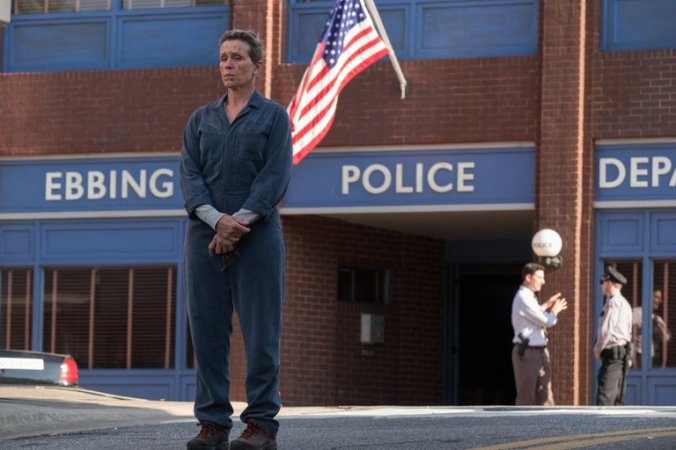
I watched last year’s “Three Billboards Outside Ebbing, Missouri,” twice, just to make sure it was the profound ethics movie I thought it was. It is. None of the reviews described it that way, of course. Here is the New York Times:
“The movie opens on low boil with Mildred behind the wheel of her station wagon near three derelict billboards…she uses the billboards to announce her crusade … a way to get things jumping (the investigators, the tale) and splash some foreboding on an outwardly pacific scene. Much of the story involves the ripples of outrage, confusion and buffoonery that the billboards inspire and that soon envelop almost everyone Mildred knows. Months after her daughter’s death, grief has walled her in; isolating and seemingly impenetrable, it is inscribed in the hardness of her gaze and in her grim new identity as a mother of a dead girl. The billboards turn that grief into a weapon, a means of taking on the law and assorted men — a threatening stranger, a vigilante dentist and an abusive ex (John Hawkes) — who collectively suggest another wall that has closed Mildred in….”
None of which addresses what is remarkable about the film, which is that it shows what causes our ethics alarms not to ring—Frances McDormand as Mildred and Sam Rockwell as Dixon, a racist and vicious deputy, in particular demonstrate what it is like to be driven by non-ethical considerations of the darkest and most passionate sort—and more important, what causes them to start ringing again. Most reviewers described this as a dark and depressing film. The ethics alarms are mostly off again as the film ends, and that is ominous, but its main ethics message is uplifting in many ways. “Three Billboards” teaches us that even broken, ignorant, alienated human beings have the capacity to access their innate instincts for compassion, justice, forgiveness, selflessness and kindness, and even when our ethical selves seem permanently overcome and decisively defeated, they can burst out again, in control, salvaging what’s best about the species.
There is a moment early in “Three Billboards” that signals that it is not only going to show us what monsters anger and grief can transform us into, but also that what George Washington’s list of 110 Rules called “that little spark of celestial fire called conscience” is remarkably resilient. A sheriff—the ethics compass of the story, played by Woody Harrelson— visits Mildred after her billboard messages embarrass him and roil the town. She is hard and cold as marble as he tries to explain his failure to find her daughter’s rapist/killer, even after he reminds her that he is dying of cancer. Suddenly the sheriff has a violent spasm: he coughs up blood on himself and Mildred. And we see her fury evaporate in an instant. The compassionate and caring mother she once was emerges, if only for a few moments. ( McDormand is such a superb actress that she pulls off the sudden transition convincingly and movingly: you believe it, though it is like watching Mr. Hyde turn into Dr. Jekyll in the snap of a finger.) Later, when again her fury has been aroused, we see the same woman firebomb the police station and watch implacably as her nemesis deputy burns. A warning: just because the ethics alarms can ring doesn’t mean they are working well enough.
Sam Rockwell’s character also reveals surprisingly that his ethics spark has not been entirely extinguished, again thanks to a catalyst supplied by the sheriff. This transformation caused considerable criticism of the film among critics and artists in Hollywood, and some attribute the film’s failure to win the Best Picture Oscar to the fact that a racist is redeemed and revealed to have an ethical core. But except for the sociopaths and psychopaths among us, admittedly a disturbingly large group, we all have that ethical core. We have the ethics alarms too, ready to be re-activated, even if they aren’t in perfect working order. Yes, this is even true of racists. So much of our current political discourse is driven by the false construct that a single belief or a single lapse of reason marks an individual as irredeemable. Its easier to marginalize and demonize them that way. But it isn’t true.
Indeed Ethics Alarms often declares certain conduct and words as signature significance, proving that an individual is unethical because such actions and thoughts are alien to ethical human beings. “Three Billboards Outside Ebbing, Missouri” reminded me that people may be unethical–Mildred and Dixon, the deputy, could never be called ethical, for ethical people don’t set police stations on fire or throw young men out of second story windows, as Dixon does—but that even unethical individuals can find their ethics if you give them a chance.
And if they can find their ethics, so can all of us, and so can society. There is hope.
________________________
Addendum: I cannot leave “Three Billboards” without a salute to one of its most powerful scenes, when Mildred tells a priest why she doesn’t care what he has to say when he comes to her home to admonish her for the messages on the billboards:
Bingo.
The Wake-Up Call And The Power Cord
As you may have noticed, your host has been involuntarily separated from Ethics Alarms for about 24 hours. Several things occurred that under normal circumstances would have had me dashing off a post while waiting for flights or preparing to check out of my hotel—and there were definitely several comments that had me reaching for a phantom keyboard—but I was without laptop, thanks to leaving the power cord behind in my previous hotel.
So I have a little story to tell. I stayed at a decent Boston hotel last night, not a 4 star hotel like the one I just left in Atlanta (The Four Seasons), but a nice one, professionally run, dependable. Yet this morning this was my wake-up call, via recording:
“It’s 7 AM. This is your wake-up call for March 8, 2018.”
Almost at the same time, David Hogg was on CNN, explaining how darned easy it was to create a system that would prevent school shootings forevermore.
Wrong. Systems break down, you experience-free, arrogant, disrespectful, know-nothing puppet. The belief that human beings can devise systems that will solve every problem, or any problem, and do what they are designed to do without failing miserably at the worst possible times and in the worst imaginable ways is signature significance for a fool, or a child. O-Rings fail. Police don’t act on warnings that a kid is violent. Obamacare raises health care premiums. Political parties end up nominating Hillary Clinton and Donald Trump. Jack Ruby breaks past police security. Communism ends up killing hundreds of millions rather than creating a worker paradise. The Titanic hits the wrong iceberg exactly where it’s weakest. Hitler takes a sleeping pill during the Normandy invasion.
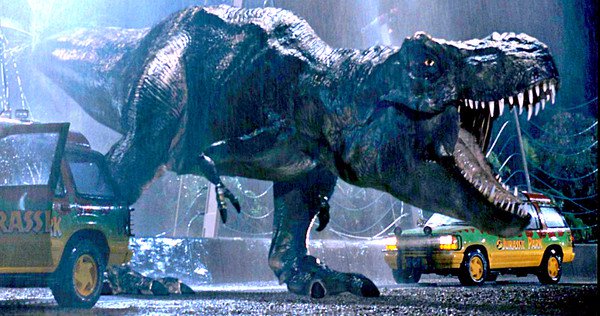
The T-Rex gets loose. Continue reading
Morning Ethics Warm-Up, 3/9/18: Update On A Jerk, Deceptive Recycling, A Movement Becomes A Club, And The Future Is Abused

Good Morning!
1 Good! Billy Williams, that Derry, N.H. Used Apple Store owner who announced that Republicans weren’t welcome in his store, was evicted from his space. For weeks, a sign in the window has said that the store would re-open after renovations, which Williams’ former landlord says is not true. Williams rented the commercial space for $2,000 per month and owed $15,110 after neglecting to pay rent for seven months.
Williams, you will recall, said that he infallibly could recognize Republicans. His Facebook post announcing the GOP ban described members of the political party as “almost evil, and to be honest, usually evil.” [Pointer: Arthur in Maine]
2. Recycling Deceit: In Atlanta’s Hartsfield-Jackson International Airport, I was intrigued yesterday by the cylindrical re-cycling receptacles that had two deposit holes, a circular one on one side, into which we were told to put cans and bottles, and a long rectangular slot on the other side, for newspapers and other paper refuse. I lifted off the top: sure enough, everything went into the same place, newspaper and cans alike. I don’t know what the term is for gratuitously demanding that the public do something pointless and trivial just to exert power, but this was it.
3. The problem with #MeToo. Commenting on yesterdays Comment of the Day, in which Carcarwhite wrote, while criticizing the #MeToo movement,
“I was kissed by Eddie Van Halen back stage in the 80’s, on the lips, a few times. He was tipsy and happy and took a selfie of us before seflies were selfies, and I’ve actually had friends on the Left tell me I should my story publicly. And they say I am ENABLING THIS BEHAVIOR by not going forward”
Commenting, Still Spartan said in part, “What you described is NOT “Me Too.” Just because some people take it too far, does not mean that it is not legitimate. Please take it from someone who had to leave a job and have her career derailed for multiple years because of this crap. It happens, and it happens every damn day.” Continue reading


I am bumping Steve-O-in-NJ’s reaction to the depressing drama of Senator John McCain spending his last days in anger and bitterness up in the queue of pending Comments of the Day, which is long right now. The reason is that his analysis fits neatly into a post I was about to write, but will summarize here as a preface.
The impulse to defend McCain’s recent conduct, notably disinviting President Trump from his funeral in advance, is one more in a long line of signature significance moments, definitively identifying late stage sufferers of anti Trump hysteria. (Trump Derangement Syndrome just isn’t an accurate diagnosis, because it suggests equivalence with the more unhinged critics of Presidents Clinton, Bush and Obama. There is no comparison. It is like comparing a bad cold to the bubonic plague.) The grotesque theater of a public figure choosing, rather than to end his life with grace, forgiveness and unifying good will, choosing to emulate the mad Ahab, screaming,
He has gone full-Ahab. You never go full Ahab. But because the equally mad haters of the elected President relish the thought of any insult, attack or indignity hurled Trump’s way, the can’t perceive the obvious. Defending McCain’s prospective snub is as clear a symptom of anti-Trump hysteria as a dog recoiling from water signals rabies.
My usual course is to make an ethics analysis and then check the opinions of analysts who I trust as generally fair and perceptive. Here was Ann Althouse’s take, in part:
Those who respect and care about McCain want him to stop. Those who hate Trump so much they are willing to see a war hero and former Presidential candidate embarrass himself to deliver one more divisive insult just regard him as a means to an end.Here is Steve-O-in-NJ’s Comment of the Day on the post, A Particularly Sad Ethics Dunce: Senator John McCain:
Continue reading →