Ethics Observations On The Columbia Journalism Review’s Report On Rolling Stone’s False UVA Gang Rape Story

So I guess democracy is in big trouble then..

So I guess democracy is in big trouble then..

The Columbia School of Journalism was tasked with delivering the final verdict on the already thoroughly discredited Rolling Stone story “A Rape on Campus,” which first ran Nov. 19, 2014. The report, which was published yesterday, could not be more critical or devastating to the publication’s reputation and credibility. The one positive conclusion about Rolling Stone that the report documents is that the magazine cooperated fully with the investigation. In light of everything else Rolling Stone has done in this indefinably awful instance of atrocious and unethical journalism, that compliment is like praising a serial killer for leading police to the bodies of his victims.

The news media this morning is full of punditry on the CSJ report, none of it kind to Rolling Stone, so I will confine any new commentary here to the following 10 observations Ethics Alarms has already discussed the matter and related ethics issues extensively.

1. Upon receipt of the CSJ report, Rolling Stone finally took down and retracted the story by Sabrina Rubin Erdely. The story has been on the magazine’s website since mid November, and it has been universally identified as unreliable, misleading and false before the month was over. Why was the piece still up almost five months later? What the reporting of the Washington Post and others demonstrated beyond a shadow of a doubt was that the story was based on unsubstantiated allegations and terrible reporting practices sparked by the reporter’s ideological agenda and her own biases. Once a news article is found to be so sub-standard that it should never have been published, that means it need to be un-published,  and does not belong on a news source website, unless it is under a banner stating: “Retracted and Discredited.”

2. While the Columbia report added some new details and had the name of a university on it, its findings added little to what had already been reported elsewhere. The CSJ’s proper role was to examine the lack of professional and ethical journalism policies and procedures that led to this fiasco, and to make recommendations to prevent similar abuses of the First Amendment from occurring. The fact that the article itself was indefensible did not need confirmation.

To me, it looks like Rolling Stone used the investigation to stall, delaying accountability as long as possible. Continue reading

Fire NYT “Public Editor” Margaret Sullivan

new_york_times_logo

In some professions, an apology isn’t enough.

One such profession is accounting. Arthur Andersen couldn’t fix its reputation by apologizing. Its knee-deep involvement and likely complicity in the Enron debacle rendered its claim to trustworthiness permanently and irredeemable damaged. Its conduct made the company useless as a certifier of transparency and truth. For an accountant or auditor, if there is any doubt that he or she might not be telling the truth, the jig is up. One cannot trust a truth-teller who only is accurate and reliable most of the time.

I think the same applies to newspaper ombudspersons, if that’s the proper term now, and this is what Margaret Sullivan’s job as New York Times “public editor is,” euphemisms aside. She is supposed to bolster public trust by serving as an objective critic of Times reporters, columnists and editors, and ensuring that they hew to the high standards of professionalism and journalism ethics readers should be able to expect from the nation’s most respected newspaper.

Like the Washington Post’s Jonathan Capehart, Sullivan has published a mea culpa for her joining on the “Darren Lewis is a white cop and Mike Brown was an unarmed black kid, so obviously the white cop gunned down the black kid in cold blood because that’s what white cops do and whites want to do” lynch mob last summer as it was being led by Eric Holder, the media, Al Sharpton and others.  But unlike Capehart, who is an opinion columnist and can be forgiven a bit for being led by his biases, Sullivan job is to protect her colleagues from their biases and ensure that the Times at least tries to be objective and fair. Continue reading

The Little Blue Jon Stewart Caboose On The Brian Williams Ethics Train Wreck

Blue Caboose

I’ve stopped updating the passenger list on the rapidly slowing Brian Williams Ethics Train Wreck. Essentially it’s all biased and unethical journalists outing themselves and not being honest or sufficiently self-aware to realize it.

Bulletin: Brian Williams being exposed as an untrustworthy journalist isn’t a “tragedy” for anyone but Brian Williams and NBC’s bottom line, and he was no more a “giant” of broadcast journalism than Joe McCarthy was a “giant” of the U.S. Senate. He was a fraud, and his exposure and fall was a good thing, as exposures of frauds always are. His demise (he isn’t coming back, and NBC should stop the speculation and just say so) does serve as a useful trap for similarly unethical and biased journalists, like TIME’s Joe Klein, who made no sense at all while bemoaning the treatment of Williams in an interview on Fox News, first using a straw man argument:

“I think that we’re living in an era where the ferocity of the prosecution is much greater than the severity of most of these crimes.”

No one’s alleging any “crimes,” Joe. Journalists who are paid huge contracts to deliver the news in a professional and trustworthy fashion can’t be allowed to stay on the air. Absent the “ferocity,” Williams would still have his job today, because news organizations value their profit over integrity and ethics. Plenty of people don’t care if journalists are ethical or not, and can’t tell the difference. If critics don’t make their legitimate complaints strongly enough, the majority’s apathy prevails.

Then Joe went for the rationalizations, this time, #19 and #20:

“And all of us make mistakes. All of us do make mistakes.”

Someone explainsignature significanceto Joe Klein, because Williams’ helicopter fable was a perfect example of it, as I surmised from the first report of the episode. Yes, good journalists make mistakes, but ethical and trustworthy journalists don’t make mistakes like that, even once—telling a false story about being in one helicopter under fire when the reporter was really in another. Sure enough, we have since learned that Williams made up lots of stories that upon examination could not have been true (Joe apparently wants to ignore all that), like seeing bodies floating in the French Quarter after Katrina, like claiming that he was imbedded with elite SEAL team that took down bn Laden. They weren’t doubted at the time because we didn’t know Brian Williams was a serial liar then. “Mistakes” are not the issue. Moreover, Williams’ “false memory” defense, complete with “experts” sent out to the media to explain this phenomenon, was also a lie, and a carefully devised one. His other false reports, slowly becoming known like the endless trail of Bill Cosby victims, prove it.

Next for Joe: euphemisms. Continue reading

Ethics Quiz: Honoring The Dead and Deadly Team Mate

Taveras

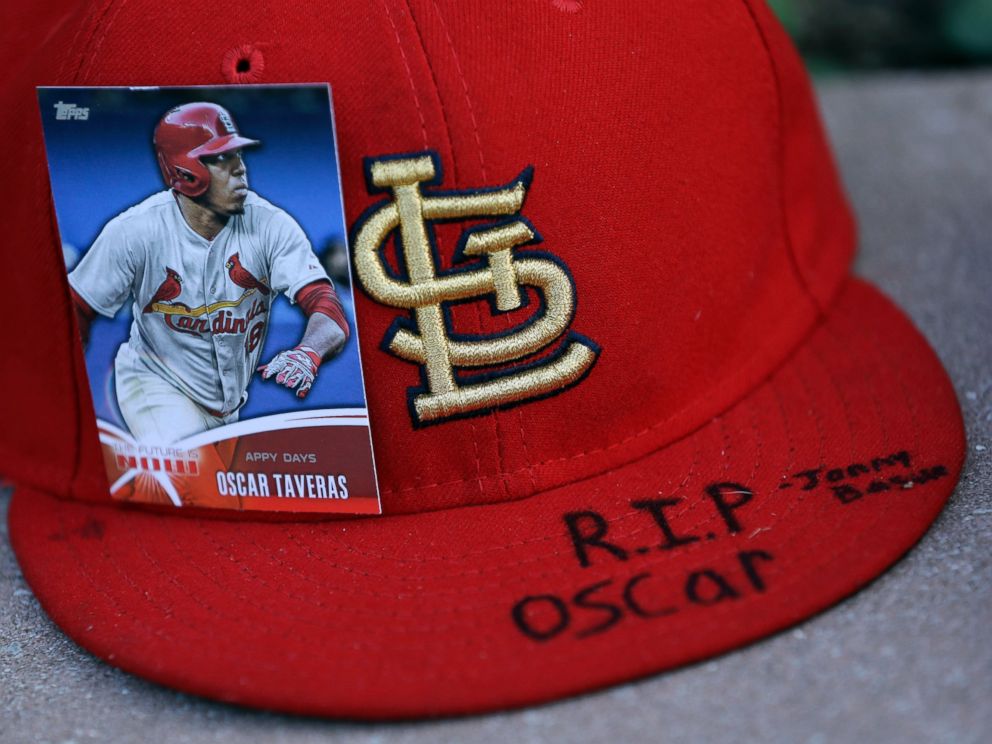
When they take the field in Spring Training and for the rest of the 2015 baseball season, the St. Louis Cardinals will be wearing a memorial patch reading “OT” in honor of outfielder Oscar Taveras, the 22-year-old budding star outfielder who died in a car crash in his native Dominican Republic last October. Such mourning patches have become common since 1972, when the Pittsburgh Pirates moved beyond the traditional black armband to a personalized patch following the tragic death of the team’s Hall of Fame outfielder Roberto Clemente in a plane crash, as he was flying humanitarian aid to Nicaragua.

Taveras, however, unlike Clemente, died in an act of reckless stupidity that took not only his own life but that of his 18-year-old girlfriend, Edilia Arvelo, as well. Toxicology tests showed that his blood alcohol level was five times the legal limit before the crash. situation is more complex because toxicology tests showed that his blood alcohol level at the time of his death was five times the legal limit. Moreover, Taveras’, also was killed in the crash. If Taveras had lived and Arvelo alone had died, he would have been prosecuted for manslaughter.

And thus your first Ethics Alarms Baseball Ethics Quiz of 2015 is this:

Is it ethical for the Cardinals to publicly honor Taveras with a uniform patch?

Continue reading

Rand Paul, Anti-Vaxxing and Signature Significance

"Got it, Senator. NEXT!!!"

“Got it, Senator. NEXT!!!”

It would be nice if a genuine, rational libertarian candidate could be part of the national political debate. The problem is that there are no genuine, rational libertarians. To be genuine, a libertarian has to decide on his or her policy positions based on the dictates of the ideology, which is backwards: as a leader, rather than a professor or theorist, one must figure out what is going to work, and what you wish would work or what a pre-determined formula says should work are not germane to the issue. For proof of the flaw in the latter approach, all we have to do is consider the past seven years.

Thus libertarians are prone to saying things like, “The United States should never have entered World War II.” This has been a staple of Rand Paul’s deluded father, Ron Paul, and properly places pure libertarianism with pacifism, also known as Cloud Cuckoo Land. The Berrigans used to say the same thing, you know. I believe it was Philip who said that nobody tried passive resistance to defeat Hitler, so we’ll never know if it would have worked. When you say things like this for public consumption, you forfeit the privilege of being taken seriously. It is signature significance: your judgment can’t be trusted.

For me, Rand Paul’s libertarian moment of signature significance was when he questioned the need for the 1964 Civil Rights Act, essentially saying that the nation would have been just fine allowing people like Lester Maddox to chase African-Americans out of his restaurant with an axe handle, or bus drivers to force Rosa Parks to sit in the back of the bus until change occurred naturally, you know, like after the race war. Such statements are not isolated instances of momentary madness; they are markers of serious ethical and cognitive problems, and it was inevitable that the source of that opinion would have more of the same, and perhaps worse. Continue reading

It’s STUPIDITY SATURDAY, Celebrating That Fascinating Nexus Between Dumb and Unethical! First Up: The IRS Picks A Contractor

Fool_Alfred

Perusing the many ethics issues that have slopped into my inbox, I realized that a fascinating theme was developing: wanton, willful, inexcusable stupidity. Being stupid is not intrinsically unethical, for in many cases it is a malady, a Nature-dictated state like being short or bald, just one that is more limiting than most. Being stupid and allowing yourself to be placed in a position where your stupidity will harm others, however, is unethical.

Incompetence is not the same thing as stupidity necessarily, but it is a kind of stupidity and it generates stupidity: stupid risks, stupid decisions, stupid statements, stupid policies, stupid results. The recent Pew study showing that the two most common descriptions of President Obama were “good” and “incompetent” was intriguing on that issue. A man can be both “good” and “incompetent,” but a leader cannot. Obama can be a good man (though after hearing his defiant, dishonest, petulant and self-destructive State of the Union address, I find that hard to believe), but he cannot be a good leader while being an incompetent one.

The President is incompetent, and the incompetence has, as it always will with those serving under incompetent leadership, metastasized throughout his administration into incontrovertible stupidity of a sort that it is unethical for a leader to tolerate or allow to continue. Yet he does.

This brings us to the IRS. Believe it or not, just even months after federal officials fired the firm CGI Federal for its botched work on the Obamacare website Healthcare.gov, the IRS awarded these same bunglers a $4.5 million IT contract for its new Obamacare tax program.

Let me say that again, slowly, so it sinks in: Continue reading

The Sixth Annual Ethics Alarms Awards: The Worst of Ethics 2014 (Part 2)

Rice and Janay

Ethics Corrupter of the Year

(Awarded to the unethical public figure whose prominence, popularity and success most corrupts the public’s ethical values)

Janay Palmer Rice, beloved punching bag of NFL star Ray Rice, who was caught on camera smooching with her man shortly after being cold-cocked by him in a hotel elevator, married him, and has repeatedly defended her husband, prompting confused female pundits to defend her. She is not only the embodiment of Rationalization #42. The Hillary Inoculation, or “If he/she doesn’t care, why should anyone else?”, she is also a good bet to get some young women killed by giving them a role model who stands for standing by your abusive man with the hard right hook.

Double Standard Of The Year

In a year of double standards, the treatment of soccer star (and accused child abuser) Hope Solo by her sport, feminists, the media and the public takes the prize. The standard, as I understand it, is that big, strong female athletes can beat up smaller, weaker family members with impunity, and it’s no big deal, but when a male athlete does the same, he is scum. Got it.

Uncivil U.S. Official of the Year

Victoria Nuland, Assistant Secretary of State for European and Eurasian Affairs and the top American diplomat in Europe, was caught saying in a viral Youtube video saying “Fuck the EU.”  Now that’s diplomatic. Of course, she wasn’t fired, because she works for the Obama Administration

The Jesse Jackson Award 

(For the Year’s Worst Amateur Diplomat)

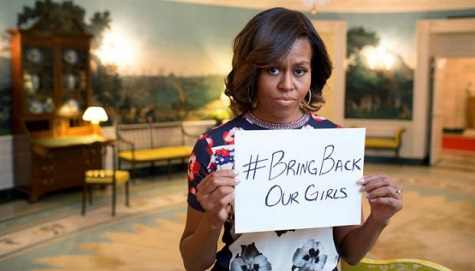
mo_selfie_lg

First Lady Michelle Obama, who helped her husband make the U.S. look weak and ineffectual (he needs no help), by engaging in this ridiculous effort at hashtag diplomacy. Those kidnapped girls were never found, and Boko Haram, the Nigerian terrorist group that took them, I learned today, just killed a reported 2000 more victims. Time for another sad picture, Michelle!

Most Unethical Sports League

The NFL, last year’s winner, was even more unethical this year, with the Ray Rice and Adrian Peterson fiascos, Commissioner Roger Goodell showing no innate instinct for right and wrong and both the league and its teams making up rules and policies according to talk show calls, polls and wet fingers in the air. Meanwhile, it’s still making billions paying young men to lobotomize themselves. What a great sport.

Sports Cheat of the Year

Alex Rodriguez, suspended Yankee star, had denied, denied, denied, threatened to sue Major League Baseball and the union, and insisted that he had not, as an investigation had determined, used performance enhancing drugs supplied by Biogenesis. Then, just as his season-long suspension was lifted, it was revealed that A-Rod had, under oath, admitted using steroids from 2010 to 2012.

Annual Sports Ethics Controversy That Gets Worse Every Year

Steroid cheats (like Rodriquez) and their fitness for admission to Baseball’s Hall of Fame

Unethical Lawyer of the Year

Michael Fine, the Ohio lawyer who allegedly hypnotized female clients in order to sexually molest them.  Runner Up Alexa Van Brunt. She didn’t do anything unethical; she just advocates ethics rules that would eliminate the core of legal ethics, proving that she doesn’t understand her own profession.

Unethical Judge of the Year

judge_mccree

Wade McCree, the handsome devil pictured above (he circulated this selfie), who, presiding over a felony child-support case, conducted a secret sexual relationship with the woman seeking support from the defendant. This was just the latest of his embarrassments.  Runner up: Texas District Judge Jeanine Howard, who handed down a stunningly lenient sentence of probation and 250 hours of community service at a rape crisis center for a man who confessed raping a 14-year old girl at her school.


Unethical National Broadcast Journalist Of The Year

CNN’s Carol Costello. She was biased, smug and incompetent all year long, but reached her nadir when she gleefully played a recording of Bristol Palin explaining to police how she had been assaulted, saying to her viewers, “You can thank me later.” She refused to apologize on the air, or to Palin. Continue reading

Signature Significance Verdict: Lena Dunham Is An Awful Human Being

 UPDATED!

Yechh.

Yechh.

If her boasting about abusing her little sister in her memoir wasn’t enough, Lena Dunham’s revealed conduct regarding “Barry” in the same tome rings the signature significance bell. No human being with a sufficient amount of decency would do something like this, even once.

In case you have not followed the latest ethics scandal involving the over-praised creator and star of HBO’s “Girls,” what occurred is this:

In one chapter of Dunham’s memoir “Not That Kind of Girl,” the feminist actress describes as factual an episode of sexual assault or rape that she says she experienced while an undergraduate at Oberlin. Her assailant was a well-known campus “Republican,” she says, a conservative whom she refers to as Barry—without the conventional quotes that would indicate a pseudonym.

There was, as it happens,  a real Oberlin college graduate from the same period named Barry, then well-known as a conservative, which then as now, is a species about as common at Oberlin as velociraptors. Besides his name and campus reputation, Barry fit some of the other details given by Dunham, such as wearing cowboy boots and sporting a flamboyant mustache. Now the 28-year-old man (the same age as Dunham)  is being tarred as a rapist, and has been forced to take down his social media accounts. He has hired a lawyer named Aaron Minc, with the help of donations from GoFundMe to help pay his legal fees, and has promised that any money he receives from the suit exceeding legal fees will go to charities assisting survivors of rape and sexual assault.

Dunham has not had the courage or decency to say anything, to or about Barry. But yesterday Random House did, in an extraordinary statement and admission: Continue reading

Uber Ethics: Emil Michael Has To Go

Uber logo

What a dilemma. You are a 17 billion dollar technology firm, known for developing the technology application that supports the burgeoning car-hiring business, and most recently for expanding into music streaming by partnering with Spotify. Then one of your key executives is recorded, Mitt Romney-style, as he tells a reporter at a business gathering that the company should deal with negative publicity by doing “opposition research” on reporters and exposing their private lives in retaliation. Now what?

This is where hot tech start-up Uber is at the moment. The executive is Uber Vice President Emil Michael, a key figure in the company’s growth and success.  At a private company dinner in New York, he speculated that Uber could spend $1 million to hire a team to do the equivalent of “opposition research” on journalists who were critical of Uber, to dig into their private lives and family secrets. A reporter from BuzzFeed who was a guest at the event made Michael’s off-the-cuff comments public, setting off several rounds of high visibility attacks from various quarters—Sen. Al Franken called for an investigation—and apologies from Uber management, including Michael, whose statement said…

“The remarks attributed to me at a private dinner – borne out of frustration during an informal debate over what I feel is sensationalistic media coverage of the company I am proud to work for – do not reflect my actual views and have no relation to the company’s views or approach. They were wrong no matter the circumstance and I regret them.”

I rate this a category 7 apology on the Ethics Alarms apology scale: Continue reading

“The Firm” Ethics: Mitch Should Have Known What He Was Getting Into

I was just watching “The Firm” again after many years—my old friend and the terrific actor, the late Bart Whiteman, played “Dutch”—to get the ick of “Cabin Fever 3” out of my head. (It was part of last night’s Halloween triple feature at my house.)

Pay attention, Tom...

Pay attention, Tom…

In an early scene in the film, Harvard Law student Mitch McDeere (Tom Cruise) is being courted by big law firms offering perks and cash. Then a small Memphis firm he never heard of —later, he learns that it is run by the Mob— blows him away with an offer he can’t refuse. The firms partners tell him that they wanted him so much, they bribed the clerk at Harvard’s placement office to learn what salaries the other firms had offered Mitch, then matched it plus 20% more. Tom is impressed, and flattered, and greedy, and takes the offer, even though the firm had openly revealed itself as unethical and proud of it.

He should have seen this as signature significance of a dangerously unethical culture in a profession with high ethical obligations, and walked out the door. A young lawyer with well-maintained ethics alarms would have. Who knows? Maybe this was a test the corrupt firm used to weed out ethical associates.

I always thought Mitch was just unlucky, but in the film, at least, he ended up in a bad firm because an ethics alarm wasn’t working.