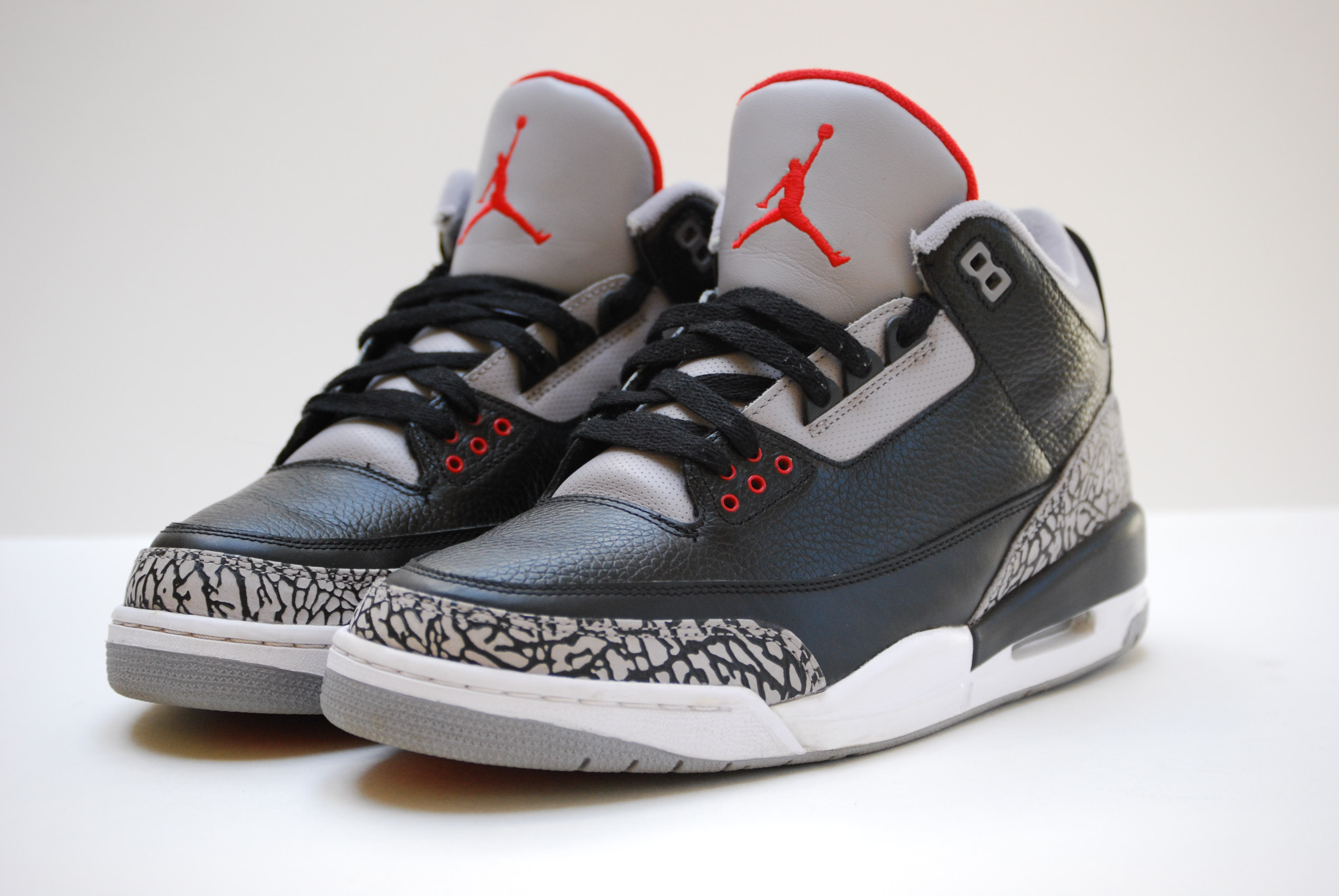
“All right, sir—put down the sneakers and come out with your hands up…”
Eastern Oregon Correctional Institution inmate Sirgeorgio Clardy should probably forget his aspirations of becoming a jailhouse lawyer, if his first effort is any indication.
Sirgiorgio, an aptly named pimp, is in stir because, among other things, he brutally stomped the face of a john who was trying to leave a Portland hotel without paying Clardy’s prostitute. Jurors found him guilty of second-degree assault for using his Air Jordans as a dangerous weapon to beat the john’s face to a pulp. Now the 26-year-old pimp turned prisoner turned pro se litigant has filed a $100 million lawsuit against Nike, the maker of the Jordans, claiming the shoe manufacturer shares responsibility for the assault that was among the crimes that drew him a 100-year prison sentence. (The jury also found him guilty of robbing the man he beat and beating the 18-year-old girl he forced to work as his prostitute. This is not, I think it is safe to say, a nice guy.)
Clardy’s creative lawsuit claims Nike breached its duty to place a label on his athletic shoes warning purchasers that they could be used as a dangerous weapon, because, I guess, the evil shoes made him do it. Or, in the alternative, he had no idea that repeatedly slamming his foot down on a man’s head would do any harm. Or something. Basically, he’d just really like a hundred million bucks, and either doesn’t know, or doesn’t care, that he’s making a travesty of the justice system.
I am confident that there is literally no chance such a lawsuit goes to trial; if there is, I am through defending the legal system for good. This is a textbook frivolous lawsuit if brought by a real lawyer, rather than an unrepentant, violent, non-too-swift pimp. The legal ethics rule that makes such monstrosities an official ethical violation, Rule 3.1, says that…
“A lawyer shall not bring or defend a proceeding, or assert or controvert an issue therein, unless there is a basis in law and fact for doing so that is not frivolous, which includes a good faith argument for an extension, modification or reversal of existing law.” Continue reading
 Ethics Alarms