Unethical Quote of the Week: Slate’s J. Bryan Lowder

“What’s more interesting is his complete refusal to recognize that the uproar around his statements isn’t just about name-calling, but rather his offensive misunderstanding of the importance and uses of birth control. As I wrote on Friday, Fluke’s own testimony was not about her sex life, but rather the painful experience of watching a friend who was forced to have an ovary removed because she couldn’t afford the pill, which, of course, has many medical uses aside from contraception. Many women depend on birth control, not for “social activities,” but for their basic health. And it is in light of his abject ignorance of female biology that Limbaugh’s willingness to demean a woman becomes truly outrageous. This apology only brings that ignorance into sharper relief”

—-Slate blogger J. Bryan Lowder, arguing that the outrage over Rush Limbaugh’s attack on law student Sandra Fluke was not just  because of his cruel and inappropriate denigration.

"Yeah, yeah, the name-calling wasn't cool, but what really ticks us off is that you don't acknowledge that we're right and you're wrong!"

Perhaps I ought to applaud Lowder for his candor, but if sincere, then this is an admission that some of the furious effort to punish and silence Limbaugh is motivated by his opposition to Fluke’s position—that contraception must be paid for in church-run institution health plans. Reminding readers that I a) wrote that the Administration was correct to require such institutions to obey the current laws like everyone else, and b) believe that Limbaugh crossed all lines of decency, fairness and civility in his attacks on Fluke, I find Lowder’s statement a blatant admission that he and his political allies aim to purge dissenting opinions from the media and the public square through intimidation, as well as a confession that the outrage over Rush’s insults was, at least by those who think like the blogger, a cover for the real objective: punishing someone for not bowing to progressive cant. Continue reading
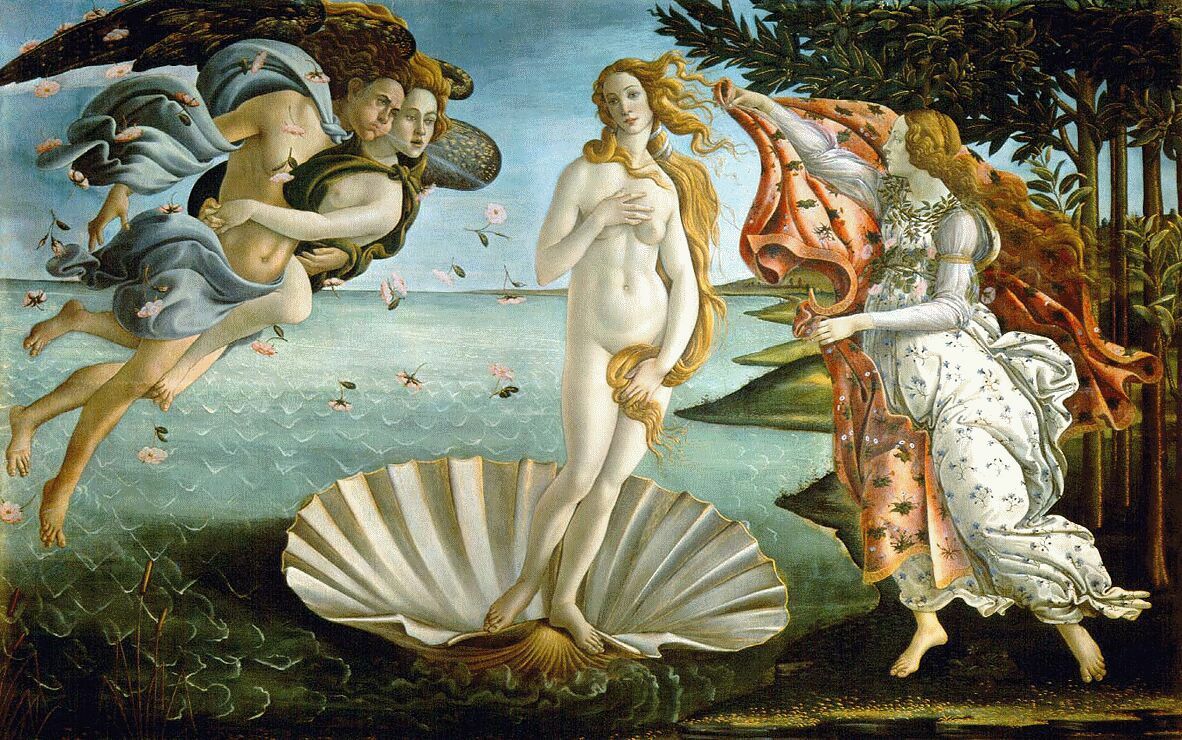
Standards of Decency: Where Ethics Belongs, and Law Does Not

If this is the Super Bowl half-time show, will the FCC fine the network?

Slate legal columnist Dahlia Lithwick drives me crazy on a regular basis, but she hit a home run with her tongue-in-cheek account of the oral argument before the Supreme Court regarding the constitutionality of the Federal Communications Commission’s indecency policy, which has broadcast networks shivering in their boots over the possibility of another “wardrobe malfunction” at the Super Bowl or another trash-mouth star saying “fuck” as she picks up an Academy Award. The particular topic before SCOTUS was momentary nudity in TV drama, such as walrus-like actor Dennis Franz’s mega-butt flashing by our horrified eyes on “NYPD Blue.” In an Ethics Hero-worthy moment, attorney Seth Waxman, representing ABC, showed the Court how absurd and arbitrary it is to try to regulate taste and decorum in art. Lithwick writes: Continue reading

Unethical Quote of the Week: Slate Editor Dahlia Lithwick

“[The G.O.P. nominee for the U.S. Senate, Christine] O’Donnell explained that “when I go to Washington, D.C., the litmus test by which I cast my vote for every piece of legislation that comes across my desk will be whether or not it is constitutional.” How weird is that, I thought. Isn’t it a court’s job to determine whether or not something is, in fact, constitutional? And isn’t that sort of provided for in, well, the Constitution?”

Dahlia Lithwick, current Supreme Court commentator for Slate, during a three-way published exchange about what an unstable, unqualified kook Christine O’Donnell is.

I hope it is at least a little disturbing to Slate that their Supreme Court expert is apparently ignorant of where the basic responsibilities of obeying the Constitution lie. Continue reading

Unethical Headlines of the Week: Wired and Slate

The headline on the website Wired reads:

“Colonel Kicked Out of Afghanistan for Anti-PowerPoint Rant”

Slate picked up the story and gave it a slightly different spin in its headline, taking its cue from Wired:

“Colonel Fired for Hating PowerPoint”

These are provocative headlines, raising issues about the First Amendment, a fanatic insistence on conformity in the military, and even dark conspiracies involving the U.S. Army and Microsoft. However, they are completely and intentionally misleading. The colonel was not fired for hating PowerPoint, and he didn’t go on any “anti-PowerPoint rant.” Here is what really happened, in Wired’s own words: Continue reading

Unethical Quote of the Week: The Richard Blumenthal Campaign

“I think in the end, the people of Connecticut care a lot more about what’s happening today in their lives, whether they’re going to keep their homes, their health care and their jobs.”

…. Conn. Senate candidate Richard Blumenthal (D) campaign adviser Marla Romash in an interview with The Associated Press, adopting the crisis-tested Bill Clinton tactic of insisting that matters like the honesty of elected officials has no bearing on their fitness for their jobs, and is a distraction from the real interests of the public.

Translation: “In the end, we know the public doesn’t care if its elected representatives are liars who, for example, claim to have fought in Vietnam when they didn’t, as long as they deliver the pork. Heck, you’ve seen it: Senators can be outright crooks, and they’ll still get the votes.”

The Blumenthal Vietnam scandal, as I predicted, is serving as wonderfully useful ethics test for other politicians, the media, Democrats, and Connecticut voters generally. Continue reading

“For Our Own Good”: the U.S. Government’s Prohibition Poisoning Policy

Slate has posted a shocking story by historian Deborah Blum, exposing long-forgotten efforts by the U.S. government to poison the alcohol supply during Prohibition for the express purpose of frightening would-be consumers of bootleg liquor into abstaining. She estimates that the government’s poisoning program killed more than 10,000 Americans before the “noble experiment” of Prohibition was abandoned in 1933.

The horrific episode is an abject lesson in the dangers of extreme Utilitarianism, in which unambiguous wrongs are deemed acceptable because of the great benefits they will create, or the greater wrongs they will prevent. It tells us that we should never trust those in power too much, because even good intentions and idealism can mutate into sinister and deadly forms. And it tells us that while we should be wary of conspiracy theories and our seemingly-paranoid fellow citizens who see malice and collusion in every misfortune, we must not dismiss them out of hand. Sometimes the conspiracies are real. Sometimes the paranoids are right.

Blum’s Slate piece is a sobering and frightening account that also raises questions about the holes in our historical record. There are surely other dark episodes in our nation’s history that we need to know about, understand, and learn from. In the meantime, we owe a debt of thanks to Deborah Blum.

By all means, read her article.

Ethics and Valleywag’s Apple Tablet Scavenger Hunt

Today is the day Apple will unveil its long-awaited tablet device, destined to be the most culture-altering advancement since, well, the Segway or something. Apple’s excited about it, anyway, and as is usual for that company, it has fiercely guarded against premature leaks regarding its newest innovation. In the process, it threatened to sue the proudly sleazy website “Gawker,” which had one of its misbegotten offspring, the Silicon Valley gossip site “Valleywag,” announce the “Apple Tablet Scavenger Hunt,” which dangled cash prizes for anyone who would uncover and leak tablet information to the website before January 27. Saying said it had “had enough of trying to follow all the speculation,” Valleywag published a bounty list describing what it would pay for and how much, ranging from $10,000 for photos to $100,000 for anyone who could put the tablet in its editors hands.

Apple’s lawyers responded with a cease and desist letter, saying that the scavenger hunt scheme violated trade-secret law and induced others to breach their confidentiality agreements with the company. Naturally, Gawker cried “First Amendment!”

It appears that the lawsuit won’t go forward, since the tablet announcement date is here; a pity, because a lawsuit couldn’t happen to a more deserving operation, and because a court decision would have clarified an interesting issue. We all know the media happily acts as information-launderers, accepting documents and secrets from lawyers, government officials and corporate whistleblowers who could be fired, disciplined, sued or prosecuted for leaking them, and publishing the illicitly acquired information with self-righteous pride, not to mention confidence, since the Constitution says the press can print anything. The issue is this: if the media can publish such leaks, can it also induce them directly with cash? Continue reading

Now For Something Completely Different: Conjoined Twin Ethical Dilemmas!

I am officially mint-green with envy: Daniel Engber, who writes “The Explainer” column over at Slate, has written an informative, off-beat, thought-provoking column on just the sort of ethical/legal hypothetical I adore. The topic: If a Siamese twin commits murder, does his brother get punished too?

He does a terrific job. his essay also reminded me of a classic “Tales from the Crypt” episode involving a fictional pair of conjoined twins that one could imagine getting into such a dilemma.