I Don’t Know What To Call This, And I Really Don’t Know What Can Be Done About it, But I Know It’s Bad…

I’ve mentioned this toxic phenomenon before, but yesterday I was in Hell. While walking Spuds and driving I saw 14 pedestrians striding along staring at their phones. Three were walking their dogs, and paying no attention to them. One was pushing a baby carriage.

In contrast, I saw only nine adults who were not staring at their phones.

The phenomenon is one of many that is isolating members of society, crippling social skills, undermining the interaction between strangers and neighbors, and giving social media and remote communication an outsized influence over society and the culture. We paved the way for it with such developments as the Sony Walkman, now, if self-isolation and absorption in public isn’t a social norm, it is rapidly becoming one.

Is the conduct unethical? It is tempting to argue that it hurts no one but the phone screen addict, though that definitely doesn’t apply to those behaving like this while caring for dogs, babies and children (or crossing the street). The counter argument would be Kant’s Universality Principle: would we want a world where everyone walks through the world oblivious to everyone and everything but their phone? Well, that’s what we are on the way to creating.


Continue reading

Morgan Freeman, Cultural Shifts, And The Dirty Old Man’s Dilemma

I wondered how it was that Morgan Freeman, black, progressive, a Barack Obama enthusiast and the owner of a squeaky clean image, was hit with career- and reputation-endangering accusations of “inappropriate conduct” that were on balance far, far less alarming than the borderline or outright criminal offenses claimed by the victims of most of the #MeToo targets. Now we know: Morgan Freeman, then 79 , was interviewed by a young, attractive CNN reporter before the Harvey Weinstein story broke. The actor made creepy, sexually suggestive comments to her, and they bothered her as she continued to consider them during her maternity leave, which began soon after the interview. When she returned, Harvey Weinstein had been exposed, #MeToo was in full swing, and the reporter, Chloe Melas, had a new and unexpected male celebrity to investigate and perhaps take down.

This does not appear to be another example of a vicious abuser whom the Weinstein story allowed to finally meet justice after years of victimizing those who came within his sphere of power. All of the claims against Freeman are garden variety dumb, blundering sexual harassment without malice, almost exclusively by the spoken word. Although the news accounts mention “unwanted touching,” the only description of such touching involves Freeman touching a woman’s skirt and threatening to lift it. There have been no “groping” accusations, at least not yet.

Never mind. The allegations so far have already harmed, probably irreparably, the Academy Award-winning actor’s career. Visa has dropped him as its long-time spokesman. Honors he has received are being reconsidered. More penalties are sure to come.

Freeman issued a clumsy, non-apology apology, saying,

“Anyone who knows me or has worked with me knows I am not someone who would intentionally offend or knowingly make anyone feel uneasy. I apologize to anyone who felt uncomfortable or disrespected — that was never my intent.”

It’s a poor apology, but I believe him. He never intended to make anyone uncomfortable, and it didn’t occur to him that any woman would make a big deal out of being—from his perspective—flirted with, even naughtily, by a very old man and iconic movie star. In this, he falls not in the ugly Cosby, Harvey, Kevin, Matt and Charlie category but into the sadder George H.W. Bush class, which I will call “The Dirty Old Men Division.” Continue reading

Morning Ethics Warm-Up, Christmas Eve 2017: I TRIED To Find Upbeat, Inspirational Items Today, Santa, I Really Did…

Goooood MORNING!

1  I believe the correct term is “rude”...Social norms are necessary to maintain ethical standards, and they need to move quickly when conduct begins to resemble the “broken windows” that trigger urban decay. Years ago there was much complaining about solo diners talking on cell phones in restaurants, a gripe based on “ick” and not ethics. A diner’s table is his or her domain, and if one chooses to talk to a friend who is physically present or one who is elsewhere, that’s no other diner’s business unless the conversation breaks the sound barrier. However, walking around a store while having a loud, endless conversation via earpiece and phone is obnoxious in the extreme. That’s a public place, and the market is an important traditional locus for social interaction and community bonding. Technology is creating toxic social habits that are creating isolation and the deterioration in social skills, including basic respect for the human beings with whom we share existence. I almost confronted a young woman at the CVS last night who was cruising the aisles, laughing and dishing with a friend over her phone,  sometimes bumping into other shoppers in the process.

I wish I had. Next time.

2. I hadn’t thought of this, but it’s obviously a problem of longstanding. Local school boards are traditional gateways to public service and politics, but the previously typical citizens who become involved often have no experience or understanding regarding the basic ethics principle of public office. In San Antonio, for example, a jury acquitted San Antonio Independent School District trustee Olga Hernandez of conspiracy to commit honest service wire fraud and conspiracy to solicit and accept bribes, the result was dictated by her utter cluelessness rather than any doubts about what she did. Testimony revealed an inner-city school district where vendors and board members developed relationships that created conflicts of interest and compromised judgment. The vendors knew what was going on, but the school board members may not have.

Hernandez, for example, testified that she considered the plane tickets, complimentary hotel stays, jewelry, meals and campaign contributions she received from those connected with a local insurance brokerage firm doing business with the school district as favors and gifts from friends. Coincidentally, none of them had been her friends before she was in a position to help them make money.

The beginning of careers in public service is when ethics training is most crucial, not later. How many school board members are required to attend a basic ethics seminar regarding government ethics? I would love to know. Continue reading

Ethics Musings While Sitting In Line At The Gas Station

My future, if I don't figure this out...

My future, if I don’t figure this out…

In the middle of a 20 minute errand that became a 90 minute ordeal today, I found myself sitting in an unexpected long line at the gas station I usually patronize.  Maybe it was because people wanted to top off tanks before the blizzard hits tomorrow, but I was really almost out of gas, and the second I moved into the “tank on the right” line, I was socked in. Finally I had only  one car ahead of me, and an absurdly long line of automobiles behind.

The lady in the car ahead, however, was unbelievable. She wasn’t elderly, but she was obese, had something wrong with one leg, and apparently had never filled a gas tank before in her life. She dithered, she paused, she disappeared and returned. She punched in so many characters at the pump that her Debit card password must have been a chapter of “Martin Chuzzlewit.”

Finally she replaced the pump, after pausing and contemplating it like it was Yorick’s skull, walked around to the driver-side door, then decided to walk back—S-L-O-W-L-Y— and make sure she had replaced the gas tank cap, then again s-l-o-w-l-y  limped and waddled back to the door. She opened the it, stared, then decided to unzip her coat, started to take it off, changed her mind, paused again. The line of cars behind me now reached to Falls Church.

I was just a smidgen of impulse control away from getting out of my car, which was turned off, and walking up to her, whereupon I would have said, not especially nicely: Continue reading

Anti-Bullying Mis-steps: The Perils of Changing Cultural Norms (Part I)

It's a simple rule, really: if they call you a jerk, thy're bullies; if you call them jerks, you're a hero.

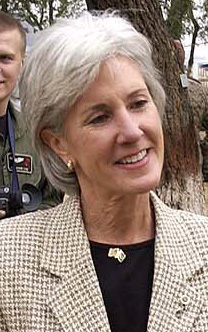
The efforts to reduce bullying in schools has already shown the dangers inherent in using the heavy hand and and often empty skull of government authority to adjust social norms. The laudable goal has already led schools to impose their wills where it emphatically does not belong: in the private interactions and communications among student over the internet. This week, HHS Secretary Kathleen Sebelius provided another example of the perils of the government trying to impose a social taboo where it didn’t exist before.

Sebelius was a guest of the Stuart-Hobson Middle School in Washington, D.C., whose students were shown  a new anti-bullying video from the Cartoon Network that among its messages urged children not to call people names like “stupid,” “fat,” and “jerk.”  Immediately after the screening,  CNN’s Don Lemon moderated a panel discussion of the issues raised by “Stop Bullying: Speak Up.”

“What do you think is the best advice for people who are going into watching this film and anyone who is watching?” Lemon asked.

Sebelius answered, in part: “I think, very important, is for kids to understand how powerful you really are. You might feel like you’re not big enough, not strong enough, not–don’t have enough tools. But just saying, ‘Stop it! You know, you’re being a jerk!’–walk away, get away from this person can make a huge amount of difference.” Continue reading

The Starbucks Principles

Hey you squatters! I'm coming over!

The First Starbucks Principle: If you create a free and open public benefit, the use of which is contingent on mutually understood conditions of fairness and reasonableness, eventually the utility of the benefit will be destroyed by individuals who refuse to be either fair or reasonable.

The Second Starbucks Principle: Once this occurs, there will necessarily  be rules and enforcement, conflict leading to consensus and a new social norm, or the elimination of the benefit.

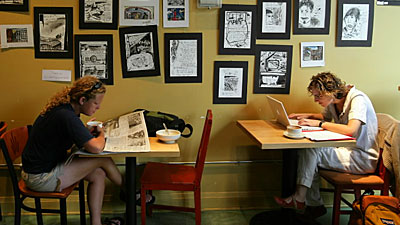
Starbucks is in the midst of the First Starbucks Principle, but the Second is on the way. The nice, absurdly expensive coffee shops that created a culture where coffee-lovers could drink their lattes at leisure while working at their laptops or perusing  books and newspapers, are being choked to death by arrogant and cheapskate squatters who stake out the tables and remain for hours on end, often driving out customers who just want to sit down briefly and sip.

I had read about Starbucks’ New York City shops covering up outlets at the store, limiting the squatters to the battery storage limits of their laptops, a pretty mild reform. Then, last week, I saw the problem up close: a companion and I purchased coffee at a Starbucks clone, Caribou Coffee, and found that every table was occupied by one squatter with a laptop. Out of eight tables, only one had a cup or food of any kind. We had to go outside and find a bench; I guarantee that Caribou lost some business, because I would have purchased another drink. Continue reading

Ethics Quote of the Week: Washington Post Columnist Michael Gerson

“In determining who is a “major” candidate for president, let’s begin here. Those who support the legalization of heroin while mocking addicts are marginal. It is difficult to be a first-tier candidate while holding second-rate values.”

—-Washington Post columnist and former Bush advisor Michael Gerson, pronouncing presidential candidate Rep. Ron Paul’s Libertarian endorsement of drug legalization ethically unacceptable.

Gerson’s deconstruction of the all-too-common and increasingly ominous calls for legalizing addictive drugs nicely captures the trio of ethical flaws of the advocacy: it denies the crucial and legitimate government role defining responsible conduct for society, it embraces the myth that recreational drug use “does no harm,” and it is arrogant and selfish, condemning the poor and reckless to problems that their fragile resources cope with, in order to bestow a dubious “freedom” that the drug advocates do not need. Continue reading