A Pause To Spew My Hatred of Spam

A typical day at Ethics Alarms!

One reason, not the only one, but one of them, that I was foiled trying to respond to a series of critical posts on an online forum was that fear of spam had caused the administrators to make it insanely difficult for me to post there—just another way for online spam to plague me. According to Akismet, WordPress’s excellent spam detection service, I now have reviewed and deleted over 45,000 pieces of spam since Ethics Alarms began. (I have to check the spam because occasionally it traps a genuine comment, kind of like dolphins getting caught in tuna nets.)

Let me be clear: I hate these people. I hate the people who send spam, the people who employ spam services, the people who write the deceitful, stupid spam messages, and the spamming outfits that make their grimy living off of it. There is no such thing as an ethical spammer or an ethical company that assists in spamming. By definition, spam is dishonest, as it pretends to offer content when there is none, and purports to represent genuine interest in the site, when it is only interesting in planting a link that will maximize a commercial site’s SEO.

Spam is not only dishonest, but it is insultingly dishonest, because it is so obvious. Continue reading

Ethics Dunce: Bernie Madoff, Now and Forever

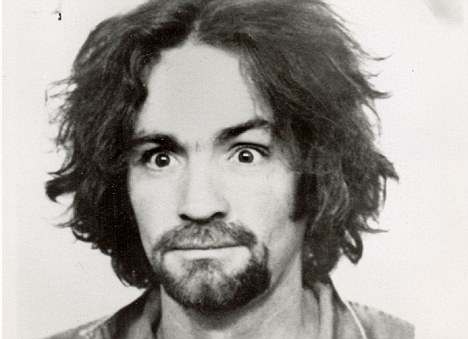
Would I rather have Charlie or Bernie on the loose? Tough call...

Bernie Madoff, reports the New York Times, is feeling mistreated.

Two years into his 150 year sentence for defrauding hundreds of investors, destroying dozens of charities, and crushing the financial security of people who trusted him with their future, Madoff thinks it was unfair for Judge Denny Chin, who sentenced him, to make certain that he would die in prison. Accusing Chin of having “zero understanding of the industry”—meaning what, I wonder; that it was normal for the investment industry to set out to ruin people?—-and saying that he was being made a scapegoat while Wall Street firms and government officials “walk away free,” Madoff told reporter Ben Weiser, “Remember, they caused the recession, not me.”

Yes, and the Crusades started the chain of events that led to 9-11, and Teddy Roosevelt’s Asian policies lit the fuse for Pearl Harbor. Continue reading

The MacDonald’s Beating Video, Another Dead Canary in The Ethics Mine

Vernon Hacket: videographer, violence afficianado, shameless bystander

Last week, In the early hours of  April 18,two teenaged patrons at a Rosedale, Maryland MacDonald’s brutally beat Chrissy Lee Polis, 22, into a seizure. The attack was captured on a video recorded by Vernon Hackett, one of the MacDonald’s workers, on a cellphone camera. Other employees can be heard laughing on the video, and Hackett apparently is heard warning the attackers that the police are coming. He has been fired by the restaurant’s proprietor.  (More on this here.)

His firing was well-deserved, but it doesn’t begin to address the disturbing implications of the incident. Continue reading

The Prince, The Sex Offender, and the Ethics of Friendship

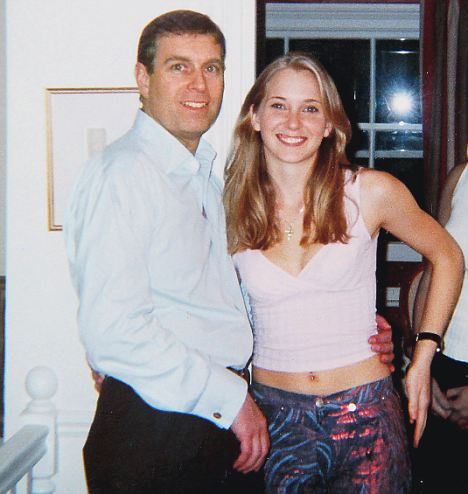
Prince Andrew with one of his friend's victims in 2001

The ethics of friendship is complicated.

President Bush claimed to be friends with Vladimir Putin. F.D.R. once said that Josef Stalin was his friend. President Obama was famously friendly with dubious characters like Rev. Wright and William Ayres.

History is full of heroes and near-heroes who had infamous friends, though the extent of the often friendship is difficult to know. Sammy Davis, Jr. and Elvis were supposedly buddies with Richard Nixon. Bill and Hillary Clinton were close friends with Dick Morris. Wyatt Earp was a life-long friend of “Doc” Holliday; Andrew Jackson may have been friends with pirate Jean Lafitte, who helped him win the Battle of New Orleans. We simultaneously celebrate loyal friends, and yet we also judge people by the company they keep. Should we condemn individuals who have friends with serious character flaws or a history of unsavory acts? Or should we admire them for sticking with their friends when everyone else is turning against them? Continue reading

Allied Against Consumers and Ethics: Google and the Sociopathic Businessman

Today the New York Times extensively documents the unethical business strategy used by the owner of a web-based eyewear business.

After making the discovery that Google does not distinguish between positive and negative mentions of a business on the Internet, he resolved to treat complaining customers as badly as possible to encourage complaints about his company on consumer sites. I do mean “as badly as possible”: the Times relates the accounts of customers who received insulting phone calls, threatening mail, and other harassing and bullying communications from the entrepreneur, who uses multiple aliases. The method works well: since on-line diatribes, complaints and bad reviews have piled up over his poor service, outrageous conduct and often shoddy merchandise, the man’s business is booming. Its name consistently nears the top of Google’s search results when a potential customer types the name of his or her favorite eyewear designer and “eyeglasses,” sometimes placing higher than the designer itself. Continue reading