This is the season of holiday wishes, reflections and aspirations. Do you know what my Ethics Alarms wish is? I wish that at least one reader, ideally one of our five commenters, would finally write in saying something like,
“I have to confess, I’ve been denying your regular, almost annoyingly repetitious assertions that the mainstream media is biased, that it is a member of what you call the Axis of Unethical Conduct, that the major legacy media sources now practice progressive, Democratic Party propaganda to the exclusion of balanced and fair (that is, ethical) journalism, that this results in a profound warping of the Democratic process, that the news media is in fact dedicated to promoting the power of the Democratic Party and its anti-American policy agenda, and that Donald Trump was correct when he pronounced the news media the ‘enemy of the people.’ But I can’t in good conscience deny this any more. You are right, and have been right all along.”
Actually there is one kamikaze commenter who should write this but who is banned and I still won’t let his comment stay up even if he does. With that single obnoxious exception, however, yes, that admission would make my year…not that the conclusion shouldn’t have been screamingly obvious to everyone for years.
I was thinking about this as I observed the current unethical news media self-indicting efforts to pretend that the unfolding Minnesota fraud scandal in the Somali community and elsewhere is a footnote to the “real” news. The Times did a relatively thorough report a full month ago; it has been fairly silent since, however, as the full expanse of the fraud scandal has unfolded. Network news has largely ignored the story too. Incredibly, the Minnesota Star-Tribune did not include the scandal in its 2025 list of top news stories. Today in CNN’s list of “Five things” readers should know about, developments in the Minnesota story is nowhere to be seen.
According to Axios, the Somali 9 billion dollar scamming wasn’t one of the top search topics, unlike Bad Bunny and Stephen Colbert (See, you have to know about a topic in order to search for it…well played, “journalists”!) The Hill gives us another classic example today of the oft-mentioned phenomenon that when Democrats have been caught in scandals or misconduct, it is the Republican/MAGA reaction that is the news: “MAGA World zeroes in on Minnesota over fraud scandal.” Other examples this month: The Guardian: “The right wing has seized on fraud cases in the state” and ABC News: “Trump has seized on the ballooning controversy in recent days …”
Other diversionary framing include the panic in the Somali community as ICE cracks down on Minnesota’s large unassimilated community consisting of people whose native culture regards cheating the government as a good thing. “ICE pounces!” is that theme. This is CNN: Anxiety grips Minneapolis’s Somali community as immigration agents zero in on the Twin Cities.
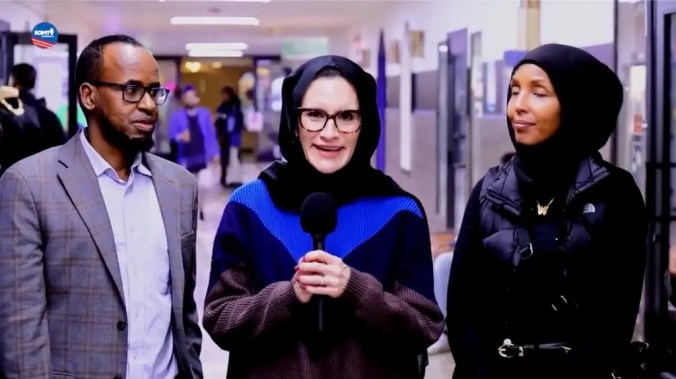
It isn’t only the Somalis: Minnesota, under the watchful eye of knuckleheaded Governor Tim Walz, has a fraud problem throughout its social welfare system. Why is an amateur Youtuber, Nick Shirley, making headlines with his Boy Scout merit badge-level investigative reporting? Where are the pros? Why wasn’t “60 Minutes” on this story like bees on a honeypot? CBS news reported the Somali scandal on December 11, but it’s been crickets since. But Shirley uncovered another Minnesota fraud, a hilarious one, last week: a Somali-owned daycare center with no children and a sign reading “Quality Learing Center.” The Quality Learing Center received $4,000,000 from Minnesota taxpayers.
 Ethics Alarms