There you go, Bill, letting people be unethical again...
Eugene Volokh, a First Amendment provocateur, notes that Minn. Stat. Ann. § 211B.07 makes it a gross misdemeanor to
“….directly or indirectly use or threaten force, coercion, violence, restraint, damage, harm, loss, including loss of employment or economic reprisal, undue influence, or temporal or spiritual injury against an individual to compel the individual to vote for or against a candidate or ballot question.“
The professor opines that the spiritual injury part, at least, is unconstitutional. Interesting.
Prohibiting the interference and manipulation of a human being’s rights of autonomy and self-determination by using threats to compel his voting choices is a legitimate area for the law, because ethics is notoriously inadequate at preventing electoral abuses. It is also an area where the law is an especially blunt instrument, and many conceivable violations of § 211B.07 would seem to risk colliding with free speech. “If you don’t vote for Ron Paul, I’ll never speak to you again!” comes to mind. The threat of “spiritual harm”—“Vote for Mitt Romney, my flock, or I condemn you to Hell!” adds the free exercise of religion to the mix, particularly when the threat is linked to a position of a candidate that violates religious doctrine.
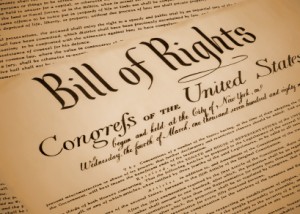
I have no difficulty concluding that any and all threats to force a citizen to vote according to another citizen’s desires are wrongful and damaging to democracy, and should be condemned and discouraged to the maximum extent possible. Ethical though such prohibitions may be, some, like the use of threatened spiritual injury, are impossible under the Bill of Rights.
So threatening to send someone to Hell if they vote for Newt Gingrich—a reasonable result, when you think about it—is unethical, but a law punishing that threat is unconstitutional.
Sorry, Ethics…looks like it’s all up to you!
 Ethics Alarms