I’m not sure what to make of this scene, which I witnessed at Washington’s Reagan National airport as I waited to be scanned prior to my flight to Miami. I have some thoughts, though.
The young, zaftig, fascinatingly-shaped African American woman in front of me was wearing one of tightest, most revealing, shape-hugging, leaving-nothing-to-the-imagination knit dresses I or anyone has ever seen, especially in an airport. The garb was obviously chosen to highlight, as in broadcast world-wide, her most prominent and unusual asset: an awe-inspiring derriere, which appeared to be fit, toned, and suitable for showing a drive-in movie. She was attracting side-glances and open-mouths from all around her, male, female, and probably the machinery too, and obviously reveled in the attention.
When she stepped into the imager and was told to raise her hands over her head, she giggled and did a spontaneous bump and grind move, threatening the integrity of the structure. That did it. The young African-American male TSA agent was launched into smiles, winks, and a stream of comments on the women’s super-structure, along the lines of, “Damn, girl! Don’t go distracting me like that! How am I supposed to do my job? And man, I am distracted! Why, some big old terrorist could walk right by me while I’m taking you in, and then where would we be?” Laughs all around from the other agents, giggles and more gyrations from the woman, more banter from her admirer. Continue reading →
On a purely ethical basis, it is difficult to argue with the majority opinion in Hall v. Florida, where the U.S. Supreme Court ruled that executing a convicted killer whose IQ had been determined to be 71 was still cruel and unusual, and thus a violation of the 8th Amendment, despite Florida law’s cut-off for mental retardation being a score of 70. On the basis of law, however, the SCOTUS decision is hard to defend. Funny, I thought the job of the Supreme Court was to interpret laws.
“Intellectual disability is a condition, not a number…,” wrote Justice Kennedy for the 5-4 majority, in which he joined the so-called “liberal wing.” “This is not to say that an IQ test score is unhelpful. It is of considerable significance, as the medical community recognizes. But in using these scores to assess a defendant’s eligibility for the death penalty, a State must afford these test scores the same studied skepticism that those who design and use the tests do, and understand that an IQ test score represents a range rather than a fixed number.”
The problem is that the whole concept of a “condition” like intellectual disability is a subjective one. The theater company for which I serve as artistic director is presenting the Abby Mann historical drama “Judgment at Nuremberg,” and one of the most troubling scenes involves a man, the son of a Communist, sterilized by the Nazis because he was “mentally defective,” or perhaps because of his family’s political views. The Nazi test: make a sentence out of the words hare, hunter, and field. A witness for the prosecution, the man who was sterilized fails to answer the test on the stand, just as he failed when quizzed by the Nazis. Continue reading →
Supreme Court Justice Scalia, though not quite to the absurd degree of Sarah Palin, is a conservative who inspires such visceral dislike from the residents of the American Left that he often inspires them to behave irrationally in their eagerness to express their contempt. Such was the case this week, when Scalia sharply rebuked a lawyer making his oral argument before the high tribunal in the case of Marvin Brandt Revocable Trust v. United States, a property rights dispute over the conversion of abandoned railroad rights of way into public trails. The advocate, Steven Lechner, was before Scalia and his colleagues for the first time, and began his argument by reading from his notes. This is not cool, and violates Supreme Court tradition, rules, and long-observed standards.
“Honor guides Marines to exemplify the ultimate in ethical and moral behavior; to never lie cheat or steal; to abide by an uncompromising code of integrity; respect human dignity; and respect others. The quality of maturity, dedication, trust and dependability commit Marines to act responsibly; to be accountable for their actions; to fulfill their obligations; and to hold others accountable for their actions. “
According to NPR, the USMC has quietly postponed the requirement for all its female recruits to be able to do three pull-ups. The standard, which was to go into effect on January 1, 2014 for all women in the Marines, just as it has long been the upper-body strength requirement for men, has put back at least a year for “further study.” Marine women have not yet had to meet the same upper-body strength test as males because they were not permitted onto the battlefield. Beginning in 2016, in response to the calls of feminists and women’s rights advocates, females in the Marine Corps and Army will be able, well, allowed, to serve in infantry, armor and artillery units, where the lack of sufficient physical ability can cost lives and result in military failure. Continue reading →
Young Brian Zulberti may be nice guy. He may even be a competent lawyer, though the chances of his being able to demonstrate that are diminishing daily. Nevertheless, his quixotic and misguided, and dare I say it, really stupid, quest to show that professionalism, judgment and character are not properly relevant to the practice of law is an exercise in hubris that must fail, deserves to fail, and of course, will fail, leaving him to pick up the pieces of fifteen minutes of media fame purchased at the price of a reputation. It looks like he’s having fun, and that’s something, I guess. Ten years from now, I doubt that he’ll think it was worth it.
Shortly after passing the Delaware Bar, Zulberti, a 2009 law school grad, emailed the entire Bar membership asking for a job. In lieu of his résumé; he attached a photo of himself in a Villanova Law muscle shirt that would be more at home on a dating site for the shallow. The web also contained his half-naked selfies, and various websites with varying motives picked up the story. Interviewed on YouTube, Zulberti proclaimed that being true to himself was more important to him than getting hired, and that he wasn’t about to change his Facebook privacy settings to portray himself as a traditional, dignified, applicant for legal work.
Let me pause here to say that in many ways I sympathize with Zulberti. Continue reading →
Almost any rule, low or ethical principle can be deconstructed using what I call border anomalies. The first time I was aware of it was as a Harvard freshman in the late Sixties, when all assumptions, good and bad, useful and not, were considered inherently suspect. The college required all students to wear jackets and ties to meals at the student union, and up until my first year, nobody objected. But that fall, my classmates set out to crack the dress code, so they showed up for meals with ties, jackets, and no pants, or wearing belts as ties, or barefoot. (Yes, there were a lot of future lawyers in that class.) Pretty soon Harvard gave up, because litigating what constitutes ties, jackets and “proper dress” became ridiculously time-consuming and made the administration look petty and stupid. Of course, there are good reasons for dress codes—they are called respect, dignity, community and civility—-but never mind: the dress code couldn’t stand against those determined to destroy them by sending them down the slippery slope.
If any rules are to survive to assist society in maintaining important behavioral standards, we have to determine how we want to handle the effects described by the Ethics Incompleteness Theory, which holds that even the best rules and laws will be inevitably subjected to anomalous situations on their borders, regarding which strict enforcement will result in absurd or unjust results. The conservative approach to this dilemma is to strictly apply the law, rule or principle anyway, and accept the resulting bad result as a price for having consistent standards. The liberal approach is no better: it demands amending rules to deal with the anomalies, leading to vague rules with no integrity—and even more anomalies. The best solution, in my view, is to regard the anomalies as exceptions, and to handle them fairly, reasonably and justly using basic principles of ethics, not strictly applying the rule or law alone while leaving it intact. Continue reading →
Prof. Reynolds, the iconic conservative bloggers who wields considerable influence in the right-leaning blogospehere and beyond, has frequently displayed a dismaying affection for the unethical response of “tit-for-tat.” Has seldom done so as blatantly, however, as in a post yesterday, linking to a National Review article about CUNY students shouting down General David Petraeus, who is now a lecturer there.
“I think right-leaning groups should similarly hound Hillary and other Obama Administration apparatchiks — including Obama himself, when he ventures onto campuses, both now and post-Presidency. The standard of behavior has been established. Let them live with it.”
Even giving Reynolds the benefit of the doubt and assuming that he is speaking tongue-in-cheek or hyperbolically, as he often does, this is an irresponsible statement if he doesn’t mean it, and an unethical one if he does. He is considered a sage and an opinion leader among many conservatives, and for such a prominent figure to expressly approve of the downward behavioral tail-spin that inevitably results when each competitor or adversary re-aligns ethical standards according to the unethical acts of the other is embracing all-out culture war and chaos, with no standards at all.
“They started it, so let’s give them a taste of their own medicine and see how they like it!” is street gang thinking, (Jets:“Well they began it!”Sharks:“Well they began it!”Both: “And w’ere the ones to stop it once and for all…tonight!”— “Quintet” from West Side Story) as far from ethics as one can get, and this is exactly what Professor Reynolds is endorsing. That ethically bankrupt approach, and the fact that our political system has been operating by it at least since 2000, accounts for today’s poisonous culture in Washington D.C. It has crippled both the Bush and Obama administrations, paralyzed the government and divided the public. If political and intellectual leaders embrace this reaction to misconduct in one setting, they are implicitly accepting it as a justifiable strategy, and it is not. It is a brutal, unethical strategy.
Students who interfere with invited speakers’ efforts to challenge or enlighten university audiences should be disciplined; it doesn’t matter whether the speaker is an ex U.S.general or Ilsa, Wolf of Dachau. Interfering with speech isn’t protected speech, nor is it ethical protest. That behavior isn’t a “standard of behavior,” it is a defiance of civilized standards. The President, Hillary Clinton and other targets of the right should be allowed to speak, listened to politely, and then confronted, if they are confronted, with civil and articulate rebuttals on the basis of their words and ideas. For a university professor to advise otherwise is unconscionable. For one who is respected and followed as extensively as Reynolds to write this defies reason.
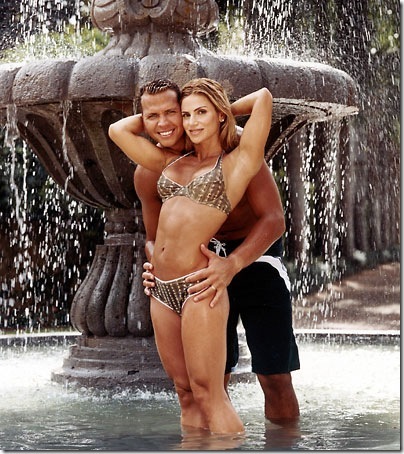
Baseball’s most embarrassing super-star, the steroid cheat Alex Rodriguez, in playing for the New York Yankees while appealing his long suspension by Major League baseball. As he is unquestionably a repeat liar and a serial violator of the game’s rules against PED’s (performance enhancing drugs), as he signed a contract, in part generated by the results of his cheating, that will both enrich him by millions and handicap his team competitively while conferring few, if any benefits, as he would qualify, by most objective standards, as the antithesis of a sports hero, the fact that Arod, as he is called, still was cheered by a vocal minority in Yankee Stadium when he made his season debut this week is intriguing. What does this mean? Can it be ethical to cheer Rodriquez now?
These are deceptively complex and difficult questions. The threshold issue is whether cheering or jeering any sports figure, or any public figure at all, is an act with ethical content rather than just a communication of an opinion. Is it conduct, or just “words”? I think, in the context of the Rodriquez situation, a sound argument can be made that it is conduct. Registering group approval or disapproval of prominent conduct by someone of status and influence is a crucial societal function in setting standards, registering disapproval, and prompting shame, regret, apology and reform—none of which, so far at least, seem to register with Arod.
That is pretty clearly what the boos convey, but what about the cheers? If the boos are ethical—they are if the disapproval is proportionate, rational, fair, and just—then are the cheers automatically unethical? Not necessarily. Here are some of the things those cheers could be expressing: Continue reading →
“Codes of ethics for judges fortify the administration of justice. They tell judges their ethical responsibilities and articulate high standards of conduct to which they should aspire. They assure litigants that a judge before whom they appear is committed to fairness and impartiality. They require judges to conduct their personal and professional lives in a manner that fosters respect for the courts.”
—–Law professors Charles Geyh and Stephen Gillers, arguing in Politico for the U.S. Supreme Court to adopt a Code of Ethics.
“Codes of ethics? We don’ need no stinkin’ codes of ethics!”
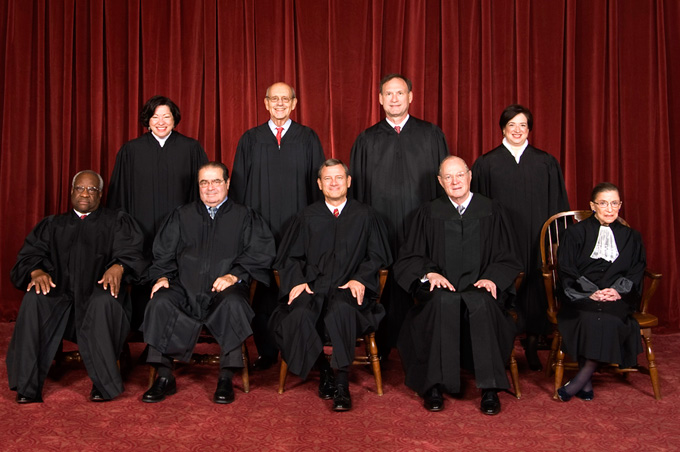
The U.S. Supreme Court, it might surprise you to know, is the only court in the U.S. without a formal Code of Ethics that its judges are required to follow. The idea appears to be that if one has risen to the tippity-top of the judicial tree, one’s ethics must be impeccable as matter of course.
Right.
On Politico, Charles Geyh and Stephen Gillers make a convincing argument that SCOTUS should not only hold itself to high ethical standards, but also make it clear to all what those standards are.
One would think—wouldn’t one?— that I could listen to a baseball game on my car radio without being jolted intro an Ethics Alarms column, but nooooooo…
Here I am, sort-of listening to the Orioles game while running to the grocery store, and suddenly I hear two morning jocks have this exchange:
“So there, in line for the roller coaster, is this woman eating a funnel cake, and she has this comically huuuuge badonkadonk butt! It is the biggest butt I have ever seen! I couldn’t take my eyes off it!”
“How was she going to fit into the roller coaster seat with that badonkadonk?”
Well, I don’t think she could! And I came this close to saying, “Ma’am, would you please stand over here so I can take a photo of your comically gigantic badonkadonk butt as you eat your funnel cake?”






 Ethics Alarms