“Codes of ethics for judges fortify the administration of justice. They tell judges their ethical responsibilities and articulate high standards of conduct to which they should aspire. They assure litigants that a judge before whom they appear is committed to fairness and impartiality. They require judges to conduct their personal and professional lives in a manner that fosters respect for the courts.”
—–Law professors Charles Geyh and Stephen Gillers, arguing in Politico for the U.S. Supreme Court to adopt a Code of Ethics.
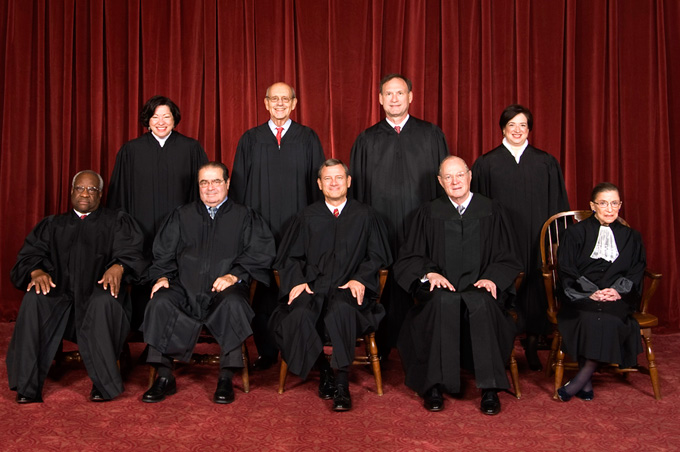
“Codes of ethics? We don’ need no stinkin’ codes of ethics!”
The U.S. Supreme Court, it might surprise you to know, is the only court in the U.S. without a formal Code of Ethics that its judges are required to follow. The idea appears to be that if one has risen to the tippity-top of the judicial tree, one’s ethics must be impeccable as matter of course.
Right.
On Politico, Charles Geyh and Stephen Gillers make a convincing argument that SCOTUS should not only hold itself to high ethical standards, but also make it clear to all what those standards are.
You can read the entire post here.
________________________
Pointer: Legal Ethics Forum

 Ethics Alarms