Few ethical concepts are as misidentified as hypocrisy, which is the opposite of integrity. The judge who secretly engages in crimes by night that he harshly sentences poor defendants for committing when he wears his black robe by day is a hypocrite; the parent who punishes his child for conduct she defiantly engaged in when she was the same age is not. The anti-hate speech zealot who uses what she would call hate speech in attacking others is a hypocrite; the closeted gay Baptist who opposes same-sex marriage is not. There is no danger of confusion where director Stephen Soderbergh’s copyright militancy is concerned, however. He’s a perfect hypocrite, one who distinguishes right and wrong this way: if anyone other than Soderbergh does it, it’s wrong.
Soderbergh is an outspoken copyright infringement hun who has testified before Congress on behalf of the Director’s Guild of America, calling for tough legal penalties against online copyright infringers. He was also the lead plaintiff in the 2006 case of Soderbergh et al v. Clean Flicks of Colorado et al., seeking to shut down a company called Clean Flicks that distributed versions of previously-released films edited by them to be more “family friendly.”
Soderbergh suit was successful, with the court ruling that the edited versions prepared by Clean Flicks violated his rights under sec 106(2) of the Copyright Act by creating derivative versions of the films – defined as “works based upon one or more preexisting works, such as a translation, musical arrangement, dramatization, fictionalization, motion picture version, sound recording, art reproduction, abridgment, condensation, or any other form in which a work may be recast, transformed, or adapted”—and held that that Clean Flicks was responsible for “irreparable injury to the creative artistic expression in the copyrighted movies.”
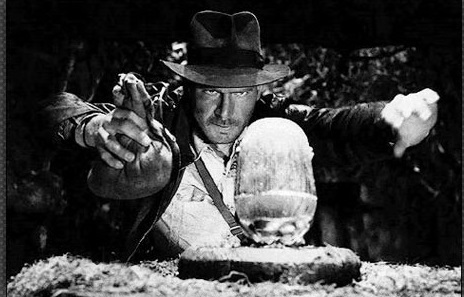
But what’s this? Now Soderbergh is posting his own specially-edited versions of the classics “Psycho,” “Raiders of the Lost Ark,” and “2001: A Space Odyssey” on his own website. Want to see how good Raiders looks as a black-and-white film for example? Soderbergh’s color-free edit will show you. And how is editing the color out of the Lucas-Spielberg film ethically and legally distinct from editing out the naughty words and images from Soderbergh’s “Sex, Lies, and Videotape?”
I have no idea. Ask Soderbergh, whose answer, I suspect, will be “because I did it, not someone else.”
Hypocrisy.
______________________
Pointer: Volokh
 Ethics Alarms