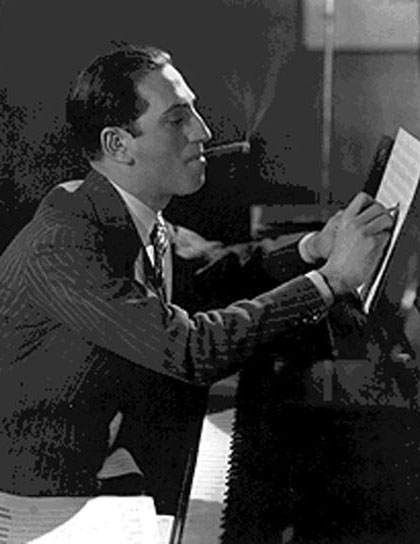
Steve has your back, George.
I read with horror last week that the Gershwin estate, lured by the temptation of an increased revenue stream from the works of their more talented forebears, have agreed to allow director Diane Paulus and the playwright Suzan-Lori Parks to mess with ( that is, “improve”) “Porgy and Bess,” the classic 1935 opera that is one of the towering works in the history of American musical theater. This is, of course, vandalism in the name of ego and commerce, and a full-fledged assault on the masterpiece of not one but four great artists: the Gershwins, George and Ira, and the Heywards, Dorothy and DuBose, who wrote the novel and the play the opera was based on. It is also stunning disrespect and abuse of power, with the living director and adapter wielding the power of celebrity and influence, and the dead artists retaining no power at all (being dead), having unwisely entrusted the protection of their legacies to greedy and tasteless relatives all too willing to sell out their kin for thirty pieces of silver. Now, as the New York Times reported, the creators of the New Improved Porgy and Bess are readying new scenes, jazzed up dialogue, back-stories for the characters and an upbeat ending.
This, as you might imagine, struck to the core of my work as an ethicist and in my position as the co-founder and artistic director of a professional theater devoted to classic 20th Century stage works. I began to prepare a post on the rape of “Porgy and Bess,” but was distracted by other matters, and didn’t get the piece finished.
That was lucky. I should have remembered that Stephen Sondheim, the only musical theater artist alive who can claim the right to be mentioned in the same breath as George Gershwin, had extolled “Porgy and Bess” as the very greatest American musical in his autobiographical work, “Finishing the Hat.” Needless to say, Sondheim is an authority on these matters, and also an artist who can appreciate what Paulus and Parks are doing to his colleague, peer and fellow geniuses, the Gershwins. On top of that, he has the wit and rhetorical skills to defend the rights of artists and dissect the rationalizations of vandals like few others.
And he did. John Glass of Drama Urge kindly alerted me that Sondheim has written a letter to the New York Times explaining…not arguing, because there is no argument…why the new “Porgy and Bess” is wrong. Here it is; you just can’t do it better than this: Continue reading
 Ethics Alarms