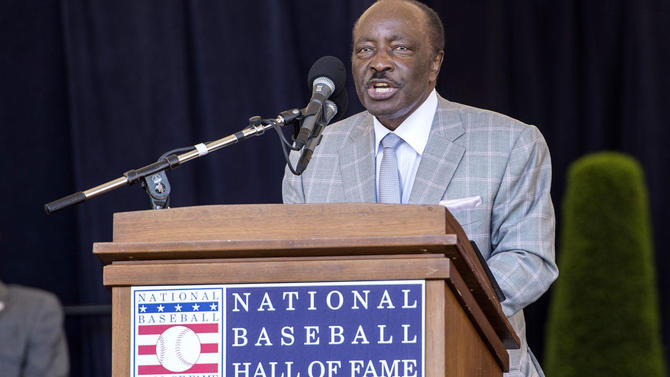
Ethics Hero: Baseball Great Joe Morgan

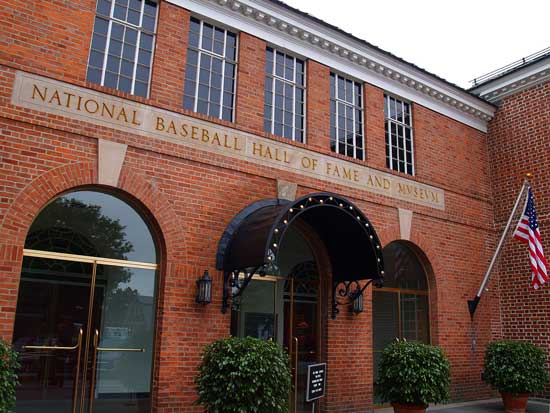
The baseball writers are filling out their Hall of Fame ballots, and Hall of Fame member Joe Morgan authored a much-needed letter on behalf of his fellow honorees to urge voters to keep steroid cheats out of the Hall. He wrote—on Hall of Fame stationary, so it is clear that this was both personal and official:

The Hall of Fame is Special – A Letter from Joe Morgan

Over the years, I have been approached by many Hall of Fame members telling me we needed to do  something to speak out about the possibility of steroid users entering the Hall of Fame. This issue  has been bubbling below the surface for quite a while. 

I hope you don’t mind if I bring to your attention what I’m hearing. 

Please keep in mind I don’t speak for every single member of the Hall of Fame. I don’t know how  everyone feels, but I do know how many of the Hall of Famers feel. 

I, along with other Hall of Fame Baseball players, have the deepest respect for you and all the writers who vote to decide who enters Baseball’s most hallowed shrine, the National Baseball Hall of Fame. For some 80 years, the men and women of the BBWAA have cast ballots that have made the Hall into the wonderful place it is. 

I think the Hall of Fame is special. There is a sanctity to being elected to the Hall. It is revered. It is  the hardest Hall of Fame to enter, of any sport in America. 

But times change, and a day we all knew was coming has now arrived. Players who played during  the steroid era have become eligible for entry into the Hall of Fame. 

The more we Hall of Famers talk about this – and we talk about it a lot – we realize we can no longer  sit silent. Many of us have come to think that silence will be considered complicity. Or that fans  might think we are ok if the standards of election to the Hall of Fame are relaxed, at least relaxed  enough for steroid users to enter and become members of the most sacred place in Baseball. We don’t want fans ever to think that. 

We hope the day never comes when known steroid users are voted into the Hall of Fame. They  cheated. Steroid users don’t belong here. 

Players who failed drug tests, admitted using steroids, or were identified as users in Major League  Baseball’s investigation into steroid abuse, known as the Mitchell Report, should not get in. Those  are the three criteria that many of the players and I think are right. 

Now, I recognize there are players identified as users on the Mitchell Report who deny they were  users. That’s why this is a tricky issue. Not everything is black and white – there are shades of gray  here. It’s why your job as a voter is and has always been a difficult and important job. I have faith in  your judgment and know that ultimately, this is your call. 

But it still occurs to me that anyone who took body-altering chemicals in a deliberate effort to cheat  the game we love, not to mention they cheated current and former players, and fans too, doesn’t  belong in the Hall of Fame. By cheating, they put up huge numbers, and they made great players  who didn’t cheat look smaller by comparison, taking away from their achievements and consideration for the Hall of Fame. That’s not right. 

And that’s why I, and other Hall of Famers, feel so strongly about this.  

It’s gotten to the point where Hall of Famers are saying that if steroid users get in, they’ll no longer  come to Cooperstown for Induction Ceremonies or other events. Some feel they can’t share a stage  with players who did steroids. The cheating that tainted an era now risks tainting the Hall of Fame  too. The Hall of Fame means too much to us to ever see that happen. If steroid users get in, it will  divide and diminish the Hall, something we couldn’t bear. 

Section 5 of the Rules for Election states, “Voting shall be based upon the player’s record, playing  ability, integrity, sportsmanship, character, and contributions to the team(s) on which the player  played.” 

I care about how good a player was or what kind of numbers he put up; but if a player did steroids,  his integrity is suspect; he lacks sportsmanship; his character is flawed; and, whatever contribution  he made to his team is now dwarfed by his selfishness. 

Steroid use put Baseball through a tainted era where records were shattered. “It was a steroidal farce,” wrote Michael Powell in the New York Times. It is no accident that those records held up for decades until the steroid era began, and they haven’t been broken since the steroid era ended.  Sadly, steroids worked. 

Dan Naulty was a journeyman pitcher in the late 1990s who admitted he took steroids, noting that his fastball went from 87 to 96. He told Sports Illustrated’s Tom Verducci in 2012, “I was a full-blown  cheater, and I knew it. You didn’t need a written rule. I was violating clear principles that were laid down within the rules. I understood I was violating implicit principles.” 

The Hall of Fame has always had its share of colorful characters, some of whom broke or bent society’s rules in their era. By today’s standards, some might not have gotten in. Times change and  society improves. What once was accepted no longer is. 

But steroid users don’t belong here. What they did shouldn’t be accepted. Times shouldn’t change  for the worse. 

Steroid users knew they were taking a drug that physically improved how they played. Taking  steroids is a decision. It’s the deliberate act of using chemistry to change how hard you hit and throw by changing what your body is made of. 

I and other Hall of Famers played hard all our lives to achieve what we did. I love this game and am  proud of it. I hope the Hall of Fame’s standards won’t be lowered with the passage of time.  For over eighty years, the Hall of Fame has been a place to look up to, where the hallowed halls  honor those who played the game hard and right. I hope it will always remain that way. 

Sincerely, 

Joe Morgan

Good.

I agree in every respect. Continue reading
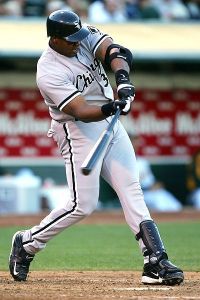
Ethics Dunce: “The Big Hurt,” Frank Thomas [UPDATED]

An ethics whiff for Frank Thomas

An ethics whiff for Frank Thomas

Baseball, and all its annual ethics puzzles, begins in about two weeks when Spring Training gets underway.  Meanwhile, I have to tolerate everyone talking about Tom Brady and the Cheating Patriots as the NFL makes billions encouraging  Americans to cheer for the gradual lobotomizing of young athletes for their pigskin entertainment. Still, even the off-season of America’s Pastime provides ethics fodder.

Frank Thomas, the 6’6″ 300 pound ex-first baseman, never was suspected of using steroids before he was elected to the  Hall of Fame, in part because he was naturally so huge and strong that if he had used steroids he would have ended up battling Godzilla in Tokyo. “The Big Hurt,” as he was called, was and is an outspoken opponent of steroid use in baseball, but speaking at  the annual White Sox fan convention last week, he proved that he is an ethics bush-leaguer.

The recent Hall of Fame vote  elected two players, Jeff Bagwell and Ivan Rodriguez, long rumored to be users of performance enhancing drugs, and the vote totals showed  increased support for uber-steroid cheat Barry Bonds and accused steroid-user Roger Clemens. The New York Post reported that Thomas said, without mentioning names, after he was asked how he felt about the election results, Continue reading

Ethics Observations On The 2017 Hall Of Fame Vote

815-baseball-hall-of-fame-c

Baseball’s Hall of Fame votes were announced yesterday, and is often the case, the ethical issues raised were as interesting as the choices. The Baseball Writers Association Of America chooses who is to be enshrined; successful candidates must be on 75% of all ballots submitted, and have ten years of edibility after the initial 5 year waiting period expires.

Here were the vote totals of the players receiving significant support; the years each player has been on the ballot is the last number.

Jeff Bagwell 381 (86.2%)  (7)

Tim Raines 380 (86.0%) (10)

Ivan Rodriguez 336 (76.0%) (1)

Trevor Hoffman 327 (74.0%) (2)

Vladimir Guerrero 317 (71.7%) (1)

Edgar Martinez 259 (58.6%) (8)

Roger Clemens 239 (54.1%) (5)

Barry Bonds 238 (53.8%) (5)

Mike Mussina 229 (51.8%) (4)

Curt Schilling 199 (45.0%) (5)

Manny Ramirez 105 (23.8%) (1)

Bagwell, Raines and Rodriguez were elected. Hoffman, the all-time leader in relief pitcher saves, just missed, and will almost certainly get into the Hall next year.

Ethics Observations:

1. More than anything, it is discouraging to see Barry Bonds crossing the 50% threshold. Bonds cheated, took the integrity out of some of baseball’s most important records, has lied about it to this day, and corrupted the game. Of course he is disqualified by the character requirements for entrance to the Hall. Bond’s vote total rise is attributed to several factors, including the old, unethical rationalizations we have been reading in defense of Bonds since he was playing. The latest excuses include the influx of younger voters who never saw Bonds nor witnessed the grotesquely inflated mutant he turned himself into, more voters throwing up their hands in frustration over the problem of sifting through so many players whose PED use is rumored, likely, or insufficiently proven, and voters who find the Hall’s recent election of former commissioner Bud Selig hypocritical, since he contrived ignorance to allow Bonds and others break the rules as long as possible. None of those excuses and rationalizations justify a single vote for Bonds.

2. Ivan Rodriquez‘s election also probably helped Bonds. He was one of the greatest catchers of all time, quite possibly the greatest defensive catcher, but in Jose Canseco’s first baseball and steroid tell-all book, “Juiced,” the steroidal slugger wrote of personally injecting I-Rod with the stuff while they were Texas Rangers. The catcher never tested positive in a drug test, but Canseco’s accusation was credible, especially after Rodriquez magically gained about 25 pound of muscle and started hitting home runs. Unlike Bonds, however, the evidence against him was slim.  Jose, for example, is one of the great slime-balls in sports history. He may not be a liar, but since he admittedly wrote hisbook out of spite, he might be.

3. Ivan, in turn, was helped by the election of Jeff Bagwell. No player ever pinned steroid use on him, but Bagwell was judged a steroid-user by many because he became so muscular after starting out as a normally-built third baseman. Bagwell lifted weighs like a fiend, and clearly had a Hall of Fame level career, so keeping him out purely on suspicion seemed unfair, and was. His election slipped down the slope to boost Rodriquez, though, which in turn allowed some writers to rationalize voting for Bonds (and Roger Clemens, not as clearly guilty as Bonds, more seriously implicated than Rodriguez). Continue reading

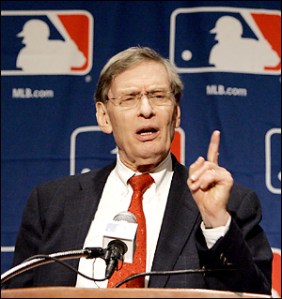
Bud Selig Is The Barry Bonds Of Baseball Commissioners…So Why Was He Just Elected To The Hall Of Fame?

Bud. I had a more descriptive caption, but decided that it wasn't professional...

Bud Selig. I had a more descriptive caption, but decided that it wasn’t professional…

Let me state my bias up front: I detest Bud Selig.

He became Major League Baseball’s first non-Commissioner Commissioner when baseball’s owners decided that Fay Vincent was doing the job of independent, uncorrupted overseer of the game’s welfare and integrity too literally for their tastes, fired him, and installed one of their own. That was Selig, a wealthy auto sales impresario who owned the Milwaukee Brewers and never saw a dollar he wouldn’t debase himself for.

The owners suspected that Vincent, a smart and decent man, might use his power to block the looming baseball labor-management impasse, benefiting the players. They dumped him just in time to give the job to an “independent overseer” who had the Mother of All Conflicts of Interest in the upcoming war: he was management. . Sure enough, under Bud’s fair and balanced leadership, the most devastating work stoppage in baseball history arrived in 1994. It stopped the season late and wiped out the World Series. It killed the Montreal Expos, for all intents and purposes, crushed the baseball card and memorabilia industry (it still hasn’t completely recovered), and nearly sent the sport itself into a death spiral. Baseball was saved, not by Selig, but by a combination of luck, the inherent greatness of the game, and Cal Ripken, who broke Lou Gehrig’s consecutive game streak (I was there to see it!) in the season after the strike to remind fans and the nation of baseball’s glorious past and why they cared about it.

From that point, Selig oversaw explosive growth in the game’s revenues, exposure, merchandising, player salaries and popularity, He shattered a lot of traditions to do it: the elimination of any real distinction between the leagues, expanded play-offs, wild card teams (which I hate, since they allow second place teams to become champions over the teams that defeated them during the season, but then there was the 2004 World Champion Boston Red Sox…) inter-league play, instant replay, penalties for big-spending teams, baseball in November, and more. If you are an ends justifies the means fan, Selig’s your man. He ended his more than two decades as the sport’s top executive with the game stronger and richer than ever.

He did this, however, despite and in part because he quietly enabled the scourge of steroid use among players, permitted cheating to go on right under his nose, and was shocked…shocked! to discover that all those players who began topping their previous best seasons at advanced ages when virtually all athletes go into decline, and all those players who turned up at spring training 25 pounds heavier and looking like Lou Ferrigno, and a few of those players breaking career and season records that hadn’t been approached in decades, were using illegal and banned performance enhancing drugs.  When this dawned on him, two steroid users, Mark McGwire and Sammy Sosa, had shattered Roger Maris’s record for home runs in a season in the same year—what a coinkydink!—and another, the grotesquely inflated Barry Bonds, had not only broken the new record but was on the road to surpass Hank Aaron’s career homer record. Continue reading

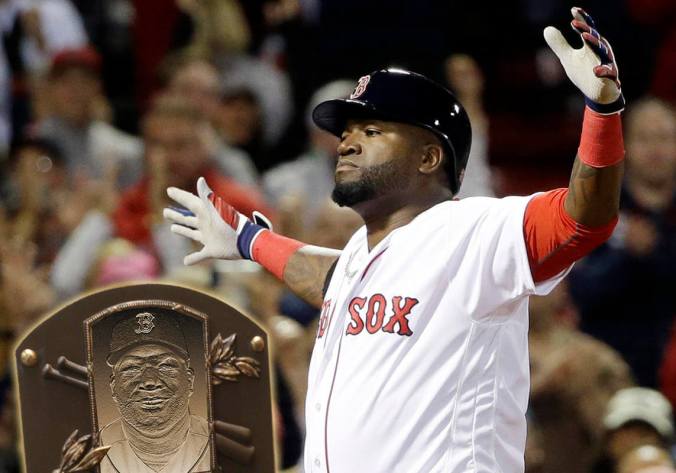
The Wrenching Problem Of David Ortiz, The Human Slippery Slope

papi_fame

Ethics conflicts force us to choose when multiple ethical principles and values point to diametrically opposed resolutions.  Often, a solution can be found where the unethical aspects of the resolution can be mitigated, but not this one. It is a tale of an ethics conflict without a satisfactory resolution.

I didn’t want to write this post. I considered waiting five years to write it, when the issue will be unavoidable and a decision mandatory. Today, however, is the day on which all of Boston, New England, and most of baseball will be honoring Red Sox designated hitter David Ortiz, who will be playing his finale regular season game after a 20 years career.  His 2016 season is quite possibly the best year any professional baseball player has had as his final one; it is definitely the best season any batter has had at the age of 40 or more. Ortiz is an icon and a hero in Boston, for good reason. Ortiz was instrumental in breaking his team’s infamous 86-year long “curse” that saw it come close to winning the World Series again and again, only to fail in various dramatic or humiliating ways. He was a leader and an offensive centerpiece of three World Champion teams in 2004, 2007, and 2013. Most notably, his record as a clutch hitter, both in the regular season and the post season is unmatched. You can bring yourself up to speed on Ortiz’s career and his importance to the Red Sox, which means his importance to the city and its culture, for nowhere in America takes baseball as seriously as Beantown, here.

That’s only half the story for Ortiz. Much of his impact on the team, the town and the game has come from his remarkable personality, a unique mixture of intensity, charm, intelligence, generosity, pride and charisma. After the 2013 terrorist bombing of the Boston Marathon, which shook the city as much as any event since the Boston Massacre, Ortiz made himself the symbol of Boston’s anger and defiance with an emotional speech at Fenway Park. Then he put an exclamation point on his defiance by leading the Red Sox, a last place team the year before, to another World Series title.

Performance-based arguments against electing Ortiz to baseball’s Hall of Fame are, at this point, untenable. Entering his final game, Ortiz had 541 home runs, (17th all-time), 1,768 RBI, (22nd), and 632 doubles, (10th).  He is only the third player in history to have more than 500 home runs and 600 doubles.  He ranks among the greatest post season hitters in baseball history with 17 home runs, 60 RBI and 21 doubles. His postseason average is .295 with an on base percentage of .409, a slugging percentage of .553 and a .962 OPS (the sum of the two.) Most great players did worse in the post season than during the regular season, for the obvious reason: the competition was better. Ortiz was better, which informs regarding his character and dedication.

The one lingering argument against admitting Ortiz to the ranks of Ruth, Williams, Aaron, Mays, Cobb, Hornsby, Griffey and the rest is that he has spent most of his career as a designated hitter, the American League’s 1973 invention, much reviled by National League fans and baseball traditionalists, designed to allow real batters relive fans from watching pitchers make fools of themselves at the plate. This makes him “half a player,” the argument goes. No designated hitter has ever been elected to the Hall, so that argument has prevailed so far. It was always a weak one—how did being lousy fielders like so many Hall of Fame sluggers make them greater players than one who never hurt his team at all with his glove? Now that a designated hitter has shown himself to be in the elite ranks of all the greatest batters, the argument sounds more like hysterical anti-DH bias than ever.

I should also note, before getting to the main point of this post, that I love Ortiz. I am a lifetime Red Sox fan, Boston born, bred and marinated, and Big Papi is special. He is one of the most interesting and admirable sports figures of my lifetime, and what he has meant to my city and my favorite sport is beyond quantifying. Few great athletes demonstrate persuasively that they are also great and admirable human beings. Ortiz is one of them.

Nonetheless, it is crucial that David Ortiz not be elected to the Hall of Fame when he becomes eligible five years from now, and that he never be admitted. On the matter of assessing the fitness for baseball honors of those who defiled the game by inflating their statistics, changing the outcome of games and harming players who abided by the rules, David Ortiz is a human slippery slope. Ortiz deserves to be in the Hall based on all admission criteria, including character and sportsmanship, but his admission will open the doors wide for players who are unfit, polluting the Hall of Fame and baseball’s values forever.

It’s not worth the trade off. This is the ethics conflict: one cannot be fair and just to “Big Papi” without doing widespread harm to the sport, and I would argue, the entire culture. Continue reading

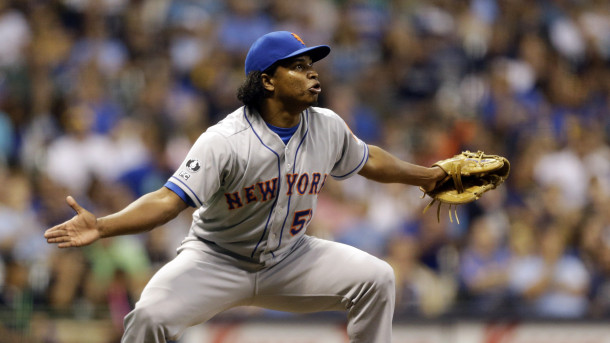
Jenrry Mejia, The Inexplicable Ethics Mega-Dunce

mejia

What is the explanation for this?

Jenrry Mejia is a young New York Mets relief pitcher who until recently had a bright future as a star closer and a guaranteed multi-millionaire.  Now, entirely on his own initiative, he has become the first player ever banned from baseball for using steroids .

This is not easy, though Mejia did it with ease…and speed.  After recovering from Tommy John surgery, Mejia was establishing himself as the Mets closer by the end of the 2014 season. But he began the 2015 season with an 80-game suspension for testing positive for a common PED (Performance Enhancing Drug), then, even before completing that punishment,  flunked another urine test and earned himself a 162-game suspension a few months later.

Knowing full well that a third positive test would end his career, Mejia tried a different banned steroid, was caught again, and that third strike triggered a lifetime expulsion from major league baseball under the sport’s rules. Nobody has been that reckless and stupid, not even Manny Ramirez (who was caught twice), and Manny’s picture is in the dictionary under “reckless and stupid.” Continue reading

No, Lisa, Alex Rodriguez Has Not Suddenly Become a Role Model. Also, YECCCHHHH…

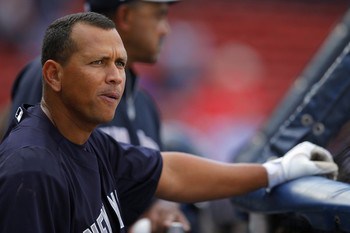
New York Yankees third baseman Alex Rodriguez warms up before the Yankees' American League baseball game against the Boston Red Sox at Fenway Park in Boston, Massachusetts August 16, 2013.  REUTERS/Brian Snyder  (UNITED STATES - Tags: SPORT BASEBALL)

Some role model.

Yesterday’s Washington Post “Outlook” section was polluted by a column by blogger Lisa Swan, and were her message not so ethically offensive, I would be inclined to ignore it. Her masterpiece was titled, “The Redemption of A-Rod,” and it argued that because Yankee designated hitter Alex Rodriguez has played unexpectedly well for his team after a one-year suspension, because the team is doing well this season, because he has not, as in the past, been involved in some embarrassing or slimy scandal on field or off for the grand total of nearly three months, and most of all, because Yankee fans are cheering him, he has become, in her words, a “role model.” She writes, and I am suppressing a gag reflex as I type this:

“We want our role models to be perfect, especially for our children’s sake. But what can flawless, contour-free statues — the marble creatures on pedestals — really teach us about overcoming adversity? The reality is that most of us have more A-Rod in us than we do Jeter. No. 2 is cool but boring; No. 13 is the one who, after decades of trying, finally bested his demons — the flawed human who dug his own grave, then climbed out of it.”

The stunning thing is that A-Rod’s biggest and most ethically obtuse fan does a reasonably fair job of summarizing his illegal, dishonest, unsportsmanlike, narcissist and sociopathic behavior. She writes… Continue reading

No, Craig, Barry Bonds Wasn’t A “Great” Baseball Player. Bernie Madoff Wasn’t A “Great” Investment Manager, Either

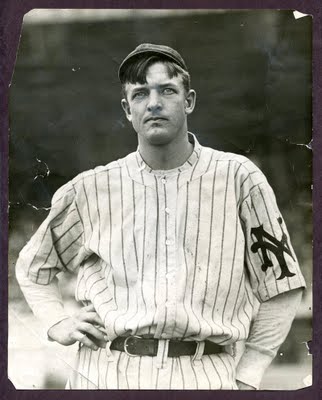
Christy Mathewson, a genuine hero. Barry Bonds would have made him want to throw up.

Christy Mathewson, a genuine hero. Barry Bonds would have made him want to throw up.

I like and admire Craig Calcaterra, who blogs entertainingly and perceptively about baseball on the NBC Sports website. I suppose I’m a bit jealous of him too: he’s a lawyer who now earns his living blogging about something he loves.

But Craig has always been a bit confused about how to regard baseball’s steroid cheats (they are cheats, which should answer any questions, but somehow doesn’t for a lot of people), and predictably, I suppose, he couldn’t resist reacting to the early results of Major League Baseball’s “Franchise Four” promotion, in which fans vote (until mid-May) for “the most impactful players who best represent each Major League franchise” as well as some other categories, including “Four Greatest Living Players.” The early results have Hank Aaron, Willie Mays, Sandy Koufax and Tom Seaver leading in the “Greatest Living Players” category, so Craig snarked that this is sad, because “it must mean Barry Bonds has died in a tragic cycling and/or Google Glass accident and no one thought to tell me.”

No, Craig, this is what someone failed to tell you: cheaters in any profession are not “great” by definition. Great baseball players, like great lawyers, writers, doctors, scientists and Presidents, bring honor on their profession, don’t corrupt everyone around them, don’t force people who admire them to embrace unethical conduct and turn them into aiders and abetters, and accomplish their great achievements while obeying the law, following the rules, and serving as role models for everyone who follows them. Barry Bonds was not a great baseball player. He had the ability to be one, but not the character.

Hank Aaron, Willie Mays, Sandy Koufax and Tom Seaver never once disgraced their game while they wore a uniform, and indeed made baseball stronger and better while they played. Good choices all.

The disgrace is that San Francisco fans voted Bonds as one of that team’s “Franchise Four,”  dishonoring great Giants of the past like Juan Marichal, as well as New York Giants greats like Christy Mathewson, Bill Terry, Carl Hubbell, and Mel Ott, Hall of Famers  and lifetime Giants who played with honesty and sportsmanship. But Giants fans warped values are among the casualties of Bonds’ career…and one more reason he can’t be rated anything but a great villain.

The Absolute Worst Of The Terrible Arguments For Putting Barry Bonds In The Hall Of Fame

815-Baseball-Hall-of-Fame-CEvery year at this time, I issue commentary on the “steroid-users in the Major League Baseball Hall of Fame” controversy. I’m not going to disappoint you this year.

Today the Hall will announce who the baseball writers deemed worthy, and, as usual, the acknowledged steroid cheats with Hall of Fame statistics will be resoundingly rejected. I don’t feel like revisiting this subject in depth again right now: I have done so before, many times. However, yesterday I nearly drove off the road listing to MLB radio commentators Casey Stern and Jim Bowden, supposedly baseball experts, give their reasons for voting for the entire range of steroid cheats, from Barry Bonds and Mark McGwire to Roger Clemens and the despicable Alex Rodriquez.

Baseball’s Hall of Fame, alone among the sports Halls,  includes ethics in its criteria for entry: a player must exhibit sportsmanship, integrity and have been a credit to the game. The average sportswriter who votes for candidates is about as conversant in ethics as he is in Aramaic, leading to an endless debate involving every rationalization on the list and  analogies so terrible that they melt the brain.For example, I constantly hear and read that the evidence that Barry Bonds used steroids is “circumstantial” so it is unfair to tar him as a steroid user. Such commentators don’t know what circumstantial evidence is. Criminals can be justly convicted beyond a reasonable doubt by circumstantial evidence, which is also known as indirect evidence. Direct evidence, if believed, proves the existence of a particular fact.  Circumstantial evidence proves facts other than the particular fact  to be proved, but reason and experience indicates that the indirect evidence is so closely associated with the fact to be proved that the fact to be proved may be fairly inferred by existence of the circumstantial evidence. There is direct evidence that Bonds was a steroid-user, but the circumstantial evidence, as the well-researched book “Game of Shadows” showed, is so voluminous that it alone is decisive. Literally no one thinks Bonds is innocent of using steroids. [You can read my analysis of the case against Bonds here, here, and here.]

Stern and Bowden, however, claim that it is unfair to refuse the honor of Hall of Fame membership to suspected steroid users because it is inevitable that some players who used steroids and were never caught or suspected will make it into the Hall, if there aren’t such undetected cheat in the Hall already. Continue reading

The Alex Rodriguez Suspension, Barry Bonds, And The Slippery Slope

New York Yankees' Alex Rodriguez stretches before American League baseball game at Fenway Park in Boston

In a decision that further defines major league baseball’s cultural standards regarding performance enhancing drugs and the players who use them, New York Yankee Alex Rodriguez was suspended for the entire 2014 season and post-season by an arbitrator yesterday. Rodriguez, a long-time superstar who was once considered a lock to break baseball’s career home run record, and who is the highest paid player in the game, was suspended for illicit drug use without testing positive under the game’s union-negotiated testing system. He was, instead, suspended for a violation of the player’s Basic Agreement under baseball management’s right to police the game and do what is in its best interests.

The evidence that Rodriguez was a flagrant and long-time steroid abuser came from documents obtained from Biogenesis, a lab that developed drugs for athletes and others, as well as convincing testimony. Rodriguez had challenged the suspension in a grievance procedure after MLB handed down a 211 game suspension during the 2013 season. The arbitrator’s ruling, which is confidential, apparently concluded that the player not only cheated, but obstructed efforts to enforce baseball’s intensified anti-drug measures in the wake of the wide-spread use of PEDs in the 90’s and thereafter.

As expected, the result produced the usual complaints and rationalizations from the disturbingly large contingent of baseball fans and writers who remain obdurate regarding the offensiveness of steroid cheating, claiming that it was “a part of the game,” that the objections to it are inconsistent, and that baseball’s vilification of users is hypocritical. They had been practicing these and related arguments for months as they waited for the baseball Hall of Fame voting results announced last week, in which about 65% of the voters showed that they regarded steroid use as a disqualification for the honor, even when a player-user had excelled on the field. Rodriquez’s defeat deeply undermines the cause of the steroid defenders, and the likelihood that their argument will ever prevail. Continue reading