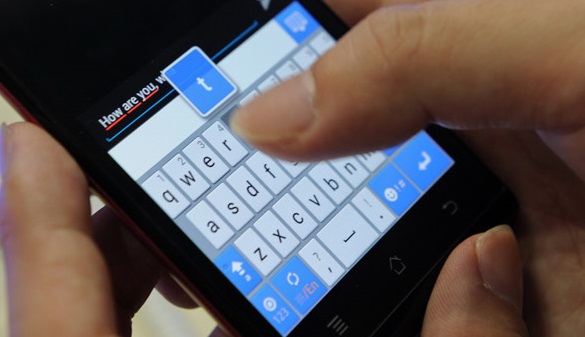
I’d like to say “never,” except that when especially offensive private text messages become public, they aren’t private any more. As with e-mails, any time you send a text message that you know will embarrass you if it falls into malign hands or is seen by righteous eyes, you have authored the means of your potential destruction.
That’s not right, but that’s the way of the world.
Thus a Washburn University Phi Delta Theta fraternity member posted a photo of a man with a topless woman in bed as part of a fraternity text exchange following a chain of crude text messages between frat members. These were obtained by The Topeka Capital-Journal on a slow news day—Wow! Stop the presses! College guys are crude!-–and before you could say “thought control,” the national Phi Delta Theta organization suspended the Topeka campus chapter.
“We are very concerned by the messages reviewed thus far. Phi Delta Theta is a values-based organization and any behavior or statement contrary to those values is subject to significant action,” Phi Delta Theta spokesman Sean Wagner said in a statement. Naturally, the chapter president then grovelled an apology. Continue reading →
Last year, in September, California became the first state to prohibit by law the suspension of students for “willful defiance” unless the activities involved were certified by the school superintendent as meeting the specific standards enumerated in the law, all of them very serious, most of them already crimes. What was the rationale behind Assembly Bill 420? Well, it seems African American kids were being disproportionately suspended. They made up about 6 percent of total enrollment, but 19 percent of suspensions for defiance.
According to the Justice Department’s politically motivated embrace of the “disparate impact” approach, any policy that disproportionately affects a minority group adversely is presumptively racist. It couldn’t possibly be true that black students are, as a group, more likely to defy authority, especially the authority of white teachers, right? The fact that pundits, members of the Congressional Black Caucus, MSNBC, Al Sharpton and the President keep hammering on the idea that America is run by a racist cabal, and that the only reason we aren’t getting ready to replace Teddy Roosevelt with Barack Obama on Mount Rushmore is that his wonderful accomplishments have been denied and distorted by white racists, and that our police departments are hunting down and murdering unarmed young black men as the justice system looks the other way—none of this could possibly be feeding anger, frustration, and hate among among young black students that is translated into willful defiance in class—why would anyone think that?
The law is lunacy. The California state government is endorsing the idea that the schools, especially white teachers, are bigots, and thus the government is reinforcing exactly the emotions and beliefs that feed African American classroom defiance in the first place. Now uncooperative minority students will be able to have their disruptive conduct validated (with disruptive conduct by non-minority students similarly encouraged), treated gently and with understanding, inevitably reducing the educational value of class by allowing more chaos and less discipline, undermining the education of well-behaved students black or white. Meanwhile, toxic behaviors, attitudes and conduct by students that will hamper their prospects of success after school will not attract trigger negative reinforcement.
And when the out-of-school defiant conduct occurs later in response to a lawful command by a police officer?
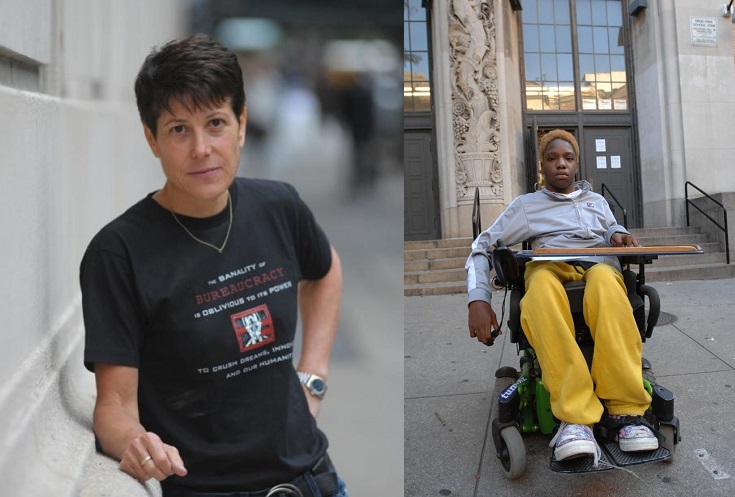
Regular readers here are familiar with the “Ick Factor,” the common phenomenon where a situation that causes an emotional response of revulsion, disgust or fear is labelled unethical when there is nothing unethical about it. Many kinds of conduct are icky, but still on the right side of ethics, if only one can put aside the gag reflex. The reverse of the Ick Factor is the less common “Awww!” Factor, where particular conduct seems loving, caring and nice, but is in fact unethical in one or more respects. Such is the case of New York City special needs teacher Debra Fisher.
In October, Fisher was suspended when e-mails were discovered on the school computer system showing that she had been spending school time raising funds for a special project on behalf of Aaron Phillip, a thirteen year old special needs student who is an aspiring animator with his own blog. The project’s goal was to raise $15,000 for a nonprofit devoted to developing Aaron’s talent, an organization called “This Ability Not Disability” founded and administered by Fisher.
Awww!
The problem was that while her efforts on behalf of the student were supported by the school, Fisher, an occupational therapist at Public School 333 with nine years of service, did not have permission to perform them during school hours. Thus she was suspended for six weeks. Now she is suing the school system for back pay, telling reporters, “I’m just trying to fight for what I believe is right.”
If she believes she is right, then she shouldn’t be working at the school at all, because she is in fact dead wrong.
 Ethics Alarms