“It is extremely dangerous to encourage people to see themselves as exceptional, whatever the motivation. There are big countries and small countries, rich and poor, those with long democratic traditions and those still finding their way to democracy. Their policies differ, too. We are all different, but when we ask for the Lord’s blessings, we must not forget that God created us equal.”
—-Former KGB officer and Russian leader Vladamir Putin, lecturing President Obama and the U.S. public on right, wrong, and human potential,in a New York Times op-ed that neatly exploits the stumbling White House diplomacy efforts regarding Syria. And yes, it made my head explode.
Oh-oh…this was bad one…
John McCain’s tweet in response to Putin’s cheeky op-ed was on target: “Putin’s NYT op-ed is an insult to the intelligence of every American.” [Aside:Of course, so was President Obama’s speech. As always these events give us a chance to gauge which journalists warrant ever regarding seriously again. On one side there are the likes of the Daily Beast’s toadying Michael Tomasky, who pronounced the President’s speech “great.” On the other is the Washington Post’s generally left-leaning Dana Milbank, who decided to be honest, pointing out how the President’s speech arising out of his contradictory and incoherent statement about Syria was…contradictory and incoherent: “The president, in the space of his 16-minute address, was often at odds with himself. He spent the first 12 minutes arguing for the merits of striking Syria — and then delivered the news that he was putting military action on hold. He promised that it would be “a limited strike” without troops on the ground or a long air campaign, yet he argued that it was the sort of blow that “no other nation can deliver.” He argued that “we should not be the world’s policeman” while also saying that because of our “belief in freedom and dignity for all people,” we cannot “look the other way.” He asserted that what Bashar al-Assad did is “a danger to our security” while also saying that “the Assad regime does not have the ability to seriously threaten our military.”In other words, “great.”] It was more than an insult, however. Putin’s screed was ethics poison: dishonest, manipulative, and malign. Continue reading →
The only rational way for any American to respond to the absurd and unprecedented bungling by President Obama and his tight circle of incompetents is sheer terror. If this was the level of care, seriousness, responsibility and professionalism employed by—oh, pick one; let’s say President Kennedy and his all-star advisors during the desperate efforts to avert nuclear war during the Cuban Missile Crisis, we might all be cockroaches today. That this particular series of inept maneuvers, verbal gaffes and brain-numbing rationalizations may not be the one that sinks the United States like Titanic Jr should not be the cause of cheering by anyone. We are stuck with this, because the news media of the United States conspired with well-meaning ideologues to place the fate of the nation in the hands of an arrogant amateur without even the ability to realize how little he knows what he is doing. Now we are awaiting what must be the most surreal Presidential speech in U.S. history—or at least we can hope it is—by a leader who has only one skill, and is once again relying on it to bail him out of a mess of his own making. Continue reading →
Tipping points are events that establish major shifts in public attitudes and the culture, and what determines a tipping point varies from circumstance to circumstance. When the switch is flipped on public trust, a leader is done for, at least in a democracy. This is why, in a parliamentary system, prime ministers call for elections at such times, or even resign. It’s a tradition the U.S. might do well to consider.
The tipping point on the George W. Bush presidency was glaringly obvious: it was the botched handling of Hurricane Katrina, even though that particular fiasco was mostly an example of effective blame-shifting by New Orleans mayor Ray Nagin. Bush had already accumulated many legitimate reasons to doubt him, but the traditional American eagerness to like and trust whoever holds the same job as Washington, Lincoln and FDR had kept his presidency afloat…until it drowned in Katrina. All was downhill from there.
Now it appears that the Obama proposal/decision/ argument—who knows what it really is?—to engage in a limited missile attack on Syria may be the public tipping point on Obama’s leadership, the moment when the veils fall and the nation reluctantly but decisively admits that the man it elected—twice—as its leader cannot be trusted. If so, it is remarkable this took so long, testimony to how much we all wanted our first African-American President to succeed. The tipping point for me was years ago. Following the Bush experience, I thought that the bungled government handling of the Gulf oil spill would clinch it, but no. Then came the Benghazi mess, with an ambassador and other Americans murdered without any decisive response other than deceptive spin and obfuscation to avoid electoral consequences—the I.R.S. tea party harassment (still being investigated, and looking worse all the time)—the NSA revelations, and the growing evidence that while the Affordable Care Act may not be the cataclysmic socialist disaster conservatives claim it is, it is also far from what the President promised. No tipping point though, until Syria, and the consequences flowing directly from the President’s undisciplined off-the-cuff rhetoric—a constantly repeated flaw in his leadership style.
Now, as tipping points do, this current controversy is resuscitating all of the past incidents, and serving as the catalyst for a reappraisal of Obama’s leadership. The looming conclusion is that he cannot be trusted.
Occasionally am beaten to the punch by a pundit or blogger who delivers an essay that says exactly what I was preparing to write, even as I was almost finished writing it. Such a pundit is Forbes contributor Merrill Mathews, who delivered an article on that publication’s website over the weekend, titled “What Happens When You Can’t Believe A Thing The President Says?” (My title was going to be “When Trust Is Gone”).
I really don’t know what to make of this, but I think it means something,and whatever it is, it’s important to remember and learn from it. Now if I could only figure out what it is.
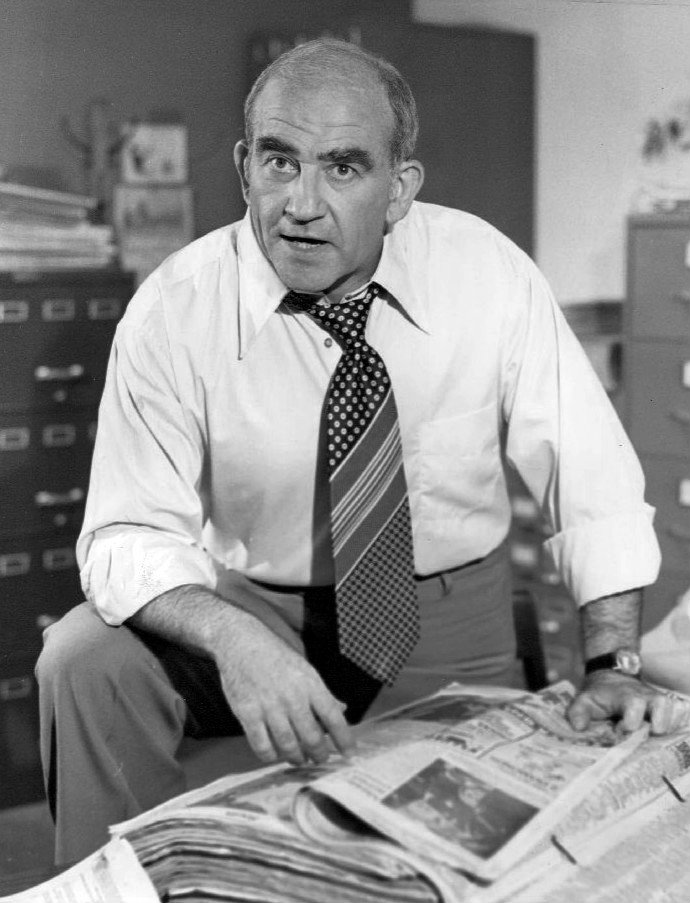
Here is what Ed Asner, the elderly “Mary Tyler Moore Show” and “Up” actor—he was also a bad guy in one of my favorite John Wayne Westerns, “El Dorado”—said in response to an interviewer’s question about why the Hollywood anti-war left was staying out of Obama’s self-made Syria controversy, in such marked contrast to its vocal opposition to the Iraq invasion (Where have you gone Janeane Garafolo, our nation turns its lonely eyes to you…OOOOO! ).
Spake Ed:
“A lot of people don’t want to feel anti-black by being opposed to Obama.”
Now, Asner has long been a vocal member of the Hollywood liberal activist community. Presumably, he still is well-connected and knows something about the culture and political pulse in Tinseltown. So I want to know: What can we glean from this ridiculous statement? What does it mean? Continue reading →
I live in the Washington, D.C. area, and at this moment even the beginning of the NFL season, usually the one thing everyone here (except me) usually cares about, is being over-shadowed by the drama of the looming Congressional vote on Syria. What was assumed—why, I cannot imagine–to be a likely rubber stamp with only an insufficient number of Republicans providing opposition because, as we all have been told repeatedly, they will oppose the President on anything, has materialized as strong bi-partisan opposition. The Washington Post estimated last night that the votes in the House are currently running 3-1 against the symbolic-and-deadly-but-promised-to-be-non-committal missile strikes on pre-announced targets. This is the most encouraging development in the government since President Obama was elected, I am tempted to say. It shows that this is not a nation of lemmings, and that the separation of powers has its virtues after all. Nonetheless, interesting ethical arguments are arising in favor of votes both no and yes.
The no arguments are varied, and reach the same conclusion from different positions, some more ethical than others. The pacifist Left and the isolationist Right, both irresponsible and dedicated to ideology over reality, are on the same path here, and would be on that same path even if the President’s argument for missile strikes was strong. Others, including me, but also those who supported more extensive military action in the Bush administration, fault the plan because of its dubious results, its contradictory logic, and the feckless and troubling way the President brought us to where we are.
I just heard an interview with a Republican House member who announced that he reversed his initial support for the missile strike after hearing Obama’s remarks in Sweden. After hearing Obama appear to deny that he drew the red line—a rhetorical point that was too cute by half and clumsily stated—this Congressman decided that he couldn’t believe anything Obama said or promised regarding Syria, including his assurances that nothing would lead to “boots on the ground.” (I would argue that his assurances that nothing would lead to boots on the ground is, if not dishonest, frighteningly irresponsible.)
The yes arguments are more perplexing. Naturally, there are those who, against all logic, simply adopt the contradictory and militarily nonsensical arguments John Kerry was asked to present to the Senate (apparently because President Obama knows that he appointed an inarticulate—but loyal!!!—dim-bulb, Chuck Hagel, as Secretary of Defense—but that is another, though related, issue). Liberal columnist Eugene Robinson, who has won an Affirmative Action Pulitzer Prize and who has proven that he will cheer whatever his fellow-African American in the White House does, even if he makes a decree like the South American rebel-leader-turned-dictator in Woody Allen’s “Bananas”...
“From this day on, the official language of San Marcos will be Swedish…In addition to that, all citizens will be required to change their underwear every half-hour. Underwear will be worn on the outside so we can check. Furthermore, all children under 16 years old are now… 16 years old!”
made this “argument”…
“The issue can’t be who wins that country’s civil war. It has to be whether the regime of Bashar al-Assad should be punished for using chemical weapons — and, if the answer is yes, whether there is any effective means of punishment other than a U.S. military strike…Let me clarify: I believe that a U.S. strike of the kind being discussed, involving cruise missiles and perhaps other air-power assets, can make it more likely that Assad loses. But I also believe that — absent a major commitment of American forces, which is out of the question — we cannot determine who wins.”
Gee, thanks for clarifying, Eugene!
Other, more coherent voices argue for endorsing Obama’s plan do sent a few missiles—not any that might hit Assad or his weapons, mind you– because they argue, even if the plan is weak, misguided, dangerous or certifiably bats, the President and, by extension, the United States will be dangerously weakened if a call to arms is rejected. This is essentially the argument of rational conservative James Taranto. Here is former Bush speechwriter Michael Gerson, this morning:
“…During the Syrian crisis, the Obama administration has generally waged a war of words and then used those words casually and clumsily. President Obama declared that Assad “must go” when his departure seemed inevitable — without a strategy, or even the intention, to achieve this goal when it became difficult. He drew a chemical-weapons “red line” that became a well-trodden thoroughfare. The Obama administration revealed details of an imminent military operation, which was promptly repudiated by the parliament of our closest ally, then abruptly postponed. The administration seemed to indicate that United Nations support for a military strike was needed — before declaring it unnecessary. It seemed to indicate that a congressional endorsement was superfluous — just before staking everything on securing it. Obama is inviting members of Congress to share responsibility for a Syrian policy that has achieved little to justify their confidence. In fact, he has undermined political support for the legislative outcome he seeks. For more than five years, Obama has argued that America is overcommitted in the Middle East and should refocus on domestic priorities. Now he asks other politicians to incur risks by endorsing an approach he has clearly resisted at every stage…”
Wait…this is how Gerson argues that Congress should vote yes? Indeed it is…
“Legislators are not arguing between preferred policy options, as they would on issues such as health care or welfare. They are deciding if they will send the chief executive into the world with his hands tied behind his back. This would be more than the repudiation of the current president; it would be the dangerous weakening of the presidency….even if this military action were wrong or pointless, it would have to be sufficiently dangerous to justify the gelding of the executive branch on a global stage. A limited military strike may be symbolic. But for Congress to block that strike would be more than symbolic. It would undermine a tangible element of American influence: the perception that the commander in chief is fully in command.”
This is a good time to stop and offer today’s Ethics Alarms Ethics Quiz, based on the reasoning of Gerson and others:
Are members of Congress ethically obligated, by loyalty and responsibility for the image and credibility of the U.S. abroad and to avoid weakening the institution of the presidency, to support the missile strikes on Syria, even if they and their constituents believe that to do so is wrong and misguided?
Some Senators are Red, and some are Blue. Then there’s Ed Markey…
Massachusetts Senator Ed Markey, who is at least temporarily filling John Kerry’s seat in the U.S. Senate, listened to the testimony and questioning regarding President Obama’s embarrassing plan to attack Syria just enough to kill a few people and be annoying (to prove he really, really meant what he said about that red line), and then cast his vote on the Senate Foreign Relations Committee’s compromise resolution approving the attack as “present.” Why? Well…
1. He’s a long-time Democratic loyalist from the House, and would no more oppose a Democratic president than fly…
2. He’s from peacenik Massachusetts (just like me!), and he knows that in the only state to give George McGovern its electoral votes, voting to drop missiles on foreign land that haven’t attacked us first is very unpopular, and…
3. He’s a lily-livered coward and a disgrace to his state.
Markey is also a liar, as his ridiculous “explanation” for his abdication of responsibility shows: Continue reading →
You see, Harold, this is your integrity on bias. Yes, I know it looks yummy…
Back in the run-up to the Iraq invasion, I exchanged some e-mails with Harold Meyerson, the left-est of the Post’s op-ed liberals. He had been condemning the Bush administration’s decision to go to war against Iraq—we were technically still at war with Iraq, since no peace terms had ever been agreed upon from the previous war, and Saddam was blatantly violating the terms of a cease-fire, but never mind—saying, among other things, that this was the first time in American history that the nation had embarked on a “war of choice” rather than necessity. This was a popular, and ignorant, “talking point” used by the anti-war critics at the time, and I was thoroughly sick of it being shouted in CNN debates without any objective participant protesting that it was a lie. I pointed out to the columnist that this was historical fantasy clothed as fact, and that he owed his readers better.
Most U.S. wars have been “wars of choice,” I wrote, and presumably Meyerson knew this. Arguably only the War of 1812, World War II and Afghanistan didn’t fit that description. The Revolution wasn’t a “war of choice”? Of course it was….most of the country would have been happy to stay subjects of the Crown. The Mexican War was not merely a “war of choice” but a war of “let’s trump up a reason to take away all this land belonging to Mexico” war. Lincoln certainly didn’t have to oppose the secession of the Southern states and start the Civil War; indeed, the best Constitutional analysis is that he was acting beyond his authority to do so.The Spanish-American War? World War 1? Korea? Vietnam? Granada? Desert Storm? What country was Meyerson talking about?
To my surprise, Meyerson replied, politely and, I thought, a bit sheepishly. Yes, he said, of course you are right, but this war is more of a war of choice than those were. Translation: “I oppose this war, and the party of this President, so I’ll say whatever is necessary to get people to agree with me, and I’ll convince myself in the process.” I’ve never taken a Meyerson column seriously since. His reasoning process, like so many on the ends of either side of the political spectrum, is to frame reality in the way that most comfortably supports his ideological objective, and then to allow that warped reality to become part of his own world view. I think this kind of thought process by confirmation bias should disqualify any infected media pundits from commentary, as much as habitual dishonesty, dementia or insanity.
Today, Meyerson once again shows how his biases rot his reasoning and integrity. Continue reading →
Today, at his press conference in Stockholm, President Obama raised many a hackle by saying,
“First of all, I didn’t set a red line,” Barack Obama said today at a press conference in Stockholm. “The world set a red line. The world set a red line when governments representing 98% of the world’s population said the use of chemical weapons are [sic] abhorrent and passed a treaty forbidding their use, even when countries are engaged in war.”
The President’s critics take this as yet another of his habitual accountability dodges, even though, for once, he didn’t blame George W. Bush. I will give the President the benefit of the doubt here, as he was speaking extemporaneously and is infamously imprecise when he is not delivering a prepared speech. He is saying that the bright line prohibition on chemical and germ warfare was not devised by him, that it is a matter of international law of long-standing, and that his red-line statement only re-affirmed the United States’ pre-existing obligation, in his view, to take action when such a line is crossed. I have no problem with that; the problem is, as this episode has shown, that President Obama did not and does not mean what he said, and the consequences he has devised for the crossing of that red line by the Assad government manage to be weak, insignificant, inadequate, cynical, cruel, dangerous, misdirected, ill-timed and illegal (under international law) all at the same time. That’s quite an accomplishment, but not one I’d want my mother to hand on the fridge.
The Wall Street Journal’s James Taranto, who, at his best, delivers a clarity of ethical analysis and a precision of language that are unsurpassed in U.S. punditry, moved on from mocking the latest red line clarification to an excellent discussion of why the credibility of the American President, and leaders generally, is so important. Credibility is the practical result of integrity: that is the ethical virtue President Obama’s handling of this matter betrayed.
Indecisiveness and narcissism makes great drama, bad leaders, and gets people killed , too.
I try to think about the ethics of war as little as possible, much less write about it. It is too frustrating, and ultimately a waste of time: the same debates and philosophical arguments have been made, eloquently and passionately, for not just hundreds but thousands of years, and only the mechanics of warfare have changed.
My father, a war hero and a man who would have loved to have devoted his life to the military if his wounds hadn’t prevented it, used to say that war was the stupidest of all human activities. “There is nothing good about war,” Dad said. “Yet it is sometimes necessary and unavoidable. And don’t ask me to reconcile those statements: I can’t. Nobody can.” I remember asking him about General Patton, who led my father and his comrades during the Battle of the Bulge. “Patton supposedly loved war,” I said. “He did,” my father replied. “He was insane.” He loathed Patton.
The Syria crisis has triggered all the same arguments again, and I want no part of them. Ethical analysis doesn’t work where warfare is concerned. The conduct of ritualized killing combatants and innocents is, at best, an extreme utilitarian act that always creeps into ethically indefensible “the ends justify the means” territory before the end of hostilities. So many invalid rationalizations are used to justify killing—“It’s for a good cause,” or the Saint’s Excuse, prime among them, with “They started it!” following close behind—that it is useless to tote them up. The war most often cited as a “moral war,” World War II, still involved the killing of innocent non-combatants by the Allies. ( My father remained amazed at the efforts at “limited war” in Iraq, noting that Allied soldiers were expected to accept civilian deaths as unavoidable and not a matter of concern. He also felt that the current dedication to half-measures just guaranteed longer wars, more deaths, and less satisfactory results. “It’s war,” he said. “You can’t make it humane or sensible; you can only make it shorter. Telling the military that it has to waste time and military personnel to avoid civilian deaths makes no sense. There is no such thing as a humane war.” Naturally, he approved of Truman’s decision to drop the atom bomb, in part, he admitted, because he was slated to be in the Japanese mainland invasion force that was likely to sustain up to a million casualties.) The Allies engaged in atrocities too, such as the fire-bombing of Dresden.
You want to talk about the problem of supporting terrible people and factions to defeat another? World War II is the champion on that score. The U.S. partnered with Stalin, who was a greater mass murderer than Hitler, and defeated Japan, the enemy of China, allowing Mao, a greater mass murderer than Stalin and Hitler combined, to enslave a billion people. The peace negotiated after the Second World War was only slightly less destructive than the one that ended the First World War (and led directly to the Second): The U.S. handed over half of Europe to Communism, laying the seeds of the Cold War that only avoided ending humanity in a nuclear holocaust by pure moral luck. The fact that WWII is the “best” war powerfully makes the case: ethics and war have nothing to do with each other. Each renders the other useless and incoherent. Continue reading →
Not everybody should be a leader, and it is no shame if you have no talent for it. It is tempting to think that all intelligent, educated, articulate people within a certain range of emotional stability and sanity can learn to be effective leaders, but history and experience tell a different story, and it has many tragic chapters.
I know many readers think that I get great joy out of criticizing President Obama for his lack of leadership skills and instincts, but in truth I find myself consciously avoiding writing about this almost every day, because the problem is on display that regularly*, and this isn’t a Bash Obama blog. I do find it remarkable that such an obviously intelligent man is so immune to leadership instincts, and that he hasn’t resolved to at least try to learn from his more naturally leadership-gifted predecessors. For example, the White House made a point of noting that the President was a great admirer of Doris Kearns Goodwin’s “Team of Rivals,” which recounts how Abraham Lincoln assembled a Cabinet made up of political enemies, adversaries and rivals whose perspective and abilities he managed and used to great advantage. Yet Obama’s choice of Cabinet members and advisors, as even his supporters have pointed out, is unusually insular, passive and narrow, with the same loyalists being recycled into position after position (Hillary was the exception). True, this may reflect the President’s recognition of his own leadership limitations, for Abraham Lincoln, a once-in-a-century example of a born leader, is a daunting model. This is a pattern, however. When various voices in the Obama-worshiping media, such as did the New York Times last week, lament that Lyndon Johnson would have been able to get gun control measures through Congress, they are commenting on the same phenomenon. LBJ was a natural leader, and Obama, whatever his other virtues, is not. Continue reading →





 Ethics Alarms