Just So We’re Clear: Some School Sexual Predators Are More Unethical Than Others

lunchladyJanelle Foley, 32,  who works in the cafeteria of Chapman Middle School in Weymouth, Mass., was charged with four counts of statutory rape for having sexual relations with a 15 year old student at the school during the Thanksgiving and New Year holidays.

This is statutory rape, and wrong, but approximately half as wrong as when the sexual predator’s target  is her (or his)  student rather than someone she glops mashed potatoes for in the lunch line. True, every employee in a school has to be worthy of some level of trust, but a teacher is blatantly misusing her authority and blurring roles to the detriment of education as well as social development when she exploits the position of teacher/role model/ authority figure/mentor for the purposes of sexual gratification. A lunch lady is just picking up horny teens. One is a professional breach and a sleazy crime. The other is a sleazy crime, and nothing more.

On the other hand, the role betrayal involved when a friend’s mother seduces her son’s underage friend is every bit as reprehensible as the acts of a predator teacher. I tend to think the Sexual Predator Lunch Lady is not a serious threat in our schools.

And where does “The Summer of ’42” land along this spectrum?

I ‘m not certain, but closer to the lunch lady than to the teacher, I think.

_______________________________

Pointer: Fark

Facts: Boston.com
When Worlds Collide: Maryland’s Attorney General Doug Gansler Flunks His Ethics Test

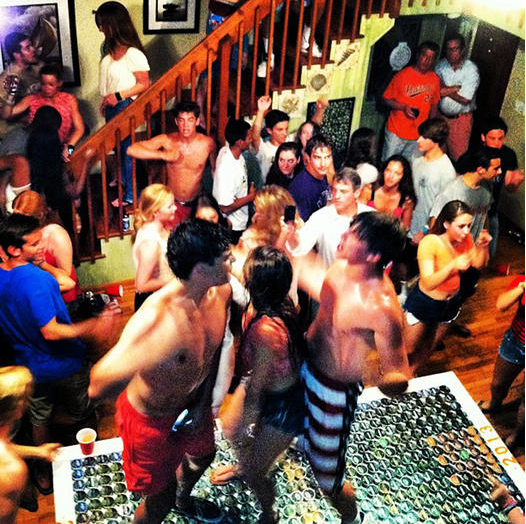
Maryland Attorney General Doug Gansler (D) is running to be his party’s nominee for Governor, which, since Maryland is one of the Bluest of states, means that success equals the statehouse, or should. But the intense spotlight that such a quest creates can be hot and unflattering, and Gansler’s character and integrity is now being called into question…especially after this photo from last summer surfaced on Instagram, showing Maryland’s top law enforcement official in the middle of a wild teen beach party at a beach house by the Delaware shore. He’s the guy in the white shirt and the cell phone:

Gensler Party

There you have it: the exact moment when Attorney General Doug Gansler, Candidate for Governor Gansler and Father of a Teenage Son Who Graduated From High School And Wants To Party With His Friends Like In “Animal House” Gansler officially collided. Many, especially many Democrats, especially many Bill Clinton fans, and definitely aspiring toyboy lawyer Brian Zulberti, would argue that only one of them is really there: Father Doug. The others, being absent, are immune from criticism. This position is popular, convenient, lazy, ethically corrosive and wrong. There is only one Doug Gansler, yes, but he is bound by three standards of conduct. When you are bound by three standards of conduct, you have to abide by the highest one.

Again, this situation focuses our attention on integrity, a core aspect of character, and crucial to ethics. Does an individual have genuine principles that he oe she lives by, or a constantly shifting set of values that are assumed and then discarded according to situation, convenient, strategy and whim? When an ethical problem arises, do others know how the individual will respond? Are his words consistent with his actions? Trust means that others can rely on an individual’s conduct, and you can’t rely on the conduct of someone whose values and priorities with the wind, locale, attention and personal desires.

Then there is the issue of judgment. Judgement is like intelligence and common sense: an individual either has it, or he doesn’t. And such traits as responsibility, accountability, honesty, prudence, dignity, loyalty  and courage come into play. I know those who embrace the private individual/professional dichotomy are stuck with the argument that the absence of  one or more of these in a private setting has no predictive value regarding public or professional conduct, but it is a hopelessly untenable position, pure denial, and ethics poison. Continue reading

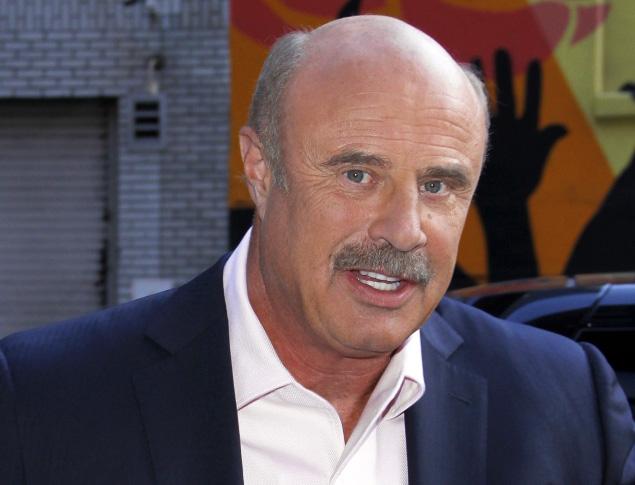
Ethics Verdict On Dr. Phil’s Media Mugging

You're in the clear, Phil...this time.

You’re in the clear, Phil…this time.

If a brilliant scholar like Richard Dawkins can get himself in hot water trying to be provocative in 140 characters, you can imagine the scalding a phony expert like Dr. Phil can attract with his tweets. Sure enough, the Oprah Winfrey-spawned arbiter of troubled relationships is now being ground up in the maw of the blogosphere and news media for tweeting this question to his inexplicably large mass of Twitter followers:

 “If a girl is drunk, is it okay to have sex with her? Reply yes or no to @drphil #teensaccused.”

He did not ask “If a girl is passed out drunk, is it okay to have sex with her?” Nor did he ask “If a girl is drunk, is it okay for me to have sex with her?” (The answers to both of these questions, obviously to me, you, and Dr. Phil, is emphatically  no. But then, he didn’t ask either of them.) He also didn’t suggest that he doesn’t know the answer to the question he did ask. He posed a question for his followers, which it is reasonable to assume was done to get a sense of the majority response.

There was nothing wrong, unethical, “tone deaf,” insensitive, sinister, off-putting, icky, misogynistic or otherwise inappropriate about the tweet or its wording, whether it was sent by Dr. Phil or anyone else.

And yet (from the Washington Post)... Continue reading

Of Teenage Tweets, Politics, Fairness, and Acorns

How about scrutinizing the trees, and not the acorns?

How about scrutinizing the trees, and not the acorns?

Two GOP Congressmen are apologizing for the offensive tweets of their teenage sons, as well they should. But to what extent do the homophobic, racist and otherwise vile social network comment of a couple of high school students with famous fathers tell us anything about their legislator parents? Are such communications newsworthy? Should the kids be exposed to “Gotchas!” as if they were the elected officials, not their dads, and are their indiscretions legitimate clubs for political and journalistic foes to beat their fathers with?

I think these are difficult ethics questions, and I don’t much care for any of them.  Let’s examine the ethical conduct of some of the participants in this icky drama: Continue reading

Ethics Hero: Jennifer McKendrick

My hero.

Jennifer McKendrick is my favorite Ethics Hero of 2011.

An Indiana County freelance photographer of sensitivity, courage and principle, McKendrick engaged in classic ethical behavior—seeing wrongful conduct that harms others, and taking affirmative action to address it. Her conduct is a template for all of us, and not merely regarding the specific problem she decided to confront: online bullying.

McKendrick had been hired to shoot the senior photos of several high school girls, then discovered that they had viciously denigrated other students on Facebook. She sent the girls’ parents this letter:
Continue reading