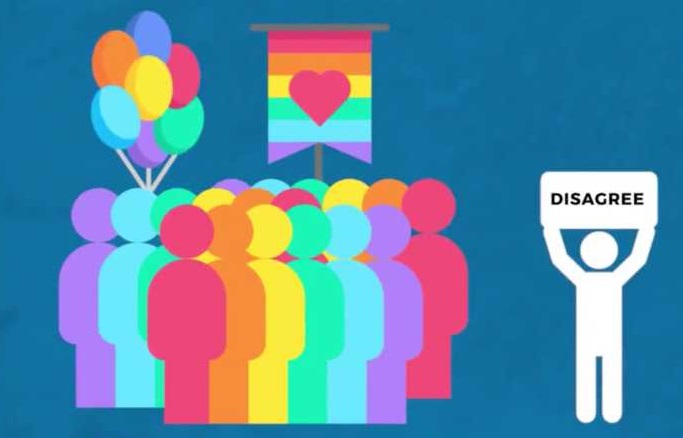
I will state up front that I am confident that this decision will get to the U.S. Supreme Court, and that if and when it does, it will be reversed.
The 10th U.S. Circuit Court of Appeals at Denver ruled 2-1 that website designer Lorie Smith and her company, 303 Creative, violated a Colorado law by refusing to create a website celebrating a same sex union. She was represented by Alliance Defending Freedom, a conservative Christian nonprofit, who also represented Christian baker Jack Phillips, who refused to bake a cake for a same-sex wedding. There is a material difference, however, between a cake and a website. A cake is not generally thought of as expression, and there is a colorable argument that a bakery is a public accommodation. But Smith, whose company designs wedding websites, argues that forcing her to make one that supports a same-sex marriage violates her religious beliefs. It isn’t frosting and cake shades at issue, it’s words.
A Colorado public accommodation law bars public accommodations from refusing to provide equal access to services because of sexual orientation. The law’s communication clause also says public accommodations cannot publish any communication indicating that full access to services will not be provided because of sexual orientation. The appeals court majority decreed that neither provision violates Smith’s free speech and free exercise rights under the First Amendment, even though it acknowledged that Smith’s websites are pure speech that involve her unique creative talents. But, the Court claims, indulging in an “it isn’t what it is” rationalization, Colorado “has a compelling interest in protecting both the dignity interests of members of marginalized groups and their material interests in accessing the commercial marketplace…We agree with the dissent that a diversity of faiths and religious exercise, including appellants’, ‘enriches’ our society…Yet a faith that enriches society in one way might also damage society in other ways, particularly when that faith would exclude others from unique goods or services.”
This opinion is way, way over the traditional judicially-drawn line between compelling public accommodations to be equally accessible to all and compelling artistic expression. Under this theory, a singer who performs at weddings would have to warble at a same-sex ceremony, even if her faith held that such a ceremony was a sin.


 Ethics Alarms